Why Does Cocoa Beach Glow at Night? Ocean Secret 2026
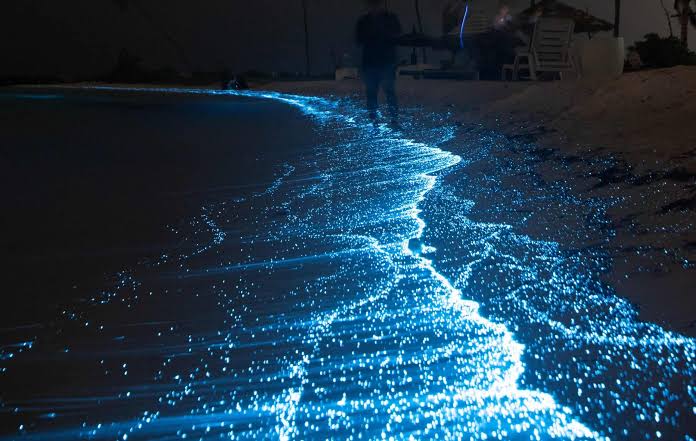
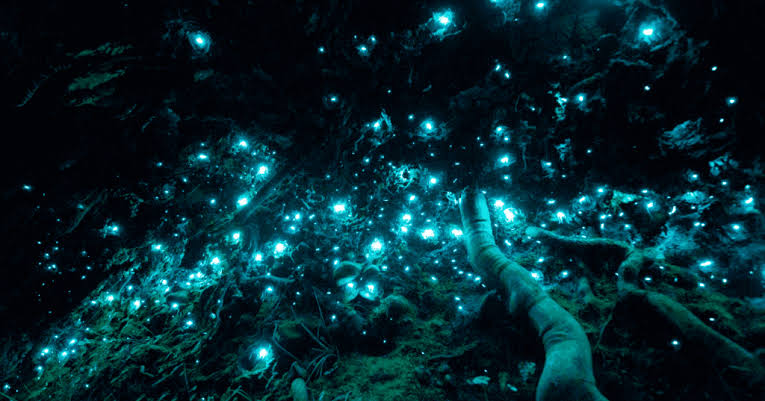
Why does Cocoa Beach glow at night? The short answer is bioluminescence, a natural chemical reaction happening inside tiny sea creatures living in the water.
Along Florida’s Space Coast, dinoflagellates and comb jellies light up every time the water moves, turning waves, paddles, and even fish trails into streaks of glowing blue.
What Is Bioluminescence, Exactly?
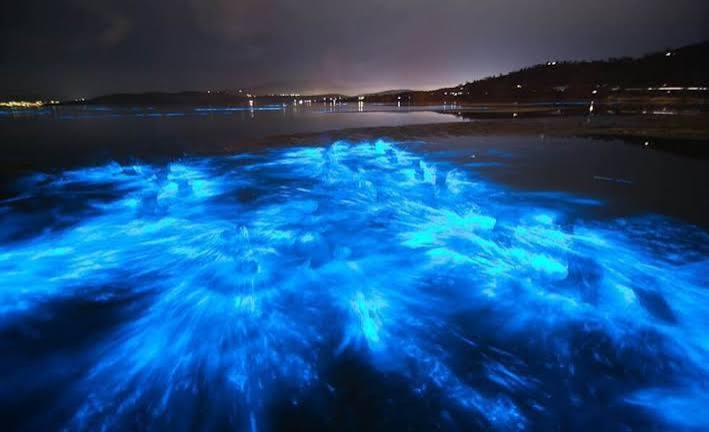
Bioluminescence is light produced by a living organism through a chemical reaction inside its body. No sunlight, batteries, or electricity are involved.
The reaction happens when a molecule called luciferin reacts with oxygen, often helped along by an enzyme called luciferase. The result is a burst of blue-green light.
This same process powers fireflies, deep-sea anglerfish, and the glowing plankton found in Cocoa Beach’s lagoons. It is one of nature’s oldest light shows.
What Causes Cocoa Beach Waters to Glow?
Two main organisms are responsible for the glow seen around Cocoa Beach, Titusville, and the Indian River Lagoon. Both react to physical movement in the water.
Dinoflagellates: The Microscopic Light Source
Dinoflagellates are single-celled plankton so small that thousands fit in a single drop of water. When disturbed by a paddle, boat, or swimming fish, they flash blue light instantly.
This flash is believed to startle predators, buying the tiny organism a split second to escape. Large blooms of dinoflagellates create the sweeping glow trails seen on kayak tours.
Comb Jellies: The Visible Glow Makers
Comb jellies, sometimes called sea walnuts, are larger and easier to spot than dinoflagellates. Their glow is used to startle predators and possibly to lure prey closer.
Comb jellies tend to show up in bigger numbers during the cooler months, giving Cocoa Beach a slightly different glow pattern in fall and winter compared to summer.
The Science Behind the Glow, Explained Simply
The light-producing reaction inside dinoflagellates and comb jellies is called a luciferin-luciferase reaction. It converts chemical energy directly into visible light.
Unlike a light bulb, almost none of this energy is lost as heat. Scientists call this “cold light,” and it is remarkably efficient compared to man-made lighting.
The reaction only fires when the organism senses pressure or motion nearby. That is why still water in Cocoa Beach’s lagoons looks completely dark until something disturbs it.
When Was Cocoa Beach Bioluminescence First Noticed?
Bioluminescent plankton have existed in Florida’s coastal waters for thousands of years, long before tourism turned it into an attraction.
Local fishermen and boaters in the Indian River Lagoon area have reported glowing water for generations, often describing it as “the water catching fire” at night.
It was only in the last two decades that guided kayak tours turned this natural phenomenon into one of Cocoa Beach’s most requested nighttime activities.
Table: Bioluminescence Sources in Cocoa Beach
| Organism | Size | Peak Season | Glow Trigger |
|---|---|---|---|
| Dinoflagellates | Microscopic | Summer (May–Sept) | Water movement, waves |
| Comb Jellies | 1–4 inches | Fall–Winter (Oct–Jan) | Physical contact, current |
| Bioluminescent Bacteria | Microscopic | Year-round, low visibility | Organic matter decay |
Best Places to See the Glow in Cocoa Beach
Not every stretch of water glows equally. Calm, nutrient-rich lagoons with limited light pollution tend to produce the brightest displays.
The Banana River and Indian River Lagoon are consistently ranked as the top spots near Cocoa Beach for reliable bioluminescence sightings.
Table: Top Glow Locations Near Cocoa Beach
| Location | Distance from Cocoa Beach | Best For |
|---|---|---|
| Banana River Lagoon | 5–10 minutes | Kayak & clear-boat tours |
| Indian River Lagoon | 10–20 minutes | Guided night paddles |
| Merritt Island refuge waters | 20–30 minutes | Wildlife + glow combo |
| Kiwanis Park launch area | Within Cocoa Beach | Family-friendly tours |
Best Time of Year to See Cocoa Beach Glow at Night
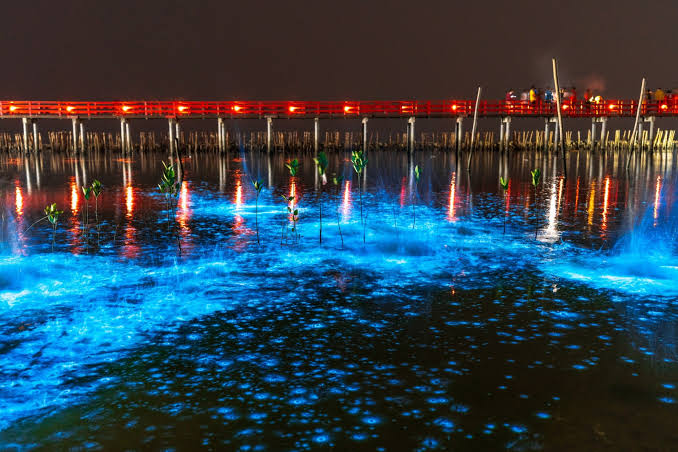
Bioluminescence in Cocoa Beach is visible year-round, but intensity shifts with water temperature and plankton or jelly populations.
Warmer months bring stronger dinoflagellate blooms, while cooler months bring larger comb jelly numbers. Both create a glow, just with a slightly different look.
Table: Monthly Glow Intensity Guide
| Month | Typical Glow Strength | Dominant Organism |
|---|---|---|
| May – August | High | Dinoflagellates |
| September – November | Very High | Comb Jellies + Dinoflagellates |
| December – February | Moderate | Comb Jellies |
| March – April | Moderate to Low | Mixed, transitioning |
Why the Moon Phase Matters So Much
Moonlight is the single biggest factor working against a good glow. A bright full moon washes out the faint blue light from the water.
New moon nights, when the sky is darkest, give the best contrast and the most dramatic bioluminescence viewing experience of the month.
Table: Moon Phase Impact on Visibility
| Moon Phase | Sky Darkness | Glow Visibility |
|---|---|---|
| New Moon | Very Dark | Excellent |
| Waxing/Waning Crescent | Dark | Good |
| Quarter Moon | Moderate | Fair |
| Full Moon | Bright | Poor |
How to Experience Cocoa Beach Bioluminescence
Most visitors see the glow through a guided night tour rather than on their own, since local guides know exactly where the plankton and jellies are active.
Clear kayaks and clear-bottom boats are popular because they let you see the glow trail underneath you, not just around the paddle.
Popular Ways to See the Glow
- Guided kayak tours through the Banana River or Indian River Lagoon
- Clear kayak tours for an underwater view of the glow
- Small private boat tours departing near Kiwanis Park
- Family-friendly group paddles with local guides
Kayak Tour vs. Boat Tour: Which Should You Choose?
Both options let you witness the glow, but the experience feels quite different depending on which one you pick.
Kayaks put you closer to the water, so every paddle stroke lights up right beside you. Boats offer more comfort and are easier for larger groups or guests with mobility concerns.
Table: Kayak Tour vs. Boat Tour
| Feature | Kayak Tour | Clear Boat Tour |
|---|---|---|
| Closeness to water | Very close | Close, viewed through clear hull |
| Physical effort | Moderate paddling required | Minimal, guide operates the boat |
| Group size | Small groups, 1–2 per kayak | Larger groups possible |
| Best for | Active travelers, couples | Families, seniors, larger groups |
How Much Does a Cocoa Beach Bioluminescence Tour Cost?
Prices vary by operator, tour length, and whether you choose a kayak, clear kayak, or boat experience.
Most guided bioluminescence tours near Cocoa Beach fall within a predictable range, with private or clear-kayak options priced slightly higher than standard group tours.
Table: Typical Tour Pricing Range (Per Person)
| Tour Type | Approximate Price Range |
|---|---|
| Standard group kayak tour | $45 – $65 |
| Clear kayak tour | $60 – $85 |
| Private boat tour | $75 – $120 |
| Family package (per person) | $40 – $60 |
Wildlife You Might See Alongside the Glow
The lagoons around Cocoa Beach are home to far more than just glowing plankton and jellies. Night tours often turn into wildlife encounters too.
It is common to spot mullet fish jumping, dolphins surfacing nearby, and wading birds along the shoreline before the glow show even begins after dark.
Bioluminescence Tour Etiquette and Rules
Respecting the water and wildlife keeps the ecosystem healthy and the experience enjoyable for every visitor who comes after you.
Guides generally ask visitors to avoid touching marine life unnecessarily, keep white lights off during the tour, and stay within the designated paddling area.
Weather Conditions That Affect the Glow
Calm, warm nights with little wind tend to produce the clearest and most visible bioluminescence displays around Cocoa Beach.
Heavy rain, strong wind, and rough water can scatter plankton or reduce visibility, so most tour operators monitor forecasts closely before confirming departures.
How Water Quality Affects Long-Term Glow Strength
Nutrient levels, pollution, and water temperature all play a role in how consistently Cocoa Beach’s lagoons produce a strong glow each year.
Conservation efforts around the Indian River Lagoon aim to protect water quality, which in turn helps sustain healthy plankton and comb jelly populations long-term.
What to Bring for a Night Glow Tour
Packing light but smart makes the experience more comfortable, especially since most tours run after sunset in humid conditions.
A few essentials go a long way: bug spray, a light jacket, water shoes, and a dry bag for your phone.
Table: Quick Packing Checklist
| Item | Why You Need It |
|---|---|
| Insect repellent | Evenings near lagoons attract mosquitoes |
| Dry bag | Protects phone and valuables from splashes |
| Light jacket | Water temperatures drop after sunset |
| Water shoes | Helpful for wading in and out of kayaks |
Tips for Photographing the Glow
Bioluminescence is faint compared to artificial light, so standard phone photos often come out dark or blurry.
A camera with manual settings, a tripod, and a long exposure setting captures the glow far better than a quick snapshot.
Quick Photography Tips
- Use a tripod to avoid camera shake during long exposures
- Set exposure time between 5–15 seconds for best results
- Avoid using flash, which overpowers the natural glow
- Shoot on new moon nights for the darkest, most vivid contrast
Is Cocoa Beach Bioluminescence Safe to Touch?
Both dinoflagellates and comb jellies found around Cocoa Beach are harmless to humans and are safe to touch or swim near.
Unlike jellyfish with stinging tentacles, comb jellies do not sting. They simply glow when disturbed, making close encounters completely safe for families.
Bioluminescence vs. Rocket Launches: Two Different Space Coast Glows
Cocoa Beach sits near Kennedy Space Center, so visitors sometimes confuse the ocean’s glow with a rocket launch lighting up the night sky.
Rocket launches produce a bright, brief flash from engines, while bioluminescence is a soft, continuous blue glow triggered by movement in the water itself.
Cocoa Beach Glow vs. Other Florida Locations
Cocoa Beach is one of several Florida spots known for bioluminescence, but its lagoon system gives it an edge in consistency.
Table: Cocoa Beach vs. Other Florida Bio Spots
| Location | Consistency | Best Access Point |
|---|---|---|
| Cocoa Beach / Banana River | Very High | Kiwanis Park area |
| Titusville / Indian River | High | Space Coast launch points |
| Merritt Island | Moderate | Refuge waterways |
| St. Augustine | Moderate | Northeast Florida marshes |
Other Types of Bioluminescent Creatures in Florida Waters
Beyond dinoflagellates and comb jellies, Florida’s coastal waters host several other organisms capable of producing their own light.
Certain species of bioluminescent worms, small crustaceans, and even some fish larvae contribute faint glows, though they are far less visible to the average visitor than plankton and jellies.
How Bioluminescence Differs From Fluorescence
People often confuse bioluminescence with fluorescence, but the two processes work in completely different ways.
Fluorescence requires an external light source, like a blacklight, to absorb and re-emit light. Bioluminescence, on the other hand, produces its own light internally without needing any outside source at all.
Table: Bioluminescence vs. Fluorescence
| Feature | Bioluminescence | Fluorescence |
|---|---|---|
| Light source | Internal chemical reaction | External light required |
| Example | Dinoflagellates, comb jellies | Certain corals under blacklight |
| Visible in daylight | No | Only under specific light |
| Found in Cocoa Beach | Yes | Rare |
Best Camera Settings for Beginners
If you are new to night photography, starting with a few simple manual settings will dramatically improve your bioluminescence photos.
A wide aperture around f/2.8, an ISO between 800 and 1600, and a shutter speed of 8 to 10 seconds is a solid starting point for most cameras.
Why This Phenomenon Matters for Marine Ecosystems
Bioluminescent organisms are not just a visual spectacle. They play an active role in the food chain and predator-prey dynamics within the lagoon.
Healthy populations of dinoflagellates and comb jellies are often a sign of a balanced, nutrient-rich ecosystem, making the glow a useful indicator of environmental health.
Environmental Factors That Boost the Glow
Water temperature, salinity, and nutrient levels all influence how strong the bioluminescence appears on any given night.
Warm, calm, nutrient-rich water tends to support larger plankton blooms, which directly translates into a brighter glow for visitors.
Cocoa Beach Glow for Families with Kids
Bioluminescence tours are a popular pick for family vacations since the glow is safe, gentle, and genuinely exciting for children to witness.
Most operators offer tandem kayaks or clear-boat seating so younger kids can experience the glow without paddling on their own.
Family Tips for a Smooth Night Tour
- Choose a clear kayak or boat tour so kids don’t need to paddle
- Book earlier tour slots if children have an early bedtime
- Bring a change of clothes in case of splashes
- Remind kids to keep flashlights off during the glow viewing
Cocoa Beach Bioluminescence and the Space Coast Identity
Cocoa Beach already draws visitors for its surf culture, sandy shoreline, and proximity to Kennedy Space Center launches.
Bioluminescence adds a second, entirely different kind of “space” experience, one that happens in the water instead of the sky, giving the region two very different reasons to look up, and down, after dark.
Planning Your 2026 Cocoa Beach Glow Night
Booking ahead matters most during new moon weeks, since demand for tours spikes when conditions are ideal for viewing.
Checking a moon phase calendar before choosing your travel dates is the single most effective step toward guaranteeing a strong glow on your trip.
Common Mistakes First-Time Visitors Make
Many first-timers book a tour during a full moon or bring bright flashlights, both of which reduce the visible glow significantly.
Booking around the new moon and keeping white light to a minimum are the two easiest ways to improve the experience.
Nearby Attractions to Pair With Your Glow Tour
Since bioluminescence tours run at night, many visitors spend the day exploring nearby Cocoa Beach and Space Coast attractions before their evening paddle.
Kennedy Space Center, the Cocoa Beach Pier, and Merritt Island National Wildlife Refuge are all within a short drive and pair naturally with a bioluminescence tour later that night.
Table: Suggested Day-to-Night Itinerary
| Time of Day | Suggested Activity |
|---|---|
| Morning | Cocoa Beach Pier or surfing lesson |
| Afternoon | Kennedy Space Center or Merritt Island refuge |
| Early Evening | Dinner near Cocoa Beach waterfront |
| After Sunset | Bioluminescence kayak or boat tour |
Booking Tips for the Best Glow Experience
Reserving your spot a few weeks in advance is especially important during new moon weekends, when tours sell out quickly.
Checking recent reviews, confirming cancellation policies for weather, and arriving a few minutes early all help ensure a smooth, stress-free night on the water.
Frequently Asked Questions (FAQs)
Why does Cocoa Beach glow at night?
The glow comes from bioluminescent dinoflagellates and comb jellies that release light when the water is disturbed by movement.
Is Cocoa Beach bioluminescence real or a myth?
It is completely real and scientifically documented, caused by a chemical reaction called bioluminescence inside marine microorganisms.
When is the best time to see Cocoa Beach glow at night?
New moon weeks between May and November offer the darkest skies and strongest plankton or jelly activity for viewing.
Where exactly does Cocoa Beach glow the most?
The Banana River Lagoon and Indian River Lagoon near Cocoa Beach are the most reliable spots for a visible glow.
Do I need a tour to see the bioluminescence?
A guided tour is recommended since local guides know current hotspots, but some visitors do see the glow from calm shorelines.
Is it safe to touch the glowing water in Cocoa Beach?
Yes, the organisms causing the glow are harmless and do not sting, making it safe for swimmers and kayakers alike.
Why does the full moon affect the glow?
Bright moonlight washes out the faint blue bioluminescent light, making the glow much harder to see clearly.
Can you see Cocoa Beach bioluminescence year-round?
Yes, though intensity varies by season, with comb jellies peaking in fall and dinoflagellates peaking in summer months.
What is the difference between dinoflagellates and comb jellies?
Dinoflagellates are microscopic plankton causing flashes of light, while comb jellies are larger organisms with a steadier glow.
How do I photograph the glow properly?
Use a tripod with a long exposure setting of 5 to 15 seconds and avoid flash for the clearest results.
Conclusion
Cocoa Beach glows at night because of bioluminescence, a natural light-producing reaction inside dinoflagellates and comb jellies living in its lagoons. Every time the water moves, whether from a paddle, a wave, or a passing fish, these organisms flash blue light as a defense mechanism.
The Banana River and Indian River Lagoon remain the most reliable places to witness this glow, especially during new moon nights when the sky is darkest. Timing your visit between summer and late fall, avoiding full moon dates, and joining a guided kayak or clear-boat tour will give you the best chance at seeing this phenomenon up close.
Whether you are drawn by curiosity, photography, or a unique Florida adventure, Cocoa Beach’s glowing waters remain one of the Space Coast’s most memorable natural experiences heading into 2026.