Why Does My Car Shake When I Accelerate? Explained 2026
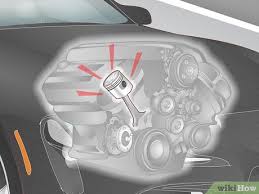
Why does my car shake when I accelerate? This is one of the most common car problems drivers deal with — and one of the most misunderstood.
The vibration can feel like a light shimmy in the steering wheel or a full-body shudder through the seat and floor. Some causes are cheap and easy to fix.
Others are serious enough to leave you stranded or create a safety risk at highway speed.
What Does It Mean When Your Car Shakes While Accelerating?
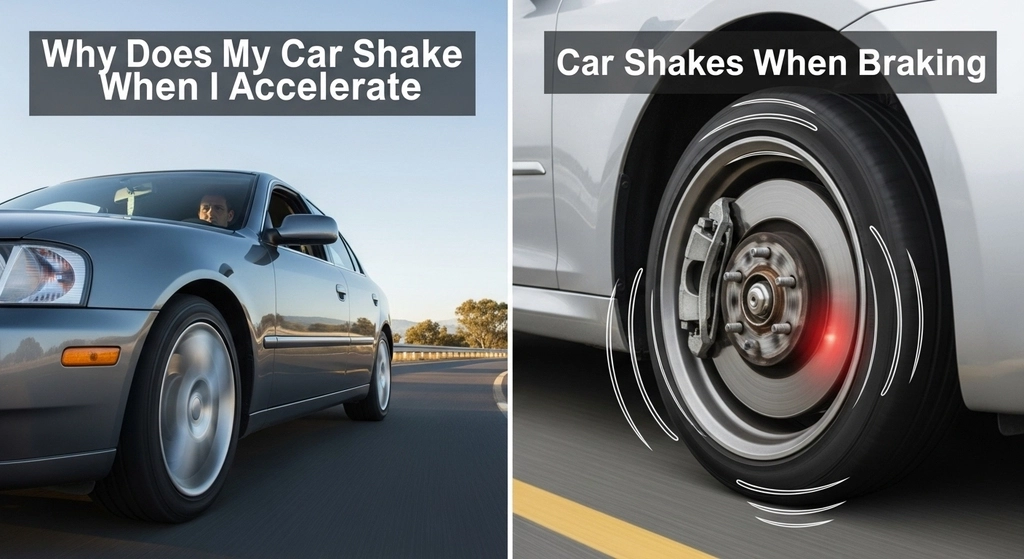
Shaking during acceleration is your car telling you that something is struggling to handle the load of putting power to the wheels.
It is different from shaking at idle or shaking only at a specific speed on cruise. Acceleration-specific vibration narrows the suspects down considerably and makes diagnosis faster.
The shake can come from the engine, drivetrain, tires, brakes, or suspension — and the location of where you feel it in the car is one of the best diagnostic clues available.
Where You Feel the Shake Tells You a Lot
Before digging into causes, pay attention to where in the car you feel the vibration. This one detail can cut your diagnostic list in half.
Shake felt in the steering wheel only — the problem is most likely at the front of the car. Suspect front tires, front wheel balance, front wheel bearing, front CV axle, or front suspension components like tie rods or ball joints.
Shake felt in the seat or floor but not the steering wheel — the problem is more likely at the rear. Suspect rear tires, rear wheel bearing, rear driveshaft, or rear axle.
Shake felt throughout the whole car — this suggests an engine issue like a misfire, or a severe drivetrain problem affecting the whole vehicle.
Shake that appears only at a specific speed range — most commonly an unbalanced tire. Tire imbalance vibrations often appear between 55 and 70 mph and can fade at higher or lower speeds.
The Most Common Reasons Your Car Shakes When Accelerating
There are more than a dozen possible causes. These are the ones mechanics diagnose most frequently — ranked from most common to least common based on real repair data.
Unbalanced or Damaged Tires
This is the single most common cause of vibration during acceleration, especially at highway speeds. Tires that are out of balance create a rhythmic wobble that gets more intense as speed increases.
Tires can go out of balance from hitting a pothole, losing a wheel weight, or simply from normal wear over time. Uneven tread wear — caused by bad alignment or infrequent rotation — creates a similar problem.
The fix is a tire balance service, which typically costs $15 to $80 for all four wheels depending on the shop. If the tires are worn unevenly, they may need rotation or replacement.
Worn or Failing CV Joints
CV joints (constant velocity joints) transfer power from the transmission to the wheels on front-wheel-drive and all-wheel-drive vehicles. When they wear out, they produce a very specific type of shaking during acceleration.
The classic CV joint symptom is a shudder or vibration that is worst right at the moment of acceleration from a stop and clears up once the car gets moving. You may also hear a clicking or popping noise when turning at slow speeds — that is the outer CV joint failing.
Replacing a CV joint or full CV axle typically costs between $200 and $800 per side depending on the vehicle and whether the full axle needs replacement.
Bad Motor Mounts
Motor mounts physically attach the engine to the car’s frame. Their secondary job is absorbing engine vibration so passengers do not feel it.
When motor mounts wear out or crack, the engine vibrates more freely during acceleration. You will feel excessive shaking especially when you first apply the gas, when reversing, or when the engine is under load going uphill.
You may also hear a thud or clunk when shifting into drive or reverse. Motor mount replacement typically costs between $200 and $600 depending on how many mounts need replacing and the accessibility of the engine.
Worn Spark Plugs or Engine Misfire
Spark plugs ignite the air-fuel mixture inside each cylinder. When spark plugs are worn, fouled, or failing, they misfire — meaning one or more cylinders does not fire at the right time or at all.
An engine misfire causes a distinct jerking or stumbling sensation during acceleration. You may also notice a check engine light, rough idle, reduced power, or worse fuel economy alongside the shaking.
Replacing spark plugs is one of the cheapest fixes on this list — typically $40 to $150 for most vehicles. Ignoring a misfire, however, can damage the catalytic converter over time, turning a $40 fix into a $1,500 repair.
Damaged or Bent Driveshaft
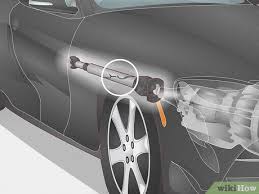
Rear-wheel-drive and all-wheel-drive vehicles have a driveshaft that runs from the transmission to the rear differential. If this shaft gets bent — from hitting a large pothole, road debris, or a minor accident — it will vibrate when rotating under load.
Driveshaft vibration tends to get worse at higher speeds and may feel like a rhythmic pounding underneath the car. You might also hear a clunking noise when accelerating or decelerating.
Driveshaft replacement costs between $500 and $1,000 in most cases. The shaft itself can sometimes be rebalanced rather than replaced if the damage is minor.
Worn U-Joints
U-joints (universal joints) connect the driveshaft to the transmission and rear differential on rear-wheel-drive vehicles. They allow the driveshaft to flex as the suspension moves.
When U-joints wear out, you will feel a vibration or shudder during acceleration, often accompanied by a clunking sound when shifting or when you first apply the throttle after coasting.
U-joint replacement typically runs $200 to $500 per joint. Catching them early is important — a failed U-joint can cause the driveshaft to drop out of the vehicle entirely.
Bent Axle
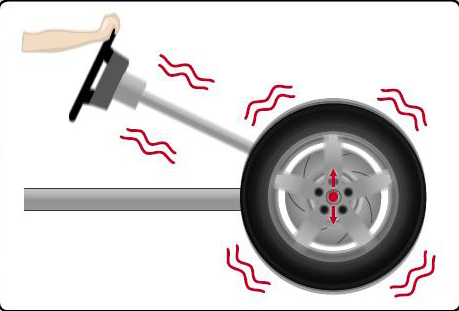
A bent axle is most often caused by hitting a curb, pothole, or road debris at speed. Even a slight bend creates a rotating imbalance that makes the car shake every time the axle spins under acceleration.
Axle-related shaking typically gets worse as speed increases and does not improve no matter how many times you balance your tires. It requires axle replacement — typically $400 to $900 depending on the vehicle.
Stuck or Seized Brake Caliper
A stuck brake caliper is often overlooked as a cause of acceleration shaking. When a caliper seizes, it maintains constant pressure on the brake rotor even with no pedal input.
This creates constant friction on one wheel. Under acceleration, this drag creates vibration — often most noticeable between 40 and 55 mph. A quick check: after a drive, carefully touch each wheel (not the brake disc). The wheel with the stuck caliper will be noticeably hotter than the others.
Brake caliper replacement typically costs $150 to $400 per corner including labor.
Wheel Bearing Failure
Wheel bearings allow the wheel to spin freely on the axle. When they wear out, they create a growling or humming noise and vibration that usually increases with speed.
Wheel bearing vibration during acceleration is often felt as a general looseness or instability rather than a sharp shimmy. The noise tends to change pitch when you gently swerve left and right at highway speed.
Wheel bearing replacement typically costs $150 to $400 per corner. Driving on a failed wheel bearing for too long can damage the axle and hub, significantly increasing repair costs.
Clogged Fuel Injectors or Dirty Air Filter
When fuel injectors are dirty or partially clogged, fuel delivery to the cylinders becomes uneven. The engine has to work harder and less efficiently under acceleration, which can cause a rough, shaky feeling.
Similarly, a severely clogged air filter restricts airflow into the engine. With insufficient air for combustion, performance drops and the engine can run rough especially under the load of acceleration.
Fuel injector cleaning or replacement typically costs $50 to $300. A new air filter is one of the cheapest maintenance items you can buy — usually $15 to $30.
Transmission Problems
If your car shakes specifically during gear changes — when the transmission shifts up or down — the transmission itself may be the issue. Low or contaminated transmission fluid is the most common cause.
Other transmission causes include worn transmission mounts (similar to motor mounts but for the gearbox), a failing torque converter in automatic vehicles, or worn gear clutch packs.
Transmission fluid service is relatively inexpensive — $80 to $200. Full transmission repair or rebuild can cost $1,000 to $3,000 depending on the severity of the damage.
Loose Lug Nuts
This is the most dangerous item on this list and the easiest to overlook. Loose lug nuts allow the wheel to move independently of the hub, creating a wobbling vibration during acceleration.
If a wheel is about to separate from the car, you will typically feel a very pronounced wobble or thump. Do not drive the car. Pull over immediately and check the lug nuts on every wheel.
Tightening lug nuts costs nothing but time. A mechanic will torque them to the manufacturer’s specification. This is worth checking any time you notice sudden shaking after recent tire service.
How to Diagnose Your Car’s Shake: A Step-by-Step Approach
Rather than guessing, use these steps to narrow down the cause before spending money at a shop.
Step 1: Note exactly when the shake happens. Does it happen only during acceleration? When you first press the gas from a stop? At a specific speed? All of these details matter.
Step 2: Identify where you feel it. Steering wheel, seat, floor, or whole car — this tells you front, rear, or engine-related causes.
Step 3: Do the gas-off test. At the speed where shaking occurs, lift your foot off the gas without braking. If the shake disappears immediately when you coast, the cause is drivetrain — CV joint, driveshaft, or motor mount. If it persists while coasting, suspect tires or wheel bearing.
Step 4: Check tire pressure and visual tire condition. Flat spots, bulges, or severely uneven wear are visible reasons for shaking.
Step 5: Check for a check engine light. A misfire code stored in the ECU will point directly to which cylinder is misfiring and whether spark plugs, coils, or injectors are to blame.
Step 6: Get a professional diagnosis if needed. For anything beyond tires and spark plugs, a mechanic with a vehicle lift and NVH (noise, vibration, harshness) diagnostic tools can pinpoint the exact source quickly.
Repair Cost Comparison Table
| Cause | DIY Difficulty | Estimated Repair Cost | Urgency |
|---|---|---|---|
| Unbalanced tires | Easy | $15–$80 | Moderate |
| Worn spark plugs | Easy–Moderate | $40–$150 | Moderate |
| Dirty air filter | Easy | $15–$30 | Low |
| Clogged fuel injectors | Moderate | $50–$300 | Moderate |
| Motor mounts | Moderate | $200–$600 | High |
| Stuck brake caliper | Moderate | $150–$400 | High |
| Wheel bearing | Moderate | $150–$400 | High |
| CV joint / CV axle | Moderate–Hard | $200–$800 | High |
| U-joints | Moderate | $200–$500 | High |
| Bent axle | Hard | $400–$900 | High |
| Driveshaft replacement | Hard | $500–$1,000 | High |
| Transmission repair | Hard | $1,000–$3,000 | Urgent |
| Loose lug nuts | Easy | $0 | Urgent — stop driving |
Speed-Based Diagnosis Guide
One of the best ways to narrow down the cause is by the speed at which the shaking is worst.
| Speed Range | Most Likely Cause |
|---|---|
| Shakes only from a stop | Inner CV joint, motor mount |
| 20–40 mph | Worn tire, bent wheel, loose lug nut |
| 40–60 mph | Tire imbalance, stuck brake caliper |
| 60–80 mph | Tire imbalance, wheel bearing, bent driveshaft |
| Any speed, during gear change | Transmission issue, transmission mount |
| Uphill only | Motor mount, engine misfire, worn CV joint |
| Worse when turning | Outer CV joint, wheel bearing |
Shake During Acceleration vs Shake While Braking
These two symptoms often get confused but point to very different causes.
Shaking during acceleration means the problem is most likely in the drivetrain (CV joints, driveshaft, U-joints), the engine (misfire, motor mounts), or the tires.
Shaking during braking — specifically when you press the brake pedal — typically points to warped brake rotors, worn brake pads, or a brake system issue. The steering wheel shudder under braking is a classic warped rotor symptom.
Some problems, like a stuck caliper, can cause shaking in both situations. If you have shaking under both acceleration and braking, get the brake system checked first since it is the more immediate safety concern.
Front-Wheel Drive vs Rear-Wheel Drive vs AWD Differences
The type of drivetrain in your vehicle affects which causes are most likely.
Front-wheel drive (FWD): CV joints are the most common drivetrain-related shaking cause. No driveshaft runs to the rear, so driveshaft and U-joint issues are not applicable.
Rear-wheel drive (RWD): The driveshaft and U-joints become the primary drivetrain suspects. CV joints are less common on RWD vehicles, though some use them at the rear.
All-wheel drive (AWD): The most components, the most possible causes. CV joints, driveshafts, U-joints, center differentials, and transfer case issues can all contribute to acceleration shaking. AWD repairs are also generally the most expensive.
Trucks specifically: Pickup trucks typically use U-joints instead of CV joints. U-joint shaking in trucks often produces a clunk when first accelerating and a rhythmic vibration that increases with speed.
When Is Car Shaking Dangerous? When to Stop Driving
Not all shaking requires you to pull over immediately. But some situations do.
Pull over and call for help immediately if:
The shaking comes on suddenly and severely at highway speed — this could be a tire blowout, a separated tire, or a driveshaft about to fail. Do not push through violent high-speed vibration.
The steering wheel is shaking so badly you are struggling to control direction — this is a safety emergency regardless of cause.
You hear a loud clunking, grinding, or metallic banging alongside the shake. These sounds often indicate a component failure that is imminent.
You notice a burning smell alongside the vibration — a stuck caliper dragging can overheat the brake and rotor to the point of fire risk.
Okay to drive slowly to a shop:
Mild shimmy in the steering wheel at highway speed that disappears at lower speeds — this is likely unbalanced tires and is not immediately dangerous.
Slight vibration felt during hard acceleration that goes away during normal cruising — a worn CV joint or motor mount that has not fully failed.
What Happens If You Ignore the Shake?
Ignoring early warning shaking is almost always more expensive than fixing it promptly.
An unbalanced tire that goes unfixed will rapidly destroy the tire’s tread in an uneven pattern, requiring full replacement instead of a simple $20 balance.
A failing CV joint that snaps completely can damage the axle shaft, wheel bearing, and surrounding suspension components — turning a $300 repair into a $1,500 or higher bill.
A misfiring engine from worn spark plugs floods the catalytic converter with unburned fuel over time. Catalytic converter replacement can cost $800 to $2,000, all because a $40 spark plug set was not replaced.
Preventing Acceleration Shake: Maintenance That Matters
Most causes of acceleration shake are preventable with basic, regular maintenance.
Rotate and balance tires every 5,000 to 7,000 miles. This prevents uneven wear and catches imbalances before they cause vibration.
Replace spark plugs on schedule — typically every 30,000 miles for standard plugs, up to 100,000 miles for iridium plugs. Check your owner’s manual for your vehicle’s specification.
Inspect CV joint boots during oil changes. A torn boot lets dirt and moisture into the joint, accelerating wear dramatically. Catching a torn boot early means a cheap boot replacement instead of a full CV axle replacement.
Get a wheel alignment check annually or after any significant pothole or curb impact. Misalignment accelerates tire wear and can eventually cause vibration.
Check transmission fluid level and condition every 30,000 miles or as recommended in your owner’s manual. Low or dirty transmission fluid is a common and easily avoided cause of shifting-related vibration.
Truck-Specific Shaking: Why Trucks Have Unique Causes
Pickup trucks and larger vehicles have some causes that are specific to their design.
U-joints are used in most truck driveshafts instead of CV joints. A worn U-joint in a truck produces a distinct clunk on initial acceleration and a vibration that worsens with speed.
Trucks with solid rear axles can develop differential problems that create vibration during acceleration, particularly if the differential fluid has never been changed.
Lift kits and modifications to suspension geometry can affect driveshaft angles and create vibration that did not exist before the modification.
Four-wheel drive systems add a transfer case as another potential source of vibration if the internal components wear or if the system is engaged improperly on dry pavement.
Frequently Asked Questions (FAQs)
Why does my car shake when I accelerate but not at idle?
Idle issues suggest an engine problem, but acceleration-only shaking points to drivetrain components like CV joints, driveshaft, or motor mounts that only come under load when you apply the gas.
Why does my steering wheel shake when I accelerate?
Steering wheel shaking during acceleration almost always points to a front-end issue — most commonly unbalanced front tires, a worn front CV axle, a front wheel bearing, or a front suspension component.
Why does my car shake only at high speeds when accelerating?
High-speed shaking is most commonly caused by tire imbalance, a bent wheel, or a driveshaft problem. These issues are less noticeable at low speed but become pronounced once centrifugal force amplifies the imbalance.
Can bad spark plugs cause my car to shake when accelerating?
Yes. Worn or misfiring spark plugs cause an engine misfire that produces a jerking or stumbling vibration during acceleration, often alongside a check engine light and loss of power.
Is it safe to drive when my car shakes during acceleration?
It depends on severity. Mild shimmy at highway speed is drivable in the short term. Violent shaking, sudden onset vibration, or shaking with loud noises means you should stop driving and have the car towed.
How do I know if it is my tires or CV joint causing the shake?
Do the gas-off test: lift your foot off the gas at the speed where shaking occurs. If the vibration stops immediately while coasting, it is drivetrain — likely a CV joint. If it continues while coasting, tires or wheel bearing are more likely.
Why does my car shake when I accelerate uphill but not on flat roads?
Uphill driving puts extra load on the drivetrain and engine. This added stress can expose weaknesses in motor mounts, CV joints, or a slightly misfiring engine that go unnoticed on flat roads.
How much does it cost to fix a car that shakes when accelerating?
Costs range from $15 for a tire balance to $3,000 for a transmission repair. The most common fixes — tire balance and spark plugs — are under $150. CV joints run $200 to $800. Always get a diagnosis before approving major repairs.
Can low transmission fluid cause my car to shake when accelerating?
Yes. Low or dirty transmission fluid can cause rough, jerky gear shifts that feel like a shake or shudder during acceleration. A transmission fluid service is one of the cheaper fixes to try early in the diagnostic process.
Why does my car shake when I accelerate from a stop but smooth out at higher speed?
This pattern — shaking worst at low throttle from a standstill — is a classic symptom of a worn inner CV joint. The inner joint is most stressed under low-speed acceleration and tends to smooth out once the car builds momentum.
Conclusion
Why does my car shake when I accelerate? The answer almost always points to one of a handful of very diagnosable, very fixable causes — unbalanced tires, worn CV joints, misfiring spark plugs, bad motor mounts, or a failing driveshaft component.
The key is not to ignore the early warning signs. A small shimmy that costs $20 to balance can turn into a $1,500 repair if the underlying issue damages surrounding components over thousands of miles.
Use the where-you-feel-it clues and the gas-off test to narrow down your cause before heading to a shop.
Handle anything urgent — violent shaking, sudden onset at speed, or shaking with abnormal sounds — by pulling over safely and not continuing to drive.
The earlier you address it, the simpler and cheaper the fix almost always turns out to be.