Why Does My Cat Lay on My Feet? Cat Behavior Explained (2026)
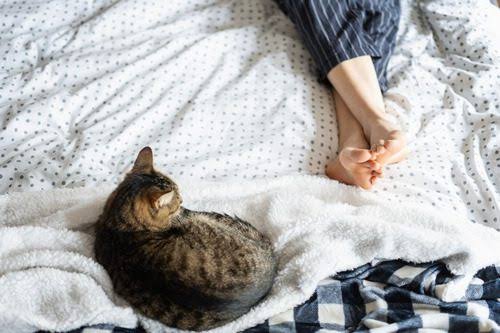
Why does my cat lay on my feet instead of my lap, the couch, or a cozy cat bed nearby? This adorable habit is one of the most common feline behaviors owners ask about, and it usually comes down to a mix of warmth, safety, and trust.
Cats are careful about where they choose to rest, and your feet check several boxes at once.
The Main Reasons Cats Lay on Your Feet
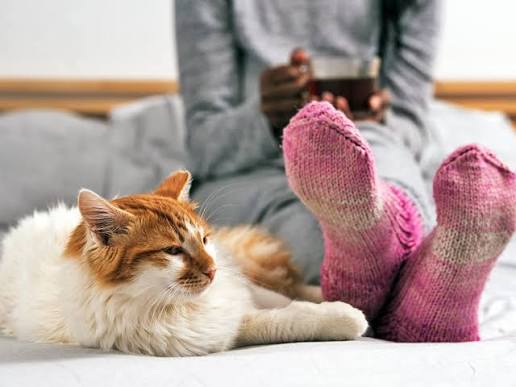
Warmth and Body Heat
Cats are naturally drawn to warm spots, and your feet give off a steady, gentle heat that’s comfortable without being too intense.
Since cats regulate their body temperature carefully, resting near a consistent heat source helps them relax and settle in for a longer nap.
This is one of the simplest and most commonly cited reasons cats choose feet over other spots in the house.
A Sense of Safety and Security
In the wild, cats are both hunters and prey, which means finding a safe place to rest is deeply instinctual for them.
Your feet offer a spot close to you without being fully enclosed, giving your cat a feeling of protection while they sleep.
Choosing to rest near you signals that your cat sees you as part of their safe environment.
An Easy Escape Route
Unlike curling up in your lap, lying at your feet gives a cat a quick and unobstructed path to move if something startles them.
This positioning allows cats to stay close to their favorite human while still maintaining independence and a fast way out.
Cats value this balance between closeness and freedom more than many owners realize.
Personal Space Without Full Contact
Cats are affectionate, but they also treasure their independence and don’t always want to be touched constantly.
Lying at your feet lets a cat stay near you without the risk of being picked up, shifted, or disturbed while resting.
This makes feet an ideal middle ground between closeness and personal space for many cats.
Bonding and Trust
When a cat chooses to sleep near you instead of somewhere else in the house, it’s often a sign of real trust and attachment.
Cats don’t show affection the same way dogs do, so this quiet, consistent closeness is one of their clearest ways of expressing bonding.
If your cat regularly chooses your feet over other spots, it’s a strong compliment from a naturally independent animal.
Familiar Scent Association
Your feet carry your personal scent strongly, and cats rely heavily on smell to feel comforted and secure.
Resting near a familiar scent helps a cat feel like they’re close to you even while you’re both asleep or still.
This scent-driven comfort is part of why cats often gravitate toward blankets, socks, or shoes that smell like their owner.
Routine and Predictability
Cats thrive on consistency, and once they find a comfortable spot, they tend to return to it night after night.
If your cat started sleeping at your feet once and felt safe doing so, this location can quickly become part of their regular routine.
This habitual behavior isn’t random. It reflects your cat’s preference for stability in their environment.
Vantage Point Awareness
Sleeping at the end of a bed or near your feet often gives cats a clear view of the room and any doorways.
This vantage point allows them to monitor their surroundings for potential threats, even while resting in a relaxed position.
This instinct traces back to wild ancestors who needed to stay aware of predators even during rest periods.
Table: Common Reasons Cats Lay on Feet
| Reason | What It Means |
|---|---|
| Warmth | Feet provide gentle, consistent body heat |
| Safety | Close contact without feeling trapped |
| Escape route | Quick path to move if startled |
| Personal space | Closeness without full physical contact |
| Bonding | Sign of trust and attachment to you |
| Scent familiarity | Comfort from your personal smell |
| Routine | Preference for consistency and habit |
| Vantage point | Ability to monitor surroundings while resting |
Why Feet Specifically, Not Your Lap or Shoulder
Feet Offer a Predictable Surface
Unlike a lap, which can shift or move suddenly, feet tend to stay relatively still, offering a more predictable resting surface.
This predictability appeals to cats who prefer stable, low-disruption spots for longer naps.
Less Risk of Being Disturbed
Sleeping at your feet reduces the chances of being picked up, petted unexpectedly, or shifted compared to sleeping directly on your chest or lap.
For cats who enjoy closeness but dislike too much handling, this compromise works well.
A Central Location in the Room
Feet are often positioned in a way that keeps your cat centrally located, whether on a couch, bed, or chair, giving them easy access to the whole space.
This central positioning supports their instinct to monitor their surroundings comfortably.
Does This Behavior Mean Your Cat Loves You?
A Sign of Comfort and Trust
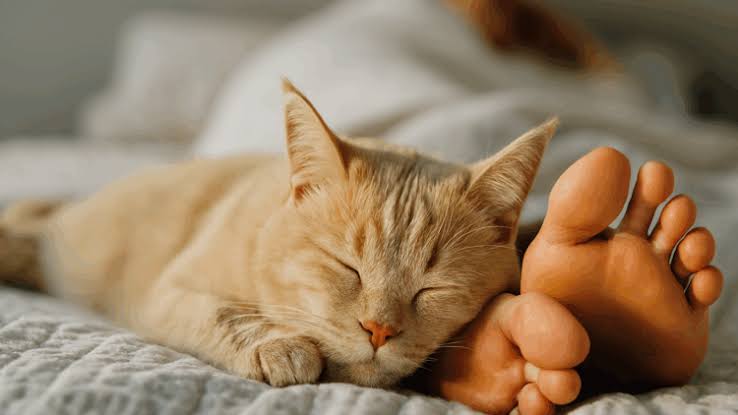
While cats express affection differently than dogs, choosing to rest near you consistently is a meaningful sign of comfort and trust.
This behavior suggests your cat associates you with safety, warmth, and a reliable environment.
Not Always About Affection Alone
Sometimes cats choose feet purely for practical reasons like temperature or an available soft surface, rather than an emotional statement.
Both explanations can be true at once, since instinct and bonding often overlap in feline behavior.
When Cats Sleep on Feet More Than Usual
Cold Weather Changes
During colder months, cats often seek out warmth more aggressively, which can lead to more frequent foot-sleeping behavior.
This seasonal shift is completely normal and reflects your cat’s need for temperature regulation.
After a Stressful Event
Cats may seek closeness to their owner more often after a stressful change, such as moving homes or a new pet joining the household.
Increased clinginess in these situations is usually temporary as your cat adjusts to the new normal.
When a Cat Is Feeling Unwell
Cats sometimes seek closeness to their owners when they aren’t feeling well, since proximity to a trusted person can feel comforting during illness.
If increased foot-sleeping comes with other changes like reduced appetite or lethargy, a vet visit is a good idea.
Table: Reasons Behavior May Increase
| Situation | Likely Explanation |
|---|---|
| Cold weather | Seeking extra warmth |
| Recent household changes | Seeking comfort and reassurance |
| New pet or visitor | Staying close to a trusted person |
| Possible illness | Seeking safety while feeling vulnerable |
| Life stage changes | Aging cats often seek more warmth and closeness |
Should You Encourage or Discourage This Habit
Benefits of Allowing It
Letting your cat rest at your feet can strengthen your bond and gives your cat a consistent, low-stress way to stay close to you.
For most healthy cats, this behavior is harmless and simply reflects their natural preferences.
When to Set Boundaries
If your cat’s position at your feet disrupts your sleep or movement significantly, gently relocating them to a nearby cat bed can help.
Providing a warm, soft alternative close to your feet often satisfies the same instincts without the same disruption.
Creating a Comfortable Alternative
Placing a heated cat bed or soft blanket near the foot of your bed can offer a similar experience while giving both of you more space.
Many cats happily adjust to a nearby alternative once it becomes part of their routine.
Other Common Cat Sleeping Positions and What They Mean

Curled in a Tight Ball
This position helps cats conserve body heat and often signals that they feel a bit more cautious or want to protect their body from cold.
Sprawled on Their Back
An exposed belly position usually signals deep trust and relaxation, since this leaves a cat’s most vulnerable area unprotected.
Sleeping Between Your Legs
Similar to sleeping at your feet, this position offers warmth and security while staying close to your body.
Sleeping on Your Chest
This position allows cats to hear your heartbeat and breathing, which some cats find calming and familiar.
Table: Sleeping Positions Compared
| Position | Primary Reason |
|---|---|
| On your feet | Warmth, safety, easy escape route |
| Between your legs | Warmth and close security |
| Curled in a ball | Conserving body heat |
| Sprawled on back | Deep trust and relaxation |
| On your chest | Comfort from heartbeat and breathing |
How to Strengthen the Bond Behind This Behavior
Consistent Routines
Keeping feeding, play, and bedtime routines consistent helps reinforce the sense of safety that encourages cats to stay close to you.
Gentle, Predictable Interactions
Avoiding sudden movements or unwanted handling while your cat rests near you helps maintain their trust in this shared space.
Positive Associations With Your Presence
Offering treats, gentle play, or calm affection during the day helps strengthen the overall bond that supports nighttime closeness.
Does Age or Breed Affect This Behavior
Kittens and Young Cats
Kittens often seek out warmth and closeness even more than adult cats, since they’re still developing the ability to regulate their own body temperature efficiently.
Young cats may also be more curious and social, making them more likely to seek out a spot near their favorite person.
Senior Cats
Older cats frequently seek warmth more actively as their metabolism slows and joints become more sensitive to cold temperatures.
A senior cat suddenly favoring your feet more than usual may simply be responding to normal age-related changes in comfort needs.
Breed Tendencies
Some breeds are known for being especially affectionate and people-oriented, which can make them more likely to seek out close contact like foot-sleeping.
However, individual personality tends to matter more than breed alone when it comes to this specific habit.
Cats in Multi-Cat Households
Choosing You Over Another Cat
In homes with multiple cats, choosing to sleep at your feet instead of near another cat can reflect a stronger individual bond with you specifically.
This preference can also reduce competition or tension between cats who prefer separate sleeping spots.
Rotating Sleeping Spots
Some cats in multi-cat households take turns using favorite spots, including your feet, based on who claims the space first each night.
This rotation is a normal part of how cats negotiate shared living spaces.
The Science of Cat Sleep Cycles
Why Cats Sleep So Much
Cats sleep between twelve and sixteen hours a day on average, a pattern rooted in their evolutionary history as both hunters and occasional prey.
This extensive sleep schedule means your cat has many opportunities throughout the day and night to choose your feet as their preferred resting spot.
Light Sleep vs Deep Sleep
Much of a cat’s sleep consists of light, easily interrupted rest rather than deep sleep, which supports their instinct to stay alert even while resting near you.
Choosing your feet, rather than a fully enclosed space, allows them to blend this alertness with comfort.
Cats vs Dogs: Different Reasons for Similar Behavior
Pack Instinct vs Independent Choice
Dogs often sleep near their owners due to pack-based social instincts, while cats make this choice more selectively based on comfort and trust.
This difference explains why a dog sleeping at your feet feels expected, while a cat doing so feels like a special, individual choice.
What This Means for Cat Owners
Because cats are more selective, having your cat consistently choose your feet is a meaningful sign of comfort specific to your relationship with them.
Practical Tips for Living With a Foot-Sleeping Cat
For Light Sleepers
Using a slightly larger blanket or adjusting your sleeping position can help you stay comfortable while still allowing your cat to rest nearby.
For People With Mobility Needs
If shifting position at night is difficult, placing a soft cat bed just beside your feet can offer a similar experience with less physical disruption.
For Allergy Sensitivities
Keeping a small blanket specifically for your cat’s foot-area naps can help reduce allergen buildup directly on your bedding.
A Brief Look at Cats and Human Sleep History
An Ancient, Ongoing Partnership
Cats have lived alongside humans for thousands of years, and shared sleeping spaces have long been part of that relationship in many cultures.
This long history suggests that comfort-seeking behaviors like foot-sleeping are a natural extension of a very old bond between cats and people.
A Behavior Rooted in Instinct, Not Just Habit
While modern cats live very different lives than their wild ancestors, many of their instincts around safety and warmth remain largely unchanged.
This is part of why foot-sleeping feels so consistent across so many different cats and households today.
Common Myths About Cats Sleeping on Feet
Myth: It Means Your Cat Is Overly Dependent
In most cases, this behavior reflects healthy bonding rather than unhealthy attachment or dependency.
Myth: Cats Only Do This for Warmth
While warmth matters, safety, trust, and routine all play significant roles alongside temperature preferences.
Myth: All Cats Behave the Same Way
Every cat has individual preferences, so some may never choose your feet at all, favoring other spots instead.
What Your Cat’s Choice of Spot Says About Your Bond
A Quiet Form of Communication
Cats communicate trust and affection in subtle ways, and consistently choosing your feet is one of the clearest examples of this quiet language.
Unlike more obvious signs like purring or head-butting, this behavior shows up simply through where your cat decides to rest.
Building on the Relationship Over Time
As your bond with your cat deepens, you may notice this behavior becoming more frequent or consistent, especially as trust builds over months or years.
Paying attention to these small shifts can help you better understand your cat’s evolving comfort level with you.
Final Thoughts Before the FAQs
Understanding why your cat lays on your feet helps you see this small nightly habit as part of a much larger pattern of trust and instinct.
Whether driven by warmth, safety, or simple routine, this behavior is almost always a positive sign in a healthy cat.
The FAQs below cover the most common quick questions owners ask about this endearing feline habit.
Signs Your Cat Feels Completely at Ease With You
Relaxed Body Language While Resting
A cat that sleeps deeply at your feet, with slow breathing and loose muscles, is showing genuine comfort in your presence.
Twitching ears or a raised head at every small sound can indicate lighter, more cautious rest rather than full relaxation.
Consistent Return to the Same Spot
A cat that returns to your feet night after night, even when other comfortable spots are available, is showing a clear and consistent preference for you.
This kind of reliable pattern is one of the strongest everyday indicators of a secure, trusting bond between you and your cat.
Watching for Changes Over Time
Since cat behavior naturally shifts with age, season, and household changes, checking in on this pattern occasionally helps you stay attuned to your cat’s needs.
Frequently Asked Questions (FAQs)
1. Why does my cat lay on my feet instead of my lap?
Feet offer warmth and closeness without full contact, giving cats a safe, low-disruption resting spot.
2. Does my cat sleeping on my feet mean they love me?
Yes, it often signals trust and bonding, though warmth and comfort play a role too.
3. Why does my cat only sleep on my feet at night?
Nighttime often brings cooler temperatures and quiet, making feet an appealing warm and calm resting spot.
4. Is it bad to let my cat sleep on my feet?
No, it’s generally harmless and simply reflects normal, healthy cat behavior.
5. Why does my cat suddenly sleep on my feet more than before?
This can happen due to colder weather, stress, aging, or seeking extra comfort and reassurance.
6. Should I stop my cat from sleeping on my feet?
Only if it disrupts your sleep significantly; otherwise, it’s a normal bonding behavior.
7. Why does my cat lay on my feet when I’m standing still?
Your feet offer warmth and a stable, predictable surface, which appeals to resting instincts.
8. Do all cats enjoy sleeping at their owner’s feet?
No, preferences vary by individual cat, with some preferring laps, chests, or separate beds instead.
9. Can illness cause my cat to sleep on my feet more often?
Yes, cats may seek closeness when feeling unwell, so watch for other symptoms too.
10. How can I give my cat a similar spot without them being on my feet?
Try a warm cat bed or blanket placed near the foot of your bed as an alternative.
Conclusion
Cats lay on your feet for a mix of warmth, safety, trust, and comfort, making this one of the most common and meaningful feline sleeping habits. Your feet offer a steady heat source, a predictable surface, and an easy escape route, all while keeping your cat close to someone they trust.
While the behavior is usually a sign of bonding, changes in frequency can sometimes point to weather shifts, stress, or health concerns worth monitoring.
Whether you enjoy the nightly company or prefer to offer a nearby alternative, understanding why your cat chooses your feet helps you appreciate this quiet, instinctive form of affection. It’s a small but meaningful reminder of the trust your cat places in you every day.