Why Does My Cat Sleep at My Feet? What It Means 2026
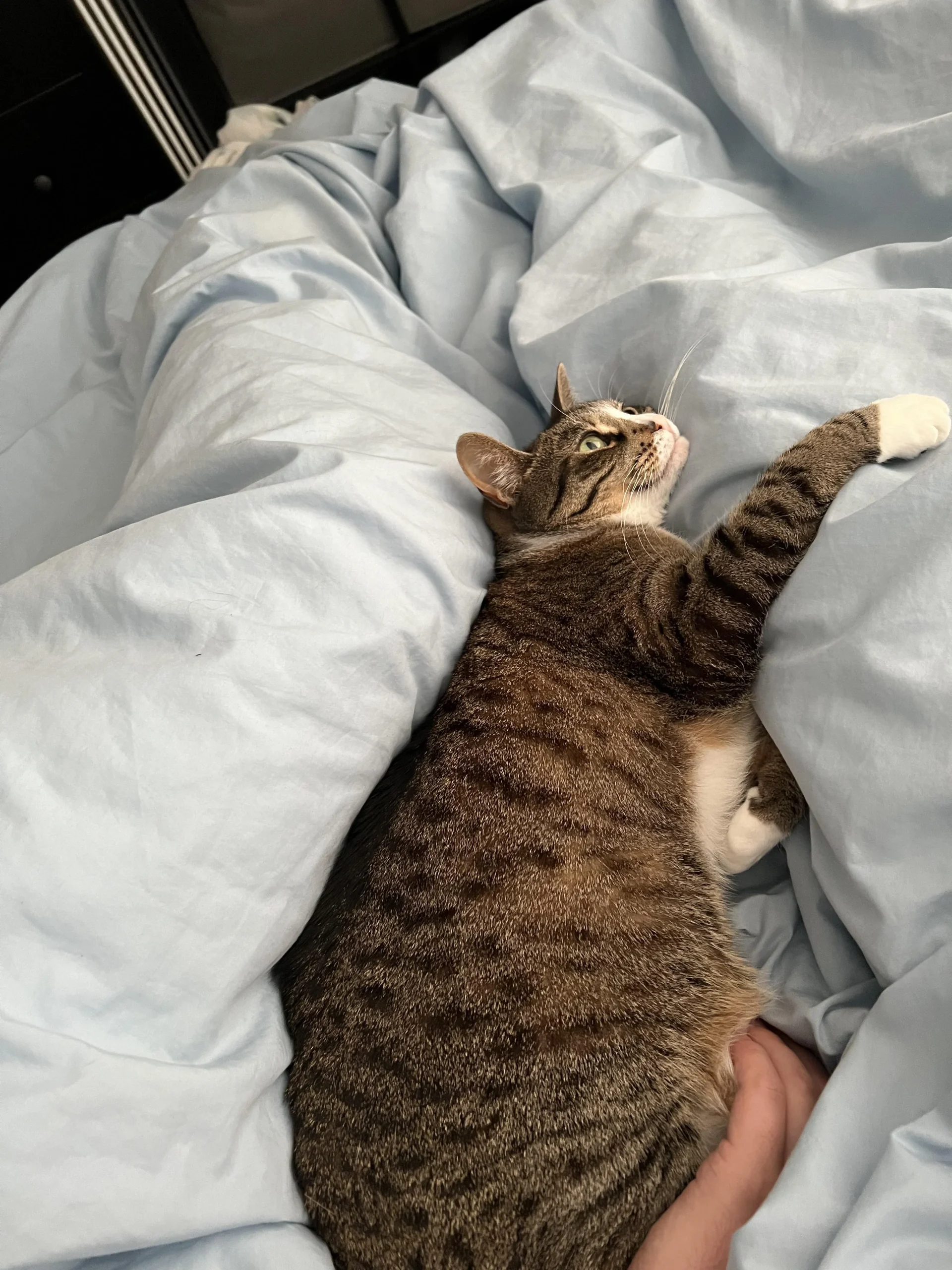
Why does my cat sleep at my feet is one of the most searched feline behavior questions among cat owners — and it deserves a real, detailed answer.
If you have ever woken up to find your cat curled at the end of the bed right by your ankles, you already know the feeling.
It looks simple, maybe even random. But cat behavior experts agree: nothing a cat does during sleep is accidental.
Every spot your cat chooses carries meaning rooted in instinct, trust, warmth, and territorial communication.
Understanding How Cats Choose Where to Sleep
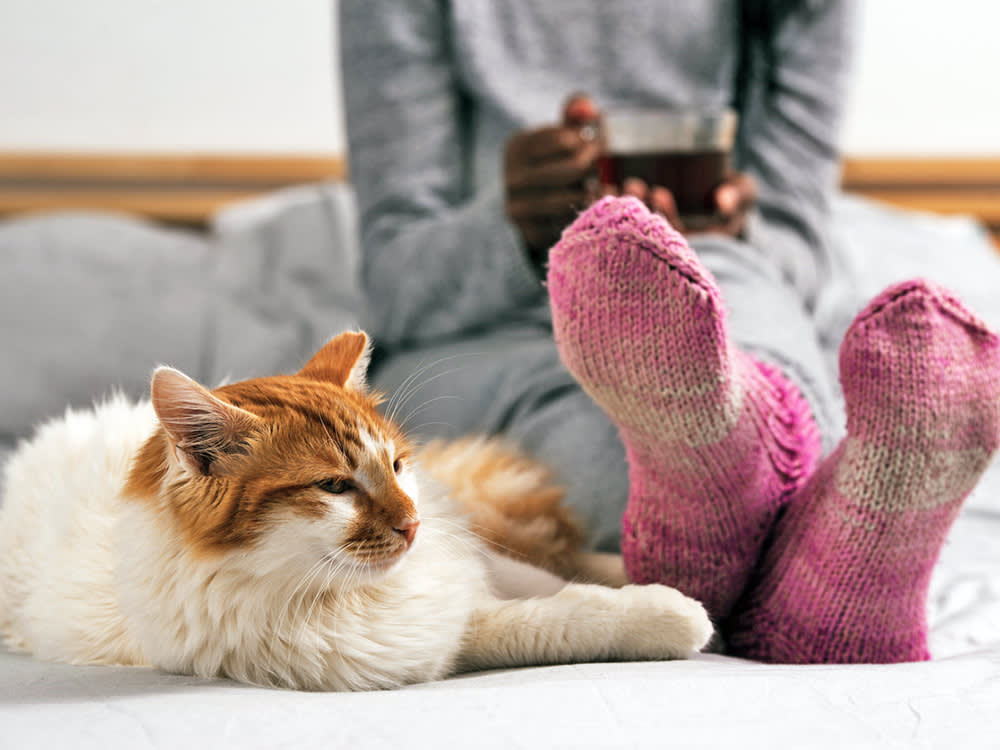
Cats sleep between 12 and 16 hours per day on average. Where they choose to sleep is not random — it is a careful calculation based on safety, warmth, scent, personal space, and social connection.
Unlike dogs, who often press themselves against their owners for maximum body contact, cats balance closeness with independence. Their sleeping spot reflects both their emotional state and their survival instincts, even in the safety of a home.
Your feet represent a very specific set of qualities: warmth, stability, familiar scent, and proximity to a trusted human — all without the disruption of your restless upper body. That combination is exactly what a cat looks for in a perfect sleep spot.
The Main Reasons Your Cat Sleeps at Your Feet
Feeling Safe and Secure
Cats are both predators and prey animals. Even in a completely safe home, their instinct to choose a secure sleeping location never fully switches off.
Sleeping at your feet gives your cat a strategic position. They are close enough to feel protected by your presence but positioned where they can monitor the room, detect approaching movement, and access an escape route quickly if needed.
Your cat does not sleep next to just anyone. The fact that they choose your feet means they see you as part of their safety — a trusted presence that allows them to lower their guard enough to rest.
Deep Trust and Emotional Bond
A cat sleeping at your feet is one of the clearest signs of trust in feline behavior. Cats are highly selective about where and with whom they sleep because sleep is their most vulnerable state.
Choosing to sleep near you — even at your feet rather than pressed against you — signals that your cat feels completely comfortable in your presence. Feline behavior researchers describe this as co-sleeping behavior that reinforces emotional attachment between cats and their owners.
The choice to stay at your feet rather than sleeping alone in another room is a quiet but meaningful declaration. Your cat has decided that you are part of their safe world.
Warmth and Temperature Regulation
Cats are naturally drawn to warmth. They seek out sunny windowsills, warm laundry piles, radiators, and heated surfaces throughout the day — and your feet are no different.
Even during sleep, your feet emit a steady, consistent source of warmth that your cat finds deeply appealing. This ties back to kittenhood, when cats huddled together with their mother and siblings for warmth and physical comfort.
The soft texture of blankets and bedding adds another layer of appeal. Warmth, softness, and familiar scent all combine at the foot of the bed into what is, from your cat’s perspective, an irresistible sleeping environment.
Territorial Scent Marking
Cats communicate through scent in ways that humans rarely notice. When your cat sleeps at your feet, they are not only absorbing your scent — they are also leaving their own scent behind in the same spot.
This scent mixing is a form of territorial bonding. Your cat is essentially marking you as part of their social group, reinforcing the idea that you belong together. According to feline behavior research, this scent-based communication is one of the primary ways cats signal trust and affiliation with the people they live with.
In multi-cat households, this behavior can also serve as a subtle signal to other cats that this particular human belongs to them — less a display of dominance, and more a quiet declaration of connection.
Survival Instinct and Escape Access
Cats retain strong survival instincts inherited from their wild ancestors. In the wild, a cat sleeping in an exposed location was a cat in danger. Choosing a sleep position with a clear exit was a matter of life and death.
Sleeping at your feet places your cat at the edge of the bed — the position closest to the floor and the fastest exit point. If something startles them in the night, they can launch off the bed and move within seconds.
This is not a sign of anxiety in a healthy, well-adjusted cat. It simply reflects the fact that even the most pampered house cat carries this deep biological programming about where it is safe to close its eyes.
Respecting Personal Space While Staying Close
Cats value independence alongside companionship. Sleeping directly on your chest or face carries a higher social intensity than sleeping at your feet — and many cats deliberately choose the lower-intensity option.
Your feet allow your cat to be near you without the disruption of your arms moving, your breath on their face, or the higher levels of body heat generated by your torso. It is proximity on their own terms.
This behavior reflects one of the most defining characteristics of cat personality: the ability to show deep affection while maintaining autonomy. Your cat is saying “I want to be with you” and “I want my own space” at the same time — and your feet make both possible simultaneously.
Routine and Habit
Cats are creatures of habit. Once your cat establishes a sleeping routine, they tend to stick to it with remarkable consistency. If your cat started sleeping at your feet and found it comfortable, safe, and warm, they will return to that exact spot night after night.
This routine reinforces their sense of stability and emotional security. A predictable sleeping arrangement signals to your cat that all is well in their world. Cats that are anxious or unsettled often change sleeping spots frequently — a cat that returns to the same place every night is generally a content and secure animal.
Bonding Behavior Rooted in Kittenhood
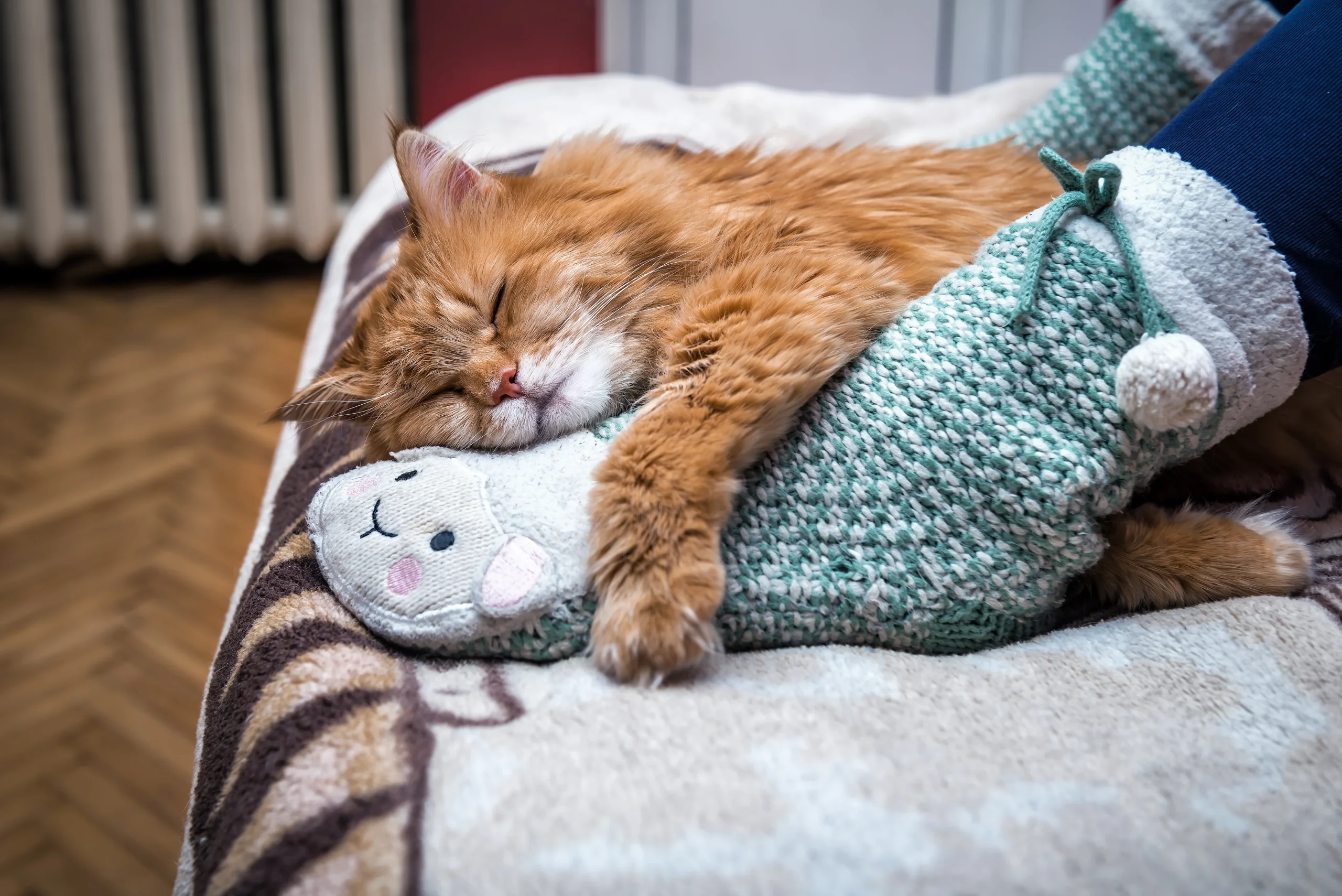
Kittens sleep in piles with their mother and siblings. Physical closeness during sleep is one of the earliest forms of comfort and security they experience.
When your adult cat chooses to sleep at your feet, they are in part reenacting this early social behavior. You have become their safe companion — the equivalent of their littermate or their mother — and sleeping near you recreates that foundational sense of belonging and warmth.
This is why sleeping together strengthens the human-cat bond over time. Shared sleep is not passive; it is an active expression of social connection for your cat.
What Your Cat’s Sleep Position at Your Feet Tells You
The exact way your cat positions itself at your feet adds additional layers of meaning to the behavior.
| Sleep Position | What It Likely Means |
|---|---|
| Curled in a tight ball | Seeking warmth, feeling slightly cautious, self-contained comfort |
| Stretched out loosely | Fully relaxed, very comfortable, high trust in the environment |
| Belly exposed upward | Extreme trust — the most vulnerable position a cat can adopt |
| Facing away from you | Watching the room, acting as a guard, surveying surroundings |
| Pressed against your ankles | Seeking maximum closeness, strong bonding behavior |
| Lightly touching your feet | Maintaining connection without full physical contact |
| Tucked between your legs | Very high trust and warmth-seeking, feeling deeply secure |
Cat Sleeping at Feet vs. Other Sleeping Spots
Understanding why your cat chooses your feet over other spots helps clarify what the behavior truly means.
Feet vs. Head
A cat that sleeps near your head tends to seek maximum scent closeness and emotional intensity. Your breath, hair, and face carry some of the strongest olfactory signals in your body.
Cats that prefer your head are often very deeply bonded and slightly more demanding of closeness. Cats that prefer your feet balance affection with independence, making feet-sleeping one of the most common patterns in cats that are securely attached but respectful of boundaries.
Feet vs. Chest or Stomach
Sleeping on your chest or stomach places the cat at the center of your body warmth and heartbeat. This is a highly intimate position that many cats reserve for moments of peak bonding or when they are seeking reassurance.
Feet-sleeping tends to be the default for confident, independent cats who love you but do not need constant reassurance. Chest-sleeping often indicates a cat that wants more emotional closeness in that particular moment.
Feet vs. Sleeping Alone
A cat that chooses to sleep with you rather than alone anywhere in the house is expressing a preference for your company. Even if they are not snuggled against you, their presence in the same sleeping space is a statement about trust.
Cats that sleep entirely alone tend to be more independent by temperament or may not yet have fully bonded with their owner. A cat that reliably sleeps at your feet every night has made a clear choice — you are their preferred social companion during rest.
What Different Cat Breeds Do
Some breeds are more naturally inclined toward sleeping close to their owners than others. Temperament and breed characteristics influence how often this behavior occurs.
| Cat Breed | Tendency to Sleep at Feet |
|---|---|
| Ragdoll | Very high — extremely people-oriented, follows owners everywhere |
| Maine Coon | High — loyal and dog-like in bonding behavior |
| Siamese | High — craves closeness and social interaction at all times |
| Burmese | High — affectionate and physically attached to their owners |
| Scottish Fold | Medium-High — calm and attached but not overly demanding |
| Bengal | Medium — energetic but can be very bonded to a specific person |
| Russian Blue | Medium — selective, but deeply loyal to their chosen person |
| Persian | Medium — prefers comfort and warmth, will often settle near feet |
| Norwegian Forest Cat | Medium — independent but affectionate on their own terms |
| Domestic Shorthair | Varies — personality-driven more than breed-driven |
Regardless of breed, any cat that consistently chooses to sleep at your feet is displaying a genuine behavioral signal of comfort and trust.
When Cats Sleep at Your Feet More Than Usual
A sudden increase in feet-sleeping behavior can be meaningful. Cats often seek more closeness when they are experiencing changes in their environment or emotional state.
Stress or Environmental Change
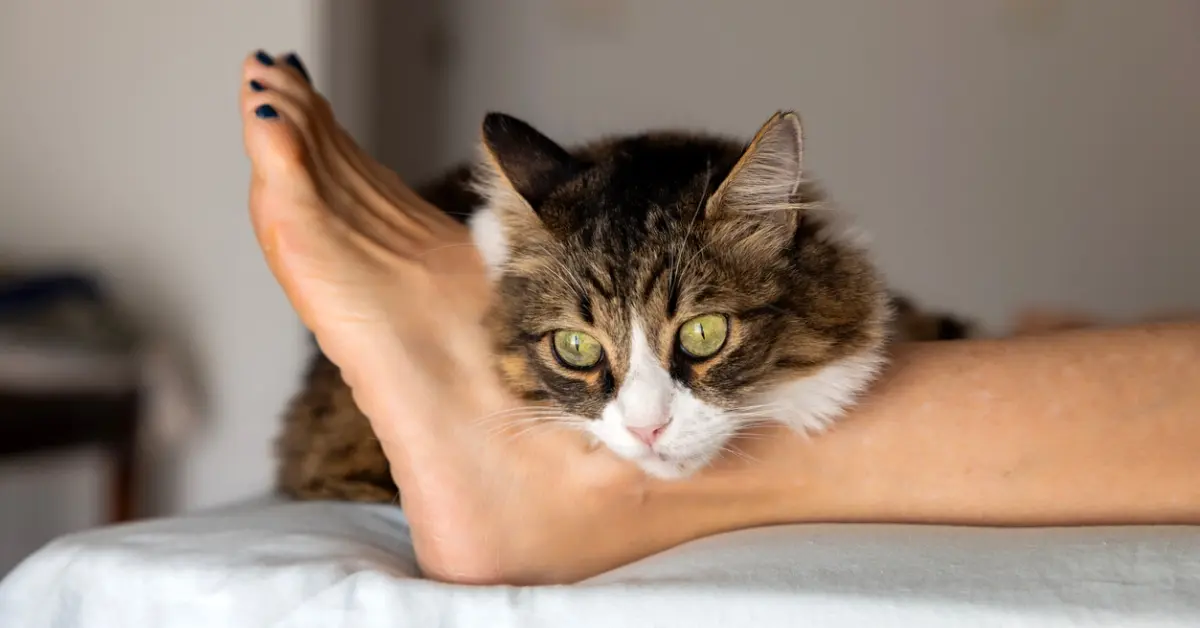
A new pet, a new person in the home, a house move, or even rearranged furniture can make your cat seek more reassurance through proximity. If your cat is suddenly sleeping at your feet more than usual, check whether something in their environment has recently changed.
Providing extra playtime, maintaining routine, and giving your cat access to elevated safe spaces can help reduce anxiety-driven closeness-seeking.
Illness or Discomfort
Cats sometimes seek out their owner more when they are not feeling well. If your cat’s increased feet-sleeping is accompanied by changes in appetite, litter box habits, energy levels, coat condition, or general demeanor, a veterinary visit is warranted.
Cats are skilled at hiding illness, and behavioral changes are often the first visible signal that something is physically wrong. Pay attention to any sudden shifts in sleeping habits alongside other symptoms.
Cold Weather
Cats instinctively seek more warmth in colder conditions. During winter months or in air-conditioned rooms, your cat may migrate toward your feet more frequently simply because you are the warmest available surface.
If this is the cause, providing a self-warming cat bed or a heated blanket nearby can give your cat a comfortable alternative while keeping everyone’s sleep undisturbed.
Seasonal and Hormonal Cycles
Unspayed females and unneutered males can show behavioral changes including altered sleeping patterns during reproductive cycles. If your cat is not spayed or neutered, this may be a factor worth discussing with your vet.
How to Respond to Your Cat Sleeping at Your Feet
If You Love It
If having your cat sleep at your feet is something you enjoy, lean into building the routine. A consistent bedtime, the same sleeping environment, and positive associations make your cat more likely to settle quickly and sleep through the night without disruption.
Avoid responding to attention-seeking behavior during the night, as this trains cats to expect interaction during sleep hours. Letting them settle at your feet without engaging too much keeps the routine calm and predictable for both of you.
If It Disrupts Your Sleep
Some cats move around, knead, or shift positions frequently. If your cat’s foot-sleeping habit is causing sleep disruption for you, there are gentle ways to redirect without damaging the bond.
Provide an equally appealing sleeping alternative right next to your bed — a warm cat bed placed at floor level, a heated pad, or a soft blanket that carries your scent. Position it as close to your feet as possible to make the transition easier.
Never punish your cat for sleeping at your feet. Use encouragement and positive association to redirect them to the new spot over several nights.
If Your Cat Keeps Returning
Cats that return to your feet after being moved are expressing a strong preference, not disobedience. Consistent, gentle redirection combined with a comfortable alternative spot usually achieves a workable compromise within one to two weeks.
Avoid repeated physical removal, as this can create stress and anxiety. Instead, each time your cat settles in the new spot, offer calm praise or a small treat to reinforce the alternative location positively.
Signs This Behavior Reflects a Healthy Bond
Cats sleeping at your feet regularly is generally a very positive behavioral indicator. Here is what this behavior typically confirms about your relationship with your cat.
| Behavioral Signal | What It Confirms |
|---|---|
| Returns to your feet every night | Strong routine, emotional security, consistent trust |
| Purrs when settling at your feet | Contentment and physical comfort |
| Stays through the night without moving | Deep relaxation, full trust in the sleep environment |
| Follows you to bed when you go | Sees you as their social companion and safe anchor |
| Kneads before settling | Comfort-seeking behavior rooted in positive kittenhood association |
| Stretches against your feet | Fully relaxed, maximum trust, very bonded |
Is It Safe to Let Your Cat Sleep at Your Feet
For most people, having a cat sleep at the foot of the bed is completely safe and carries no health risks beyond the possibility of mild sleep disruption from movement.
People with severe allergies to cats should take precautions including keeping the bedroom door closed and using allergen-reducing bedding. Those with compromised immune systems should consult a doctor about co-sleeping arrangements with pets.
For healthy adults and children who enjoy it, cat foot-sleeping is a harmless and often deeply comforting nighttime routine that strengthens the human-feline bond over time.
Frequently Asked Questions (FAQs)
Why does my cat sleep at my feet every night without fail?
Your cat has established a routine — your feet offer consistent warmth, your scent, and a sense of safety. Once cats find a spot that meets all their comfort requirements, they return to it nightly without question.
Does my cat sleeping at my feet mean they love me?
Yes, it is a genuine sign of affection and trust. Cats only sleep in vulnerable positions near people they feel completely safe with — choosing your feet is a quiet but meaningful expression of love and bonding.
Why does my cat sleep at my feet and not my partner’s?
Cats typically bond most strongly with the person who feeds them, plays with them most, or whose scent and energy they find most familiar and calming. Your cat has simply decided you are their person.
Is my cat protecting me when it sleeps at my feet?
Partially, yes. Cats positioned at your feet have a full view of the room and can detect approaching threats. Some feline behaviorists describe this as a guarding instinct — your cat watches over you while you rest.
Why did my cat suddenly start sleeping at my feet?
A sudden change in sleeping location often signals a change in environment, a stressor in the home, cold weather, or an early sign of illness. Monitor for other behavioral changes and consult your vet if anything else seems off.
Should I move my cat if they sleep at my feet and disturb me?
Yes, it is fine to gently relocate your cat to an alternative warm spot nearby. Use a comfortable cat bed close to your feet, be consistent, and use positive reinforcement so they adjust without stress.
What does it mean when my cat sleeps between my legs?
Sleeping between your legs signals an even higher degree of trust and warmth-seeking. Your legs form a natural enclosed space that feels safe and den-like — cats that do this are deeply relaxed and bonded to you.
Why does my cat knead before sleeping at my feet?
Kneading is a comfort behavior rooted in kittenhood — kittens knead their mother while nursing. When your adult cat kneads at your feet before settling, they are experiencing deep comfort and contentment in that moment.
My cat only sleeps at my feet in winter — why?
Temperature is a major driver. In colder months your feet become an even more attractive heat source. This seasonal pattern is completely normal and simply reflects your cat’s natural temperature-regulation instincts kicking in.
Can letting my cat sleep at my feet cause health problems?
For most healthy adults, no. Light sleep disruption is the most common issue. People with cat allergies or compromised immune systems should speak with a doctor, but for the general population co-sleeping with a cat at the foot of the bed is safe.
Conclusion
Why does my cat sleep at my feet comes down to one powerful truth — your cat has chosen you.
Every reason behind this behavior, from warmth and scent to survival instinct, territorial bonding, and deep emotional trust, points back to the same conclusion: your cat sees you as safe, familiar, and worth staying close to even during their most vulnerable hours.
Cats do not sleep at just anyone’s feet. They choose the people they trust most, the places that feel most secure, and the spots that best reflect their instincts. Whether your cat has done this for years or just started the habit, it is a genuine behavioral signal that your bond is strong.
Understanding what it means helps you appreciate those quiet nighttime moments for exactly what they are — your cat’s most honest expression of love and trust in 2026.