Why Does My Cat Sleep by My Feet? What It Means 2026

Why does my cat sleep by my feet almost every single night, even when there’s a cozy bed or blanket right next to me? It’s one of the most common and endearing feline habits owners notice.
Cats are natural predators who are also prey animals, which means they choose sleeping spots that balance warmth, safety, and independence all at once. Your feet happen to check every one of those boxes.
Quick Overview: Why Does My Cat Sleep by My Feet?
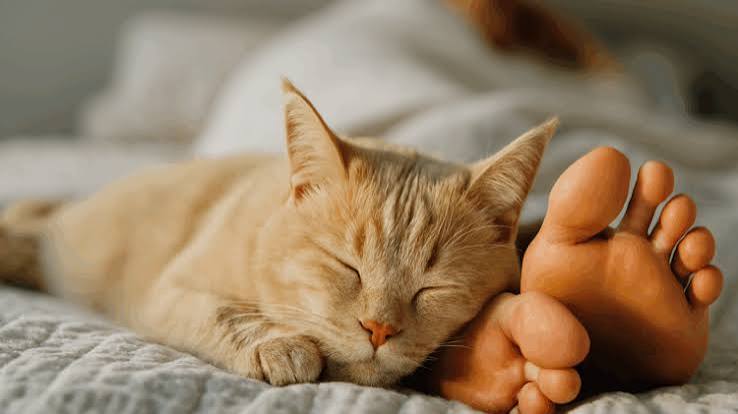
Cats sleeping at your feet usually comes down to a mix of warmth, safety, routine, and a desire for closeness without full physical contact.
Unlike dogs, cats balance affection with independence, so sleeping near you rather than directly on your chest often reflects their comfort level.
This spot also offers a strategic advantage, letting your cat stay close while keeping a clear escape route if something startles them.
Table: Main Reasons Cats Sleep at Your Feet
| Reason | What It Reflects |
|---|---|
| Warmth | Feet radiate steady, gentle body heat |
| Safety | Feels protected near a trusted person |
| Routine and consistency | Cats favor a stable sleeping spot |
| Personal space | Closeness without being disturbed |
| Escape route | Easy vantage point if startled |
| Bonding and trust | Comfort with your presence overnight |
Warmth: A Cat’s Favorite Comfort
One of the simplest explanations for this behavior is temperature. Cats are drawn to warm, cozy spots wherever they can find them.
Your feet emit a steady, gentle source of heat throughout the night, which mimics the soothing warmth cats naturally seek out for relaxation.
This is especially true during colder months, when a warm foot area becomes noticeably more appealing than a cooler spot elsewhere in the room.
Safety and a Cat’s Survival Instincts
Cats are both predators and prey animals, which means their instincts push them toward finding safe, defensible sleeping spots even indoors.
Sleeping at your feet gives them a clear vantage point of the room, often including a view of the doorway, which helps them feel more secure.
Positioning themselves this way allows cats to rest while still maintaining awareness of their surroundings, a habit rooted deep in their evolutionary history.
Personal Space Without Full Isolation
Cats value independence, and sleeping at your feet lets them stay close without being disturbed by your movements during the night.
Unlike your upper body, which shifts more as you sleep, your feet tend to stay relatively still, offering a calmer resting spot.
This balance of closeness and independence is often exactly what cats are looking for when choosing where to settle down for the night.
Trust and Emotional Bonding
Cats don’t show affection the same way dogs do, but choosing to sleep near you is one of their clearest signs of trust.
By resting at your feet rather than avoiding you entirely, your cat is signaling that they feel safe and comfortable in your presence.
This behavior often strengthens over time as your bond deepens, especially in cats that were initially shy or cautious around people.
Routine and Consistency
Cats thrive on predictable routines, and a stable sleeping arrangement helps reinforce their sense of security throughout the day and night.
If your cat sleeps at your feet every night, you’ve essentially become part of their established routine and comfort zone.
A cat that returns to the same spot repeatedly may simply have found what works best for their comfort, safety, and warmth all at once.
Table: Common Cat Sleeping Spots and Their Meaning
| Sleeping Spot | Likely Meaning |
|---|---|
| At your feet | Warmth, safety, independence with closeness |
| On your chest | Strong bond, seeking direct warmth and comfort |
| Near your head | Wants easy access to wake you for needs |
| Curled in a tight ball | Conserving body heat, feeling slightly cautious |
| Fully stretched out | Feels very relaxed and secure |
| Hidden or tucked away | May be feeling anxious or unwell |
Territorial Behavior and Marking
Cats are naturally territorial, and sharing your bed is one way they reinforce their claim over a shared space.
Sleeping at your feet allows your cat to mark the bed with their scent while still staying close to their trusted person.
This territorial instinct doesn’t conflict with affection. In fact, the two often work together in a cat’s decision about where to rest.
Why Some Cats Prefer Feet Over Laps or Chests
Not every cat enjoys direct physical contact for extended periods, even if they’re affectionate in other ways throughout the day.
Sleeping at your feet offers a middle ground, letting your cat stay physically connected without feeling fully confined or restricted in movement.
Cats that value a bit more personal space often gravitate toward this spot specifically because it avoids the closeness of lap or chest sleeping.
What It Means When Your Cat Suddenly Changes Spots
If your cat usually sleeps near your head or chest but suddenly shifts to your feet, this alone typically isn’t cause for concern.
Cats often switch sleeping spots based on temperature changes, mood, or simply wanting a different vantage point for the night.
However, a sudden and lasting change paired with other new behaviors, like hiding or reduced appetite, is worth monitoring more closely.
Table: Sudden Sleeping Changes and What to Watch For
| Change Observed | Likely Explanation |
|---|---|
| Moved from head to feet occasionally | Normal variation, temperature or mood |
| Consistently avoiding usual spot | Possible discomfort or environmental change |
| Change paired with hiding | Worth monitoring for stress or illness |
| Change paired with appetite loss | Recommend a veterinary checkup |
| Change during a household disruption | Likely adjusting to new stress or noise |
Does Sleeping at Your Feet Mean Your Cat Loves You?
While it’s hard to know exactly what’s going on in a cat’s mind, choosing to sleep near you is widely seen as a sign of trust and affection.
Cats that feel unsafe or unfamiliar with a person are unlikely to choose such a vulnerable position as sleep anywhere close to them.
Many veterinarians and behaviorists agree that consistent feet-sleeping reflects a genuine bond, even if it looks different from more overt affection like cuddling.
How Cat Personality Affects Sleeping Preferences
Just like people, cats have individual personalities that shape their sleeping habits, including where and how close they choose to rest.
More independent cats may prefer feet-sleeping specifically because it avoids the closeness of chest or lap sleeping while still staying nearby.
More affectionate or clingy cats may alternate between your feet, chest, or even directly on your pillow depending on their mood that night.
Multi-Cat Households and Feet Sleeping
In homes with multiple cats, sleeping at your feet can also reflect a cat’s attempt to claim a low-conflict, easily accessible spot.
Cats that are lower in the household hierarchy may specifically choose your feet to avoid competition for more coveted spots like your chest or pillow.
Observing how cats rotate sleeping spots in a multi-cat home can offer subtle clues about their social dynamics with each other.
Table: Feet Sleeping in Multi-Cat Homes
| Scenario | Possible Explanation |
|---|---|
| One cat always at feet, another on chest | Reflects individual comfort or hierarchy |
| Cats rotating positions nightly | Normal variation in preference |
| One cat avoiding feet spot entirely | May prefer a different secure location |
| Increased competition for feet spot | Sign of strong preference among multiple cats |
Making the Arrangement More Comfortable for Both of You
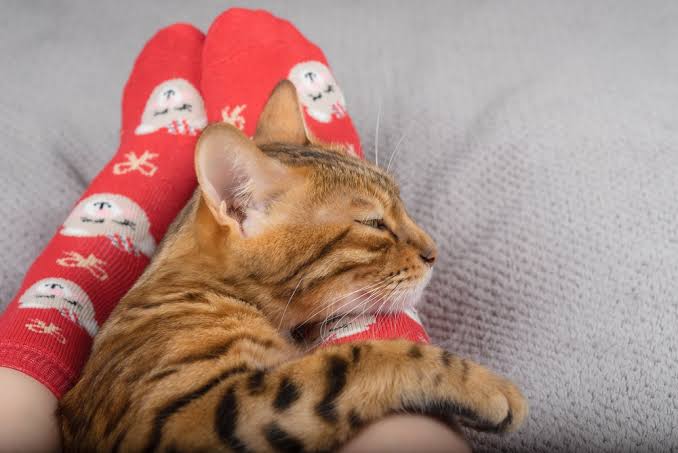
Adding a soft blanket or small cushion near the foot of the bed can make the spot even more appealing and comfortable for your cat.
If your cat’s weight or movement disrupts your sleep, a nearby cat bed placed just beside your feet offers a compromise both of you can enjoy.
Maintaining a consistent bedtime routine helps reinforce this comfortable sleeping arrangement without introducing unnecessary stress or disruption for your cat.
When Feet Sleeping Might Signal a Problem
Occasionally, a cat may choose your feet specifically because a more central spot like the chest feels physically uncomfortable due to pain or illness.
Older cats with arthritis may prefer feet-level sleeping since it requires less jumping or climbing compared to settling on a raised pillow or chest area.
If you notice signs of stiffness, reluctance to jump, or other new symptoms alongside a sleeping change, a veterinary visit is a reasonable next step.
Table: When to Consult a Veterinarian
| Situation | Recommended Action |
|---|---|
| Sudden, lasting change in sleeping spot | Monitor for other new symptoms |
| Reduced mobility or reluctance to jump | Veterinary exam for joint pain |
| Sleeping change with appetite loss | Veterinary exam recommended |
| Sleeping change with excessive hiding | Discuss with vet or behaviorist |
| No other symptoms present | Likely normal preference shift |
Building a Stronger Nighttime Bond With Your Cat
Spending calm, quiet time with your cat before bed helps reinforce the trust that leads to consistent, comfortable sleeping arrangements.
Avoiding sudden movements or startling your cat during the night helps maintain the sense of safety that draws them to your feet in the first place.
Over time, this consistency often deepens your cat’s overall comfort and connection with you, both during the day and through the night.
Kittens vs Adult Cats: Sleeping Habits Compared
Kittens often sleep in tighter clusters near warmth sources, including feet, since they haven’t yet developed the confidence to claim more open spots.
Adult cats tend to have more established preferences, often settling into the same sleeping spot night after night once they feel secure in their environment.
Senior cats may shift their sleeping habits again, often favoring lower, easier-to-reach spots like the foot of the bed as mobility changes with age.
How Cat Sleep Cycles Influence Sleeping Location
Cats sleep significantly more than humans, often between 12 and 16 hours a day, cycling through light dozing and deeper rest throughout that time.
Because much of this sleep is light rather than deep, cats remain semi-alert even while resting, which explains their preference for spots with a clear view of the room.
Your feet, positioned at the edge of the bed, naturally support this instinct by offering both comfort and an easy line of sight toward the door.
Seasonal Changes in Sleeping Preferences
During colder months, cats are especially drawn to warm spots, making your feet an even more attractive choice compared to open floor space.
In warmer weather, some cats may shift away from feet-sleeping in favor of cooler surfaces like tile floors or spots near a fan or air vent.
Noticing these seasonal shifts can help you understand changes in sleeping behavior without assuming something is wrong with your cat’s health or mood.
Comparing Cat and Dog Sleeping Behavior
Dogs often seek constant physical contact and may sleep pressed directly against their owners throughout the night without much variation.
Cats, by contrast, balance affection with independence, which is why they frequently choose nearby but not fully touching spots like the foot of the bed.
This difference reflects each animal’s evolutionary background, with cats retaining stronger instincts toward personal space even within a trusted home environment.
Common Myths About Cat Sleeping Behavior
One common myth is that a cat sleeping at your feet rather than your chest means they love you less. In reality, both spots can reflect deep trust.
Another myth suggests cats choose sleeping spots purely at random. In truth, warmth, safety, and routine all play a measurable role in these decisions.
Some owners also assume a change in sleeping spot always signals illness. Most of the time, it simply reflects a shift in temperature, mood, or household routine.
Encouraging Healthy Sleep Habits for You and Your Cat
Keeping a consistent bedtime and wake time helps both you and your cat settle into a predictable, comfortable nightly routine.
Providing a warm blanket or dedicated cat bed near your feet can satisfy your cat’s preference for warmth without disrupting your own sleep quality.
Over time, small adjustments like these can make shared sleep more comfortable for both you and your feline companion.
Why Location in the Bed Matters to Cats
Cats are deliberate about where they position themselves, since sleep leaves them temporarily vulnerable even in a safe home environment.
The foot of the bed often provides a slightly elevated, stable surface with a clear view of the room, making it a practical choice beyond just comfort.
This positioning allows cats to balance the benefits of closeness to their owner with the instinctive need to monitor their surroundings while resting.
Other Common Places Cats Choose to Sleep
Beyond feet, chests, and heads, many cats also favor windowsills, closets, or high shelves depending on their individual comfort preferences.
Warm laundry piles, sunny spots on the floor, and enclosed boxes are other frequent favorites that reflect a cat’s love of warmth and security.
Comparing these alternate spots to feet-sleeping can offer additional insight into what your specific cat values most: warmth, height, enclosure, or closeness to you.
The Role of Scent and Familiarity
Cats have a strong sense of smell and often gravitate toward areas that carry their owner’s scent most strongly, including bedding and pillows.
Since feet and bedding closest to you carry a concentrated version of your scent, this familiarity likely reinforces your cat’s choice to sleep in that spot.
Over time, this scent association can deepen the comfort and security your cat feels, further reinforcing feet-sleeping as their preferred nightly routine.
What Behaviorists Say About This Habit
Certified cat behaviorists generally agree that feet-sleeping reflects a combination of instinctive safety behavior and genuine emotional bonding with an owner.
Veterinarians often reassure owners that this behavior, while sometimes puzzling, is completely normal and doesn’t require any special intervention in most cases.
Understanding these expert perspectives can help owners feel more confident interpreting their own cat’s unique sleeping habits without unnecessary worry.
A Simple Way to Appreciate the Habit
Rather than questioning whether feet-sleeping means less affection, it helps to see it as one of many valid ways cats express comfort and trust.
Every cat has its own combination of preferences shaped by personality, past experiences, and even the specific layout of your bedroom.
Recognizing this individuality allows owners to enjoy the behavior for what it is: a small, consistent sign that your cat feels at home with you.
Frequetky Asked Questions (FAQs)
1. Why does my cat sleep at my feet instead of next to me?
Sleeping at your feet offers warmth and closeness without full physical contact. It also gives your cat a stable, less disruptive spot to rest.
2. Does my cat sleeping at my feet mean they trust me?
Yes, choosing a vulnerable position like sleep near you generally reflects trust and a sense of safety in your presence.
3. Why did my cat suddenly start sleeping at my feet?
This is often just a shift in preference based on temperature, mood, or routine. It’s usually not a cause for concern.
4. Is it bad if my cat won’t sleep near my feet anymore?
Not necessarily. Cats naturally rotate sleeping spots, though a lasting change paired with other symptoms is worth monitoring.
5. Why does my cat prefer my feet over my lap?
Sleeping at your feet offers closeness with more independence and movement, which some cats prefer over full physical contact.
6. Can arthritis affect where my cat chooses to sleep?
Yes, older cats with joint pain may prefer feet-level sleeping since it avoids jumping onto higher, less accessible spots.
7. Do all cats sleep at their owner’s feet?
No, sleeping preferences vary by personality. Some cats prefer chests, heads, or entirely separate spots instead.
8. Should I move my cat if they sleep at my feet?
It’s usually fine to let them stay unless it disrupts your sleep. A nearby cat bed can offer a comfortable compromise.
9. Does sleeping at my feet mean my cat is guarding me?
It can reflect a protective, secure instinct, though warmth and comfort are usually the more significant factors involved.
10. When should I worry about a change in my cat’s sleeping habits?
Worry if the change comes with hiding, appetite loss, or reduced mobility. Otherwise, it’s typically a normal preference shift.
Conclusion
Cats sleeping at your feet usually comes down to a simple, comforting mix of warmth, safety, and trust. This spot offers steady body heat, a clear vantage point, and closeness without the full physical contact some cats prefer to avoid.
For most owners, this behavior is a heartwarming sign of a strong bond, even if it looks different from more obvious affection like cuddling on your chest. Sudden shifts in sleeping spot are usually harmless, though pairing changes with other new symptoms is worth a closer look.
Understanding why your cat chooses your feet can deepen your appreciation for this small, nightly ritual. It’s a quiet reminder that your cat feels safe, comfortable, and connected to you, even while fast asleep beside your feet each night. Paying attention to this simple habit is one more way to strengthen the everyday bond you share with your feline companion.