Why Is Uhoebeans Software Update So Slow? Quick Guide 2026

Why is Uhoebeans software update so slow is one of the most searched questions among users of this platform in 2026.
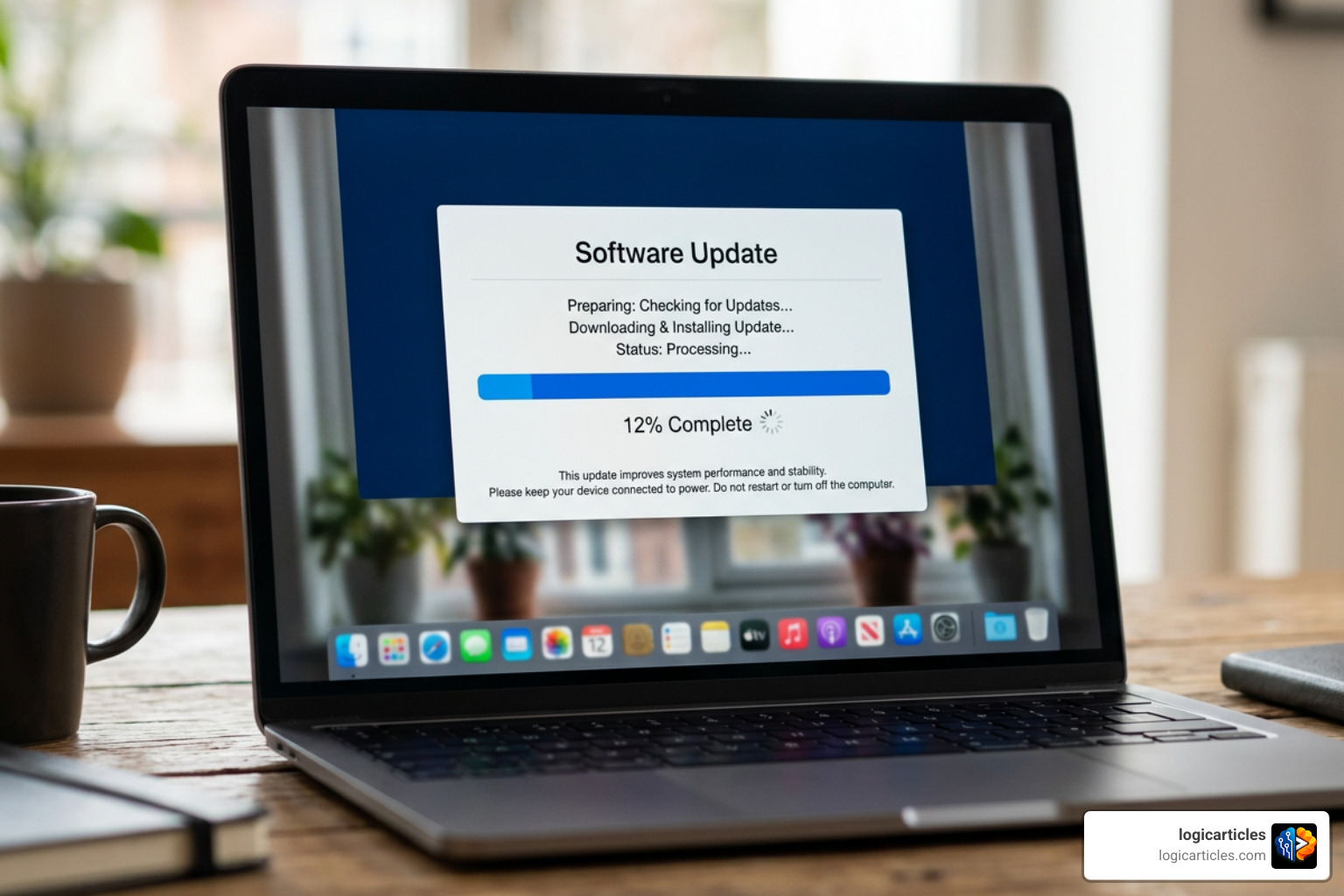
If you have ever hit the update button and watched the progress bar crawl from 5% to 10% while your workday grinds to a halt, you are not alone. Thousands of users face this frustration every time a new version rolls out.
The good news is that a slow Uhoebeans update is almost never a sign of broken software.
Why Is Uhoebeans Software Update So Slow

Uhoebeans is an all-in-one SaaS business management platform built for teams of all sizes. It combines task management, CRM pipelines, inventory tracking, real-time analytics, workflow automation, and team collaboration under a single roof.
Because so many business functions live inside one platform, companies depend on it daily. That daily dependency also means updates carry a heavier load than a typical single-function app.
Regular updates are not optional for Uhoebeans. Every new release delivers security patches, bug fixes, performance improvements, and new features that keep the platform competitive and safe. Skipping updates creates security vulnerabilities and compatibility issues that get harder to fix over time.
How the Uhoebeans Update System Works
Uhoebeans uses a cloud-based update delivery system. When you click the update button, your device connects to Uhoebeans servers, downloads compressed update files, verifies their integrity, and installs them step by step.
This process is designed for stability and safety, not raw speed. Every file is verified before and after download to prevent corrupted installations that could break a business workflow.
That verification process, combined with the size of modern update packages, is one of the core reasons why the Uhoebeans software update feels slow compared to a simple app download.
The Main Reasons Why Uhoebeans Software Update Is So Slow
There is rarely one single cause. Most slow updates result from several technical factors occurring at the same time. Here is a complete breakdown of every known cause.
Large Update Package Size
Modern Uhoebeans updates are not small files. Each new release bundles AI improvements, new UI elements, expanded analytics modules, enhanced security layers, and new automation features.
A single update package can range from several hundred megabytes to multiple gigabytes. Even with a fast internet connection, downloading that volume takes meaningful time — especially if the connection fluctuates at all during the transfer.
Larger packages also require more processing time during the installation and file verification phases after the download finishes. This is unavoidable when the software is actively adding significant new capabilities.
Server Overload During Peak Hours
When a new Uhoebeans update is released, thousands of users worldwide click the update button at nearly the same time. This creates a massive traffic spike on the company’s distribution servers.
Think of it as a single checkout lane at a supermarket suddenly handling hundreds of customers at once — everyone slows down together. Downloading during peak hours, especially on weekday mornings and early evenings, almost guarantees a slower experience.
The fix is straightforward. Server load drops significantly between midnight and 6 AM in most regions. Scheduling your update during off-peak hours is one of the most immediately effective changes you can make.
Staged Rollout: You May Be in a Later Batch
Uhoebeans does not release updates to all users simultaneously. It uses a staged rollout strategy — pushing the update to a small group of users first, monitoring for bugs, then gradually expanding to the full user base.
If your account is in a later rollout batch, the delay feels like slowness but is actually a deliberate queue. Restarting the app repeatedly or force-checking for updates will not help here. You are simply waiting for your batch to be reached.
This approach protects all users. If a critical bug is discovered in an early batch, Uhoebeans can pause the rollout before it affects everyone. Slower for some users, but far safer for the entire platform.
Unstable or Congested Internet Connection
Many users assume their internet is fine because video streaming or web browsing works without problems. But software updates require something different — sustained, stable, continuous data transfer.
Even small Wi-Fi dropouts during a large update force the system to pause, verify file integrity, and restart the affected download segment. This repeated verification cycle is a major hidden reason why the Uhoebeans software update feels so slow on home networks.
Other devices on your network competing for bandwidth — streaming video, downloading files, running cloud backups — all reduce the bandwidth available to the update. Switching from Wi-Fi to a wired Ethernet connection is one of the most reliable improvements you can make.
VPN Interference
If you use a VPN while updating, your internet traffic is routed through a server in a different location — sometimes on the other side of the world. This adds significant latency to every data transfer during the update.
VPNs also sometimes trigger firewall rules on the Uhoebeans update server side, causing downloads to pause or retry repeatedly. Turning off your VPN before starting the update is one of the quickest and most impactful fixes available.
A corporate VPN is especially likely to cause this problem. If you are updating on a work network, ask your IT team to whitelist the Uhoebeans update servers or switch to a direct home connection for the update.
Antivirus Real-Time Scanning
Antivirus programs run real-time scans on every file being downloaded and installed. During a large multi-gigabyte Uhoebeans update, this means the antivirus is scanning hundreds or thousands of individual files — one by one — as they arrive.
This scanning process runs simultaneously with the download and installation, competing directly for CPU and disk resources. The result is a noticeably slower update that can sometimes stall entirely if the antivirus quarantines a file it does not recognize.
Temporarily pausing real-time protection during the Uhoebeans update is a safe and effective fix. Re-enable your antivirus immediately after the update finishes.
Insufficient Disk Space
Uhoebeans requires free disk space not just for the final installed files but also for temporary files during the download and installation process. If your drive is nearly full, the installer stalls repeatedly while managing temporary storage.
A good rule to follow: keep at least 20 percent of your total drive space free at all times, especially on the drive where Uhoebeans is installed. Delete old downloads, empty the trash or recycle bin, and clear temporary system folders before starting a major update.
Outdated Device Hardware
Older devices with limited RAM and slower processors struggle specifically during the delta update stitching and file decompression phases of the Uhoebeans installation. These phases are CPU-intensive tasks.
A device running at 90 to 100 percent CPU during the update will take significantly longer to complete installation than a modern device with spare processing capacity. Closing all non-essential applications before updating frees up RAM and CPU for the update process.
Background Applications Competing for Resources

Even on a modern device, too many background applications slow the update significantly. Background processes compete for bandwidth during the download phase and for CPU and RAM during the installation phase.
Cloud sync services like Dropbox or Google Drive, scheduled antivirus scans, browser tabs, email clients, and other running apps all consume resources that the Uhoebeans updater needs. Closing unnecessary applications before clicking update consistently produces faster results.
Firewall and Corporate Network Restrictions
Overly strict corporate firewalls can block or throttle connections to Uhoebeans update servers. Businesses with aggressive network security policies may inadvertently flag the update traffic as suspicious.
If your update consistently runs much slower on your work network than on a home connection, firewall interference is likely the cause. Ask your IT department to whitelist the Uhoebeans update server domains, or perform the update on your home network.
Complete Causes and Fixes Summary Table
| Cause | Impact Level | Fix |
|---|---|---|
| Large update package size | High | No direct fix; use fast connection and be patient |
| Server overload at peak hours | High | Update between midnight and 6 AM |
| Staged rollout batch delay | High | Wait for your batch; repeated restarts do not help |
| Unstable Wi-Fi connection | High | Switch to wired Ethernet connection |
| VPN interference | High | Disable VPN before updating |
| Antivirus real-time scanning | Medium–High | Pause real-time protection during update |
| Insufficient disk space | Medium–High | Free at least 20% of your drive before updating |
| Background applications | Medium | Close all non-essential apps before updating |
| Outdated device hardware | Medium | Upgrade device or close all other programs |
| Corporate firewall restrictions | Medium | Ask IT to whitelist Uhoebeans update servers |
| Corrupted cache files | Medium | Clear app cache and retry update |
Step-by-Step Fixes to Speed Up Your Uhoebeans Update
Here is a practical checklist you can work through in order. Most users resolve the issue before reaching step five.
Fix 1: Schedule the Update for Off-Peak Hours
The single most effective change most users can make is timing. Update between midnight and 6 AM local time when server traffic is at its lowest.
Set a reminder or enable automatic overnight updates if your device settings allow it. This one change alone can cut update time by 50 percent or more during congested daytime periods.
Fix 2: Switch to a Wired Ethernet Connection
Wi-Fi connections fluctuate constantly due to interference, distance from the router, and competing devices. A wired connection eliminates all of these variables.
Plug your computer directly into your router using an Ethernet cable before starting the update. If you cannot use Ethernet, move as close to your router as possible and pause all other network activity during the update.
Fix 3: Disable Your VPN
Turn off your VPN completely before clicking the update button. Wait for the VPN to fully disconnect, then start the update.
If you are on a corporate network that requires a VPN, coordinate with your IT team. Ask them to temporarily allow direct access to Uhoebeans update servers, or perform the update from a home network where VPN use is not mandatory.
Fix 4: Pause Antivirus Real-Time Protection Temporarily
Open your antivirus settings and disable real-time scanning temporarily. Start the Uhoebeans update immediately after disabling protection.
Re-enable your antivirus as soon as the update finishes — do not leave it disabled. This fix consistently reduces update time when antivirus scanning is the bottleneck, which is common on devices with aggressive endpoint protection software.
Fix 5: Free Up Disk Space
Before updating, check how much free space you have on the drive where Uhoebeans is installed. Aim for at least 20 percent free.
Delete old files, empty the trash or recycle bin, and use your system’s disk cleanup tool to remove temporary files. On Windows, use the built-in Disk Cleanup utility. On Mac, use the Storage Management tool under About This Mac.
Fix 6: Close All Background Applications
Before starting the update, close every non-essential program running on your device. This includes browsers, email clients, cloud sync services, media players, and any other open applications.
On Windows, open Task Manager to see what is running and end unnecessary processes. On Mac, use Activity Monitor. The more free RAM and CPU you give to the update, the faster it completes.
Fix 7: Clear the App Cache
Corrupted or outdated cache files are a common hidden cause of stalled or unusually slow updates. Clearing the cache forces a clean download with no interference from old temporary data.
On Windows, clear the Uhoebeans cache folder in the AppData directory. On Mac, clear it from the Library/Caches directory. On mobile, go to your device’s application settings and select Clear Cache for the Uhoebeans app. Consult Uhoebeans’ official support documentation for platform-specific cache clearing instructions.
Fix 8: Switch to the 5 GHz Wi-Fi Band
If you are using Wi-Fi, check whether your router offers a 5 GHz band in addition to the standard 2.4 GHz band. The 5 GHz band is significantly faster for large downloads, though it has shorter range.
Connect your device to the 5 GHz band before starting the update. If your router only offers 2.4 GHz, upgrading to a dual-band router is a worthwhile investment for anyone who regularly updates large software packages.
Fix 9: Keep the Update Screen Active
Some devices throttle downloads when the updating application moves to the background. Keep the Uhoebeans update screen active and in focus during the entire process.
Avoid switching to other apps like social media, streaming services, or email while the update is running. Keeping Uhoebeans as the foreground application signals to your device that this is the current priority task.
Fix 10: Use the Manual Installer as a Last Resort
If the in-app automatic update repeatedly stalls or fails, download the manual installer directly from the official Uhoebeans website. A fresh manual installation avoids the auto-updater entirely and often resolves issues that the built-in updater cannot work around.
Make sure to back up your Uhoebeans data and settings before running a manual installation to avoid any data loss.
Why Uhoebeans Updates Are Worth the Wait
It is easy to feel frustrated during a slow update, but it helps to understand what that update is actually delivering. Skipping updates is not a solution — it creates compounding problems.
Security Patches Cannot Wait
Every Uhoebeans update includes security patches that fix known vulnerabilities. Running an outdated version leaves your business data, customer information, and workflow systems exposed to threats that have already been identified and fixed in the latest release.
Cybersecurity threats evolve constantly. Staying updated is not optional — it is a fundamental part of operating a secure business.
Bug Fixes Improve Daily Performance
Beyond security, each update fixes bugs that affect day-to-day performance. Features that run slowly, crash occasionally, or behave unexpectedly in your current version are often already resolved in the latest release.
Delaying updates means continuing to work with known problems that have already been solved.
New Features Expand What Your Team Can Do
Uhoebeans updates consistently introduce new automation tools, analytics capabilities, UI improvements, and integration options. Teams that stay current get access to these improvements immediately. Teams that fall behind miss out on productivity gains their competitors may already be using.
How Update Speed Compares Across Different Scenarios
| Scenario | Expected Update Speed | Why |
|---|---|---|
| Wired Ethernet, off-peak hours, no VPN | Fast | Optimal conditions on all fronts |
| Wi-Fi, peak hours, VPN active | Very slow | Multiple bottlenecks active simultaneously |
| Corporate network, firewall enabled | Slow to stalled | Firewall interfering with update servers |
| Low disk space (under 10% free) | Very slow or stalled | Installer cannot manage temporary files |
| Old device, high background usage | Slow | Limited CPU and RAM slowing installation |
| Clean device, fresh cache, fast connection | Fast | No interference from any source |
What to Do When the Update Is Completely Frozen
If your Uhoebeans update has been stuck at the same percentage for more than 10 to 15 minutes without any visible progress, it has likely stalled rather than just slowed.
Do not close the app immediately. Wait a full 10 minutes first to confirm it is genuinely frozen and not simply processing a slow phase.
If it is truly frozen, follow these steps in order:
First, close the Uhoebeans application completely. On Windows, use Task Manager to confirm all Uhoebeans processes have ended. On Mac, use Force Quit.
Second, clear the Uhoebeans app cache using the method appropriate for your operating system.
Third, check your disk space and free up at least 20 percent if needed.
Fourth, disable your VPN and pause your antivirus.
Fifth, restart your device fully before attempting the update again.
If the update stalls repeatedly at the same percentage despite following all of these steps, download the manual installer from the official Uhoebeans website and perform a clean installation.
Common Error Scenarios and Their Causes
| Error or Symptom | Most Likely Cause | Fix |
|---|---|---|
| Progress bar frozen at same % | Corrupted cache or stalled server connection | Clear cache, restart update |
| Update fails immediately | Insufficient disk space or permission issue | Free disk space, run as administrator |
| Very slow download speed | Peak server hours or VPN active | Update off-peak, disable VPN |
| Update completes but app broken | Corrupted download interrupted mid-transfer | Manual installer from official site |
| No update available yet | Staged rollout, later batch | Wait; check again in 24 to 48 hours |
| Update slower on work network | Corporate firewall blocking update servers | Ask IT to whitelist update servers |
Habits to Keep Every Future Update Fast
Fixing this once is good. Building consistent habits that prevent it is better.
Keep 20 percent disk space free at all times. This is the single most impactful maintenance habit for update performance. Set a monthly reminder to check available storage.
Update your operating system regularly. An outdated OS can conflict with Uhoebeans’ new requirements. OS updates also improve the underlying performance of download and installation processes.
Restart your device before major updates. A clean restart clears RAM, ends background processes, and resets network connections. It consistently improves update speed and reduces the chance of a stall.
Avoid peak update windows. New Uhoebeans releases almost always hit during business hours when the most users are active. If you get an update notification during the workday, schedule it for late that night instead.
Keep your network hardware current. Older routers and network adapters can cap your effective download speed well below what your internet plan provides. A modern dual-band router with a 5 GHz band makes a measurable difference for large software downloads.
What Uhoebeans Is Improving in 2026
The 2026 Uhoebeans roadmap includes several direct improvements aimed at update speed that are worth knowing about.
Smarter delta updates will change only the specific lines of code that differ between versions, significantly reducing package sizes compared to current methods.
AI-predictive prefetching will anticipate when a user is likely to update and begin pre-downloading the package in the background before the update button is even clicked. When the user initiates the update, most of the download is already complete.
Enhanced CDN edge servers are being added in more global regions. Users in Asia, the Middle East, Africa, and South America will experience download speeds much closer to what users in North America and Europe currently get.
These improvements mean that even without any changes on your end, future Uhoebeans updates should be noticeably faster than they are today.
Why Uhoebeans Prioritizes Safety Over Speed
It is worth understanding the engineering choice behind the slower-than-expected update pace. Uhoebeans is business-critical software. A single corrupted update that breaks the platform for a large company could cause lost data, missed deadlines, and significant financial damage.
Developers choose slower but safer over fast and risky every time for enterprise software. Staged rollouts, file verification at every stage, and thorough integrity checks all add time to the process — but they also mean that updates almost never break the software for users who follow them through.
One widespread crash from a rushed update could cost far more in support tickets, data recovery, and lost trust than a few extra minutes of waiting during installation.
Quick Reference: Best Practices Before Every Update
| Action | When to Do It | Time Required |
|---|---|---|
| Check disk space and free up 20% | Before every update | 5–10 minutes |
| Restart device | Immediately before updating | 2–3 minutes |
| Disable VPN | Before clicking update | 30 seconds |
| Pause antivirus real-time protection | Before clicking update | 30 seconds |
| Switch to wired Ethernet | Before clicking update | 2 minutes |
| Close all background applications | Before clicking update | 2 minutes |
| Schedule for off-peak hours | Choose update time wisely | 0 minutes extra |
| Clear app cache (if previously slow) | Before retrying a stalled update | 3–5 minutes |
Frequently Asked Questions (FAQs)
Why is the Uhoebeans software update so slow even with fast internet?
Fast internet alone is not enough — server congestion, staged rollouts, and antivirus scanning all slow the update independently of your connection speed. Try updating during off-peak hours and disabling your VPN and antivirus real-time protection.
Does a VPN slow down the Uhoebeans update?
Yes. VPNs reroute your traffic through distant servers, adding latency to every data transfer. Disable your VPN completely before starting the Uhoebeans update and re-enable it after the installation finishes.
Why is the Uhoebeans update progress bar frozen?
A frozen progress bar usually means corrupted cache files or a stalled server connection. Close the app, clear your Uhoebeans app cache, free up disk space, and restart the update from scratch.
How much disk space does a Uhoebeans update need?
You need at least 20 percent of your total drive space free before updating. Less than that causes the installer to stall repeatedly while managing temporary files during the download and installation phases.
Can antivirus software slow down the Uhoebeans update?
Yes. Antivirus programs scan every file in real time during installation, competing for CPU and disk resources. Temporarily pausing real-time protection during the update is a safe and effective fix — just re-enable it immediately after.
What is a staged rollout and why does it make updates feel slow?
A staged rollout releases the update to small batches of users gradually rather than everyone at once. If you are in a later batch, you will wait longer before the update is fully available to you — repeated restarts will not change this.
What is the best time to run a Uhoebeans software update?
The best time is between midnight and 6 AM local time when server load is at its lowest. Avoiding weekday peak hours — especially mornings and early evenings — significantly reduces download time.
Why does the Uhoebeans update run slower on my work network?
Corporate firewalls often block or throttle connections to external update servers. Ask your IT team to whitelist the Uhoebeans update server addresses, or perform the update from a home network where firewall restrictions do not apply.
Should I close other applications while the Uhoebeans update runs?
Yes, always. Background applications compete for bandwidth, CPU, and RAM during the update. Closing all non-essential programs before clicking update consistently reduces the total time the update takes to complete.
Will Uhoebeans updates get faster in the future?
Yes. The 2026 roadmap includes smarter delta updates that reduce package sizes, AI-predictive prefetching that pre-downloads updates before you click, and expanded CDN edge servers across more global regions for faster delivery worldwide.
Conclusion
Why is Uhoebeans software update so slow comes down to a combination of factors that no single fix covers completely.
Large update package sizes, global server traffic spikes during peak hours, staged rollout batches, unstable network connections, VPN interference, antivirus scanning, and limited device resources all play a role.
The good news is that most of these causes have direct, practical solutions that any user can apply in under ten minutes.
Scheduling updates for off-peak hours, switching to a wired connection, disabling your VPN, pausing antivirus scanning, and keeping 20 percent disk space free will resolve the issue for the vast majority of users.
With the 2026 improvements to delta updates, predictive prefetching, and expanded CDN infrastructure coming, the experience is only going to get better from here.