Why Must Fire Extinguishers Be Routinely Maintained? Top Reasons 2026

Fire extinguishers must be routinely maintained to ensure they actually work when a fire breaks out.
A unit hanging on a wall can look perfectly ready while silently failing from pressure loss, internal corrosion, or a clogged nozzle.
Without regular inspection and servicing, these invisible faults go undetected until the exact moment you need the extinguisher most — and by then it is too late.
Routine maintenance keeps every unit fully operational, legally compliant, and capable of stopping a small fire before it becomes a catastrophe.
It is not optional; it is a legal requirement under OSHA and NFPA 10 standards.
Why Must Fire Extinguishers Be Routinely Maintained
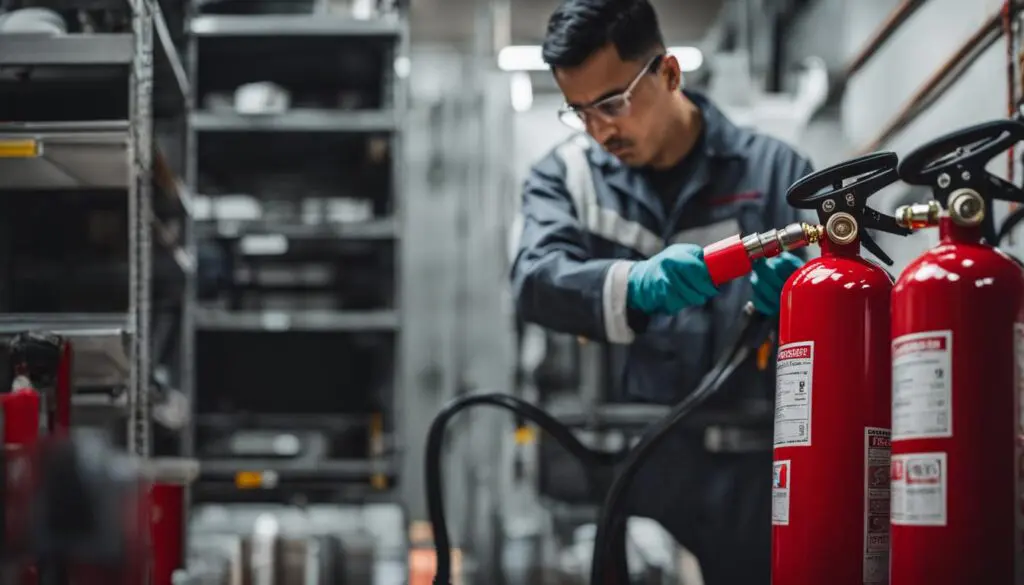
A fire extinguisher is the single fastest response tool available in any building fire. It is in your hands within seconds, long before a sprinkler system activates or the fire department arrives.
That first-responder role makes reliability absolutely critical. An extinguisher that fails during those first 30 seconds of a fire is not just useless — it hands the fire a head start that cannot be recovered.
Regular maintenance is how you guarantee your first line of defense actually holds.
Why Must Fire Extinguishers Be Routinely Maintained
A fire extinguisher contains two main components: an extinguishing agent that suppresses the fire and a pressurized propellant that forces the agent out through the nozzle when you squeeze the handle.
The cylinder is sealed under significant pressure. A safety pin locks the handle. A discharge hose or horn directs the agent at the base of the fire.
Every one of those components can degrade without producing any visible warning sign. Pressure can drop through tiny pinhole leaks. Dry chemical agents can absorb moisture and clump solid inside the cylinder. Discharge hoses develop internal cracks. Valves corrode. Seals deteriorate. Maintenance catches each of these failures before they matter.
Reason 1 — Pressure Loss Happens Silently
Fire extinguisher cylinders operate under pressure. That pressure is what drives the extinguishing agent out when you squeeze the handle. If the pressure drops too low, the agent either discharges weakly or does not discharge at all.
Pressure loss happens through tiny leaks around valve seals, faulty o-rings, or micro-cracks that are invisible to the untrained eye. The gauge needle can appear in the green zone while actual usable pressure has dropped below operating level.
During routine maintenance, certified technicians weigh the extinguisher and verify true pressure levels. If the unit has lost more than 10 percent of its weight or the pressure is outside the acceptable range, it gets recharged or replaced before it fails in an emergency.
Reason 2 — Extinguishing Agents Degrade Over Time
The chemicals inside a fire extinguisher do not last forever. Dry chemical agents, which are the most common type in ABC extinguishers, absorb moisture over time. Once moisture gets into the powder, it clumps and cakes into a solid mass.
A clogged dry chemical agent will not discharge properly. You will squeeze the handle, the propellant will release, and nothing meaningful will come out of the nozzle. The fire continues to grow.
CO2 extinguishers can lose charge through valve seepage. Wet chemical agents used in kitchen class K extinguishers can break down chemically over time. Routine maintenance checks the condition of the agent and ensures it is still fit for purpose.
Reason 3 — Corrosion and Physical Damage Weaken the Cylinder
Fire extinguisher cylinders are built from steel or aluminum. Both metals corrode when exposed to moisture, temperature fluctuations, and harsh environments like commercial kitchens, construction sites, or outdoor storage.
Rust thins the cylinder wall from the inside. Surface rust on the outside may signal deeper structural weakness beneath. Even small dents from being knocked over or dropped compromise the cylinder’s ability to safely hold pressure.
A corroded or structurally compromised cylinder is not just an ineffective fire safety tool — it is a pressure vessel waiting to fail catastrophically. Hydrostatic testing performed at required intervals identifies these weaknesses before they become dangerous.
Reason 4 — Blocked or Damaged Discharge Hoses
The discharge hose or horn is the path the extinguishing agent takes from the cylinder to the fire. Over time, hoses crack, kink, or develop internal blockages from dried agent residue, insect nesting, or physical damage.
A blocked hose renders the extinguisher completely useless even if the cylinder is fully charged. The agent has nowhere to go when you pull the trigger.
During annual maintenance, technicians inspect and clear the discharge path, checking hoses for cracks, flexibility, and obstruction. Cracked or degraded hoses are replaced before the next service period.
Reason 5 — Safety Seals and Tamper Indicators Fail
Every fire extinguisher has a tamper-evident seal and a safety pin that prevents accidental discharge. If the seal is broken or the pin is missing, the extinguisher may have been partially or fully discharged already — without anyone logging it.
A partially discharged extinguisher is one of the most dangerous scenarios in fire safety. It appears present and ready. The gauge may still read in the green zone. But when a fire occurs, the remaining agent is insufficient to suppress it.
Monthly visual checks verify that seals are intact and safety pins are in place. This simple 30-second inspection catches unauthorized or accidental discharges before they go unnoticed.
Reason 6 — Labels Must Be Legible and Instructions Must Be Visible
Every fire extinguisher carries operating instructions on its label. In an emergency, someone unfamiliar with the equipment will read those instructions to use the device correctly. Faded, damaged, or missing labels remove that guidance entirely.
NFPA 10 requires that operating instructions face outward and remain legible at all times. Labels that have peeled, faded from UV exposure, or been painted over during building maintenance are non-compliant and dangerous.
Routine maintenance includes a check of label condition. Extinguishers with illegible instructions are relabeled or replaced.
Reason 7 — Location and Accessibility Must Be Verified
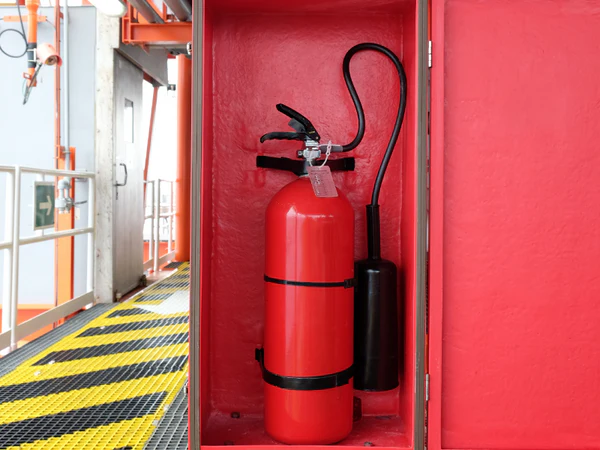
An extinguisher that has been moved, blocked by stored inventory, or hidden behind a newly installed partition is not accessible in an emergency. People cannot use equipment they cannot reach or find.
OSHA and NFPA 10 both require that extinguishers remain in their designated locations, visible, and free from obstruction at all times. Monthly checks confirm placement and accessibility.
Regular maintenance also confirms that the correct type of extinguisher is still in place for the current fire hazard class in that location. A Class B extinguisher installed near a Class A hazard is a compliance violation and a safety failure.
Reason 8 — Legal Compliance Under OSHA and NFPA 10
Fire extinguisher maintenance is not optional for businesses. The Occupational Safety and Health Administration mandates it under 29 CFR 1910.157. The National Fire Protection Association governs it under NFPA 10. Both apply regardless of business size or industry.
Non-compliance results in citations, fines, and in the event of a fire-related injury or fatality, serious legal liability. Insurance claims for fire damage can also be denied if it is found that required maintenance was not performed and documented.
Compliance requires a documented maintenance trail. Records must be kept on file and made available to inspectors upon request.
Reason 9 — Routine Maintenance Extends Extinguisher Lifespan
Fire extinguishers are not cheap. A quality rechargeable unit represents a real capital investment. Ignoring maintenance forces earlier replacement — either because the unit fails inspection or because a problem that could have been caught early has become irreparable.
Regular servicing extends the usable life of a fire extinguisher significantly. Annual professional maintenance catches minor issues before they become major ones. Recharging a partially depleted unit costs a fraction of replacing it.
Non-rechargeable disposable units must be replaced every 10 to 12 years regardless of visible condition. Rechargeable units can serve far longer with proper care and scheduled hydrostatic testing.
Reason 10 — Employee Confidence and Emergency Readiness
When employees know the fire extinguishers in their building are regularly inspected and certified, they are more confident and more capable in an actual emergency. Hesitation and doubt during a fire cost lives.
A well-maintained extinguisher backed by visible inspection tags and current service records tells every occupant that someone is watching over their safety. That trust translates directly into faster, calmer responses when seconds matter most.
Doubt in the equipment leads to delayed action. Delayed action lets small, controllable fires become uncontrollable ones.
Failure to meet any of these intervals is a violation of federal law and NFPA standards. Documentation of each service must be maintained on file.
What Happens During Monthly Visual Inspections
The monthly inspection is a quick but important check that any trained staff member or building manager can perform. It takes about five minutes per extinguisher when done correctly.
What to check each month:
The extinguisher must be in its designated location, visible, and unobstructed. The pressure gauge needle must sit in the green zone. The safety pin must be present and the tamper seal must be intact. The discharge hose or horn must show no cracks, kinks, or blockages. The cylinder must be free of obvious dents, corrosion, or damage. The label must be legible and facing outward with instructions visible.
The inspection date and inspector’s initials must be recorded on the back of the inspection tag. This documentation is your proof of compliance for fire marshals and insurance auditors.
What Happens During Annual Professional Maintenance
Annual maintenance goes far deeper than the monthly visual check. It must be performed by a certified fire protection technician and documented with a dated service tag attached to the extinguisher.
The technician opens the unit, inspects internal mechanics, checks the actual condition of the extinguishing agent, weighs the cylinder to verify true fill level, tests the discharge mechanism, inspects and replaces seals and o-rings as needed, and verifies that all components meet manufacturer specifications.
At the end of the annual service, the technician attaches a new service tag showing the date, the technician’s certification number, and the date the next service is due.
What Happens During 6-Year Internal Maintenance
Every six years, dry chemical extinguishers require a more thorough internal examination beyond the standard annual check. This involves fully discharging the unit, disassembling it, and inspecting the interior for corrosion, residue buildup, and component wear.
Worn or degraded components are replaced. The unit is refilled with fresh dry chemical agent and re-pressurized to manufacturer specifications using nitrogen gas. A comprehensive post-maintenance inspection confirms everything is within spec before the unit goes back into service.
This six-year maintenance is not the same as hydrostatic testing. It addresses the internal components. Hydrostatic testing addresses the structural integrity of the cylinder itself.
What Happens During Hydrostatic Testing
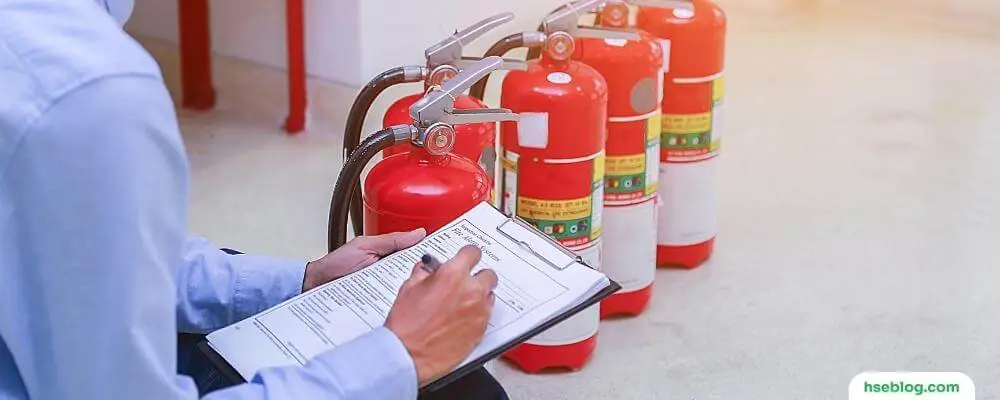
Hydrostatic testing evaluates whether the cylinder can safely hold pressure at levels significantly above its normal operating pressure. The test is required at intervals of 5 to 12 years depending on the extinguisher type.
| Extinguisher Type | Hydrostatic Test Interval |
|---|---|
| Dry chemical (stored pressure) | Every 12 years |
| CO2 extinguishers | Every 5 years |
| Wet chemical (Class K) | Every 5 years |
| Water and water mist | Every 5 years |
| Halon and clean agent | Every 12 years |
The cylinder is filled with water and pressurized to 1.5 to 2 times its normal operating pressure. The technician monitors for deformation, leaks, or permanent expansion. Any cylinder that shows these signs fails the test and must be removed from service and replaced immediately.
A cylinder that passes receives a new hydrostatic test label showing the test date and the date the next test is due.
Common Signs That Indicate Immediate Service Is Needed
Some conditions are obvious signs that an extinguisher needs professional evaluation right away — without waiting for the next scheduled service.
Remove from service and have it professionally inspected if:
The pressure gauge needle is in the red zone on either the over-pressurized or under-pressurized side. The tamper seal is broken or the safety pin is missing. The cylinder has visible dents, cracks, or external corrosion or rust. The discharge hose is cracked, kinked, or visibly blocked. The label is missing or completely unreadable. The most recent service tag shows an expired service date or is missing entirely. The unit has been used even partially — any discharge requires professional recharge before the unit can be returned to service.
Fire Extinguisher Types and Their Specific Maintenance Needs
Different extinguisher types have different vulnerabilities and maintenance requirements. Knowing what type you have matters.
| Extinguisher Type | Fire Class | Common Locations | Key Maintenance Concern |
|---|---|---|---|
| ABC Dry Chemical | A, B, C | Offices, warehouses, schools | Agent clumping from moisture |
| CO2 | B, C | Server rooms, laboratories | Charge loss through valve seepage |
| Wet Chemical (Class K) | K | Commercial kitchens | Agent chemical degradation |
| Water Mist | A | Hospitals, archives | Nozzle blockage, freeze risk |
| Clean Agent (Halon replacement) | B, C | Data centers, museums | Slow charge loss over time |
| Foam (AFFF) | A, B | Fuel storage, aircraft hangars | Foam concentration breakdown |
Each type requires the same monthly, annual, 6-year, and hydrostatic schedule, but the specific checks during annual and internal maintenance differ based on agent chemistry and delivery mechanism.
What Non-Compliance Actually Costs
Skipping fire extinguisher maintenance carries real financial and legal consequences that go far beyond the cost of a service call.
OSHA citations for fire extinguisher non-compliance can reach thousands of dollars per violation per day. Willful violations carry significantly higher penalties. A fire that causes injury or death in a building with documented maintenance failures exposes business owners and facility managers to personal legal liability.
Insurance implications are equally serious. Policies commonly include clauses requiring compliance with fire codes. A fire damage claim can be denied — partially or entirely — if the insurer discovers that required maintenance was not performed and documented.
The cost of annual maintenance for a standard ABC extinguisher is a small fraction of any of these potential consequences.
How to Build a Compliant Maintenance Program
A compliant fire extinguisher maintenance program does not require complicated systems. It requires consistency, documentation, and the right professional partner.
Step 1 — Inventory every extinguisher in the facility. Record the type, location, manufacture date, and current service tag date for each unit.
Step 2 — Assign monthly inspection responsibility. Designate a specific staff member for each area of the building. Provide them with a simple checklist and require documented sign-off each month.
Step 3 — Schedule annual professional service. Partner with a licensed fire protection company that will send a certified technician annually, attach a compliant service tag, and provide documentation for your records.
Step 4 — Track 6-year and hydrostatic intervals. Record the manufacture date of each extinguisher and calculate when 6-year internal maintenance and hydrostatic testing are due. Add these dates to your facility maintenance calendar.
Step 5 — Keep all records on file. OSHA requires that annual maintenance records be kept for one year after the last entry or the life of the shell, whichever is less. Best practice is to maintain a permanent file for the life of each extinguisher.
Fire Extinguisher Placement Rules That Maintenance Must Verify
Maintenance is not only about the condition of the extinguisher. It also includes verifying that placement continues to meet code requirements.
NFPA 10 specifies maximum travel distances to reach a fire extinguisher based on the hazard class of the occupancy. For Class A hazards, the maximum travel distance is 75 feet. For Class B hazards it is 50 feet. For Class K kitchen hazards, an extinguisher must be within 30 feet of the cooking equipment.
Extinguishers must be mounted at the correct height — the handle should be no more than 3.5 feet off the ground for units weighing more than 40 pounds and no more than 5 feet off the ground for lighter units.
Monthly inspections confirm these placement standards are still being met as buildings change, inventory shifts, and tenant configurations evolve.
Frequently Asked Questions (FAQs)
Why must fire extinguishers be routinely maintained?
Fire extinguishers must be routinely maintained to ensure they remain fully operational during an emergency. Pressure loss, agent degradation, corrosion, and blocked hoses can all cause silent failure that visual inspection alone cannot detect.
How often do fire extinguishers need to be inspected?
OSHA and NFPA 10 require monthly visual inspections by building staff and a thorough annual maintenance check by a certified fire protection technician. Internal maintenance is required every 6 years and hydrostatic testing every 5 to 12 years depending on type.
What happens if fire extinguisher maintenance is not performed?
Unmaintained extinguishers can fail during a fire emergency, resulting in property damage, injury, or death. Businesses also face OSHA fines, insurance claim denials, and legal liability for non-compliance with 29 CFR 1910.157 and NFPA 10.
Can I do fire extinguisher maintenance myself?
Monthly visual inspections can be performed by any trained staff member following an NFPA 10 checklist. Annual maintenance, 6-year internal examinations, and hydrostatic testing must be performed by a certified fire protection technician.
How long do fire extinguishers last?
Non-rechargeable disposable units should be replaced after 10 to 12 years. Rechargeable units can last far longer with proper annual maintenance, 6-year internal service, and hydrostatic testing at the required intervals.
What is hydrostatic testing for fire extinguishers?
Hydrostatic testing pressurizes the extinguisher cylinder to 1.5 to 2 times its normal operating pressure to test structural integrity. It detects internal corrosion and micro-fractures invisible to the eye and is required every 5 to 12 years depending on extinguisher type.
What does annual fire extinguisher maintenance include?
Annual maintenance by a certified technician includes checking internal agent condition, verifying true pressure level by weight, inspecting and replacing seals and o-rings, testing the discharge mechanism, inspecting the hose or horn, and attaching a new dated service tag.
What are the signs that a fire extinguisher needs immediate service?
A pressure gauge in the red zone, broken tamper seal, missing safety pin, visible dents or corrosion, cracked discharge hose, unreadable label, expired service tag, or any prior discharge all indicate an extinguisher needs professional evaluation immediately.
Is fire extinguisher maintenance required by law?
Yes. OSHA 29 CFR 1910.157 requires monthly visual inspections and annual professional maintenance in all workplaces. NFPA 10 adds requirements for 6-year internal maintenance and hydrostatic testing. Non-compliance results in citations and fines.
How much does fire extinguisher maintenance cost?
Annual professional maintenance for a standard ABC extinguisher typically costs between $15 and $50 per unit depending on location and service provider. This is a fraction of the potential cost of OSHA fines, insurance claim denials, or fire damage from a failed unit.
Conclusion
Understanding why fire extinguishers must be routinely maintained comes down to one simple reality: a fire extinguisher that has not been inspected, serviced, and tested cannot be trusted to work.
Pressure loss, degraded agents, corroded cylinders, blocked hoses, and missing seals are all failures that develop silently and reveal themselves only when it is too late to do anything about them.
Regular maintenance — monthly visual checks, annual professional service, 6-year internal examinations, and hydrostatic testing on schedule — eliminates that uncertainty entirely.
It keeps every unit in your building ready to perform, keeps you compliant with OSHA and NFPA 10 requirements, and protects your employees, customers, and property from preventable fire damage.
The cost of a maintenance program is minimal. The cost of skipping it — in fines, legal liability, insurance denials, and most importantly human safety — is not.
Commit to a documented, consistent fire extinguisher maintenance schedule and treat it as the non-negotiable safety obligation it truly is.