Why Was the 2nd Amendment Created? History & Facts 2026
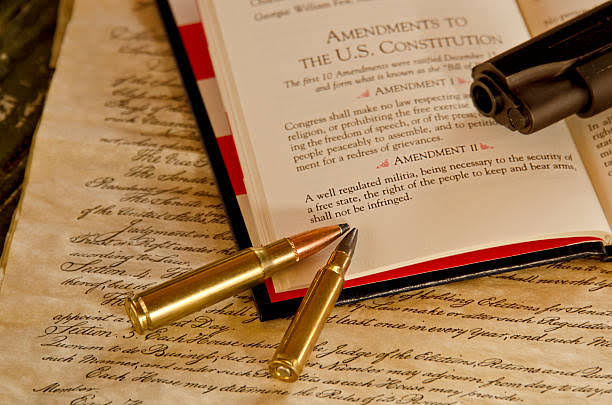
Why was the 2nd Amendment created is a question that goes back to the earliest years of the United States, when the framers were still debating how much power a new federal government should hold. The answer is rooted in colonial history, English legal tradition, and deep fears about standing armies and tyranny.
Ratified in 1791 as part of the Bill of Rights, the Second Amendment reflects lessons the founders learned from British rule, the Revolutionary War, and centuries of English legal precedent around the right to bear arms.
What Does the Second Amendment Actually Say?
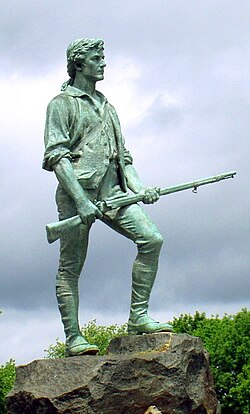
The Second Amendment reads: “A well regulated Militia, being necessary to the security of a free State, the right of the people to keep and bear Arms, shall not be infringed.” These 27 words have generated intense debate for more than two centuries.
The amendment was ratified on December 15, 1791, as part of the first ten amendments known as the Bill of Rights. At the time, George Washington was serving his first term as the nation’s president.
Its short, dense wording is exactly why interpretation has varied so widely between historians, courts, and lawmakers ever since.
The English Origins of the Right to Bear Arms
The Second Amendment did not appear out of nowhere. It drew heavily on centuries of English legal and political tradition surrounding the right to possess weapons for self-defense.
The English Bill of Rights of 1689
A century before American independence, the English Declaration of Rights of 1689 codified the right of English subjects to possess arms for their own defense. This right, however, was limited to Protestants and was subject to legal restrictions set by Parliament.
This precedent gave American colonists a legal and philosophical foundation to draw on when they later debated their own right to bear arms.
William Blackstone’s Influence
English jurist William Blackstone, writing shortly before the American Revolution, listed the right of English subjects to possess arms as one of the principal safeguards against violations of life, liberty, and property. His writings were widely read by the American founders.
Blackstone’s framing tied the right to arms directly to the idea of self-preservation when ordinary legal protections failed.
The Elizabethan Militia System
The roots of the militia concept trace back even further, to the late 16th century when Queen Elizabeth I established a national militia requiring individuals of many classes to help defend the country. Although her effort largely failed in practice, the idea of an armed citizen militia remained politically influential for generations.
This concept of ordinary citizens serving as a defense force became a recurring theme in English politics, contributing to conflicts like the English Civil Wars and the Glorious Revolution.
Colonial America and the Road to Revolution
By the time of the American Revolution, colonists had absorbed these English ideas about arms and liberty, and they applied them directly to their own growing conflict with Britain.
Fear of a Standing Army
Colonists were deeply suspicious of large, permanent professional armies controlled by a central government. Standing armies were associated with the enforcement of unpopular laws and the suppression of political dissent.
This suspicion became personal as British troops were sent to occupy colonial cities, reinforcing the belief that an armed citizenry was a necessary check on military power.
British Attempts to Seize Colonial Weapons
Tensions escalated sharply when British forces attempted to confiscate stockpiles of arms and gunpowder from colonial militias. General Thomas Gage led troops to seize supplies stored in Massachusetts towns considered hostile to British rule.
The resulting clashes at Lexington and Concord in 1775 are widely regarded as the spark that ignited the Revolutionary War.
The Role of Citizen Militias
During the Revolutionary War, ordinary citizens who supplied their own weapons and received limited training served as militia forces alongside the Continental Army. These militias played a critical role in early resistance efforts, even though they were not always as reliable as professional soldiers.
This wartime experience shaped how the founders thought about balancing a national army with an armed citizenry.
Why the Founders Wanted an Armed Citizenry
Once independence was won, the founders carried these lessons directly into the debates over the new Constitution and Bill of Rights.
Protection Against Foreign Threats
One clear purpose of the Second Amendment was practical: the young nation needed a way to defend itself without relying solely on an expensive, centralized standing army. An armed citizen militia offered a lower-cost, decentralized defense option.
Protection Against a Tyrannical Government
The founders were also concerned about threats closer to home. According to constitutional historians, the founders believed citizens should be able to protect themselves not only from foreign governments but also from a domestic government that turned tyrannical.
This dual concern, external defense and internal accountability, is central to understanding why the amendment was written the way it was.
The Anti-Federalist Push
Anti-Federalists were especially wary of the strong central government created by the Constitutional Convention. They worried that a powerful standing military under federal control could be used to violently oppress the population.
James Madison proposed the Second Amendment partly to address these Anti-Federalist concerns, allowing for the creation of civilian militia forces that could counterbalance federal military power.
The table below summarizes these core motivations behind the amendment.
| Motivation | Explanation |
|---|---|
| National defense | Reduce reliance on a costly permanent standing army |
| Check on tyranny | Allow citizens to resist an oppressive government |
| Anti-Federalist compromise | Address fears of unchecked federal military power |
| English legal tradition | Build on the 1689 English Bill of Rights |
| Revolutionary War lessons | Reflect the role militias played in resisting British forces |
The Drafting and Ratification Process
Understanding how the amendment moved from proposal to final text helps explain some of its unusual wording.
James Madison’s Original Draft
James Madison introduced the amendment as part of a broader package of proposed rights in 1789. His early draft included a clause addressing religious objectors, which was ultimately removed before final ratification.
Changes Made in the Senate
The amendment took its final form in the Senate, where lawmakers removed the religious-objector clause and adjusted other phrasing. Unfortunately, no detailed Senate debate record survives for this specific amendment.
Final Ratification in 1791
The amendment was ratified as part of the Bill of Rights in December 1791, becoming one of the first ten amendments to the Constitution. At the time, firearms technology was limited to weapons like the Kentucky long rifle, far simpler than modern firearms.
This ratification came after each state legislature reviewed and approved the proposed amendments, a process that took roughly two years from initial proposal to final adoption. The relatively quick ratification reflected broad, though not universal, agreement on the need for these protections.
How Second Amendment Interpretation Has Evolved
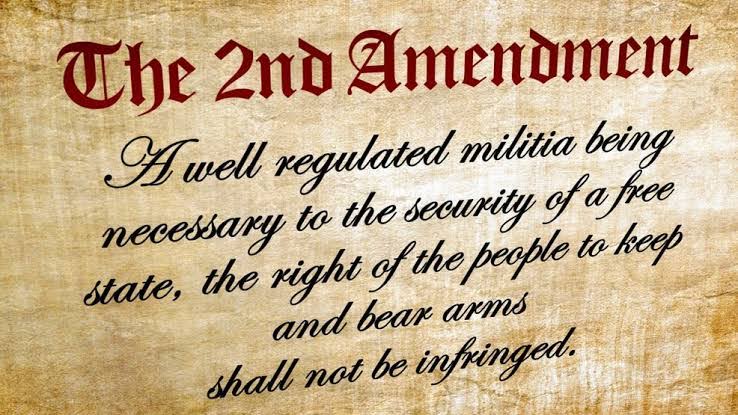
While the amendment’s origins are largely settled historical fact, its legal meaning has shifted significantly over time, particularly through Supreme Court rulings.
Early Judicial Treatment
For much of American history, courts treated the Second Amendment as a relatively minor provision, rarely central to major legal disputes. Its practical legal significance stayed limited compared to other constitutional rights.
District of Columbia v. Heller (2008)
In 2008, the Supreme Court issued a landmark ruling in District of Columbia v. Heller, striking down a law that banned most handgun possession in the nation’s capital. A 5-4 majority held that the amendment protects an individual right to possess arms for self-defense, not merely a right tied to militia service.
The dissenting justices disagreed, arguing the historical evidence supported a more militia-focused reading of the text.
McDonald v. City of Chicago (2010)
Two years later, the Supreme Court extended this individual-rights interpretation to state and local governments in McDonald v. City of Chicago. This ruling confirmed that Second Amendment protections applied beyond just federal law.
New York State Rifle & Pistol Association v. Bruen (2022)
In 2022, the Court ruled that carrying a firearm in public for self-defense purposes is protected by the Second Amendment. This decision further expanded the practical scope of individual gun rights recognized by the courts.
The table below outlines these major cases and their impact.
| Case | Year | Key Ruling |
|---|---|---|
| District of Columbia v. Heller | 2008 | Recognized an individual right to possess firearms for self-defense |
| McDonald v. City of Chicago | 2010 | Extended individual rights protection to state and local laws |
| NYSRPA v. Bruen | 2022 | Affirmed a right to carry firearms in public for self-defense |
Individual Right vs Collective Right: The Ongoing Debate
One of the most contested questions about the Second Amendment is whether it protects an individual right to own weapons or a collective right tied to organized militia service.
Supporters of the individual-rights view point to English legal tradition, state constitutions with clearer individual-rights language, and the Heller ruling as strong evidence that the amendment was always meant to protect personal ownership.
Supporters of the militia-focused view argue that the amendment’s opening clause about a “well regulated Militia” was central to its original purpose, and that many constitutional historians still disagree with the Court’s individual-rights interpretation.
Many state constitutions written around the same era used more explicit individual-rights language than the federal amendment, which some scholars argue supports the individual-rights reading, while others note this comparison is not conclusive on its own.
This disagreement is not simply academic. It continues to shape modern debates over gun control laws, licensing requirements, and public carry regulations across the country.
The Second Amendment in Modern Political Debate
Today, the Second Amendment sits at the center of one of the most polarizing political debates in the United States. Advocates for gun rights emphasize self-defense, resistance to tyranny, and constitutional protection of personal ownership.
Advocates for stricter gun regulation argue that the amendment’s historical context, an era of muskets and citizen militias, does not directly translate to modern firearms technology and contemporary public safety concerns.
Both sides frequently invoke the amendment’s original history to support very different conclusions about what current gun policy should look like. This is a genuinely contested political and legal issue, and reasonable people, historians, and courts continue to disagree.
Public opinion on gun policy also varies significantly depending on region, personal experience, and political affiliation, which helps explain why this debate rarely produces a single, widely accepted resolution.
The Second Amendment’s Place Within the Bill of Rights
The Second Amendment did not exist in isolation. It was ratified alongside nine other amendments meant to limit federal power and protect individual liberties from government overreach.
Part of a Broader Package of Rights
The Bill of Rights emerged from a compromise between Federalists, who wanted a stronger national government, and Anti-Federalists, who demanded explicit protections for individual liberties before agreeing to ratify the Constitution. The Second Amendment was one piece of this larger bargain.
Other amendments in the same package protected freedom of speech, religion, and the press, along with protections against unreasonable searches and self-incrimination. Together, these amendments reflected a broader founding-era goal of limiting centralized government power.
State Constitutions and Individual Rights Language
Many state constitutions written around the same era included language about the right to bear arms that was more explicitly tied to individual self-defense than the federal amendment’s text. States including Kentucky, Ohio, and Indiana used wording that courts later interpreted as clearly protecting an individual right.
This variation between state and federal language is part of why interpretation of the federal amendment has remained such a persistent source of legal debate.
Reasonable Regulation Was Not Entirely New
Even in the founding era, the right to bear arms was not treated as completely without limits. Historical records show that early American and English legal traditions included restrictions based on factors like religion, specific locations, or particular circumstances.
This historical nuance is often left out of modern political arguments, even though it directly informs how courts and scholars debate the amendment’s original scope today.
The table below summarizes how the Second Amendment fits within this broader founding-era context.
| Element | Historical Context |
|---|---|
| Bill of Rights package | Compromise between Federalists and Anti-Federalists |
| State constitutions | Often used clearer individual-rights language than the federal text |
| Early regulation | Some restrictions existed even in founding-era arms laws |
| Broader goal | Limiting centralized government power over individual liberties |
Common Misconceptions About the Second Amendment
Several myths and misunderstandings frequently circulate about the amendment’s history and meaning. Clearing these up helps separate historical fact from modern political framing.
Misconception: It Was Only About Militias
While militias were central to the amendment’s original context, the modern Supreme Court has ruled that the right extends to individual self-defense as well. Historians remain divided on how much weight the militia clause should carry in interpretation.
Misconception: It Was Unlimited From the Start
Even early English and American traditions around arms included legal restrictions, such as limitations based on religion or specific conditions. The idea of a completely unrestricted right is not historically accurate.
Misconception: The Founders Anticipated Modern Firearms
The founders wrote the amendment during an era of muskets and simple rifles like the Kentucky long rifle. Whether or how the amendment applies to modern firearms technology remains a subject of ongoing legal and political debate.
The table below summarizes these misconceptions and the more accurate historical context.
| Misconception | More Accurate Context |
|---|---|
| It was only about militias | Modern courts have ruled it also protects individual self-defense |
| The right was always unlimited | Historical versions included legal restrictions |
| Founders anticipated today’s firearms | Amendment was written in the era of muskets and long rifles |
Why This History Still Matters Today
Understanding why the Second Amendment was created helps explain why it remains such a contested part of American law and politics. Its roots in English tradition, revolutionary conflict, and fear of centralized power still influence legal arguments today.
Courts continue to reference this original history directly when deciding modern gun policy cases, making historical context far more than an academic exercise. Knowing this background allows citizens to engage more thoughtfully with an issue that shows no signs of becoming less significant.
Whether someone favors expanded gun rights or stricter regulation, a clear grasp of the amendment’s founding-era purpose provides a more solid foundation for evaluating today’s competing arguments.
Frequently Asked Questiosn (FAQs)
1. Why was the 2nd Amendment created?
It was created to allow citizens to form militias for national defense and to serve as a check against a potentially tyrannical government. It also drew on English legal traditions protecting the right to possess arms.
2. When was the Second Amendment ratified?
The Second Amendment was ratified on December 15, 1791, as part of the Bill of Rights. George Washington was serving his first term as president at the time.
3. Did the Second Amendment come from English law?
Yes, it drew heavily on the English Bill of Rights of 1689, which protected the right of English subjects to bear arms. William Blackstone’s writings also influenced how the founders viewed this right.
4. What role did militias play in the American Revolution?
Citizen militias, who supplied their own weapons, fought alongside the Continental Army during the Revolutionary War. Their role convinced many founders that an armed citizenry was essential for defense.
5. Why were the founders worried about standing armies?
They feared a large, permanent military controlled by a central government could be used to suppress political dissent. This fear was reinforced by British troop occupations before the Revolutionary War.
6. Who wrote the Second Amendment?
James Madison proposed the amendment as part of the broader Bill of Rights in 1789. It was later revised in the Senate before its final ratification in 1791.
7. Does the Second Amendment protect an individual right?
The Supreme Court ruled in District of Columbia v. Heller (2008) that it protects an individual right to bear arms for self-defense. This interpretation remains debated among historians and legal scholars.
8. What was the Lexington and Concord connection?
British troops attempted to seize colonial weapons stored in these Massachusetts towns in 1775. The resulting clashes are widely seen as the spark that started the Revolutionary War.
9. How has Second Amendment interpretation changed over time?
For much of history, courts treated it as a minor provision with limited legal weight. Modern rulings like Heller, McDonald, and Bruen have significantly expanded its recognized individual scope.
10. Is the individual right vs militia right debate settled?
No, this remains a genuinely contested legal and historical question. Courts, scholars, and lawmakers continue to disagree on how much weight the militia clause should carry.
Conclusion
The Second Amendment was created out of a specific historical moment shaped by English legal tradition, colonial resistance to British military occupation, and deep founding-era fears about both foreign threats and domestic tyranny. Its short text reflects compromises made between Federalists and Anti-Federalists during the drafting of the Bill of Rights.
Since ratification in 1791, its meaning has evolved considerably, especially through landmark Supreme Court rulings like Heller, McDonald, and Bruen, which shifted its legal interpretation toward protecting an individual right to bear arms.
Understanding why was the 2nd Amendment created offers valuable context for the ongoing modern debate over gun rights and regulation, even though historians, courts, and citizens continue to disagree on exactly how that original history should apply today.