Why Was the Battle of Gettysburg Important? Key Facts 2026
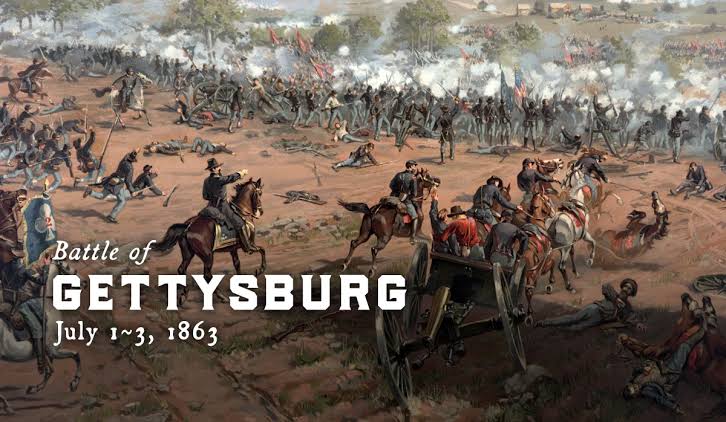
Why was the Battle of Gettysburg important is a question central to understanding how the American Civil War turned in favor of the Union. Fought from July 1 to July 3, 1863, in the small town of Gettysburg, Pennsylvania, this three-day battle became the bloodiest engagement of the entire war.
It ended Confederate General Robert E. Lee’s second and most ambitious invasion of the North, crushing his hopes of forcing a negotiated peace.
The Union victory boosted Northern morale, weakened the Confederacy’s chances of foreign recognition, and set the stage for President Lincoln’s historic Gettysburg Address.
Quick Overview: Key Facts About Gettysburg
Here’s a fast summary of the most important details before we explore the full significance of the battle.
| Fact | Detail |
|---|---|
| Dates | July 1–3, 1863 |
| Location | Gettysburg, Pennsylvania |
| Armies | Union Army of the Potomac vs Confederate Army of Northern Virginia |
| Commanders | General George Meade (Union), General Robert E. Lee (Confederate) |
| Casualties | Roughly 46,000–51,000 total |
| Outcome | Union victory |
| Historical significance | Widely seen as the turning point of the Civil War |
The Background Leading Up to Gettysburg
Lee’s Confidence After Chancellorsville
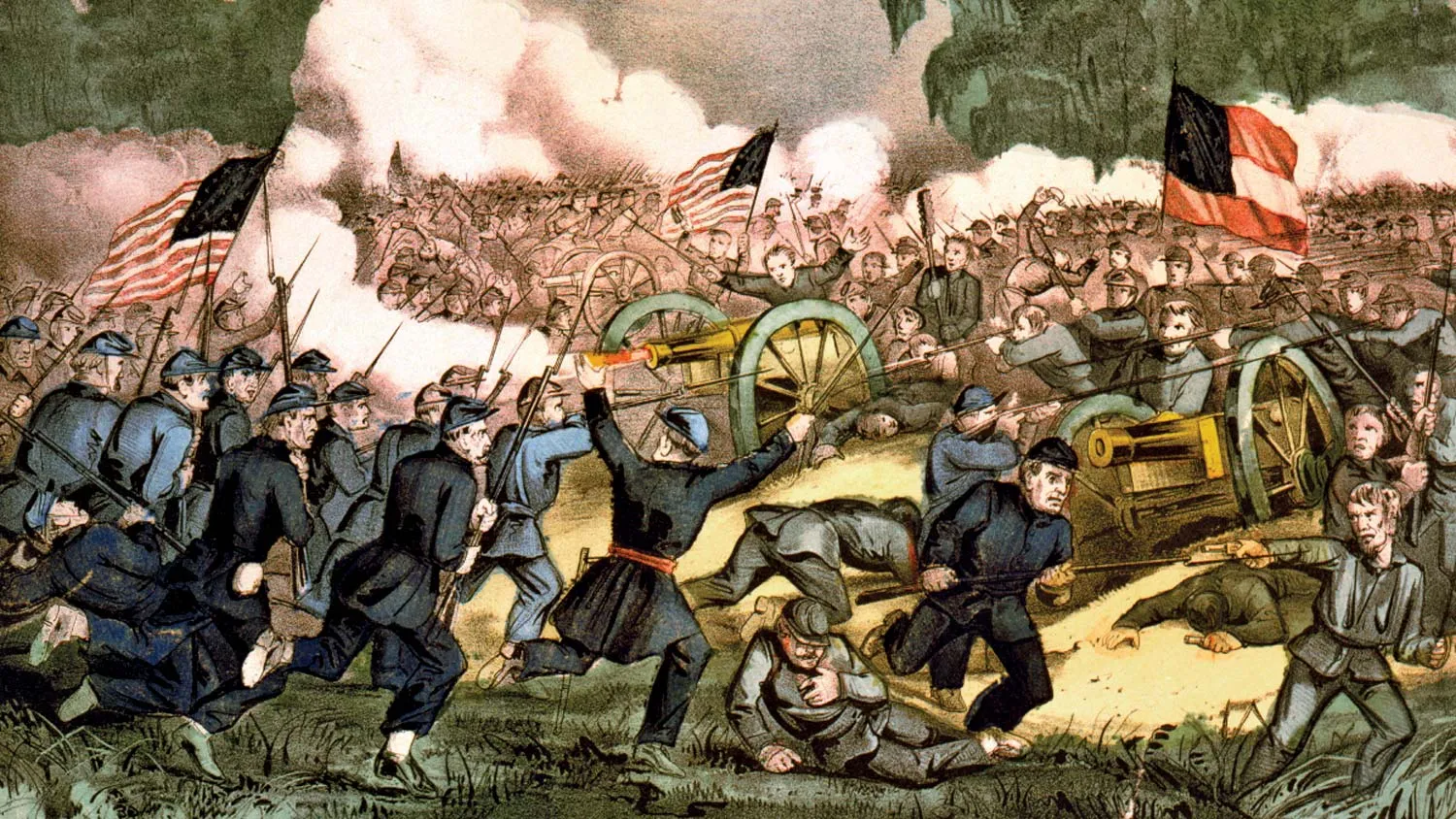
In May 1863, Lee’s Army of Northern Virginia won a major victory at Chancellorsville. This success gave Lee and his troops a strong sense of confidence heading into summer.
Believing his army capable of winning on Northern soil, Lee pushed for a bold invasion of Pennsylvania. Confederate leadership approved the plan, hoping for a decisive strike.
Why Lee Chose to Invade the North
Lee hoped a victory deep in Union territory would pressure Northern politicians to seek peace. It would also relieve pressure on Confederate forces defending Vicksburg in the western theater.
There was an added diplomatic goal as well. A strong Confederate win might convince Britain or France to formally recognize the Confederacy.
How the Two Armies Ended Up at Gettysburg
Gettysburg sat at the intersection of multiple major roads, making it a natural meeting point for both armies. Neither Lee nor Meade initially planned to fight there.
Confederate troops entered the town searching for supplies and unexpectedly encountered Union cavalry. This chance encounter quickly escalated into a full-scale battle.
Day One: July 1, 1863
The Opening Clash
Fighting began early in the morning when Confederate troops advanced toward Gettysburg. Union cavalry under General John Buford managed to slow their approach until infantry reinforcements arrived.
Union General John Reynolds was killed early in the fighting. His death was a significant loss for Union leadership on the first day.
Confederate Gains on Day One
Confederate forces, reinforced by additional divisions, pushed Union troops back through the town. By late afternoon, Union soldiers retreated to the high ground south of Gettysburg.
This retreat, while a tactical setback, placed Union forces in a strong defensive position. Cemetery Hill would become critical to their strategy in the days ahead.
Day Two: July 2, 1863
The Fight for the High Ground
On the second day, Union forces defended a curved line of hills and ridges south of town. Confederate troops attempted to outflank this position from multiple directions.
Fierce fighting broke out at locations like Little Round Top, Devil’s Den, and Culp’s Hill. Union defenders held their ground despite heavy losses on both sides.
Little Round Top and Key Union Defenses
The defense of Little Round Top became one of the most celebrated moments of the battle. Union troops, including Joshua Chamberlain’s regiment, held the position against repeated assaults.
This defense prevented Confederate forces from flanking the Union line. Holding this ground proved critical to the battle’s overall outcome.
Day Three: July 3, 1863 — Pickett’s Charge
The Confederate Gamble
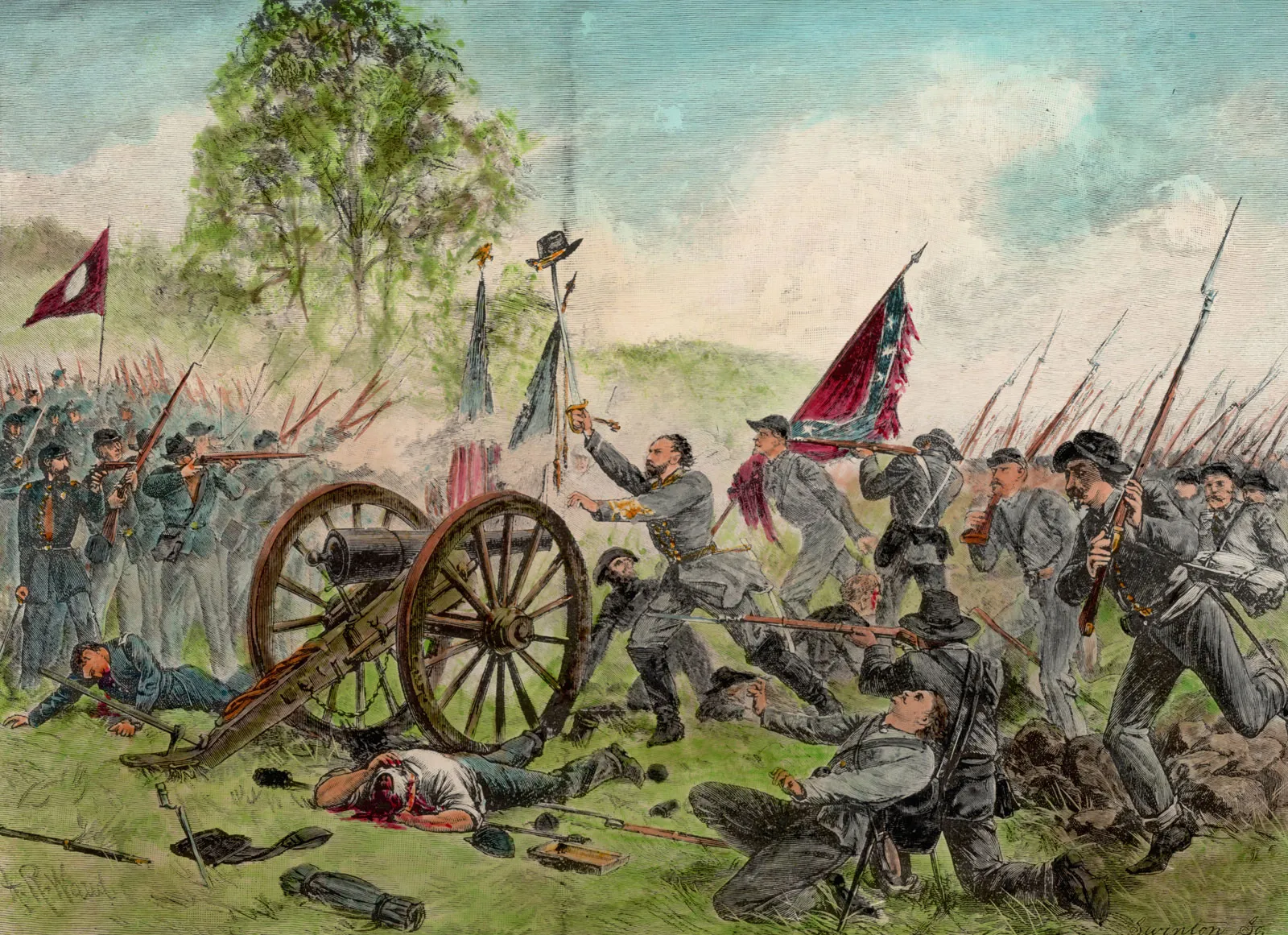
Believing his army capable of one final breakthrough, Lee ordered a massive infantry assault against the center of the Union line at Cemetery Ridge. This attack became known as Pickett’s Charge.
Roughly 12,500 Confederate soldiers advanced across open ground under heavy artillery and rifle fire. The assault has since become one of the most studied military decisions in American history.
The Failure of the Charge
Union defenders repelled the attack with devastating effect. Confederate casualties from the charge alone approached 50 percent of the attacking force.
This moment is often referred to as the “High Watermark of the Confederacy.” It marked the closest the Confederacy came to a decisive Eastern victory before being permanently pushed back.
Lee’s Retreat
Following the failed charge, Lee withdrew his battered army toward Virginia. Heavy rain and flooding along the Potomac River slowed his retreat significantly.
Union General Meade chose not to pursue aggressively, a decision later criticized by President Lincoln. Despite this missed opportunity, the battle’s outcome remained a major Union victory.
Why the Battle of Gettysburg Was So Important
It Marked the Turning Point of the Civil War
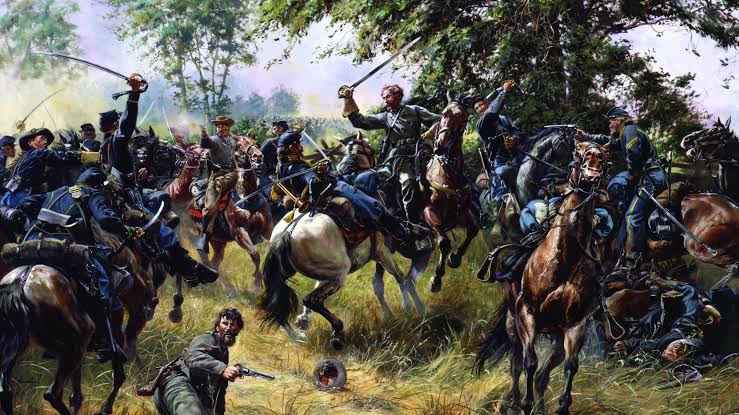
Before Gettysburg, Confederate forces had won several major battles in the Eastern theater. This victory reversed that momentum and gave the Union a much-needed strategic and psychological advantage.
Many historians consider this the moment the Confederacy’s chances of winning the war began to fade. The war continued for nearly two more years, but the balance had shifted.
It Ended Lee’s Invasion of the North
Lee’s goal of striking deep into Union territory was completely halted at Gettysburg. His retreat marked the second and final failed attempt to bring the war onto Northern soil.
This failure removed the immediate threat to cities like Harrisburg, Philadelphia, and Washington, D.C. It also forced the Confederacy back into a defensive posture for the remainder of the war.
It Was the Bloodiest Battle of the Civil War
With casualties estimated between 46,000 and 51,000, Gettysburg remains the deadliest battle ever fought on American soil. The scale of loss shocked both the North and South.
This staggering toll underscored the brutal cost of the ongoing conflict. It also intensified public pressure on both governments to bring the war to an end.
It Boosted Union Morale
The Union victory reinvigorated Northern support for the war effort. Confidence in President Lincoln’s leadership grew significantly following the win.
This renewed morale mattered greatly heading into the difficult years of fighting that remained. It also strengthened political support for continuing the war until full Union victory.
It Damaged Confederate Hopes for Foreign Recognition
Confederate leaders had hoped a major victory on Northern soil might convince Britain or France to formally recognize the Confederacy. Gettysburg eliminated that possibility.
Without foreign support, the Confederacy’s diplomatic and economic isolation deepened. This loss of potential allies further weakened their long-term war effort.
It Coincided With the Fall of Vicksburg
On July 4, 1863, the day after Gettysburg ended, Union forces under General Ulysses S. Grant captured Vicksburg, Mississippi. This gave the Union full control of the Mississippi River.
Together, these two victories delivered a devastating blow to the Confederacy within a single week. Many historians view this combination as the true turning point of the entire war.
It Inspired the Gettysburg Address
In November 1863, President Lincoln traveled to Gettysburg to dedicate a portion of the battlefield as a national cemetery. His brief speech redefined the purpose of the war for the nation.
The Gettysburg Address remains one of the most quoted speeches in American history. It reframed the conflict as a fight for human equality and the survival of democratic government.
Key Figures Who Shaped the Battle
The table below highlights some of the most significant commanders involved in the battle and their roles.
| Figure | Side | Role |
|---|---|---|
| George Meade | Union | Commander of the Army of the Potomac |
| Robert E. Lee | Confederate | Commander of the Army of Northern Virginia |
| John Buford | Union | Delayed Confederate advance on Day One |
| John Reynolds | Union | Killed in action on Day One |
| James Longstreet | Confederate | Led major assaults on Days Two and Three |
| George Pickett | Confederate | Led the infantry assault known as Pickett’s Charge |
| Joshua Chamberlain | Union | Defended Little Round Top on Day Two |
| Winfield Scott Hancock | Union | Helped defend Cemetery Ridge |
The Long-Term Impact of Gettysburg
A Shift in Military Momentum
Following Gettysburg, the Confederacy shifted permanently into a defensive strategy. The Union began a steady series of advances that would eventually lead to victory in 1865.
This shift didn’t guarantee an easy path to the war’s end. However, it marked the beginning of the Confederacy’s long, gradual decline.
A Changed National Identity
Gettysburg came to symbolize sacrifice, resilience, and the broader purpose of preserving the United States as one nation. Lincoln’s address helped cement this meaning in public memory.
The battlefield later became a national memorial site, preserving the history for future generations. Millions of visitors continue to walk its grounds each year.
A Lasting Historical Legacy
Gettysburg remains one of the most studied battles in American military history. Its lessons on leadership, strategy, and sacrifice are still examined by historians and military scholars today.
The preservation of the battlefield ensures the story continues to be told accurately. This ongoing effort keeps the significance of the battle alive for new generations.
Frequently Asked Questions (FAQs)
Why was the Battle of Gettysburg important to the Civil War?
It marked the turning point of the war by halting Lee’s invasion of the North. This shift in momentum favored the Union for the remainder of the conflict.
How many soldiers died at the Battle of Gettysburg?
Total casualties, including deaths, wounds, and captures, ranged between 46,000 and 51,000. This makes it the deadliest battle in American history.
Who won the Battle of Gettysburg?
The Union Army, led by General George Meade, won the battle. The victory forced Confederate General Robert E. Lee to retreat to Virginia.
What was Pickett’s Charge?
Pickett’s Charge was a failed Confederate infantry assault on the Union center at Cemetery Ridge on July 3. It resulted in devastating Confederate casualties.
Why is Gettysburg called the turning point of the Civil War?
It reversed Confederate momentum and ended Lee’s plan to invade the North. Many historians view it as the moment Southern victory became unlikely.
What happened at Little Round Top?
Union forces successfully defended this key hill against repeated Confederate assaults on Day Two. This defense prevented the Union line from being flanked.
How did Gettysburg affect Confederate hopes for foreign support?
The defeat significantly reduced the Confederacy’s chances of gaining recognition from Britain or France. This deepened the South’s diplomatic isolation.
What is the Gettysburg Address?
It is a short speech delivered by President Lincoln in November 1863 to dedicate the Gettysburg National Cemetery. It redefined the war’s purpose around freedom and equality.
Why did Vicksburg fall around the same time as Gettysburg?
Union General Ulysses S. Grant captured Vicksburg on July 4, 1863, the day after Gettysburg ended. Together, these victories dealt a major blow to the Confederacy.
Did the Civil War end right after Gettysburg?
No, the war continued for nearly two more years after the battle. However, Gettysburg marked a lasting shift in momentum toward the Union.
Conclusion
The Battle of Gettysburg stands as one of the most decisive moments of the Civil War, marking the point where Confederate momentum permanently shifted in favor of the Union.
Lee’s failed invasion of the North, the staggering casualties, and the collapse of Pickett’s Charge combined to weaken the Confederacy both militarily and diplomatically.
The victory boosted Northern morale, coincided with the fall of Vicksburg, and eventually inspired one of the most memorable speeches in American history through Lincoln’s Gettysburg Address.
While the war continued for nearly two more years, Gettysburg’s significance as a turning point has never been seriously disputed by historians.
Its legacy lives on through the preserved battlefield, the words of Lincoln’s address, and the countless stories of courage from those who fought there. Understanding this battle offers essential insight into how the United States endured its most defining internal conflict.