Why Was the Second Amendment Created? The Origin Story 2026
Why was the Second Amendment created is a question that cuts to the heart of American constitutional history.
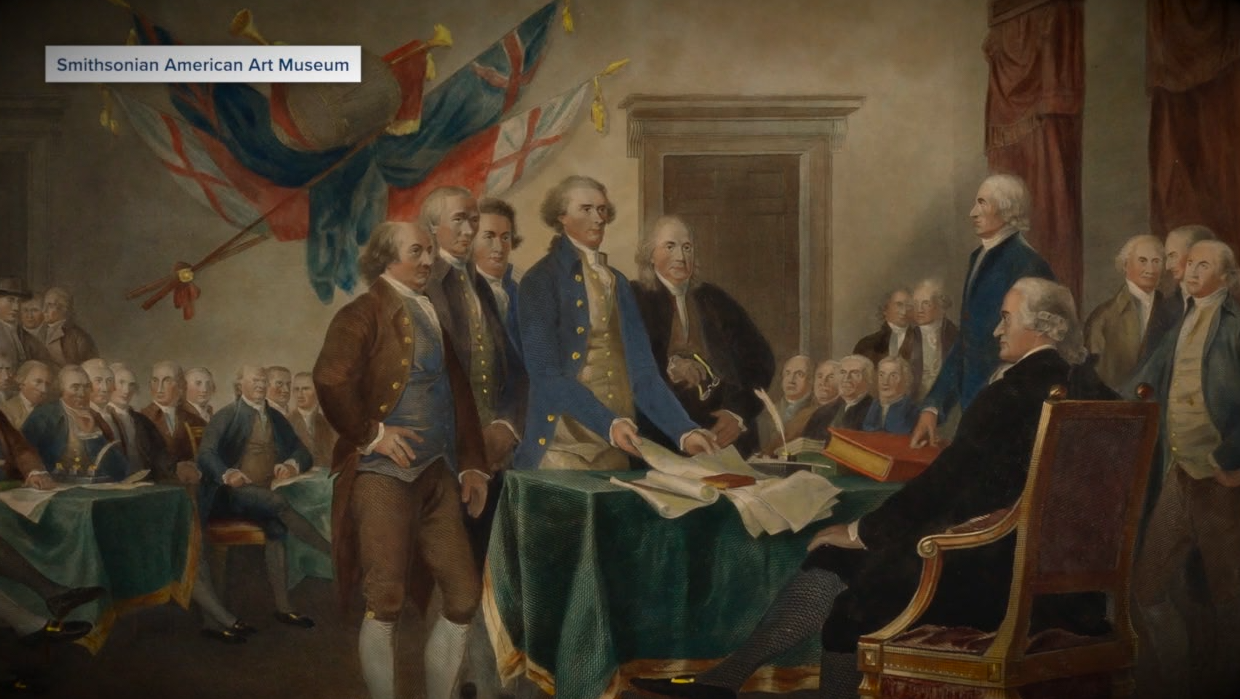
Ratified on December 15, 1791, as part of the Bill of Rights, the Second Amendment was not born out of thin air.
It emerged from colonial fear of tyranny, distrust of standing armies, the revolutionary experience of fighting British rule, and fierce debates between Federalists and Anti-Federalists about how much power a central government should hold.
Understanding the real origin story behind these 27 words reveals a surprisingly complex mix of political strategy, historical precedent, and philosophical conviction.
Why Was the Second Amendment Created
The full text of the Second Amendment reads: “A well regulated Militia, being necessary to the security of a free State, the right of the people to keep and bear Arms, shall not be infringed.”
Twenty-seven words. Two clauses. Centuries of debate.
The first clause references a well-regulated militia. The second declares the right of the people to keep and bear arms shall not be infringed. How these two clauses relate to each other — whether the right is tied to militia service or exists independently — has been one of the most contested legal questions in American history.
Where It All Began: English Roots of the Right to Bear Arms
Why was the Second Amendment created traces back well before 1791. The roots stretch to England and the political crises of the 17th century.
The 1689 English Bill of Rights, passed after the Glorious Revolution, established that Protestant subjects had the right to bear arms suitable for their conditions, as allowed by law. This was a direct response to King James II, who had disarmed Protestant militias while arming Catholic ones to consolidate his power.
American colonists inherited this tradition. They grew up reading English common law, including the works of William Blackstone, who described the right to bear arms as one of the fundamental rights of English subjects — a final safeguard against tyrannical government.
The Blackstone Influence
Sir William Blackstone’s Commentaries on the Laws of England were widely read by the Founding Fathers. Blackstone described the right to bear arms as an auxiliary right that protected the primary natural rights of personal security, personal liberty, and private property.
This framing — arms as the last resort against oppression — directly shaped how Madison and his contemporaries thought about the amendment they were drafting.
Colonial America and the Militia Tradition
Long before the Revolution, colonial America ran on a citizen militia system. There was no professional standing army. Defense of towns and settlements fell to ordinary men who brought their own weapons.
Militias were the backbone of local security. They dealt with frontier conflicts, enforced colonial laws, and kept order in communities spread across a vast continent far from any central authority.
The Militia vs. Standing Army Debate
The colonists had deep suspicion of professional standing armies. In England, they had seen how the Crown used paid soldiers to suppress dissent, quarter troops in private homes, and override civilian authority.
The British Parliament’s Quartering Acts, which forced colonists to house British soldiers, made this suspicion personal. An armed civilian militia, controlled locally, was seen as both safer and more republican than a distant federal army loyal only to a central power.
This tension between a standing federal army and locally controlled militias became one of the central fault lines in the debate over whether to ratify the Constitution.
The Revolutionary War and Its Impact
The American Revolution hardened the Founders’ views on arms in profound ways.
The first military confrontations of the Revolution at Lexington and Concord in April 1775 began when British forces marched to seize colonial arms and ammunition stockpiles. The message was unmistakable: disarmament was how tyrannical governments crushed resistance.
Colonists who had been debating abstract political theory suddenly had a lived example. An armed population had stood its ground against the most powerful military in the world. An unarmed one would have had no recourse at all.
Patrick Henry and the Fear of Disarmament
Virginia’s Patrick Henry was among the most vocal voices warning about what a powerful central government could do to an unarmed citizenry.
He argued in the Virginia ratifying convention that Congress could disarm citizens by neglecting to keep the militia properly armed. Without a constitutional guarantee, future governments could let the militia atrophy while building up a standing army loyal only to federal authority.
George Mason, co-author of the Virginia Declaration of Rights, made the same argument. He insisted that a government with the power to disarm its citizens had the power to enslave them.
The Constitutional Convention and the Federalist Divide
The Constitutional Convention of 1787 produced a document with significant implications for military power. Article I gave Congress authority to raise armies, fund them, organize militias, and call them into federal service. Article II made the President commander in chief.
Anti-Federalists were alarmed. They had just fought a war against a centralized monarchy. They saw the new Constitution as trading one distant, powerful authority for another.
What Anti-Federalists Feared
The Anti-Federalists — including figures like George Mason, Elbridge Gerry, and the pseudonymous writers “Brutus” and “Federal Farmer” — raised three specific concerns about military power.
| Anti-Federalist Concern | Specific Fear |
|---|---|
| Standing army power | Federal troops could be used to oppress states and citizens |
| Congressional control of militia | Congress could disarm or neglect militias, rendering states defenseless |
| Select militia risk | A small, elite federal militia could function as a de facto standing army |
| No explicit arms guarantee | Without a written right, future governments could disarm citizens legally |
These were not paranoid arguments. They were grounded in the lived experience of colonial subjects who had watched the British government use precisely these tactics.
The Federalist Response
Federalists like Alexander Hamilton and James Madison argued in the Federalist Papers that the fears were overblown.
Madison, in Federalist No. 46, made the case that an armed citizenry would be the ultimate check on federal tyranny. He calculated that a federal standing army could never overcome the resistance of half a million armed American citizens backed by state governments with their own militias.
Hamilton, in Federalist No. 29, argued that a well-regulated national militia made standing armies unnecessary and that federal oversight of the militia would make it more effective, not more dangerous.
Neither argument fully satisfied the Anti-Federalists. Several states — including Virginia, New York, and North Carolina — made ratification of the Constitution contingent on the promise of a Bill of Rights that would explicitly protect individual and state rights.
James Madison Drafts the Second Amendment
The task of translating these competing demands into a workable amendment fell to James Madison.
Madison arrived at the First Congress in 1789 carrying a political obligation. He had personally promised Virginia’s Patrick Henry and George Mason that he would push for a Bill of Rights as the price of Virginia’s ratification. Without Virginia, the Constitution could not stand.
Madison’s Original Draft
Madison’s initial draft of what became the Second Amendment read: “The right of the people to keep and bear arms shall not be infringed; a well armed and well regulated militia being the best security of a free country: but no person religiously scrupulous of bearing arms shall be compelled to render military service in person.”
Congress debated and revised the language through the summer of 1789. The conscientious objector clause was removed. The order of the two clauses was reversed. The word “free” was changed to “free State.”
The final text — ratified on December 15, 1791 — placed the militia justification first, giving rise to centuries of debate about whether the right was primarily collective (tied to militia service) or individual (inherent to every person).
The Core Reasons Why the Second Amendment Was Created
With the historical context established, the reasons behind the Second Amendment’s creation become clear. They were multiple, overlapping, and deeply intertwined with the political moment.
Reason 1: To Prevent Federal Tyranny
The primary and most widely cited reason why the Second Amendment was created was to provide citizens with a last resort check against a tyrannical federal government.
The Founders had just overthrown one tyrannical government through force of arms. They were not willing to leave their successors defenseless against the possibility of another.
Madison explicitly argued that an armed citizenry was the ultimate insurance policy against government overreach. The Second Amendment codified that insurance in constitutional law.
Reason 2: To Protect the State Militia System
The Anti-Federalists were especially worried that Congress would let the state militias decay through neglect, either by failing to arm them properly or by calling them into extended federal service far from home.
The Second Amendment addressed this by tying the right to bear arms directly to the concept of a well-regulated militia. It was a structural guarantee that citizens would remain armed and capable of militia service regardless of what Congress chose to do with federal forces.
Reason 3: To Codify the Natural Right of Self-Defense
Beyond the political and military arguments, the Founders recognized self-defense as a natural right — one that existed before governments and could not be legitimately taken away by them.
Blackstone’s influence is visible here. The right to defend oneself, one’s family, and one’s property was seen as part of natural law. The Second Amendment did not create this right. It recognized and protected one that already existed.
Reason 4: To Maintain the Balance of Power Between States and Federal Government
The Second Amendment was also a federalism instrument. By guaranteeing that states could maintain armed militias independent of federal control, it preserved a structural check on centralized power.
State governments, backed by armed citizens, were intended to serve as a counterweight to the federal government — not just in theory, but in practical military terms. An armed state was a state that could not simply be overrun or ignored by federal force.
Reason 5: To Secure Political Ratification
There was also a pragmatic reason why the Second Amendment was created. Several large states had made clear they would not ratify the Constitution without a Bill of Rights.
Virginia was the most critical. Patrick Henry had organized significant opposition. Madison’s promise to include arms protections in a Bill of Rights was what broke the political deadlock. Without that promise, the Constitution itself might have failed.
The Two Clauses and Their Ongoing Debate
The debate over what the Second Amendment was created to protect has never fully resolved.
| Interpretation | Core Argument | Key Supporters |
|---|---|---|
| Collective/Militia Right | The right applies only in context of organized militia service | Brennan Center, some legal scholars |
| Individual Right | Every citizen has an independent right to keep and bear arms | NRA, originalist scholars, Heller majority |
| Civic Republican View | Armed citizens serve a civic duty as the foundation of republican government | Saul Cornell, some historians |
| Federalist/Structural View | The amendment primarily protects state authority over militia against federal overreach | Some constitutional law professors |
For most of American history, courts avoided ruling directly on the Second Amendment’s individual scope. That changed in 2008.
District of Columbia v. Heller: The Landmark Ruling
The most important modern ruling on why the Second Amendment was created came in the 2008 Supreme Court case District of Columbia v. Heller.
In a 5-4 decision written by Justice Antonin Scalia, the Court held that the Second Amendment protects an individual right to possess firearms for traditionally lawful purposes, including self-defense in the home. This was the first time the Supreme Court had definitively ruled that the right existed independently of militia service.
What Heller Said About the Amendment’s Origins
The majority opinion in Heller engaged extensively with the historical record. Scalia argued that the prefatory militia clause announced a purpose but did not limit the operative right declared in the second clause.
The dissent, written by Justice John Paul Stevens, argued the historical evidence pointed to a right tied specifically to militia service, and that the majority had misread the founding-era context.
McDonald v. City of Chicago (2010)
Two years after Heller, the Supreme Court extended its ruling in McDonald v. City of Chicago. The Court held that the Second Amendment right recognized in Heller applies to state and local governments, not just the federal government.
Together, Heller and McDonald established the modern legal framework for Second Amendment rights — while leaving many specific questions about permissible regulations still unresolved.
New York State Rifle and Pistol Association v. Bruen (2022)
The next major shift came in 2022 with NYSRPA v. Bruen. The Court, in a 6-3 decision authored by Justice Clarence Thomas, established a new test for Second Amendment cases.
Under Bruen, gun regulations must be consistent with the nation’s historical tradition of firearm regulation. Courts can no longer rely on interest-balancing tests. They must look to text, history, and tradition.
This ruling dramatically expanded the scope of Second Amendment challenges to existing gun laws and opened a new era of constitutional litigation that continues into 2026.
Key Founding Fathers and Their Views on the Second Amendment
Understanding why the Second Amendment was created also means understanding what the people who built it actually believed.
| Founder | Role | Key Position |
|---|---|---|
| James Madison | Drafted the amendment | Armed citizens as check on federal tyranny; militia essential to free government |
| Thomas Jefferson | Influenced Madison’s thinking | Opposed standing armies; believed in citizen militias and right of revolution |
| George Mason | Co-author of Virginia Declaration of Rights | Disarmament equals enslavement; states must control their own militias |
| Patrick Henry | Led Virginia Anti-Federalist opposition | Federal government must not be able to disarm citizens |
| Alexander Hamilton | Federalist Papers author | Federal regulation of militia improves national defense; arms deters tyranny |
| Elbridge Gerry | Continental Congress member | Standing armies in peacetime are the bane of liberty |
These were not fringe views. They were mainstream positions held by men who had lived through the consequences of being unarmed subjects of a distant government.
How the Second Amendment Was Actually Used in Early America
Despite the fiery rhetoric surrounding its creation, the Second Amendment was used relatively little in federal courts for its first two centuries.
Early American governments actually passed significant gun regulations. Founding-era laws required militia members to own and maintain specific firearms. Other laws restricted gun ownership by groups considered untrustworthy, including enslaved people and loyalists.
States had broad authority to regulate arms in the public interest. Carrying firearms in public was restricted in many early American cities. The right protected was understood to coexist with significant regulatory power.
The 19th Century and Near Silence
The Supreme Court addressed the Second Amendment directly only twice in the 19th century — in United States v. Cruikshank (1876) and Presser v. Illinois (1886). Both cases declined to apply the amendment as a broad individual right against state gun laws.
This judicial silence lasted until the 20th century, reflecting how different early constitutional practice was from modern Second Amendment jurisprudence.
The Slavery Dimension
A historically significant but often overlooked dimension of why the Second Amendment was created involves the institution of slavery.
Several historians, most notably Carol Anderson, have argued that the Second Amendment was partly shaped by Southern slaveholder concerns about maintaining armed slave patrols and state militias capable of suppressing enslaved uprisings.
Virginia was the most populous state and deeply dependent on enslaved labor. Madison’s language in the Second Amendment gave states the right to maintain well-regulated militias free from federal interference — which, in the Southern context, meant militias that could patrol plantations and put down revolts.
This reading does not eliminate the other motivations for the amendment, but it adds a dimension that complicates any purely libertarian or purely idealistic account of its origins.
Why the Second Amendment Still Matters in 2026
The debate over why the Second Amendment was created is not merely academic. It directly shapes how courts rule on gun laws today.
Under the Bruen framework, any modern gun regulation must be justified by reference to historical tradition. This means the original reasons behind the Second Amendment — what the Founders feared and intended — are now legally operative facts, not just historical curiosities.
As of 2026, dozens of federal cases are working through the courts testing everything from background check requirements to restrictions on specific weapon types under the Bruen standard. The Second Amendment’s origin story is actively shaping American law right now.
Timeline: Key Moments in Second Amendment History
| Year | Event | Significance |
|---|---|---|
| 1689 | English Bill of Rights | Established Protestant right to bear arms in England |
| 1775 | Lexington and Concord | British attempt to seize colonial arms sparked revolution |
| 1787 | Constitutional Convention | Created federal military powers that alarmed Anti-Federalists |
| 1789 | Madison drafts Bill of Rights | Second Amendment language debated and refined in First Congress |
| 1791 | Second Amendment ratified | Became part of the Constitution on December 15 |
| 1876 | United States v. Cruikshank | Supreme Court declined to extend Second Amendment against states |
| 2008 | District of Columbia v. Heller | Court confirmed individual right to bear arms for self-defense |
| 2010 | McDonald v. City of Chicago | Extended Heller ruling to state and local governments |
| 2022 | NYSRPA v. Bruen | Established text, history, and tradition test for gun regulations |
Frequently Asked Questions (FAQs)
Why was the Second Amendment created?
The Second Amendment was created primarily to prevent federal tyranny, protect the state militia system, and codify the natural right of self-defense. It also helped secure political ratification of the Constitution by satisfying Anti-Federalist demands for a written Bill of Rights.
Who wrote the Second Amendment?
James Madison drafted the Second Amendment as part of the Bill of Rights in 1789. He drew on proposals from state ratifying conventions and the ideas of George Mason, Patrick Henry, and other Anti-Federalist critics of the Constitution.
When was the Second Amendment ratified?
The Second Amendment was ratified on December 15, 1791, along with the other nine amendments that make up the Bill of Rights.
Was the Second Amendment created for individual self-defense or militia service?
Historians and legal scholars debate this. The Supreme Court ruled in District of Columbia v. Heller (2008) that the Second Amendment protects an individual right independent of militia service, including the right to self-defense in the home.
What did the Founding Fathers fear most about gun control?
The Founders’ greatest fear was a federal government that disarmed citizens to remove all resistance to centralized power. They had witnessed how the British Crown used disarmament as a tool of political control and were determined not to repeat that experience.
Did the Second Amendment originally apply to individuals or states?
The original debate involved both dimensions. Anti-Federalists were primarily concerned with preserving state militia power. But the Founders also broadly recognized self-defense as an individual natural right. Modern courts have ruled both dimensions are constitutionally protected.
How did the English Bill of Rights influence the Second Amendment?
The 1689 English Bill of Rights established a precedent for Protestant subjects’ right to bear arms as a defense against royal tyranny. American colonists were steeped in this tradition through English common law and Blackstone’s commentaries, which directly influenced how Madison and his peers framed the Second Amendment.
Why did some Founders fear standing armies?
Standing armies were professional soldiers paid by and loyal to the central government. The Founders had seen the British Crown use them to quarter troops in private homes, suppress protests, and override civilian authority. They believed armed citizen militias, controlled locally, were a safer and more republican alternative.
What role did Anti-Federalists play in creating the Second Amendment?
Anti-Federalists were the driving force behind demanding a Bill of Rights. Their insistence that the Constitution needed explicit protections for individual and state rights — including the right to bear arms — directly produced the Second Amendment. Without their pressure, it may never have been written.
How does the Second Amendment’s history affect gun laws today?
Under the Supreme Court’s 2022 Bruen ruling, all gun regulations must be consistent with the historical tradition of firearms regulation at the time of the Founding. This means the original reasons behind the Second Amendment are legally binding reference points for every gun law challenged in court today.
Conclusion
Why was the Second Amendment created comes down to a convergence of fear, experience, philosophy, and political necessity.
The Founders had lived under a government that used disarmament as a tool of control. They had fought a revolution that began when British soldiers marched to seize colonial weapons.
They had seen, in theory and practice, how easily a powerful central government could crush unarmed resistance.
The Second Amendment was their answer — a constitutional guarantee that citizens would always retain the means to defend themselves, their communities, and their liberty.
Whether its original purposes map neatly onto 21st-century gun debates is a separate and genuinely contested question.
But understanding why it was created — the militias, the tyrants, the political deals, and the philosophical convictions — is the essential starting point for any honest conversation about what it means today.