Zinc Pyrithione Shampoo: What It Is and Why Dermatologists Trust It
Dandruff is not simply a dry scalp problem. For millions of people, the underlying cause is a microscopic yeast called Malassezia, which lives naturally on the skin but can overgrow, triggering an inflammatory response that accelerates the skin cell turnover cycle. The result is the visible flakes, persistent itching, and scalp oiliness that many people struggle to control with regular shampoo.
Zinc pyrithione is the most widely clinically studied active ingredient for controlling this specific cause of dandruff. Understanding how it works, and why formulation quality matters enormously, helps explain why some products deliver lasting results while others merely mask symptoms.
How Zinc Pyrithione Works
Zinc pyrithione is an antimicrobial and antifungal compound that targets Malassezia at the scalp surface. It disrupts the yeast’s membrane function, reducing its population and allowing the scalp’s natural cell cycle to return to a normal rate. With less yeast driving the inflammatory response, flaking slows, itching reduces, and the scalp returns to a more balanced state.
At a concentration of 1%, which is the clinical standard, zinc pyrithione has been shown in multiple dermatological trials to reduce visible flakes significantly within two to four weeks of consistent use. For people with seborrheic dermatitis, a more persistent and inflammatory version of the same condition, it is similarly effective and can be used as part of an ongoing maintenance routine.
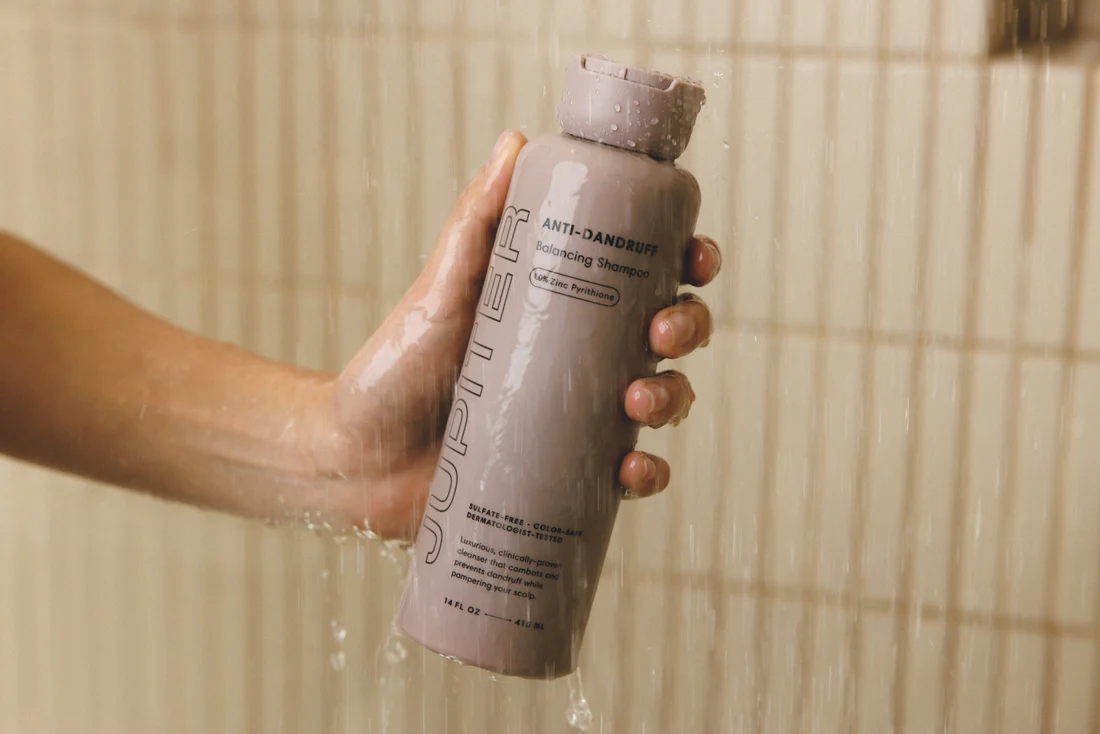
A zinc pyrithione shampoo like Jupiter’s Anti-Dandruff Balancing Shampoo pairs 1% zinc pyrithione with additional botanical actives including rosemary extract, squalane, and sugar kelp in a sulfate-free, paraben-free base that is clinically proven to reduce flakes by up to 100% within 30 days. It is formulated to be safe for color-treated and chemically processed hair, addressing a concern that historically kept people with dyed hair away from medicated scalp products.
Why Formulation Matters Beyond the Active Ingredient
Many medicated shampoos historically relied on sulfates to produce lather, which gave the impression of thorough cleansing but in practice stripped natural oils and irritated the scalp. This left users caught between managing dandruff and tolerating dry, dull hair as a side effect.
Modern zinc pyrithione formulations solve this by building the active ingredient into a sulfate-free, moisturizing base. The absence of harsh detergents means the scalp can be treated consistently without the stripping effect that used to make medicated shampoos a last resort.
Jupiter’s formulation is recommended by over 400 dermatologists and stylists and has been independently tested across consumer and clinical studies. The brand reports reducing hair breakage by over 75%, which positions its anti-dandruff shampoo not just as a scalp treatment but as a hair health product.
Usage and Results Timeline
Most dermatologists recommend using a zinc pyrithione shampoo three to four times per week, leaving the product on the scalp for two to three minutes before rinsing to allow the active ingredient adequate contact time. Results vary by individual, but most people see meaningful improvement within the first two washes, with continued improvement over four to eight weeks of consistent use.
For those whose dandruff improves, the question of whether to maintain regular use or reduce frequency depends on individual scalp biology. Some people find they can reduce usage once balance is restored; others benefit from ongoing maintenance at a lower frequency.
Frequently Asked Questions
Is zinc pyrithione safe for everyday use? Yes, when formulated in a gentle, sulfate-free base. Most dermatologists recommend three to four times per week rather than daily to maintain scalp balance without over-stripping.
Will a zinc pyrithione shampoo fade my hair color? Quality formulations specifically designed to be sulfate-free and color-safe, such as Jupiter’s Anti-Dandruff Balancing Shampoo, will not strip or fade color. Check that any product you use is explicitly formulated without sulfates.
What is the difference between dandruff and seborrheic dermatitis? Both involve Malassezia yeast overgrowth, but seborrheic dermatitis is more inflammatory, often producing thicker, yellower scales and more significant redness. Both respond to zinc pyrithione treatment; seborrheic dermatitis may require more consistent long-term use.
How quickly does zinc pyrithione shampoo work? Most users see visible reduction in flaking within two washes. Full stabilization of the scalp typically occurs within four weeks of consistent use.
Can I use zinc pyrithione shampoo if I have a sensitive scalp? Yes, provided the formula is free from sulfates, dyes, and synthetic preservatives like MITs or BHTs. Sensitivity-prone users should choose formulations with minimal fragrance and clean ingredients.