10 Reasons Why Voting Is Important for Your Future 2026
10 reasons why voting is important is a topic that matters more in 2026 than ever before.
Every single policy that shapes your daily life — healthcare costs, school funding, tax rates, housing regulations, minimum wage, and civil rights protections — is decided by elected officials chosen by voters.
When you cast your ballot, you choose who makes those decisions. When you stay home, you hand that power entirely to others who may not share your values or care about your community.
Voting Is the Foundation of Democracy
Democracy only functions when citizens actively participate in it. It is not a system that runs on its own. It requires consistent, widespread participation to remain healthy and representative.
When large numbers of citizens vote, elected officials are forced to represent a broader cross-section of society. When turnout drops, power concentrates in the hands of a smaller, less representative group. The entire structure of democratic government depends on enough people choosing to use the voice it gives them.
The Brookings Institution defines civic duty voting as “a full embrace of democracy” — an insistence that every citizen has a role to play in the nation’s public life. That role starts at the ballot box.
Reason 1: Your Vote Directly Shapes the Policies That Affect Your Life
Every policy decision that touches your daily life flows from an election. Healthcare access, education funding, tax rates, infrastructure investment, environmental rules, and housing regulations are all determined by people who were chosen by voters.
Those officials know exactly who voted and which communities turned out. They allocate attention and resources accordingly. Communities with higher voter turnout consistently receive more political attention, more funding, and more responsive representation.
When you do not vote, you leave every one of those decisions to someone else. You do not get to opt out of the consequences of elections by skipping them.
Reason 2: Every Vote Actually Counts — History Proves It
One of the most persistent reasons people skip voting is the belief that a single vote cannot make a difference. History destroys that argument with specific, documented examples.
| Election | Margin | Total Votes Cast |
|---|---|---|
| New Hampshire Senate Race (1974) | 2 votes | 223,363 |
| Massachusetts Governor Race (1839) | 2 votes | 102,066 |
| Alaska Congressional Race (2008) | 1 vote | 10,035 |
| New Mexico State Rep Seat | 2 votes | 14,000 |
Local elections are especially vulnerable to razor-thin margins. A Portland State University study found that fewer than 15 percent of eligible voters decided most American mayoral elections. The fewer people who vote, the more each individual ballot weighs.
Your single vote is most powerful in the elections that are closest to your daily life — school board, city council, county commission — and those are the races with the lowest turnout.
Reason 3: Voting Protects and Strengthens Human Rights
Without an active voting population, elected leaders face no accountability for how they treat citizens. Voting is the mechanism through which citizens hold power in check.
When voting rights erode, the consequences are concrete and documented: discrimination increases, policing becomes less equitable, healthcare access narrows, and educational opportunity shrinks. Elected officials who depend on suppressed turnout have no incentive to serve the communities they are excluding.
Throughout American history, the expansion of voting rights to women, people of color, and other groups directly produced stronger civil rights protections. The connection runs both directions: protecting voting rights protects all other rights. Every right that exists today was secured by people who fought to vote and then used that vote to demand change.
Reason 4: Voting Gives Voice to Marginalized Communities
Research is consistent on this point: politicians respond to voters. When a community turns out in high numbers, its issues rise on the political agenda. When a community stays home, its concerns get ignored regardless of how urgent or legitimate they are.
Lower-income communities, young people, and communities of color have historically faced both active suppression of their voting rights and lower voluntary participation rates. That combination compounds political disadvantage over time. Issues that affect these communities most directly — policing, housing, healthcare access, wage equity — receive less policy attention when those communities vote less.
The American Public Health Association has documented that voting shapes public health policy outcomes for Black, Latino, Asian American, and American Indian communities directly. The vote is not abstract. It is a tool for concrete protection.
Reason 5: Voting Has Direct Financial Impact on Your Life
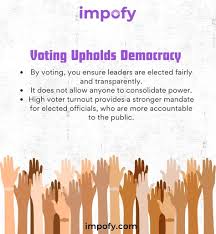
The use of your tax dollars is determined entirely by the outcomes of elections and the people you elect to office. Budgets, tax rates, infrastructure spending, and social program funding are all decided by officials who got their positions through elections.
This financial connection runs through every level of government.
| Level of Government | Financial Decisions Controlled |
|---|---|
| Federal | Income tax rates, Medicare, Social Security, defense spending |
| State | State income tax, Medicaid, state education funding, roads |
| Local | Property tax rates, school budgets, local infrastructure, police funding |
| School Board | Per-pupil education spending, teacher pay, school facilities |
When you vote, you influence who controls these spending decisions. When you do not, those decisions are made entirely by the preferences of whoever did show up. The financial stakes of every election are real and measurable.
Reason 6: Local Elections Have the Biggest Impact on Your Daily Life
National elections get all the attention, but local elections have the most direct, immediate impact on your day-to-day experience. The quality of your children’s schools, the condition of your roads, the response time of emergency services, local policing policy, housing regulations, and public transportation are all decided at the local level.
Local officials hold enormous power over your daily quality of life. Yet local elections routinely see turnout below 15 percent of eligible voters in many jurisdictions. This means a small number of highly motivated voters often decide outcomes that affect everyone.
If you attend a local school board meeting, you are often one of fifty people deciding policy for a community of fifty thousand. The same logic applies to the ballot box. Your vote in a local election carries far more individual weight than your vote in a presidential race.
Reason 7: Voting Honors a Hard-Won Historical Right
The right to vote was not given freely. It was extracted from systems of power through decades of struggle, sacrifice, and in many cases physical danger.
Women were not guaranteed the right to vote until 1920 after more than 70 years of organized advocacy. Black Americans were systematically and violently denied the right to vote despite the Fifteenth Amendment until the Voting Rights Act of 1965. Native Americans were not granted full voting rights until 1924, and faced practical barriers for decades beyond that. Young people between 18 and 21 did not receive the right to vote until 1971.
Every one of these expansions of voting rights was won by people who believed that the vote was worth fighting for. Not using that right treats their sacrifice as irrelevant. As one framing puts it: from D-Day Normandy landings to the Selma-to-Montgomery marches, people risked their lives for this right. Rights that are not exercised can be eroded.
Reason 8: Voting Holds Elected Officials Accountable
Elections are the primary mechanism through which citizens hold their government accountable. An elected official who knows their community votes in high numbers will work harder to serve that community. An official who knows a community never shows up has no reason to respond to its needs.
This accountability mechanism works only when enough people participate to make losing an election a realistic consequence of poor performance. Low turnout breaks the accountability loop. It shields bad governance from consequences and removes the primary incentive for officials to serve their constituents.
Voting is not just about choosing new leaders. It is also about sending clear signals to current leaders about what the public values, what it is watching, and what it will not tolerate. Even in elections where a result is not close, turnout data communicates community priorities to every official paying attention — and they are always paying attention.
Reason 9: Voting Shapes the Future for the Next Generation
Voting is not only about present conditions. It is also about the world you leave behind. Decisions made in current elections determine environmental policy, national debt levels, healthcare infrastructure, educational investment, and the strength of democratic institutions for decades to come.
Young voters have the longest stake in the outcomes of any election. Policies set today on climate change, student debt, housing affordability, and economic opportunity will shape the world young people live in for the next 40 to 50 years. Yet consistently, young voters have lower turnout rates than older voters.
A Tufts University study found that recent elections have seen historically high youth turnout, but significant inequities by race, educational attainment, and region remain. The issues young voters rank as most important — cost of living, jobs that pay living wages, gun violence, and climate change — are all directly shaped by election outcomes.
Future generations cannot vote in today’s elections. The decisions being made right now will be handed to them as a legacy. Voting is the most direct way to make sure that legacy reflects values worth inheriting.
Reason 10: Not Voting Is Also a Choice — With Real Consequences
Choosing not to vote does not neutralize your political impact. It simply transfers it. When you stay home, your absence shifts the effective balance of every race on the ballot. You give more weight to the votes of everyone who did show up, regardless of whether their values align with yours.
The mathematical reality is simple: in a race where 100 people vote, each vote represents 1 percent of the outcome. If 200 eligible voters could have voted but only 100 did, each non-voter effectively made the other side’s votes count more. Your non-participation is not neutral. It is a contribution to whoever wins among those who showed up.
Minority parties and third-party candidates face threshold requirements — minimum vote percentages they need to maintain ballot access and public funding eligibility. Every vote for a smaller party helps preserve political diversity and future ballot options, even in races where that party is unlikely to win outright.
Why Young People Must Vote in 2026
The 2026 midterm elections will shape the legislative agenda for the years following a major presidential cycle. Congressional composition, state-level policy, and judicial appointments are all on the line.
In the 2024 election, more than 10 million young people who were eligible to vote were not registered, according to Stanford Social Innovation Review analysis. That is 10 million voices that were completely absent from the democratic process.
| Age Group | Typical Voter Turnout | Share of Electorate |
|---|---|---|
| 18–29 | 30–50% | Roughly 17% |
| 30–44 | 48–55% | Roughly 22% |
| 45–64 | 60–68% | Roughly 32% |
| 65+ | 68–76% | Roughly 22% |
The gap between the oldest and youngest voter age groups is consistently 20 to 30 percentage points. That gap means the policy preferences of older voters are systematically overrepresented in every election cycle. Closing it is one of the most powerful changes young people can make to shift political outcomes without changing a single law.
Why Voting Matters Even When Your Candidate Loses
A common reason people stop voting after a loss is the feeling that the effort was pointless. This misunderstands how democratic participation works over time.
Voting is a long game. Officials track not just wins and losses but turnout patterns, vote share shifts, and trend lines. A candidate who loses while receiving 45 percent of the vote in a district they previously won by 30 points sends a very loud political signal to every official in that region. That signal triggers policy adjustments, candidate strategy changes, and resource reallocations.
Communities that vote consistently, even in losing cycles, accumulate political credibility. Communities that only show up when they are confident of winning lose that credibility quickly. Showing up every time, regardless of the expected outcome, is how communities build long-term political power.
How Voting Protects Public Health
Research from UC Berkeley’s public health program documents a direct link between voting and health policy outcomes. Through voting, communities contribute to decisions affecting health equity, healthcare access, and overall community well-being.
Healthcare policy is not made in a vacuum. Medicaid expansion decisions, insurance regulation, prescription drug pricing, mental health funding, and public health infrastructure are all legislated by people who were elected by voters. Communities with lower voting participation face documented disadvantages in healthcare policy outcomes, particularly for lower-income and racially diverse populations.
The American Public Health Association has formally adopted voting access as a public health issue, recognizing that disenfranchisement functions as a health determinant. Voting is not only a civic act. It is a health act.
The Connection Between Voting and Economic Opportunity
Economic policies that affect job availability, wage levels, workplace rights, and income inequality are all set by elected officials. Minimum wage increases, labor protections, trade policies, and tax structures all require legislative action from people who were elected or appointed by elected officials.
Research is consistent that communities with higher voter turnout receive more attention to economic concerns from their representatives. Job training programs, infrastructure investment, and small business support are more likely to flow to communities where elected officials feel accountable to an active voting population.
Conversely, low-turnout communities face a structural disadvantage in competing for economic resources. The political economy of resource allocation rewards the communities whose votes officials need to win and punish those whose abstention makes them politically irrelevant.
What Happens to Democracy When People Stop Voting
When participation drops, democratic institutions weaken in measurable ways. Officials become more responsive to the preferences of organized special interest groups and wealthy donors, because those groups show up consistently while the general public does not.
Low turnout elections produce less representative outcomes. Extreme candidates perform better in low-turnout environments because their motivated base represents a higher share of actual voters. Moderate, consensus-oriented governance requires broad participation to succeed. Narrow participation produces narrow, often more polarized leadership.
This is not a theoretical concern. Political scientists who study American elections have documented a systematic shift in policy outcomes as turnout rates fluctuate. The preferences of frequent voters are systematically reflected in policy. The preferences of infrequent or non-voters are systematically ignored.
A Summary of the 10 Reasons Why Voting Is Important
| Reason | Core Impact |
|---|---|
| 1. Shapes daily life policies | Healthcare, taxes, education, housing |
| 2. Every vote counts | Elections decided by 1–2 votes historically |
| 3. Protects human rights | Rights erode without voter accountability |
| 4. Voice for marginalized communities | Turnout drives political attention |
| 5. Financial impact | Tax dollars and budgets follow election outcomes |
| 6. Local elections shape daily life most | Schools, roads, safety, housing decided locally |
| 7. Honors historical sacrifice | Hard-won right through generations of struggle |
| 8. Holds officials accountable | Elections are the accountability mechanism |
| 9. Shapes future generations | Climate, debt, healthcare decided now |
| 10. Non-voting has consequences | Absence shifts balance toward those who showed up |
How to Make Sure Your Vote Counts in 2026
Registering to vote is the first step and in most US states must be completed 10 to 27 days before Election Day. Checking your registration status, confirming your polling location, and understanding what identification requirements apply in your state are all concrete steps that turn intention into action.
If you registered at a previous address and have moved, your registration may need to be updated. Millions of eligible voters miss elections each year not from lack of desire but from administrative barriers that are entirely avoidable with a small amount of advance preparation.
Voting early or by mail where available removes the scheduling pressure of Election Day and ensures that work, childcare, transportation, or unexpected circumstances cannot prevent you from participating. These options exist specifically to increase the number of citizens who can exercise this right.
Frequently Asked Questions (FAQs)
Why is voting important in a democracy?
Voting is the primary mechanism through which citizens choose their representatives and hold them accountable. Without widespread participation, democratic government becomes less representative and more susceptible to the influence of narrow, organized interests.
Does one vote really make a difference?
Yes. Multiple documented US elections have been decided by one or two votes, including a 1974 New Hampshire Senate race. Local elections are especially sensitive to individual ballots, with many decided by margins of under 1 percent.
Why is it important for young people to vote?
Young people have the longest stake in today’s policy decisions on climate, student debt, jobs, and healthcare. Yet youth voter turnout is consistently 20 to 30 points lower than older voters, meaning their priorities are systematically underrepresented.
Why is voting in local elections important?
Local officials control schools, roads, policing, housing, and public services that affect daily life directly. Local elections typically have very low turnout, meaning each vote carries far greater individual weight than in national races.
Is not voting a political choice?
Technically yes, but it is not a neutral one. Abstaining shifts effective voting weight toward those who did participate, regardless of whether their values match yours. Non-voting produces real political consequences.
How does voting affect healthcare policy?
Every healthcare policy decision — Medicaid funding, insurance regulations, drug pricing, mental health programs — is made by elected officials. Communities with higher voter turnout consistently receive more favorable healthcare policy attention and resource allocation.
Why did people fight for voting rights?
Marginalized groups including women, Black Americans, and young people fought for voting rights because they understood that political exclusion produced economic, social, and legal disadvantage. The vote was and remains a tool of community protection.
Does voting affect the economy?
Yes. Minimum wage, labor protections, tax policy, trade agreements, and infrastructure spending are all set through legislative action by elected officials. Communities with higher turnout consistently receive more attention to economic concerns.
Can my vote matter if I live in a safe state?
Yes. State and local elections on the same ballot as national races determine your governor, state legislature, judges, and local officials who have enormous direct power over your life. These races are never decided in advance.
How do I make sure I am registered to vote in 2026?
Check your state’s official voter registration portal or USA.gov to verify your current registration status. In most states, you must register 10 to 27 days before Election Day. If you have moved, your registration likely needs to be updated.
Conclusion
10 reasons why voting is important all come back to a single truth: every decision that affects your life is made by people chosen by voters.
Healthcare access, education funding, housing policy, tax rates, civil rights protections, environmental rules, and the strength of democratic institutions are all shaped by who wins elections. And who wins elections is determined by who shows up to vote.
History shows that elections are regularly decided by margins of one or two votes. Local races are often won or lost by a handful of ballots.
Communities that vote consistently receive more resources, more representation, and better policy outcomes.
Young people, marginalized communities, and first-time voters have more power at the ballot box than they realize.
In 2026, with consequential elections at every level of government, there is no stronger act you can take for your future than casting your vote.
Register, prepare, and show up.