eSports: Where Tech and Sports Fully Merge
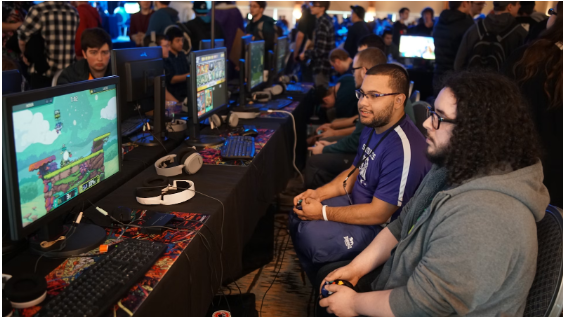
What if instead of a stadium, the roar of a crowd came from behind a glowing screen, and the crowd got to cheer from wherever they want? What if winning isn’t just putting in a lot of effort but instead requires techniques like coordination and technology? Mongolia is more than just a passive viewers. They are streaming and creating content. A novel form of battleground is emerging: the eSports arena. It is ready, the eSports arena is alive with energy. It’s more than just a passing trend. Why are eSports gaining such a deep grasp on our lives?
The Rise of Digital Arenas
In Mongolia, what used to be internet cafes bustling with schoolchildren have now evolved into high-performance training centers. Venues like the UB Arena in Ulaanbaatar host eSports tournaments, which draw hundreds of people and thousands online. This is not some random competition; we are talking about well-structured sponsored leagues with cash rewards, LED screens, and plenty more. In 2024, the Mongolian eSports team took part in the IESF eSports World Championship in Romania, showing the world their place in this global arena.
And in such a rapidly digitalizing environment, the availability of sports participation directly from the phone is especially valuable. That’s why more and more users are choosing the Melbet APK download — a sports betting app for Android, where live matches, odds, and casino games are available. It’s not just a way to have fun, but a full-fledged tool for those who want to be in the center of the action — be it football, eSports, or basketball. The simplicity of the interface and the variety of events make the platform part of the new sports reality.
Gaming as a Global Spectator Sport
Streaming platforms and massive tournaments turned eSports into a spectacle. It’s not just about playing anymore — it’s about watching, analyzing, cheering. Global tournaments attract millions, and Mongolia is right there in the digital crowd. Here’s how eSports grew into a global viewer magnet:
- The 2024 League of Legends World Championship drew over 6.5 million concurrent viewers — more than the NBA Finals.
- The Dota 2 International had a prize pool of over $18 million and was streamed in 30+ languages.
- Twitch and YouTube Gaming broadcast thousands of hours of live content daily, accessible from Ulaanbaatar to New York.
- Mobile Legends: Bang Bang tournaments reached over 1.3 billion views worldwide in 2023.
And these numbers grow with each match. Spectators are becoming not just fans, but active participants in the digital arena — they discuss, predict, and become more deeply involved. And in this environment, platforms that allow you not only to follow the course of events but also to be part of the game are especially important. MelBet betting company offers fans access to bets, analytics, and live statistics on the most popular esports disciplines. This is not just involvement — this is a new level of participation, where every click can be as strategic as a move in the game.
Skills, Strategy, and Split-Second Precision
This is not a case of mindless button-bashing; competitive gamers prepare like athletes, too. Reflexes? Strategy? Reaction time is usually under 150 milliseconds, and entire teams dedicate hours to map study, opponent prep, and decision training. After finishing 16th in an Asia-wide PUBG Mobile championship, Mongolian player “Retsu” became a national superstar. His story is a testament to the fact that talent, combined with hours of dedicated practice, produces greatness.
Training facilities have recently emerged alongside eSports teams in Mongolia, often resembling traditional sports academies. Reactionary drills, mental endurance challenges, team psychology, and countless others to push the limits. Players compete at the Asia Esports Championship and MPL Mongolia. Strategic games such as Starcraft II or real-time shooters like CS:GO demand unparalleled speed and require unmatched leadership, memory, and coordination. Everything matters. Every move matters — and every second is critical. Every click has the potential to bring glory or spiraling defeat.
Building Communities Across Screens
Mongolia doesn’t just solo grind eSports: it’s a collective effort. People engage in local cafés, Discord servers, and even at university clubs. Festivals like the Ulaanbaatar eSports Fest serve as a gathering point for fans across the country. Players can socialize, strategize, form alliances and rivalries, and so much more. With it, they take home immense pride and a sense of identity.
Awarding scholarships to aspiring eSports players began with Mongolian institutes this year. National tournaments are streamed on Facebook Gaming and TikTok Live, garnering thousands of views per match. Buzzing online forums speculate about the matches while championing other teams. “Genghis Kings” and “Steppe Fire” no longer represent just teams, but embody the very essence of Mongolia. Scarcely — and yet abundantly — through screens, cables, and pixels, a generation is connecting to the world for the sole purpose of having something greater than themselves to aspire towards.
Tech Tools Behind Every Click
You think it’s just about skill? Think again. Esports relies on cutting-edge tech at every level. Here’s what’s powering those perfect plays:
- High-refresh rate monitors (240Hz+): Essential for tracking rapid in-game movement with zero lag.
- Gaming chairs and ergonomic gear: Designed to support players during hours of training without strain.
- Dedicated servers: Reduce ping times for smoother, faster matches. In Mongolia, companies like Mobicom are investing heavily in infrastructure.
- Streaming software (OBS, XSplit): Let’s players broadcast to thousands with pro-level overlays and effects.
Without this tech, high-stakes eSports wouldn’t be possible. In Mongolia, upgrades in fiber optics and 5G are pushing things even further.
From Hobby to Career Path
A while back, gaming was purely a form of entertainment. Mongolian eSports professionals now enjoy the privileges of earning sponsorships, globetrotting, and participating in full-time streaming. Ulaanbaatar’s Tekken champion, “Chuka,” even joined a Korean team after winning their regional qualifiers. That is a huge change for him. More than just players, there are also shoutcasters, analysts, team managers, and event organizers building their careers in these fields.
Now, there are eSports academies, sponsorships, and funding for international representation from both the government and private sectors. Even the youth’s parents are more on board. A few weeks ago, the Mongolian Youth Federation released a new program meant to connect veteran gamers with high school students. Now, the screens in their bedrooms are turned into portals of possibility. With each click and countless late-night practice sessions, these teens are discovering paths to success.
The Future of Sports Still Starts with Passion
At the center of it all? Passion. The roar of the crowd as the victory is clinched. The drive to continually better oneself. The immense joy in picking up the controller, not because one is obligated. Mongolia is a prime example of where eSports are expanding further, and there is no sign of it slowing down. Who’s to say the next breakout star isn’t sitting on a controller right now?