Why painting is the hobby your brain actually needs (and how to start this weekend
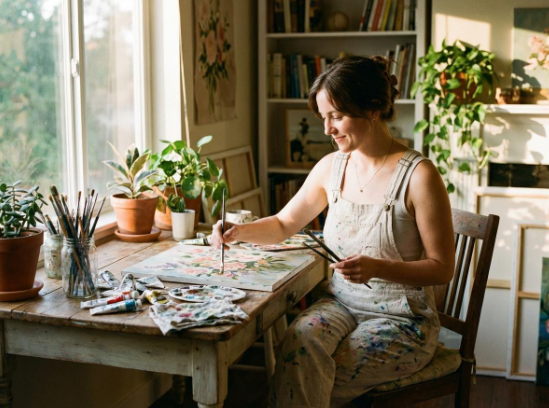
Painting engages both brain hemispheres and has been shown to reduce cortisol levels in 75% of participants after just 45 minutes of creative activity.
Most people write off painting before they’ve ever tried it. “I can’t draw.” “I have no artistic talent.” “That’s for people who went to art school.” Sound familiar? These are the same objections that kept a lot of people away from one of the most well-researched mood-boosting activities you can do at home, with no equipment other than a brush and some paint.
Painting has had a genuine comeback over the past few years. It’s not just a pandemic trend that quietly faded – creative hobbies have held steady as a mainstream wellness practice, and for good reason. The global arts and crafts market is on track to hit $47.35 billion in 2025, growing at 6.5% annually, according to Research and Markets industry data. In 2024 alone, 71% of U.S. adults took part in a craft project, with 86% of Gen Z identifying as crafters, per Statista.
This isn’t about making museum-worthy art. It’s about what the act of painting does to your brain – and why the evidence behind it is hard to ignore.
Flower art: why it’s the perfect subject for beginners
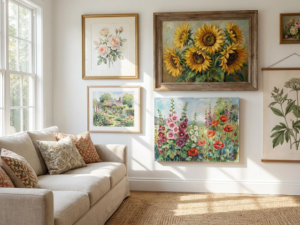
Floral subjects offer infinite variety, from delicate cherry blossoms to bold sunflowers, making them ideal for painters at any skill level.
If you’re going to start somewhere, flowers are the most forgiving subject you can pick. There’s no wrong way to paint a petal. A rose that’s slightly asymmetrical is still a rose. A sunflower with uneven edges reads as organic, not as a mistake. That built-in tolerance for imperfection makes floral subjects genuinely easier for beginners to approach than, say, portraits or architectural scenes where proportions are obviously off.
Flowers also offer a wide variety within a single subject. Watercolor washes work beautifully for soft botanical pieces. Acrylics handle the bold, graphic look of poppies or sunflowers. Oils build up a richness that suits dark, moody garden scenes. You can spend years painting nothing but flowers and never exhaust the style options.
There’s a practical angle too. Nature-inspired art is one of the most consistent interior design trends of the past few years – biophilic design, the idea of bringing natural elements into living spaces, has driven demand for botanical prints and floral canvases in home decor. A finished floral painting doesn’t just sit in a portfolio; it goes straight on a wall. That finished-product appeal matters when you’re starting out and need something to show for your efforts.
For those who want to see what’s possible before picking up a brush themselves, browsing a flower art collection can work as both a reference point and a source of inspiration – and if your own painting efforts take time to develop, there’s nothing wrong with hanging something beautiful in the meantime.
What painting does to your brain (the science is real)
Start with the cortisol research. A Drexel University study found that just 45 minutes of creative activity reduced cortisol – the body’s primary stress hormone – in 75% of participants. That’s not a marginal effect. That’s the kind of result you’d expect from a 20-minute run or a meditation session. The interesting part: it didn’t matter whether participants had any prior art experience. Making something was enough.
A 2024 review published in Frontiers in Behavioral Neuroscience found that creative arts activities trigger dopamine release in the brain’s reward system – the same pathways activated by food, music, and social bonding. Sustained creative practice also appears to strengthen connections between brain hemispheres over time, which is the same neuroplasticity mechanism behind learning a new language or instrument.
The real-world numbers tell a similar story. A March 2025 survey by Jackson’s Art of artists in the UK found that 21% said art helps them feel more relaxed, and 20% reported it boosts their confidence and self-esteem. These aren’t outliers – they’re consistent patterns across different age groups and skill levels.
The takeaway: you don’t need talent for any of this to work. Your brain doesn’t care if the painting looks good. It responds to the act of making.
How to get started without any artistic experience
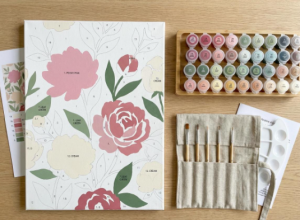
A photo-based painting kit turns your own images into a guided step-by-step experience – no prior skill required.
The biggest barrier to starting is also the most irrational one: “I’m not creative enough.” But creativity isn’t a fixed trait you either have or don’t. It responds to practice. The first session won’t look like your mental image of a painting. That’s fine. That’s the point.
For people who want a concrete entry point rather than a blank canvas, the paint-by-numbers format has become genuinely popular – and more sophisticated than its childhood toy reputation suggests. The concept is simple: a canvas is pre-printed with numbered sections, and each number corresponds to a specific paint color. You follow the map. The image takes shape without you having to make any compositional decisions upfront.
What’s changed recently is the customization angle. One of the most popular entry points right now is photo-based painting kits – you upload a personal photo, receive a numbered canvas with all the paints included, and work through it at your own pace. Your dog. A family portrait. A favorite travel photo. The finished piece is yours in a way a generic kit can’t replicate. According to Accio.com’s 2025 market trend report, paint-by-numbers kits saw 18% month-over-month search growth in early 2025, with flower and animal themes leading in sales volume.
If you’re after something low-pressure to try this weekend, painting is consistently one of the more relaxing things to do this weekend – no special setup required, just a surface and a couple of hours.
Making it a habit (without turning it into a chore)
The difference between a hobby that sticks and one that doesn’t usually comes down to expectations. People start with ambition – they picture themselves painting for three hours on Sunday mornings – and when life gets in the way, they assume they’ve failed. They haven’t. They just set the bar too high from the start.
Research published in PMC/NIH on creative pursuits for mental health supports the idea that even short, consistent creative sessions produce real wellbeing benefits. You don’t need a dedicated studio or a two-hour block. Twenty minutes twice a week is enough to start seeing the effects on mood and stress levels. Consistency matters more than duration.
A few things that actually help: keep your supplies visible. If the paints are in a box in a closet, you won’t reach for them. A small tray on a side table or in a corner of a desk reduces friction enough to make spontaneous sessions possible. Tying painting to an existing routine – after dinner, on weekend mornings before the household wakes up – works better than treating it as a separate scheduled event.
The social side has grown, too. Sharing work on Instagram or Pinterest, joining local painting groups, gifting finished pieces – these have all become part of how people sustain creative hobbies long-term. If you’re casting around for ideas for fun activities that leave you with something tangible at the end, painting holds up better than most options.
Pick up the brush
Painting is one of the few hobbies where the process is the point, not the outcome. The stress reduction, the dopamine release, the satisfaction of making something with your hands – those happen whether or not the finished painting ends up on a wall or in a drawer. Your brain doesn’t grade on aesthetics.
If you’ve been waiting for the right moment or the right level of skill before trying, it’s worth dropping both conditions. A set of basic acrylics costs less than a restaurant meal. A photo-based kit comes with everything you need in the box. Finished flower art gives you something to look at while you work up the confidence to make your own.
The hardest step is always the first one. Everything after that is just paint on canvas.