Why Does My Ear Hurt When I Chew? Jaw or Ear Issue 2026
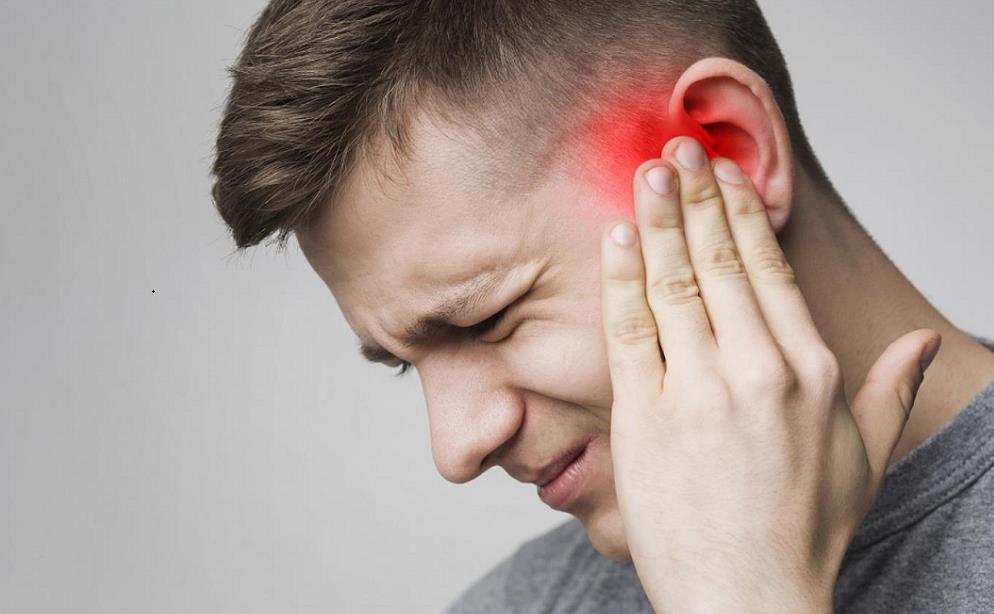
Why does my ear hurt when I chew is a question millions of people search every year — and the answer is almost never as simple as an ear infection.
Ear pain during chewing sits at the crossroads of your jaw joint, your ear canal, and a complex web of shared nerves.
It can come from a dental problem, a joint disorder, a sinus issue, or something happening directly inside the ear itself. Understanding the real cause is the first step toward real relief.
The Anatomy Behind the Pain: Why the Jaw and Ear Are So Connected
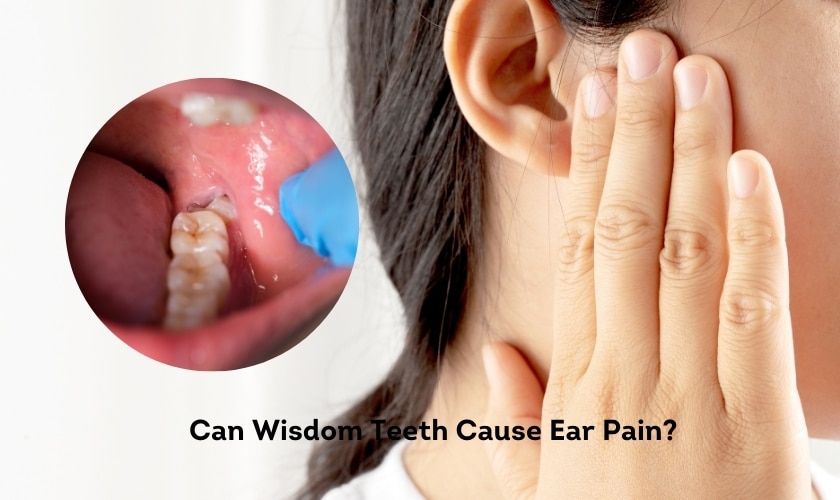
Your ear and jaw are not separate systems. They share anatomy, nerves, and muscle attachments in ways that make pain in one area almost automatically felt in the other.
The temporomandibular joint — the TMJ — sits just 2 to 3 millimeters in front of your ear canal. It is literally your closest joint to your ear. This sliding hinge connects your lower jawbone (mandible) to the side of your skull (temporal bone), allowing you to chew, speak, yawn, and swallow.
The same nerve — the trigeminal nerve — supplies sensation to both the jaw joint and the ear region. When something irritates this nerve near the TMJ, your brain can misread the signal as ear pain. That is what clinicians call referred pain.
One of the chewing muscles (the tensor veli palatini) actually extends into the middle ear and connects to the Eustachian tube. When jaw muscles go into spasm, this muscle can spasm too — creating pressure, fullness, and pain that feel entirely like an ear problem.
The Most Common Reason: TMJ Disorder (TMD)
TMJ disorders — formally called temporomandibular disorders or TMD — are responsible for approximately 80% of jaw-related ear pain cases. This is the most important thing to understand when asking why your ear hurts when you chew.
What Is TMD?
TMD is not a single condition. It is a group of conditions involving pain and dysfunction in the jaw joint and the muscles surrounding it. Between 5 and 12 percent of adults experience some form of TMD, and it affects women more commonly than men.
The TMJ is one of the most complex joints in the body. It moves in multiple directions simultaneously — hinging open and sliding forward at the same time. A soft cartilage disc sits between the bones to cushion this movement. When this disc shifts, wears down, or becomes inflamed, the joint stops working smoothly.
Why TMD Makes Your Ear Hurt During Chewing
Every bite you take loads the TMJ. If the joint is inflamed, the disc is displaced, or the surrounding muscles are tight, that loading creates pressure that radiates directly toward the ear canal.
Shared nerve pathways mean the brain interprets this jaw-joint pressure as ear pain. Many patients spend months being treated for recurring ear infections when the real problem is sitting millimeters away — in the jaw joint.
Common Causes of TMD
Teeth grinding (bruxism) during sleep is one of the leading drivers of TMD. Grinding puts enormous repetitive force on the joint throughout the night, inflaming it by morning.
Jaw clenching — often triggered by stress — creates the same sustained muscle tension without the grinding. Many people clench without ever realizing it, especially while concentrating, driving, or sleeping.
A misaligned bite (malocclusion) means your upper and lower teeth do not meet evenly. Uneven bite forces stress the TMJ on one or both sides during every chew.
Jaw injury or trauma — even from dental procedures that require wide mouth opening — can temporarily alter the joint’s alignment and trigger a TMD flare.
Arthritis, including osteoarthritis and rheumatoid arthritis, can affect the TMJ like any other joint in the body, causing cartilage breakdown and inflammation.
TMD Symptoms Beyond Ear Pain
| Symptom | Description |
|---|---|
| Clicking or popping | Sound when opening or closing the mouth |
| Jaw stiffness | Especially in the morning or after meals |
| Limited mouth opening | Jaw may feel locked or restricted |
| Headaches | Radiating from the temples or jaw |
| Facial soreness | Tenderness in cheeks, temples, or neck |
| Ear fullness | A “plugged” or underwater sensation |
| Tinnitus | Ringing or buzzing in the ear |
| Neck and shoulder pain | From compensating muscle tension |
If your ear pain worsens when you chew, yawn, or talk — rather than being constant — TMD is almost certainly involved.
Ear Infections: When the Ear Itself Is the Source
Not all ear pain during chewing comes from the jaw. Actual ear infections can also worsen significantly when you chew, because jaw movement puts mechanical pressure on inflamed tissue near or inside the ear canal.
Outer Ear Infection (Otitis Externa / Swimmer’s Ear)
Swimmer’s ear is a bacterial infection of the outer ear canal, often caused by water trapped after swimming or bathing. The ear canal becomes inflamed, swollen, and very tender.
When you chew, the movement of your jaw physically stretches and compresses the outer ear canal wall. In a healthy ear, this causes no sensation. In an infected ear, this motion creates sharp, stabbing pain.
Swimmer’s ear is usually identified by pain when the outer ear is tugged or touched, a feeling of blockage, and sometimes a discharge from the ear canal.
Middle Ear Infection (Otitis Media)
Middle ear infections involve fluid buildup and inflammation behind the eardrum. They affect the Eustachian tube’s ability to equalize pressure inside the middle ear.
Chewing creates small pressure changes in the jaw and surrounding structures. In a healthy ear, these are imperceptible. In an infected middle ear, these pressure changes amplify pain significantly.
Middle ear infections typically come with fever, a feeling of fullness deep in the ear, muffled hearing, and sometimes fluid drainage. They are more common in children but do affect adults.
How to Tell an Ear Infection from TMD Ear Pain
| Feature | TMD Ear Pain | Ear Infection |
|---|---|---|
| Worsens with jaw movement | Yes — chewing, yawning | Sometimes |
| Fever | No | Often |
| Ear discharge | No | Possible |
| Triggered by touching outer ear | No | Yes (swimmer’s ear) |
| Affects both ears | Sometimes | Usually one ear |
| Associated with jaw clicking | Yes | No |
| Improves with jaw rest | Yes | No |
| Recent illness (cold, flu) | Unlikely | Common trigger |
If you have a fever or ear discharge, see a doctor immediately — these point to infection, not TMD.
Dental Problems That Cause Ear Pain When Chewing
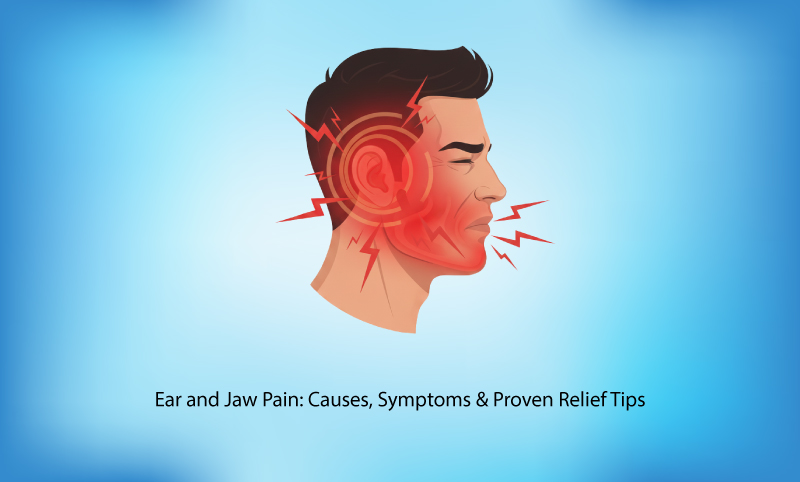
Dental issues are a surprisingly common and often overlooked cause of ear pain during chewing. The teeth and the ear share nerve pathways through branches of the trigeminal nerve.
Dental Abscess
A dental abscess is a pocket of infection at the root of a tooth or between the tooth and gum. Abscesses in the upper back molars are especially prone to causing referred pain toward the ear, because those teeth’s nerve roots connect to the same trigeminal nerve branches that supply ear sensation.
The pain from a dental abscess tends to throb, worsen with heat, and intensify significantly when biting down. It is often accompanied by facial swelling on the affected side and sensitivity to both hot and cold.
Impacted Wisdom Teeth
Wisdom teeth that are partially erupted or growing at an angle put pressure on surrounding tissue and nerves. This pressure radiates forward and upward — often landing directly in the ear area during chewing.
Impacted wisdom teeth may also cause jaw stiffness, swollen gum tissue at the back of the mouth, and difficulty opening the mouth wide.
Cavities and Tooth Decay
A deep cavity exposes the inner pulp of the tooth to pressure and temperature changes. Biting down on food compresses the decayed tooth and fires pain signals along the trigeminal nerve — which can be interpreted as ear pain.
Gum Disease and Periodontal Infection
Advanced gum disease creates pockets of infection around tooth roots. These infections generate inflammation that can radiate along shared nerve pathways toward the jaw joint and the ear.
Bruxism: Teeth Grinding and Its Impact on Ear Pain
Bruxism — the habit of clenching or grinding teeth, usually during sleep — is a major driver of ear pain during chewing and deserves its own focus.
Grinding places forces on the TMJ that far exceed those of normal chewing. Studies show grinding can generate bite forces of up to 250 pounds per square inch — compared to roughly 70 pounds during regular eating.
This sustained overload inflames the joint, tightens the surrounding muscles, and puts direct pressure on the structures adjacent to the ear canal. People with bruxism frequently wake up with ear pain, jaw soreness, and headaches — all of which worsen as they begin eating breakfast.
Stress, anxiety, sleep disorders, and misaligned teeth all contribute to bruxism. A custom night guard is the most effective way to protect the joint from overnight grinding damage.
Sinus Infections and Pressure
Sinus infections (sinusitis) cause mucus buildup and inflammation in the sinus cavities of the face and skull. Because the sinuses are located in close proximity to the jaw and ear structures, this congestion creates pressure that radiates outward.
Chewing can temporarily increase sinus pressure by engaging the muscles and bones of the face. In someone with an active sinus infection, this makes ear and jaw pain noticeably worse during meals.
Sinusitis is typically accompanied by nasal congestion, postnasal drip, facial tenderness around the cheeks or forehead, and sometimes fever. If these symptoms accompany your ear pain during chewing, sinusitis may be a contributing factor.
Earwax Buildup
Excessive earwax (cerumen impaction) can create a blockage in the ear canal. When you chew, the movement of your jaw shifts the tissue of the ear canal — and if that canal is packed with hardened wax, this movement creates pressure and discomfort.
Earwax buildup rarely causes severe pain, but it can produce a dull ache, a feeling of fullness, muffled hearing, and discomfort that noticeably increases during chewing.
A healthcare provider can safely remove impacted earwax with irrigation or a curette — never attempt to remove it at home with cotton swabs, which tend to push the wax deeper.
Trigeminal Neuralgia
Trigeminal neuralgia is a nerve disorder involving the trigeminal nerve — the same nerve that connects the jaw and the ear. When this nerve is irritated or compressed, it fires intense, sharp pain signals along its branches.
Chewing is one of the classic triggers of trigeminal neuralgia episodes. The pain is often described as electric shock-like, stabbing, and sudden. It can radiate to the ear, cheek, forehead, or teeth.
This is a less common cause but an important one to rule out, especially when ear and jaw pain occurs as sudden, brief, electric-shock bursts rather than as a dull persistent ache.
Other Less Common Causes
Several less frequent conditions can also cause ear pain specifically during chewing.
Sternocleidomastoid muscle injury involves the large muscle that runs from behind the ear down to the collarbone. Injuries or strain to this muscle can produce ear pain, sinus pressure, and jaw discomfort — often without any obvious cause from the ear itself.
Eustachian tube dysfunction occurs when the tube connecting the middle ear to the back of the throat fails to equalize pressure properly. Chewing can momentarily affect pressure around this tube, causing a pop, pain, or sensation of fullness.
Parotid gland problems involve the large salivary gland located just in front of and below the ear. Infection or blockage of this gland can cause pain directly in front of the ear that worsens during chewing — when saliva production peaks.
Red Flag Symptoms: When to Seek Help Immediately
Most ear pain during chewing is not dangerous. But some signs demand prompt medical evaluation.
See a doctor the same day if you experience fever above 101°F alongside ear pain, as this suggests infection that may spread. Ear discharge — especially if it is yellow, green, or bloody — is another urgent sign.
Sudden hearing loss in one ear combined with ear pain requires emergency evaluation to rule out serious inner ear events. Facial swelling, especially if it involves the jaw or neck, can indicate a spreading dental or ear infection.
If your jaw locks completely open or shut, this is a TMJ emergency that warrants urgent dental care. Any ear pain accompanied by dizziness, loss of balance, or extreme vertigo should be evaluated without delay.
What to Do at Home: Immediate Relief Steps
For most cases of ear pain when chewing — especially those related to TMD or mild dental issues — there are practical steps you can take right away.
Switch to a Soft Food Diet
Give your jaw joint a break. For the first week, eat soft foods that require minimal chewing: soups, scrambled eggs, mashed potatoes, yogurt, well-cooked vegetables, and soft fish.
Avoid steak, raw carrots, crusty bread, chewy bagels, hard candy, and chewing gum. The less you load the TMJ during meals, the faster inflammation can resolve.
Apply Moist Heat
A warm, moist compress applied to the jaw area directly in front of the ear for 15 to 20 minutes, two to three times a day, helps relax tight chewing muscles and reduce joint inflammation.
Moist heat penetrates deeper than dry heat. A warm damp towel, a microwaveable heat pack dampened with water, or even a warm shower with water directed at the jaw area all work well.
Try Ice for Acute Flare-Ups
If the ear and jaw pain feels sharp and recent — especially after an injury or a TMD flare — apply a cold pack wrapped in a thin cloth to the joint area for 10 minutes at a time.
Cold constricts blood vessels, reduces acute swelling, and numbs sharp pain. Alternate with moist heat once the sharpest pain phase has passed.
Over-the-Counter Anti-Inflammatories
Ibuprofen (400 to 600 mg every 6 to 8 hours with food) is more effective than acetaminophen for TMD-related ear pain because it targets both pain and the underlying inflammation in the joint.
Take it consistently for 5 to 7 days rather than only when pain spikes — this allows the anti-inflammatory effect to build up and reduce sustained joint swelling.
Jaw Exercises
Gentle jaw exercises help restore range of motion and relax muscle tension around the joint.
The relaxed jaw exercise involves placing your tongue on the roof of your mouth just behind the front teeth, then allowing your mouth to drop open slowly while keeping your tongue in place. Hold for 10 to 15 seconds and repeat five times.
The chin tuck involves drawing your chin straight back toward your neck — creating a gentle double-chin position — and holding for five seconds. This corrects forward head posture, which places extra strain on the TMJ.
Avoid Jaw-Straining Habits
Stop chewing gum entirely during a TMD flare. Also avoid biting your nails, chewing on pen caps, resting your chin in your hand, and sleeping on your stomach with your face twisted to one side.
These habits may seem minor, but they add cumulative strain to an already irritated joint.
Night Guard
If teeth grinding is suspected, a night guard prevents the teeth from making destructive contact during sleep. Custom-fitted guards from a dentist are significantly more effective than over-the-counter options, as they properly position the jaw.
Professional Treatment Options
| Treatment | Used For | What It Does |
|---|---|---|
| Custom Night Guard | Bruxism, TMD | Protects joint from grinding forces overnight |
| Scaling and Root Planing | Gum disease causing referred pain | Removes infection from tooth roots |
| Dental Abscess Treatment | Abscessed tooth | Root canal or extraction to eliminate infection |
| Physical Therapy | TMD, muscle tension | Strengthens jaw muscles, restores joint mechanics |
| Occlusal Adjustment | Bite misalignment | Reshapes bite surfaces to distribute forces evenly |
| Corticosteroid Injection | Severe TMJ inflammation | Reduces joint swelling directly |
| Botox Injections | Severe muscle clenching | Temporarily relaxes overactive chewing muscles |
| Arthrocentesis | Advanced TMD | Washes out the joint capsule under local anesthesia |
| Antibiotics | Ear or dental infection | Clears bacterial infection causing pain |
| Ear Irrigation | Earwax impaction | Safely removes compacted earwax |
| Surgery (last resort) | Severe structural joint damage | Repairs or reconstructs TMJ components |
How to Tell If It Is Your Jaw or Your Ear: A Quick Self-Check
Ask yourself these questions before your appointment:
Does the pain get worse specifically when you chew, yawn, or talk? This strongly points to the jaw joint — not the ear itself.
Does pressing gently on the area directly in front of your ear — the TMJ — reproduce or worsen the pain? If yes, this is highly suggestive of TMD.
Is there clicking or popping when you open your mouth wide? This is a classic TMD sign.
Did the pain start during or after a stressful period? Stress-related clenching is a major TMD trigger.
Is there a fever, ear drainage, or recent cold or flu? These point toward an actual ear or sinus infection.
Has a dentist recently commented on worn or cracked teeth? This may indicate bruxism-related TMD.
When to See a Doctor vs. Dentist vs. Specialist
| Situation | Who to See |
|---|---|
| Pain worsens with jaw movement, no fever | Dentist — rule out TMD and dental causes |
| Fever + ear discharge | Doctor / ENT — rule out infection |
| Jaw clicking, popping, or locking | Dentist or TMJ specialist |
| Toothache + ear pain + swelling | Dentist — rule out abscess urgently |
| Electric-shock jaw/ear pain | Neurologist — rule out trigeminal neuralgia |
| Persistent dizziness + ear pain | ENT specialist |
| Symptoms persisting beyond 2 weeks | Any of the above — do not delay |
Frequently Asked Questions (FAQs)
Why does my ear hurt when I chew but I don’t have an ear infection?
The most likely cause is TMJ disorder — inflammation or dysfunction in the jaw joint just in front of your ear. Shared nerve pathways make jaw pain register as ear pain without any actual ear problem.
Can TMJ disorder cause ear pain?
Yes. TMJ disorders are responsible for around 80% of jaw-related ear pain. The joint’s direct proximity to the ear canal and shared nerve anatomy make referred ear pain one of the hallmark symptoms of TMD.
How do I know if my ear pain is from my jaw or my ear?
If pain worsens specifically when you chew, yawn, or talk — and there is no fever or discharge — it is almost certainly jaw-related. Pressing on the area just in front of your ear reproducing the pain is a strong indicator of TMD.
Can teeth grinding cause ear pain?
Absolutely. Bruxism places extreme repetitive force on the TMJ, inflaming the joint and surrounding muscles. This inflammation radiates toward the ear and is a leading cause of morning ear pain and jaw soreness.
What is the fastest way to relieve ear pain from TMJ?
Apply moist heat to the jaw for 15 to 20 minutes, take ibuprofen as directed, switch to soft foods, and avoid chewing gum. Symptoms typically begin to ease within a few days of consistent self-care.
Can a dental abscess cause ear pain?
Yes. Abscesses in upper back molars frequently cause referred pain to the ear through shared trigeminal nerve branches. This pain is usually accompanied by throbbing, swelling, and sensitivity to temperature.
Can sinus infections make my ear hurt when I chew?
Yes. Sinus pressure from a sinus infection can radiate toward the ear and jaw. Chewing temporarily increases facial pressure, making this pain noticeably worse during meals.
Should I stop eating if my ear hurts when I chew?
Do not stop eating — but switch to soft foods that require minimal jaw effort. Completely avoiding jaw use can actually stiffen the joint further. Gentle, low-effort chewing on soft foods keeps the joint mobile without overloading it.
How long does TMD-related ear pain last?
Mild cases often resolve within 1 to 2 weeks with consistent home care including soft diet, moist heat, and ibuprofen. If pain persists beyond two weeks or is severe, professional evaluation is necessary.
When should I see a doctor for ear pain when chewing?
See a doctor if you have fever or ear discharge, if pain is severe or worsening, if your jaw locks, if you have sudden hearing loss, or if symptoms have not improved after two weeks of home care.
Conclusion
Why does my ear hurt when I chew has many possible answers — but the most important thing to recognize in 2026 is that the ear and jaw are deeply connected.
TMJ disorder is the leading cause, and it is far more common than most people realize. Ear infections, dental abscesses, teeth grinding, sinus pressure, and nerve issues can all produce the same symptom.
Starting with soft foods, moist heat, and anti-inflammatories handles most mild cases effectively. W
hen pain persists, a dentist or specialist can identify the real source and provide targeted treatment. Do not ignore ear pain that consistently comes on when you chew — your jaw is telling you something worth listening to.