Why Do Balloons Pop on Grass? Physics Made Easy 2026
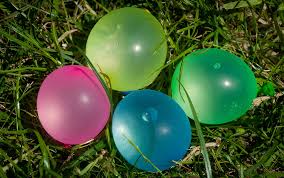
Why do balloons pop on grass is a question every parent, party planner, and curious kid has asked after watching a perfectly good balloon explode the moment it touches the lawn. It seems baffling — grass looks soft, green, and harmless.
But the science behind this everyday mystery is genuinely fascinating. It involves the physics of pressure, the microscopic structure of grass blades, the chemistry of latex, heat expansion, static electricity, and even the hidden dangers lurking in your backyard.
The Basic Physics of Why Do Balloons Pop on Grass?

Before explaining why balloons pop on grass, it helps to understand what a balloon actually is from a physics perspective.
A balloon is a thin elastic container holding gas at a pressure higher than the surrounding atmosphere. When you inflate a balloon, you are forcing more air or helium molecules into a confined space than can comfortably exist there at normal pressure.
This creates internal pressure that pushes outward in all directions. The balloon skin — usually made of latex — stretches to accommodate this pressure. The more you inflate it, the thinner and more stretched the skin becomes, and the higher the internal pressure climbs.
At full inflation, a typical latex balloon is stretched to nearly 700% of its original size. The material is incredibly thin at this point — similar in thickness to a few layers of plastic wrap. This is why a surprisingly small force is enough to cause a pop.
What Happens When a Balloon Pops
The actual popping mechanism is a fascinating piece of physics. When a hole or tear appears in the balloon skin, the system immediately becomes unstable.
The internal pressure suddenly has an escape route. High-pressure air rushes outward through the opening at extreme speed. As it does, the tension in the latex skin causes the tear to propagate outward at speeds of up to 500 miles per hour — faster than the speed of sound in some cases.
This rapid tearing of the latex is what creates the loud bang. The sound is not simply air escaping — it is the shock wave created by the near-instantaneous release of stored elastic energy as the skin rips apart.
At higher internal pressures, multiple cracks radiate outward from the puncture point simultaneously, shattering the balloon into fragments. At lower pressures, a single tear opens and spreads more slowly.
Why Grass Looks Safe but Is Not
The central misunderstanding about balloons on grass is the assumption that grass is soft. From a human scale, it feels soft underfoot. From a balloon’s perspective, grass is a field of microscopic spears.
The Sharpness of Grass Blade Tips
Individual grass blades have tips that, while invisible to the naked eye at normal viewing distance, are mechanically sharp enough to concentrate force onto an extremely small area.
Physics has a specific principle at work here called stress concentration. When you press a balloon against a broad, flat surface, its weight is distributed across a large area and the pressure per square millimeter is low. When a grass blade tip contacts the balloon, the entire weight of the balloon is focused onto a contact point that may be less than a millimeter wide.
This concentrates the force dramatically — potentially hundreds of times more than what a smooth surface would produce. That concentrated point of pressure can easily exceed the tensile strength of the stretched latex.
Dry vs. Wet Grass
The condition of the grass matters enormously. Dry grass is significantly more dangerous to balloons than wet grass.
When grass dries out, the blades become stiffer and more rigid. This stiffness means they do not bend and flex when a balloon pushes against them — instead, they push back with full concentrated force, making puncture far more likely.
Wet grass bends and compresses under the balloon’s weight. The tips splay outward and the force is distributed more broadly. This is why lightly watering the grass the night before an outdoor event can meaningfully reduce balloon popping rates.
Seed Heads, Weeds, and Hidden Debris
Grass alone is rarely the only hazard. A typical lawn contains seed heads, weed stems with pointed ends, small stones, fallen twigs, insect shells, and other debris that are far sharper than ordinary grass blades.
Seed heads — the flower-like structures at the top of uncut grass — are particularly dangerous. They have multiple stiff, diverging points that function like a cluster of tiny needles. A balloon settling onto a patch of uncut grass with seed heads has almost no chance of survival.
Burrs and thistles are among the worst offenders. Their hook-like spines are specifically evolved to catch and grip soft materials — which is exactly what a latex balloon surface is. Contact with a single burr is almost always fatal to a balloon.
The Main Reasons Balloons Pop on Grass
1. Puncture from Sharp Grass Tips (Primary Cause)
This is the dominant reason and the most direct one. The microscopic tips of grass blades concentrate contact pressure onto a point smaller than the wall thickness of the balloon skin.
When the concentrated pressure at this point exceeds the tensile strength of the stretched latex, the material tears. This creates the initial hole, and from that moment, the stored elastic energy in the skin takes over — propagating the tear at enormous speed and producing the characteristic pop.
A balloon that is more inflated is at higher internal pressure and has thinner, more stretched skin — making it dramatically more vulnerable to this puncture mechanism. A balloon inflated to only 70 or 80 percent of its maximum size has thicker skin and lower internal pressure, making it significantly harder to puncture.
2. Heat Expansion from Sunlight
Heat is the second major cause of balloon popping, and on a sunny day it may actually exceed grass-related punctures in frequency.
When a balloon sits in direct sunlight, the gas inside absorbs thermal energy and its molecules begin moving faster. According to Charles’s Law — a fundamental principle of gas physics — gas expands when heated at constant pressure. Inside a sealed balloon, the volume cannot freely expand, so the internal pressure increases instead.
As the temperature rises, this pressure climbs. On a hot summer day, a balloon moved from an air-conditioned room to direct sunlight may experience a temperature difference of 30 degrees Celsius or more. This temperature change alone can increase internal pressure enough to burst a fully inflated balloon, with no grass required.
When grass and heat work together — a balloon sitting in sunlight on a dry lawn — the balloon skin is simultaneously weakened by heat degradation and under increased internal pressure, while the grass tips below are rigid and ready to puncture. This combination is why outdoor parties on warm days produce so many sudden, unexplained pops.
3. UV Degradation of Latex
Ultraviolet light from the sun does not just heat the balloon — it chemically attacks the latex itself. UV radiation breaks the molecular bonds within the polymer chains that give latex its strength and elasticity.
This process causes what balloon professionals call oxidation — the chalky, cloudy appearance that develops on latex balloons after a few hours in sunlight. Oxidized latex is weaker, stiffer, and far more brittle than fresh latex.
A balloon that has been sitting in the sun for two to three hours has significantly reduced tensile strength compared to a freshly inflated one. At this point, even relatively gentle contact with grass blades — contact that a fresh balloon might have survived — becomes enough to cause a pop.
Dark-colored balloons absorb more UV radiation and heat than light-colored ones and therefore oxidize and weaken faster. White, yellow, and pastel balloons hold up noticeably better in outdoor conditions than dark red, navy, or black ones.
4. Friction and Abrasion
When a balloon rolls or slides across grass rather than landing statically on it, friction becomes an additional factor. The repeated dragging of latex across multiple grass tips creates a different failure mode than a single puncture.
Friction abrades the surface of the latex progressively, thinning it unevenly and creating microscopic weak spots. These weak spots do not immediately cause a pop but make the surface much more vulnerable to the next contact point it encounters.
A balloon that bounces across a lawn in a breeze can accumulate significant abrasion damage across its surface before any single point actually punctures through. The eventual pop may look sudden and random, but it is the result of accumulated surface damage reaching a critical threshold.
5. Static Electricity Discharge
Latex balloons are excellent generators of static electricity. When you rub a balloon against fabric, hair, or carpet, electrons transfer between surfaces and the balloon acquires a significant electrostatic charge.
As a charged balloon moves through the air or rolls across grass, the charge can build up further through contact and movement. Grass is not a great conductor of electricity, but under the right conditions — particularly in dry air — a charged balloon touching the right point of contact can discharge suddenly.
This electrostatic discharge creates a brief but intensely hot spark. While the spark is tiny, it is hot enough to melt a microscopic hole in the thin latex skin. This creates the initial puncture, and the pressure inside does the rest.
It is worth noting that static electricity alone is rarely powerful enough to pop a balloon without first creating this thermal pinhole. The actual burst is still a pressure event, but it is triggered by an electrical ignition mechanism rather than mechanical puncture.
6. Over-Inflation Before Contact
A balloon inflated to its maximum capacity is already under extreme stress. Its skin is stretched to maximum thinness, its internal pressure is at its peak, and it has no tolerance for any additional force or temperature increase.
Over-inflated balloons pop on grass easily because the system has no margin of safety. Even a relatively blunt grass blade that a 75-percent-inflated balloon would survive becomes fatal when the balloon is stretched to 100 percent of its capacity.
The professional balloon industry recommends inflating balloons to no more than 80 to 90 percent of their maximum size for outdoor events. This leaves a buffer that accommodates both heat expansion and the mechanical stresses of surface contact.
7. Temperature Shock from Rapid Environment Changes
Moving a balloon rapidly from a cool environment to a hot one creates a sudden, fast expansion event rather than a gradual pressure increase.
When gas heats up quickly, it expands faster than the latex skin can gradually accommodate. This rapid pressure spike can exceed the skin’s tolerance in a fraction of a second — causing an immediate pop the moment the balloon exits an air-conditioned space and enters hot outdoor air.
This is a common experience at outdoor birthday parties where balloons are brought from an air-conditioned house to a sunny lawn. The balloon that survived indoors without issue pops dramatically within seconds of stepping outside — not because of anything on the grass, but because of the shock of sudden heating.
The solution is to allow balloons to equilibrate gradually — carrying them through a transitional space or shade area rather than directly from cold interior to full sun.
Balloon Types and Their Grass Resistance
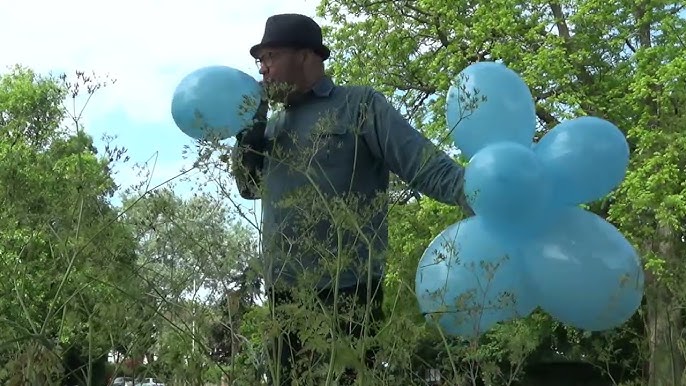
Not all balloons behave equally when they encounter grass. The material, construction, and inflation medium all dramatically affect how likely a balloon is to survive outdoor conditions.
Balloon Type Comparison for Outdoor Grass Conditions:
| Balloon Type | Material | Grass Resistance | Heat Resistance | UV Resistance | Cost |
|---|---|---|---|---|---|
| Standard latex | Natural rubber latex | Low | Low | Low | Very low |
| Professional latex | Thick-wall latex | Medium | Low-medium | Low-medium | Low |
| Foil / Mylar | Metallic polyester film | Medium-high | Medium | High | Medium |
| Vinyl | PVC material | High | High | High | High |
| Bubble / Deco | Clear stretchy plastic | High | Medium-high | Medium | Medium-high |
Key differences explained:
Latex balloons are by far the most commonly used and the most vulnerable. Standard latex is thin, stretchy, and highly sensitive to UV, heat, and mechanical puncture. The same elasticity that makes latex balloons fun to play with is the property that makes them easiest to pop on grass.
Foil (Mylar) balloons use a metallic polyester film that is non-stretchy and much thicker than latex. They do not expand significantly with heat, making them far more heat-resistant. However, they are still vulnerable to sharp puncture — a single grass blade tip can pierce the film just as easily as latex. The advantage is that foil punctures tend to produce slow deflation rather than an explosive pop.
Vinyl balloons are made from PVC and are thick enough to genuinely resist most grass-related punctures. They are designed for prolonged outdoor use and can survive conditions that would destroy multiple generations of latex balloons. The trade-off is cost — vinyl balloons are significantly more expensive and less commonly available.
Bubble or Deco balloons are made from a clear, stretchy, thick plastic. They are notably more resistant than latex while maintaining the look of a traditional round balloon. They represent the best balance of cost, appearance, and outdoor durability for most event planners.
Why Some Surfaces Are Safer Than Grass
Understanding why grass is dangerous also explains why some surfaces are much safer for balloons.
Surface Safety Comparison for Balloons:
| Surface Type | Risk Level | Primary Reason |
|---|---|---|
| Smooth hardwood floor | Very low | No points, even pressure distribution |
| Carpet (short pile) | Low | Fibers flex and spread force |
| Smooth concrete | Low (unless rough) | Broad contact area, no sharp tips |
| Wet grass | Medium | Blades flex and compress |
| Dry short-cut grass | High | Rigid tips, concentrated pressure |
| Uncut grass with seed heads | Very high | Multiple sharp points per contact |
| Gravel or rough concrete | Very high | Multiple sharp stones |
| Thorny weeds or burrs | Extreme | Curved barbs grip and puncture |
The key variable in all cases is point concentration — how much force is concentrated onto how small an area. Smooth surfaces spread the balloon’s weight across thousands of square millimeters. Grass tips concentrate it onto fractions of a square millimeter.
Does Air-Filled vs. Helium-Filled Matter?
The gas inside the balloon affects both behavior on grass and longevity in outdoor conditions.
Air-filled balloons are generally more resistant to temperature changes than helium-filled ones. Air has larger molecules than helium and does not expand as dramatically with temperature increases. Air also does not escape through the latex skin as quickly, meaning air-filled balloons last significantly longer.
Helium molecules are extraordinarily small — much smaller than the molecular gaps in latex. Helium slowly migrates through the latex skin continuously, which is why helium balloons deflate over time even without any puncture. This gradual helium loss means a helium balloon’s skin becomes progressively less taut, but it also means the balloon starts deflating from within, making it sag and eventually contact surfaces it was floating above.
For outdoor events on grass, air-filled balloon decorations — arches, garlands, columns — are significantly more practical than helium-filled ones. They stay in place, do not drift into the grass or sharp objects, and are not subject to the dramatic temperature-driven pressure changes that affect helium.
The 90 Percent Inflation Rule
The single most effective technical prevention is the 90 percent inflation rule.
Rather than inflating balloons to their maximum size, inflate them to approximately 80 to 90 percent of maximum capacity. This rule provides two independent benefits.
First, the balloon skin is thicker and stronger at lower inflation. At 90 percent inflation, the latex is meaningfully thicker than at 100 percent, giving it much greater puncture resistance.
Second, the internal pressure is lower at 90 percent inflation, leaving a buffer for heat expansion. If the temperature increases and the gas expands, the additional pressure can be absorbed within the remaining elastic capacity of the skin rather than immediately exceeding it.
A useful professional technique is to inflate the balloon to 100 percent, then let a small amount of air out before tying it. This stretches the latex to its maximum range, making it more elastic and uniform, then reduces it to the safer 90 percent operating point with improved material properties.
How to Prevent Balloons from Popping on Grass
Prepare the Lawn Before the Event
Mow the grass at least one day before the event. Shorter grass blades have less reach and are less likely to contact a balloon resting on or near the lawn.
After mowing, rake the area to remove clippings, seed heads, and debris. Walk the entire event area and manually remove any thistles, burrs, or thorny weeds you find.
Water the grass lightly the night before. Damp grass blades flex and compress rather than standing rigid — significantly reducing their ability to puncture a balloon.
Create a Barrier Between Balloons and Grass
A physical barrier is the simplest and most reliable solution. A plastic tablecloth, foam mat, tarp, or even a few layers of newspaper placed under balloon clusters eliminates direct grass contact entirely.
Clear acrylic stands or balloon stands raise decorations above the lawn surface, providing both a visual uplift and complete separation from grass. These are particularly effective for balloon centerpieces and focal points.
Weighted balloon bases with wide, smooth bottom plates keep the arrangement stationary and lifted, preventing the bottom balloons from resting on the grass.
Choose the Right Balloon Type
For key outdoor decorations, foil balloons provide better durability and a more professional appearance that holds up through the event. For maximum durability in long events or full-sun conditions, vinyl or bubble balloons are worth the additional cost.
If latex is the only option, invest in professional-grade thick-wall latex rather than standard party-store balloons. The difference in wall thickness meaningfully affects puncture resistance and UV durability.
Use lighter colors for outdoor events. Dark colors absorb more heat, degrade faster in UV, and pop sooner than pastels, white, or yellow.
Time Inflation and Setup Correctly
Inflate balloons as close to the event start time as possible. Every hour of sunlight exposure weakens latex and fills its heat buffer.
If early setup is unavoidable, store inflated balloons in a shaded, cool area — indoors if possible — until the last moment before the event begins.
When moving balloons from a cool interior to the outdoors, do so gradually. Walk through a shaded transitional area rather than directly into full sun. This allows the gas inside to warm gradually rather than shock-expand.
Monitor and Replace Proactively
Rather than waiting for balloons to pop during the event, monitor them periodically for signs of overexpansion or thinning. A balloon that looks noticeably larger than its companions, or that has a shiny, tight surface compared to a slightly matte finish, is approaching its pressure limit.
Replacing a balloon proactively — deflating it quietly and substituting a fresh one — prevents the startling noise and mess of an unexpected pop, particularly important if children or noise-sensitive guests are present.
The Science of the Popping Sound
The loud bang of a popping balloon is itself worth a brief scientific explanation, because many people misunderstand where the noise comes from.
It is not the sound of air escaping. Air exits through the tear relatively quietly. The bang is created by two simultaneous events.
First, the rapid tearing of the latex skin at several hundred miles per hour creates a mechanical shock wave in the surrounding air. This is similar to the crack of a whip, which also moves faster than sound.
Second, the sudden release of compressed air from inside the balloon creates a brief pressure wave — a miniature sonic boom at the point where the balloon was. The surrounding air is displaced outward in all directions, and our ears register this displacement as a sharp, impulsive sound.
The volume of the pop depends on how much pressure was stored inside the balloon. An over-inflated balloon popping contains more stored energy and produces a louder, more violent explosion than an under-inflated one.
Common Myths About Balloons Popping on Grass
Several misconceptions circulate about this topic. Setting the record straight helps both scientific understanding and practical prevention.
Myth: Grass produces some kind of chemical that dissolves latex. This is false. Grass does not secrete compounds that attack latex at any meaningful rate during contact. The only chemical interaction between grass and latex that could cause damage would require prolonged contact, not the momentary touch that pops a balloon.
Myth: Static electricity alone is enough to pop a balloon. Static electricity contributes but is rarely the sole cause. It creates a pinhole spark, but the actual burst is still a pressure event. Most outdoor balloon pops involve mechanical puncture or heat expansion as the primary trigger.
Myth: Helium is more dangerous on grass than air. Helium-filled balloons are not more vulnerable to grass puncture than air-filled ones. Both contain gas at similar pressures when equally inflated. The difference is that helium is more temperature-sensitive and causes more dramatic pressure changes in heat.
Myth: Wet grass makes balloons pop faster. The opposite is true. Wet grass bends and compresses, reducing the concentration of force from grass blade tips. Dry, rigid grass is far more dangerous to balloons than wet grass.
Myth: Hi-Float liquid inside a balloon prevents it from popping on grass. Hi-Float is a water-based coating applied inside helium balloons to reduce helium permeation through the latex skin. It extends float time but has no effect on puncture resistance or heat tolerance.
Balloon Popping and Child Safety
The sudden, loud pop of a balloon can be genuinely distressing for young children and those with sensory sensitivities or anxiety. At outdoor events on grass, this risk is elevated because so many factors conspire to cause unexpected pops.
Several practical steps reduce the safety concern alongside the pop frequency.
Under-inflating all balloons by at least 10 to 15 percent reduces both the frequency of pops and the volume of each pop when it occurs. Less stored energy means a quieter, less violent burst.
Positioning balloon decorations away from areas where children are playing directly reduces the chance of a child accidentally causing a pop through contact. Children chasing a balloon on the lawn is a near-certain recipe for a grass-induced pop.
After any pop, latex balloon fragments should be collected immediately. Small latex pieces are a choking hazard for toddlers and can also be swallowed by pets and wildlife.
Eco-Friendly Considerations for Outdoor Balloon Events
Outdoor balloon events raise genuine environmental concerns beyond the science of popping.
Latex is a natural material and technically biodegradable, but the degradation timeline is much longer than commonly believed — often several years rather than months. During that time, latex fragments and especially metallic foil pieces can be ingested by wildlife, cause intestinal blockages, and persist in waterways.
Helium balloons released outdoors travel several miles before bursting at altitude and returning to earth as fragments. These fragments land in oceans, forests, and farmland where they can cause harm to marine and terrestrial wildlife.
For truly eco-conscious outdoor events, air-filled balloon decorations that remain controlled and are cleaned up immediately after the event represent the most responsible approach. Alternatives such as paper lanterns, fabric bunting, and tissue pompoms create a festive atmosphere without the environmental footprint.
Quick Prevention Checklist for Outdoor Events
Day before the event:
Mow the grass and rake thoroughly. Water the lawn lightly. Walk the area and remove all weeds, burrs, thorns, and debris. Purchase professional-grade or foil balloons rather than standard party balloons.
Morning of the event:
Inflate balloons to 80 to 90 percent of maximum size. Use lighter colors for any latex balloons. Store inflated balloons indoors or in shade. Set up physical barriers — mats, stands, weighted bases — in the event area.
During the event:
Transition balloons from cool indoor to outdoor gradually through shade. Monitor balloons periodically for signs of overexpansion. Keep balloons away from direct sunlight where possible. Keep young children from chasing balloons across the lawn. Replace any balloon showing stress signs before it pops.
After the event:
Collect all balloon fragments immediately — both for safety and environmental reasons. Dispose of latex fragments in the trash, not the compost bin. Deflate and save any reusable foil or vinyl balloons for future use.
Summary: Why Balloons Pop on Grass — All Causes at a Glance
| Cause | Mechanism | Risk Level | Prevention |
|---|---|---|---|
| Sharp grass blade tips | Stress concentration exceeds tensile strength | Very high | Mow, wet grass, use barriers |
| Seed heads and debris | Multiple sharp points puncture latex | Very high | Rake and remove debris |
| Heat expansion from sun | Gas pressure rises beyond skin tolerance | High | Shade, under-inflate, light colors |
| UV degradation | Latex weakens chemically over time | Medium-high | Minimize sun exposure, time setup |
| Over-inflation | Thin skin and peak pressure, no safety margin | High | Apply 90% inflation rule |
| Friction and abrasion | Surface damage from rolling or dragging | Medium | Keep balloons stationary |
| Temperature shock | Rapid expansion on moving from cool to hot | Medium | Gradual temperature transition |
| Static discharge | Spark creates pinhole in dry conditions | Low-medium | Humidity helps; dry air worsens |
Frequently Asked Questions (FAQs)
Why do balloons pop immediately when they touch grass?
The tips of grass blades concentrate all the contact force onto a microscopic point that easily pierces the thin, stretched latex skin. An over-inflated balloon on dry grass is under maximum stress and has almost no tolerance for any additional force.
Do all types of balloons pop on grass?
Latex balloons are the most vulnerable. Foil and vinyl balloons are significantly more resistant because they are thicker and do not stretch the same way. However, any balloon can be punctured by a sharp enough point on the grass.
Does wet grass make balloons pop less often?
Yes. Wet grass blades flex and bend under the balloon’s weight, spreading the contact force across a wider area. Dry, rigid grass concentrates the force onto the sharp tip and is far more likely to puncture a balloon.
How can I stop balloons from popping at an outdoor party?
Mow and rake the grass, water it lightly the night before, place mats or stands between balloons and the lawn, inflate balloons to only 80 to 90 percent capacity, choose foil or vinyl balloons for key decorations, and use lighter balloon colors to reduce heat absorption.
Is it safe to let children play with balloons on grass?
Keep a watchful eye and ensure any popped balloon fragments are collected immediately, as latex pieces are a choking hazard for toddlers. Under-inflate balloons to reduce both the frequency and volume of accidental pops.
Why does a balloon pop in the sun even without touching anything?
Sunlight heats the gas inside, causing it to expand and increase pressure. If the balloon is already fully inflated, there is no room left for this expansion — the pressure exceeds the skin’s tolerance and it bursts without any contact at all.
Does balloon color affect how quickly they pop on grass?
Color affects heat absorption but not grass puncture directly. Dark balloons absorb more sunlight, heat up faster, and build pressure more quickly — making them more likely to burst from heat in combination with grass contact. Light colors perform noticeably better outdoors.
Can static electricity from grass cause a balloon to pop?
Static plays a minor contributing role. Grass itself is not a strong static generator, but a charged balloon can build up static through movement and contact. A sudden discharge can create a spark hot enough to melt a pinhole in the latex, which then causes a pressure-driven burst.
What is the best balloon for outdoor grass events?
Vinyl balloons offer the most durability but are expensive. For most events, professional-grade foil (Mylar) balloons offer the best balance of durability, appearance, and cost. If latex is required, use thick-wall professional-grade latex, under-inflated to 80 to 90 percent, in light colors.
Why does the balloon make such a loud bang when it pops?
The bang comes from two events: the latex skin tearing at speeds up to 500 miles per hour creates a shock wave, and the sudden release of compressed air displaces surrounding air in all directions. The louder the pop, the higher the internal pressure was when the balloon burst.
Conclusion
Why do balloons pop on grass? The short answer is that grass is not actually soft from a balloon’s perspective — it is a field of microscopic sharp tips that concentrate force onto the thinnest, most stretched material you can buy.
Combined with heat expansion, UV degradation of latex, over-inflation, friction, and static electricity, grass creates a surprisingly hostile environment for an inflated balloon.
The physics behind every pop is elegant and consistent: once a hole appears in pressurized stretched latex, the stored elastic energy propagates the tear at explosive speeds. The good news is that this science gives us clear, practical solutions.
Mow the lawn, wet it down, use barriers and stands, choose the right balloon material, follow the 90 percent inflation rule, and time your setup wisely. With these steps, your outdoor event balloons can survive the grass — and the whole party — without a single unexpected bang.