Why Did Hang Ease Go Out of Business? Rise & Fall 2026

Why did Hang Ease go out of business is a question that reveals one of the most fascinating and heartbreaking startup stories to ever come out of Shark Tank.
HangEase was a brilliantly simple collapsible clothes hanger invented by an eight-year-old boy, sold to Walmart before he turned ten, pitched on national television at nineteen, and completely shut down before he turned twenty-one.
The story involves a patent dispute, a broken Shark Tank deal, a seven-year business hiatus, a price point four times higher than competitors, and a founder who ultimately outgrew his own invention.
What Was HangEase?
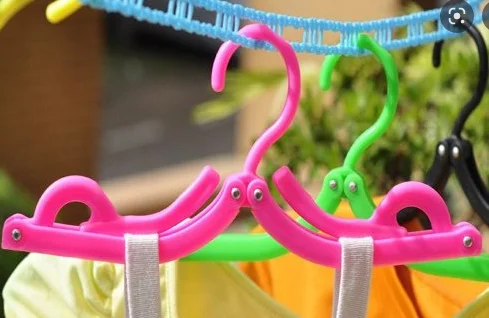
HangEase was a collapsible plastic clothes hanger with a patented hinge at its center. When downward pressure was applied, the hanger folded in half, allowing shirts to slide off easily without stretching the collar or snapping the hanger.
The design solved a genuine everyday problem. Traditional rigid plastic hangers break under pressure, snag fabrics, and stretch shirt necks when you try to pull clothes off quickly. HangEase eliminated all three issues with one simple mechanical innovation.
The hanger returned to its rigid locked shape when you wanted to hang something back up. Simple, practical, and genuinely clever for an invention that started as a third-grade school project.
Who Founded HangEase?
Ryan Landis of Plano, Texas, invented HangEase in 2003 when he was in third grade. His teacher had issued a challenge to the class: find an everyday household object and redesign it to work better.
Ryan was frustrated by how often he broke hangers pulling his shirts off and how the rigid plastic would catch and stretch fabric. He sketched out a hanger with a fold-down hinge in the middle and entered it in a school invention convention.
What started as a homework assignment would become a product sold in 100 Walmart stores before Ryan turned ten years old.
HangEase Before Shark Tank: The Walmart Success Story
The HangEase origin story before Shark Tank is genuinely extraordinary for a child inventor.
A classmate’s mother who worked as a sales broker attended Ryan’s school invention convention and immediately recognized the commercial potential of the collapsible hanger. She helped connect Ryan’s family with Walmart’s buying team.
Walmart placed an order for 400,000 units. The hangers were retailed in four-packs at $3.89. The total Walmart contract generated $200,000 in sales and $70,000 in profit for Ryan and his family.
Ryan hired a patent attorney and filed for a utility patent, which was officially granted in 2007. He had a patented product, a proven retail relationship with the world’s largest retailer, and real sales data — all before most kids had finished elementary school.
| Early HangEase Milestone | Year | Detail |
|---|---|---|
| Invention created | 2003 | Third-grade school project, Plano, Texas |
| Entered invention convention | 2003 | Caught attention of a retail sales broker |
| Walmart contract signed | ~2004–2005 | 400,000 units ordered for 100 stores |
| Utility patent filed | ~2005–2006 | Protection for collapsible hinge design |
| Patent officially granted | 2007 | Full legal protection issued |
| Business goes dormant | 2006–2013 | Ryan focuses on school, hangers sit in boxes |
| Shark Tank appearance | April 2014 | Season 5, Episode 27 |
| Deal announced on air | April 2014 | Mark Cuban and Lori Greiner, $80K for 30% |
| Deal falls apart | Late 2014 | Patent due diligence fails, deal never closes |
| Website and social media go dark | 2015 | Business effectively dead |
| Official closure | 2022 | Website confirmed down, product delisted everywhere |
Why Did HangEase Leave Walmart?
Here is the first crack in the HangEase story. Walmart stocked the product in approximately 100 stores. The product sold. But Walmart did not reorder.
When the Sharks on Shark Tank pressed Ryan on why Walmart stopped carrying HangEase if the product was successful, Ryan’s answer was honest and damaging: he believed it was because the product was not marketed well.
There was no promotional strategy. No endcap placement negotiation. No social media because social media did not yet exist for small businesses at that scale in 2004 and 2005. No advertising push to tell Walmart shoppers that a collapsible hanger even existed.
Retail giants like Walmart do not keep products on shelves out of goodwill. They track sales velocity — how fast a product moves per unit of shelf space. Without marketing driving customers to reach for the four-pack of HangEase hangers instead of the cheap standard ones nearby, the product simply sat and eventually disappeared from reorders.
Losing Walmart was the first and arguably most consequential blow to HangEase’s long-term survival.
The Seven-Year Business Hiatus
After losing the Walmart contract, Ryan Landis made a decision that was entirely reasonable for a ten-year-old: he stopped working on the business and went back to being a kid.
For the next seven years, the HangEase inventory sat in boxes. The patent remained active. The trademark was maintained. But no sales happened, no marketing was done, no new retail relationships were built, and no product development occurred.
When Ryan arrived on Shark Tank in April 2014 at age nineteen, he had to explain to a panel of seasoned investors why his business had been completely dormant for nearly a decade.
Barbara Corcoran cited this exact gap as her primary reason for declining to invest. She told Ryan directly that she had invested in products that founders had shelved and brought back, and those investments had always failed because the founder’s passion had faded.
The seven-year hiatus was not just a gap in operations. It was a signal to investors that the business had no momentum, no updated market research, no current retail relationships, and no proof that the founder was truly committed to making it work.
HangEase on Shark Tank: Season 5, Episode 27
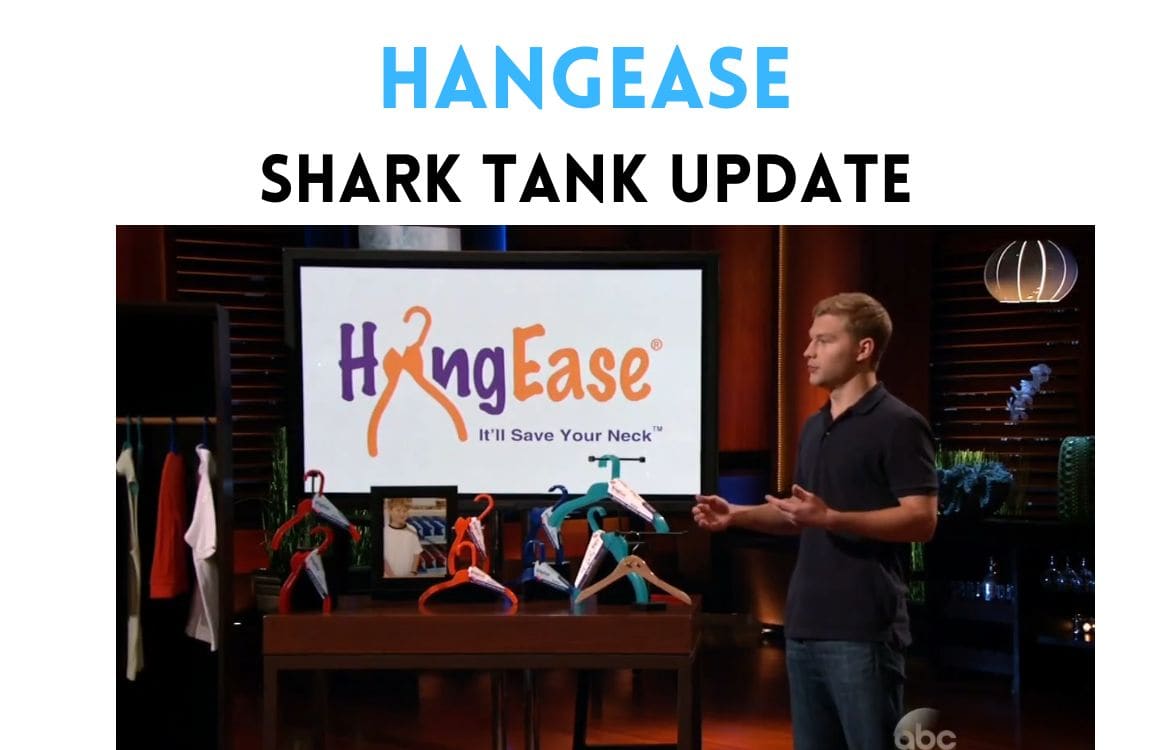
Ryan Landis appeared on Shark Tank Season 5, Episode 27, which aired on April 18, 2014. He walked into the Tank asking for $80,000 in exchange for a 30% equity stake, giving HangEase an implied valuation of $266,667.
He demonstrated the product, explained how the hinge mechanism worked, and handed samples to each Shark. The pitch was clear and the product was genuinely clever.
Then the questions came, and the cracks in HangEase’s story began to show.
What Each Shark Said
Robert Herjavec did not see a compelling need for the product and was the first to drop out.
Kevin O’Leary’s assessment was characteristically blunt. He said the product “bores the crap out of me” and exited the deal.
Barbara Corcoran expressed her concerns about Ryan’s long absence from the business. She had been burned before by products that founders abandoned and tried to revive. She passed.
Lori Greiner expressed genuine interest but raised a significant concern. She told Ryan that she had seen similar collapsible hangers in the market, which directly challenged the protective value of his utility patent.
Mark Cuban saw potential despite the uncertainties. He offered $80,000 for 30% equity, contingent on the patent being verified as legitimate and offering genuine competitive protection. He then invited Lori to join him in the deal. She agreed.
Ryan accepted on air. The room celebrated. HangEase had a Shark Tank deal with two of the show’s most powerful investors.
Why the Shark Tank Deal Never Closed
This is the central question behind why did Hang Ease go out of business, and the answer is equally frustrating and instructive.
The deal between Ryan Landis, Mark Cuban, and Lori Greiner was contingent on patent verification. After the cameras stopped rolling, the due diligence process began — and the deal fell apart.
The exact reasons were never made fully public, but the evidence points clearly to patent concerns. Lori Greiner had already flagged on air that she had seen similar products in the market. A utility patent for a specific mechanical design does not necessarily prevent competitors from producing hangers with functionally similar collapsing mechanisms achieved through slightly different engineering.
If due diligence revealed that the 2007 patent did not provide the airtight competitive protection Cuban and Greiner needed to justify the investment, they would have had every reason to walk away from the contingent deal.
Without the $80,000 injection and without the strategic guidance of two major Shark Tank investors, HangEase had no path to relaunching production, rebuilding retail relationships, or funding a marketing campaign.
The deal collapsing was a death sentence for HangEase in practical terms.
The Real Reasons HangEase Failed
Why did Hang Ease go out of business comes down to multiple compounding failures, not a single mistake. Here is the complete breakdown.
Reason 1: The Shark Tank Deal Fell Through
Without the $80,000 and without Mark Cuban and Lori Greiner’s networks, HangEase had no capital to restart operations. The business had been dormant for seven years and needed real investment to relaunch — investment it never received.
Reason 2: Patent Protection Was Too Weak
The utility patent granted in 2007 protected the specific design, but it was not broad enough to prevent competitors from entering the market with functionally similar products. Lori Greiner’s observation that she had seen similar hangers was a major warning sign that proved accurate.
Without strong patent protection, there was no defensible market position. Any manufacturer could produce a competing collapsible hanger without violating Ryan’s specific patent claims.
Reason 3: The Price Point Was Not Competitive
HangEase sold four hangers for $3.89. A four-pack of standard plastic hangers cost $0.88 at the same retailers. HangEase was more than four times more expensive than its direct competition.
The collapsible design required more engineering, more material, and more complex manufacturing than a basic injection-molded plastic hanger. That cost got passed to the consumer. But consumers shopping the hanger aisle at Walmart are highly price-sensitive, and most were not willing to pay a 342% premium for a marginally more convenient hanger.
Reason 4: Seven Years of Business Dormancy
Seven years of no sales, no marketing, no retail relationships, and no product development left HangEase with nothing to build on when it tried to return. The Walmart relationship was long cold. The manufacturing relationships had to be rebuilt from scratch. There was no customer base, no email list, no social media following, and no brand recognition beyond whatever the original Walmart placement had produced.
Reason 5: Lost Walmart Retail Relationship
The Walmart contract was HangEase’s single most valuable asset, and it was gone before the business was five years old. Without that anchor retail relationship, HangEase had no proven sales channel and no leverage in negotiations with other major retailers.
Rebuilding a retail relationship with Walmart or any comparable chain requires substantial marketing data, strong sales velocity numbers, and active business operations — none of which HangEase had when Ryan tried to relaunch.
Reason 6: No Post-Shark Tank Marketing Strategy
Even without closing the Shark Tank deal, the episode’s airing gave HangEase a significant burst of free publicity. That kind of national television exposure creates a real window for sales and brand building.
HangEase did not capitalize on it. There was no functioning website at the time of airing. Social media accounts were minimal and quickly went dark. There was no place for interested viewers to buy the product, no landing page to capture interest, and no marketing campaign to ride the wave of Shark Tank attention.
That window closed quickly, as it always does, and HangEase had nothing to show for it.
Reason 7: The Founder Moved On
Ryan Landis was nineteen years old when he appeared on Shark Tank. After the deal fell through, he made the understandable decision to focus on his education and his career.
He completed his undergraduate degree. He worked in senior-level merchandising at Neiman Marcus, gaining real-world retail experience that his childhood invention never had the benefit of. He enrolled in an MBA program at Rice University with an expected graduation in 2023. In 2019, he filed a patent for a Lytic peptide biosensor, showing that his innovative instincts remained very much alive — just redirected elsewhere.
HangEase the company could not survive without an engaged, committed founder. When Ryan moved on, the business moved on with him — in the other direction.
HangEase Net Worth: From $266,667 to Zero
The valuation trajectory of HangEase is stark.
| Stage | Implied Valuation | Notes |
|---|---|---|
| Walmart era (2004–2006) | Not formally valued | $70,000 in profit from retail deal |
| Shark Tank pitch (2014) | $266,667 | Based on $80K ask for 30% equity |
| Peak publicity (2014) | ~$1,000,000–$2,670,000 | Various estimates post-episode air |
| Post-deal collapse (2015) | Rapidly declining | No investment, no sales, no operations |
| Website offline (2022) | $0 | Officially confirmed defunct |
| Current status (2026) | $0 | No website, no retail, no social media |
The HangEase net worth in 2026 is zero. The company has no active operations, no online presence, no retail listings, and no products available for purchase anywhere.
What Happened to Ryan Landis After HangEase?
Ryan Landis did not disappear after HangEase closed. In many ways, his post-HangEase career is more impressive than the original invention.
He completed his degree and moved into senior-level retail merchandising at Neiman Marcus, one of America’s most prestigious department store chains. This gave him the kind of sophisticated retail operations experience that HangEase desperately lacked during its operational years.
He enrolled in Rice University’s MBA program, continuing to build the business and management skills that would have been invaluable to HangEase had they been available in 2014.
In 2019, Ryan filed a patent for a Lytic peptide biosensor — a scientific innovation in an entirely different field that demonstrates his inventive instincts never faded, just evolved.
The story of Ryan Landis is ultimately a story of an entrepreneur whose first venture failed but whose skills, resilience, and curiosity continued to develop. The business failed. The founder did not.
Could HangEase Have Survived? Lessons for Entrepreneurs
Why did Hang Ease go out of business is not just a historical question. It is a business lesson with clear, actionable answers.
HangEase had genuine product-market fit. People do break hangers. People do stretch shirt collars. A collapsible hanger that solves both problems is a real solution to a real problem. The Walmart contract proved demand existed.
What HangEase lacked was the business infrastructure to capitalize on that product-market fit.
A stronger pricing strategy could have brought the cost closer to the premium end without the 342% premium over standard hangers. A marketing plan could have retained the Walmart relationship. A sustained social media and e-commerce strategy after the Shark Tank episode could have built direct-to-consumer sales. A broader patent filing strategy could have created more defensible intellectual property.
These are not criticisms of a child inventor. Ryan Landis accomplished something genuinely extraordinary before he turned ten. These are the gaps that business experience, mentorship, and capitalization could have filled — if the circumstances had aligned differently.
HangEase in 2026: Current Status
As of 2026, HangEase is completely defunct.
The official HangEase website has been offline since at least 2022. All social media accounts — Instagram, Facebook, Twitter — are inactive and have been for years. The product is not listed on Amazon, Walmart’s website, Target, Bed Bath & Beyond, or any other major online or physical retailer.
There is no indication that Ryan Landis has any plans to revive the HangEase brand. Given his career trajectory — Rice University MBA, Neiman Marcus merchandising, biosensor patent innovation — it appears the HangEase chapter is fully closed.
The collapsible hanger concept itself lives on in various competing products that have entered the market since HangEase’s decline, which is perhaps the most telling evidence that the core idea was sound even if the business was not.
Frequently Asked Questions (FAQs)
Why did Hang Ease go out of business?
HangEase failed because the Shark Tank deal with Mark Cuban and Lori Greiner never closed after patent due diligence raised concerns, leaving the business with no capital to relaunch. Combined with a seven-year dormancy, a price point four times higher than competitors, and the loss of the Walmart contract, the business had no viable path to survival.
Did HangEase actually get a deal on Shark Tank?
Yes, on air Mark Cuban and Lori Greiner offered $80,000 for a 30% equity stake. However, the deal was contingent on patent verification and never officially closed after the show, making it one of Shark Tank’s more prominent failed post-show deals.
Who invented HangEase?
Ryan Landis of Plano, Texas, invented HangEase in 2003 as a third-grade school project. He was eight years old at the time and designed the collapsible hanger after becoming frustrated with rigid plastic hangers that broke and stretched shirt collars.
How much did HangEase sell at Walmart?
HangEase sold 400,000 units through Walmart across approximately 100 stores, generating $200,000 in total sales and $70,000 in profit. Four-packs retailed for $3.89 each.
What is HangEase worth in 2026?
HangEase net worth in 2026 is $0. The company is completely defunct with no active website, social media presence, or retail listings. No commercial operations of any kind are ongoing.
Why did Walmart stop selling HangEase?
Walmart stopped reordering HangEase because the product was not marketed effectively, and shelf sales velocity was insufficient to justify continued stocking. Without marketing driving consumer awareness and purchases, the product did not turn fast enough to compete for limited shelf space.
What happened to Ryan Landis after HangEase?
Ryan Landis moved on to complete his education, work in senior-level merchandising at Neiman Marcus, and pursue an MBA from Rice University. In 2019, he filed a patent for a Lytic peptide biosensor, showing continued innovation in an entirely new scientific field.
Why did the Shark Tank deal with Mark Cuban and Lori Greiner fall apart?
The deal was contingent on verifying that HangEase’s utility patent provided adequate competitive protection. During due diligence, it appears the patent was found insufficient to prevent similar competing products — a concern Lori Greiner had flagged on air when she said she had seen similar hangers already on the market.
Was HangEase a good product?
Yes, the core concept was genuinely useful and solved a real problem. Its early Walmart success proved that consumer demand existed. The failure was a business execution problem — poor pricing strategy, weak patent protection, no sustained marketing, and a seven-year operational gap — not a product quality problem.
Can you still buy HangEase hangers in 2026?
No. HangEase products are not available anywhere in 2026. The website is down, social media is inactive, and the product is not listed on any major retail or e-commerce platform. The business is completely closed.
Conclusion
Why did Hang Ease go out of business ultimately comes down to a series of compounding failures that overwhelmed a genuinely good product idea.
A patent that could not hold off competitors, a price point too high for mass market adoption, a seven-year operational gap that froze all momentum, a lost Walmart relationship that was never replaced, and a Shark Tank deal that collapsed in due diligence — any one of these problems alone might have been survivable.
Together, they were not. Ryan Landis accomplished something extraordinary as a child inventor and demonstrated real entrepreneurial instincts throughout his journey.
The HangEase story is not a story of a bad idea. It is a story of a good idea that never received the execution, infrastructure, and sustained commitment it needed to compete in a crowded consumer market. In 2026, HangEase is gone, but the lessons it leaves behind for every entrepreneur are worth far more than $80,000.