Why Am I Overthinking Everything? Quick Help 2026
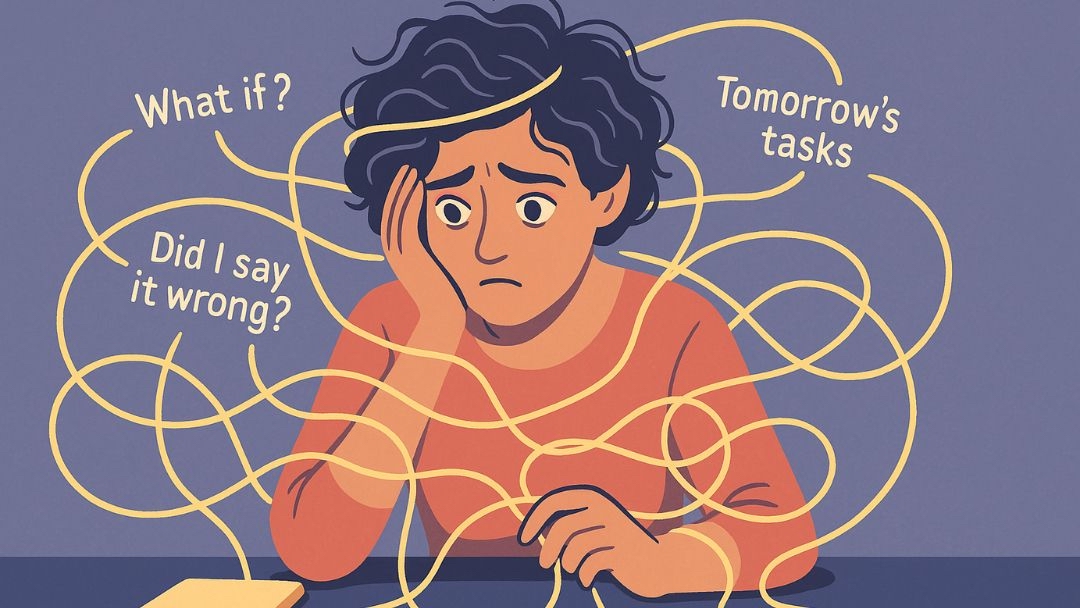
Why am I overthinking everything? If that question sounds familiar, you are already showing the self-awareness needed to break the cycle. Overthinking is one of the most exhausting mental patterns a person can experience.
It pulls you into endless loops of replaying past conversations, imagining worst-case futures, and second-guessing every decision you make. It feels like problem-solving but delivers zero solutions.
According to research by sociologist Susan Nolen-Hoeksema, nearly 73% of adults aged 25 to 35 experience chronic overthinking in their daily lives. Understanding why your brain does this is the fastest route to stopping it.
What Is Overthinking?
Overthinking is when your mind gets trapped in repetitive, unproductive thought loops that circle the same problem without ever resolving it. Mental health professionals often call this pattern rumination.
Unlike healthy reflection, which leads to insight and action, overthinking keeps you mentally spinning in place. You analyze the same situation over and over, growing more anxious and confused rather than finding clarity.
Overthinking is not a diagnosed mental illness on its own. However, it is a major symptom and driver of conditions including anxiety, depression, OCD, and PTSD.
The Two Core Types of Overthinking
Understanding which type of overthinking you experience most can help you choose the most effective strategy to stop it.
Rumination focuses on the past. It involves repeatedly going over old mistakes, regrets, embarrassing moments, or painful experiences. Thoughts like “Why did I say that?” or “I should have done things differently” are classic signs.
Worry focuses on the future. It involves mentally rehearsing worst-case scenarios, imagining everything that could go wrong, and obsessing over outcomes you cannot yet control. Thoughts like “What if I fail?” or “What if they hate me?” are the hallmark of this type.
Many people experience both simultaneously, creating a mental loop that bounces between past regrets and future fears with very little time spent in the present.
Why Am I Overthinking Everything? The Real Causes
There is rarely just one reason behind chronic overthinking. It usually develops from a combination of psychological, emotional, and neurological factors.
Anxiety and Generalized Anxiety Disorder (GAD)
Anxiety is one of the most common drivers of overthinking. When the brain perceives threat — real or imagined — it responds by analyzing every possible scenario to prepare for danger.
People with generalized anxiety disorder experience excessive, uncontrollable worry about many areas of life simultaneously. Even small situations feel potentially catastrophic, triggering non-stop mental analysis.
Overthinking and anxiety reinforce each other in a loop. Excessive rumination creates more stress, which activates the fight-or-flight response, which generates more anxious thoughts.
Depression
Overthinking and depression have a deeply intertwined relationship. Research consistently shows that rumination is one of the strongest risk factors for developing depression.
When you spend long periods replaying painful memories and dwelling on perceived failures, it sustains and intensifies low mood. Depression then extends periods of rumination, creating a self-reinforcing cycle that can be difficult to exit without targeted support.
If you notice overthinking getting heavier alongside feelings of hopelessness, fatigue, or withdrawal from activities you usually enjoy, depression may be a contributing factor worth addressing with a professional.
Perfectionism
Perfectionists struggle deeply with overthinking because their internal standard is impossibly high. Every decision carries the weight of needing to be the perfect choice.
They overanalyze options before acting, replay their performance afterward, and measure every outcome against an unattainable ideal. The fear of making the wrong move keeps them mentally stuck.
Perfectionism is closely linked to all-or-nothing thinking — the cognitive distortion where something is either a total success or a complete failure, with no middle ground.
Low Self-Esteem and Self-Doubt
When you fundamentally doubt your own judgment, every decision becomes a potential crisis. Low self-esteem fuels constant second-guessing, because you do not trust your own assessments.
People with low self-esteem often obsess over how others perceive them. They replay social interactions searching for evidence that they said something wrong or made a bad impression.
This creates a painful cycle where self-doubt generates overthinking, and the exhaustion of overthinking erodes confidence further.
Past Trauma and Adverse Experiences
Overthinking frequently develops as a protective response to past experiences of unpredictability, criticism, or emotional pain. If your environment was unsafe or unpredictable growing up, your brain learned to hypervigilate as a survival strategy.
That hypervigilance — constantly scanning for threats and trying to anticipate what might go wrong — is the brain’s attempt to protect you from being caught off guard again.
For people with PTSD, overthinking often takes the form of intrusive thoughts about traumatic events and persistent mental replaying of what happened.
Intolerance of Uncertainty
Some people experience particular distress when outcomes are unclear or unpredictable. This intolerance of uncertainty drives overthinking as a way to mentally eliminate unknowns.
When you cannot tolerate not knowing what will happen, the mind works overtime trying to predict, prepare, and plan for every possible scenario. This feels productive but rarely provides the certainty it seeks.
The discomfort of uncertainty is the engine that keeps many people’s overthinking running.
Stress and Life Transitions
Periods of high stress are major triggers for overthinking. Major life changes — a new job, a relationship shift, a health scare, financial pressure — all create fertile ground for rumination.
Research suggests that after going through stressful events, many people do not just ruminate about those specific events but begin overthinking multiple areas of their lives simultaneously.
Stress depletes the mental resources needed to manage thoughts effectively, making it harder to interrupt rumination once it starts.
Neurological Patterns in the Brain
From a neuroscience perspective, overthinking is linked to heightened activity in the brain’s default mode network — the system active during self-referential processing and mind-wandering.
When this network stays overactivated, the brain struggles to disengage from internal thought loops. The more a thinking pattern is repeated, the more automatic and effortless it becomes to trigger.
This is why chronic overthinking can feel so involuntary — the brain has literally wired itself to default into those loops.
Common Signs You Are Overthinking
Recognizing the signs is the foundation of change. Many people overthink without realizing they are doing it.
| Sign of Overthinking | What It Looks Like |
|---|---|
| Replaying conversations | Mentally revisiting what you said hours or days after a social interaction |
| Catastrophizing | Immediately jumping to the worst possible outcome |
| Analysis paralysis | Being unable to make decisions because you are weighing too many options |
| Difficulty sleeping | Racing thoughts keeping you awake at night |
| Second-guessing decisions | Doubting choices after they have already been made |
| Excessive “what if” thinking | Mentally preparing for unlikely scenarios |
| Difficulty being present | Always mentally in the past or future, never the current moment |
| Physical tension | Headaches, tight muscles, or stomach discomfort from mental stress |
| Seeking constant reassurance | Needing others to confirm your decisions repeatedly |
| Avoiding decisions | Putting off choices to escape the discomfort of choosing |
How Overthinking Affects Your Brain and Body

Overthinking does not stay neatly contained in your mind. It creates measurable physical and emotional consequences throughout the body.
The Stress Hormone Response
When overthinking activates the brain’s threat detection system, the adrenal glands release cortisol — the primary stress hormone. This prepares the body for fight or flight even when no physical danger is present.
Prolonged exposure to elevated cortisol causes fatigue, headaches, muscle tension, and sleep disturbances. Over the long term, it weakens the immune system and increases cardiovascular risk.
The body does not distinguish between a real threat and a mentally rehearsed one. Your nervous system reacts equally to both.
Sleep Disruption
Overthinking and sleep problems form one of the most damaging cycles in mental health. Racing thoughts make it nearly impossible for the brain to wind down and enter restful sleep.
Poor sleep then significantly increases emotional reactivity and reduces the brain’s ability to regulate thoughts the following day. More overthinking follows, which disrupts the next night’s sleep, and the cycle repeats.
If you frequently find yourself asking “Why do I overthink at night?” the answer is that the quiet and lack of distraction at bedtime removes the buffers that suppress rumination during the day.
Cognitive Consequences
Chronic overthinking directly impairs concentration, memory, and decision-making. When mental resources are consumed by repetitive thought loops, there is less cognitive bandwidth available for focused tasks.
People who overthink frequently report brain fog, difficulty completing tasks, and feeling mentally exhausted even after light activity. Cognitive fatigue from rumination is real and measurable.
Decision-making becomes especially impaired. The more you overthink a choice, the less confident you feel about any option, often leading to paralysis or avoidance.
Emotional and Relational Impact
Persistent overthinking erodes confidence over time. Each episode of self-doubt and second-guessing reinforces the neural pathways associated with uncertainty and inadequacy.
Relationships suffer when overthinking makes you seek constant reassurance from others, withdraw from social interaction, or misread neutral situations as threatening. It can make you appear anxious, indecisive, or emotionally unavailable to the people around you.
The Cognitive Distortions Behind Overthinking
Overthinking is fueled by specific patterns of irrational thinking called cognitive distortions. Identifying your personal distortions is one of the most powerful steps toward changing them.
| Cognitive Distortion | Definition | Example |
|---|---|---|
| Catastrophizing | Expecting the worst possible outcome | “I made one mistake at work — I’m going to get fired” |
| All-or-nothing thinking | Seeing situations in extreme black or white | “If it’s not perfect, it’s a total failure” |
| Fortune telling | Predicting negative future outcomes without evidence | “This date will go badly” |
| Mind reading | Assuming you know what others think | “They didn’t reply quickly — they must be angry with me” |
| Overgeneralizing | Drawing broad conclusions from single events | “I failed once, so I always fail” |
| Personalization | Blaming yourself for things outside your control | “If they’re in a bad mood, it must be something I did” |
| Emotional reasoning | Treating feelings as facts | “I feel stupid, therefore I am stupid” |
| Selective abstraction | Focusing only on negatives while ignoring positives | Remembering only the one mistake in an otherwise successful presentation |
Proven Strategies to Stop Overthinking
The good news is that overthinking is a learned pattern. And what the brain has learned, it can unlearn — with the right tools and consistent practice.
Mindfulness and Present-Moment Awareness
Mindfulness is consistently rated as one of the most effective evidence-based tools for reducing rumination. It works by training the brain to notice when it has drifted into thought loops and gently redirecting attention to the present moment.
You do not need hours of meditation practice. Even five minutes of breath-focused attention daily, consistently maintained, produces measurable reductions in rumination over weeks.
The 5-4-3-2-1 grounding technique is particularly useful in the moment. Name five things you can see, four you can touch, three you can hear, two you can smell, and one you can taste. It anchors the mind in sensory experience and interrupts the thought spiral.
Scheduled Worry Time
This is one of the most counterintuitive but research-supported strategies available. Rather than trying to suppress overthinking throughout the day — which often makes it worse — you schedule a specific daily window of 20 to 30 minutes dedicated to worrying.
When rumination starts outside that window, you acknowledge the thought and firmly postpone it: “I’ll think about this at 6 PM.” Over time, this trains the brain to contain rather than diffuse overthinking across your entire waking life.
It interrupts the automatic nature of rumination by adding a deliberate pause between trigger and spiral.
Cognitive Behavioral Therapy (CBT) Techniques
CBT is the gold standard evidence-based treatment for rumination. It works by teaching you to identify the specific cognitive distortions fueling your overthinking and systematically challenge them.
The core process involves noticing a distorted thought, examining the evidence for and against it, and replacing it with a more accurate and balanced alternative. This is not about forced positivity — it is about accurate thinking.
Practiced consistently, CBT literally rewires the neural pathways associated with rumination, making automatic thought spirals less likely to trigger over time.
The 5-5-5 Rule
When a worry feels overwhelming, ask yourself three questions: Will this matter in 5 days? In 5 months? In 5 years?
Most things that consume enormous mental energy today will be irrelevant within weeks. This exercise provides rapid perspective and helps the mind assess the true weight of a concern before investing further thought in it.
It is particularly effective for catastrophizing — the pattern of treating every setback as a catastrophe.
Physical Exercise
Exercise interrupts the overthinking cycle through the body rather than the mind. Regular moderate aerobic activity has been shown to directly reduce rumination and improve mood.
The physical engagement absorbs attentional resources, making it harder for thought loops to run in the background. The neurochemical effects — including increased dopamine and endorphins — also reduce the emotional intensity of rumination.
Even a 20-minute walk is enough to produce a measurable reduction in ruminative thinking. Consistency matters more than intensity.
Journaling
Writing down your thoughts transforms them from vague, looping mental noise into specific, examinable content. Journaling creates psychological distance between you and your thoughts.
Write about the situation triggering your overthinking, the specific thoughts you are having, and how you would advise a close friend in the same situation. This shift in perspective often reveals how harsh or irrational your self-directed thoughts actually are.
Over time, reviewing journal entries helps you identify your personal overthinking triggers and the specific thought patterns that accompany them.
Behavioral Activation and Distraction
Engaging in activities you enjoy or find absorbing provides genuine relief from overthinking by occupying attentional resources that rumination requires to run.
The key is to choose activities that genuinely engage your attention — creative work, music, cooking, exercise, conversation — rather than passive distractions like scrolling social media, which leave significant mental bandwidth available for thought loops.
Social connection is particularly powerful. Talking with a trusted friend or spending time with people you feel relaxed around provides both distraction and emotional support.
Challenging the Reassurance-Seeking Habit
Many overthinkers seek frequent reassurance from others to temporarily quiet their doubts. While it provides short-term relief, it actually strengthens the underlying anxiety over time.
Each time reassurance is sought and received, the brain learns that it cannot tolerate uncertainty without external confirmation. This erodes internal confidence and makes the next episode of doubt more likely to trigger reassurance-seeking.
Gently reducing reassurance-seeking, while uncomfortable initially, builds genuine self-trust and emotional resilience over time.
Overthinking and Mental Health Conditions
Chronic overthinking rarely exists in isolation. It is closely linked to several recognized mental health conditions.
| Mental Health Condition | Connection to Overthinking |
|---|---|
| Generalized Anxiety Disorder (GAD) | Excessive, uncontrollable worry across multiple life areas |
| Depression | Persistent rumination about past failures and perceived worthlessness |
| OCD | Intrusive, unwanted thought loops that feel impossible to silence |
| PTSD | Repetitive replay of traumatic events and hypervigilance |
| Panic Disorder | Overthinking physical sensations, escalating fear of panic attacks |
| Social Anxiety Disorder | Excessive analysis of social interactions and perceived judgment |
| ADHD | Difficulty disengaging from sticky thought patterns due to attention regulation issues |
If you recognize that your overthinking is severe, persistent, and significantly interfering with your daily functioning, seeking professional evaluation is a strong and important step.
When to Seek Professional Help
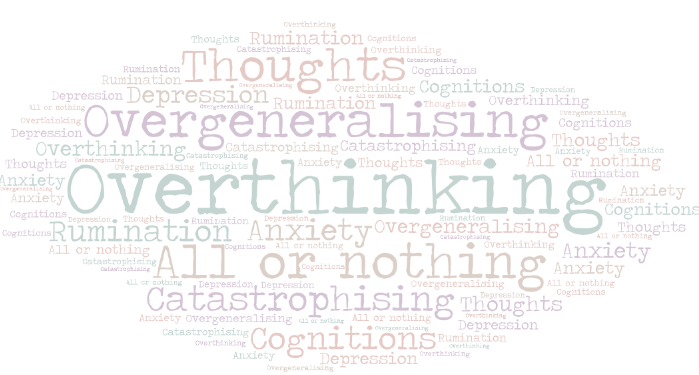
Most people can meaningfully reduce overthinking with consistent self-help strategies over several weeks. But certain signs indicate that professional support would make a significant and faster difference.
Consider speaking with a therapist or mental health professional if overthinking significantly disrupts your work, relationships, or daily responsibilities. The same applies if you have difficulty sleeping most nights because of racing thoughts, if you have tried self-help strategies for several weeks without improvement, or if you recognize symptoms of depression, anxiety, or trauma alongside your overthinking.
Therapeutic approaches with strong evidence for treating rumination include Cognitive Behavioral Therapy (CBT), Mindfulness-Based Cognitive Therapy (MBCT), Acceptance and Commitment Therapy (ACT), and Eye Movement Desensitization and Reprocessing (EMDR) for trauma-related overthinking.
Medication can also help by reducing the overall anxiety and depression that fuel rumination, creating enough mental space for therapy techniques to take hold.
Overthinking vs. Healthy Reflection: What Is the Difference?
Not all deep thinking is overthinking. It is worth distinguishing between the two so you can value genuine reflection without treating every moment of contemplation as a problem.
Healthy reflection is purposeful. It has a direction, leads somewhere, and produces insight or a decision. You think something through and arrive at a conclusion, even if that conclusion is simply accepting uncertainty.
Overthinking is circular. It revisits the same territory repeatedly without producing anything new. You end each cycle more stressed and uncertain than when you began.
If your thinking is leading somewhere — even slowly — it is probably reflection. If it is circling the same drain and growing more distressing with each pass, it is likely overthinking.
Lifestyle Changes That Reduce Overthinking Long-Term
Daily habits have a measurable cumulative impact on how prone the brain is to rumination. Small consistent changes over weeks create real structural shifts in thinking patterns.
Prioritizing sleep is one of the highest-leverage changes you can make. Sleep deprivation dramatically increases emotional reactivity and reduces the brain’s ability to regulate thoughts. Even a consistent additional 30 minutes of sleep produces noticeable changes in mental clarity.
Reducing caffeine intake helps many overthinkers because caffeine amplifies anxious arousal and can accelerate racing thoughts, particularly in people already prone to anxiety.
Limiting passive social media consumption reduces constant exposure to social comparison and fear-inducing news, both of which fuel worry and catastrophizing.
Building a consistent daily structure reduces the volume of decisions and uncertainties the brain must navigate each day, directly lowering the baseline load that triggers overthinking.
The Role of Self-Compassion in Stopping Overthinking
One of the most underused tools against overthinking is self-compassion — treating yourself with the same kindness you would offer a good friend facing the same struggle.
Overthinkers are typically their own harshest critics. Self-criticism does not motivate better performance; it increases anxiety, which intensifies overthinking, which generates more self-criticism.
Research by Dr. Kristin Neff shows that self-compassion reduces rumination more effectively than self-criticism or forced positive thinking. Acknowledging that struggle is a universal human experience, rather than evidence of personal inadequacy, creates the psychological safety needed to let thoughts pass without getting consumed by them.
Frequently Asked Questions (FAQs)
Why am I overthinking everything all of a sudden?
A sudden increase in overthinking is usually triggered by a stressful event, major life change, or accumulated stress that has crossed a threshold. Elevated cortisol from sustained stress makes the brain’s threat-detection system more reactive, producing more intrusive thoughts.
Is overthinking a mental illness?
Overthinking is not a standalone mental health diagnosis, but it is a major symptom of anxiety disorders, depression, OCD, and PTSD. If chronic overthinking is significantly impairing your daily life, a professional evaluation is recommended.
Why do I overthink at night?
Daytime activities, noise, and tasks provide mental buffers that suppress rumination. At night, with fewer distractions, the brain defaults to processing unresolved concerns, making thought loops far more active and harder to interrupt.
Can overthinking be stopped completely?
Completely eliminating overthinking is not the goal. The goal is changing your relationship with your thoughts so they become less automatic, less distressing, and less dominant in your daily experience. With practice, most people significantly reduce their overthinking.
Does overthinking mean I have anxiety?
Not necessarily. Overthinking is common in people without diagnosable anxiety disorders. However, if your overthinking is excessive, uncontrollable, and causing significant distress or impairment, anxiety may be a contributing factor worth exploring with a professional.
What is the fastest way to stop overthinking?
The fastest in-the-moment techniques are grounding exercises like the 5-4-3-2-1 method, physical movement, and deliberate breath focus. These redirect the brain’s attention away from thought loops and into sensory experience within minutes.
Does exercise help with overthinking?
Yes. Regular moderate aerobic exercise has been shown to directly reduce rumination and improve mood through neurochemical changes. Even a 20-minute walk produces measurable short-term relief from active thought spirals.
Can overthinking damage your health?
Chronic overthinking triggers sustained cortisol release, which over time contributes to fatigue, weakened immunity, sleep disruption, muscle tension, headaches, and increased cardiovascular risk. The mental and physical effects are genuinely interconnected.
What therapy is best for overthinking?
Cognitive Behavioral Therapy (CBT) has the strongest evidence base for treating rumination. Mindfulness-Based Cognitive Therapy (MBCT) and Acceptance and Commitment Therapy (ACT) are also highly effective. The best fit depends on the underlying cause and individual needs.
Is overthinking related to intelligence?
Some research links analytical thinking to higher cognitive ability, but chronic overthinking is more strongly associated with anxiety and emotional distress than with intelligence. Being an overthinker is not a sign of superior intellect — it is a sign that the brain’s threat-detection system is working overtime.
Conclusion
Why am I overthinking everything? The answer is rarely simple, and it is almost never a personal flaw. Overthinking develops from anxiety, perfectionism, low self-esteem, past trauma, intolerance of uncertainty, and deeply ingrained neurological patterns that the brain has learned over time.
The encouraging truth is that overthinking is a learned behavior, and the brain is capable of unlearning it with the right support and consistent practice. Strategies like mindfulness, scheduled worry time, cognitive behavioral techniques, regular exercise, and journaling all produce real, measurable change.
If self-help approaches are not enough, professional therapy — particularly CBT or MBCT — can directly target the ruminative patterns driving your overthinking. In 2026, the tools available for breaking the overthinking cycle are better than they have ever been. The most important step is simply recognizing the pattern and deciding to address it with both patience and self-compassion.