Why Does Coffee Give Me Diarrhea? What to Know 2026
Why does coffee give me diarrhea? If this is a question you find yourself asking every morning, you are not imagining things. Coffee is one of the most powerful natural digestive stimulants in the world, and millions of people experience loose stools, urgency, or full diarrhea after drinking it.
The answer involves multiple compounds inside your cup working together to speed up your digestive system far faster than it should run.
What Happens in Your Gut When You Drink Coffee?

Coffee does not simply pass through your stomach like water does. The moment coffee enters your body, it triggers a cascade of digestive reactions that begin within minutes.
Your stomach recognizes coffee as a signal to start working. Hormones are released, muscles in your intestinal walls begin contracting, and the entire digestive conveyor belt speeds up dramatically. This is why so many people feel the urge to use the bathroom within 20 to 30 minutes of finishing their first cup.
Understanding this process is the key to understanding why coffee gives you diarrhea specifically, rather than just a normal, comfortable bowel movement.
Why Does Coffee Give Me Diarrhea? The Science Behind It
The Gastrocolic Reflex
The most important mechanism driving coffee-induced diarrhea is something called the gastrocolic reflex. This is a natural bodily response where eating or drinking anything triggers your colon to contract and make room for incoming food and drink.
Coffee is unusually good at triggering this reflex. Research shows that coffee increases colon activity by roughly 23% more than plain water and approximately 60% more than decaffeinated coffee. This powerful colon stimulation moves stool toward the rectum very quickly, sometimes before the colon has had enough time to absorb water from the waste properly.
When your colon pushes contents through too fast, the result is loose, watery stool, which is diarrhea.
Caffeine and Gut Motility
Caffeine is a well-known central nervous system stimulant, but it also stimulates your gastrointestinal tract directly. It speeds up peristalsis, the wave-like muscle contractions that push food and waste through your intestines.
When peristalsis is accelerated beyond a normal pace, food and waste move through the digestive system before your intestines can properly absorb nutrients and water. The faster the transit time, the looser the stool.
One study noted that coffee can trigger the need for a bowel movement within just four minutes of consumption in some individuals. For people who already have faster-than-normal digestive transit, such as those with diarrhea-predominant IBS, this caffeine-driven speed-up is especially problematic.
Chlorogenic Acids
Here is something most people do not know: caffeine is not the only compound in coffee that triggers diarrhea. Chlorogenic acids are powerful antioxidants found in both regular and decaffeinated coffee. They increase the production of stomach acid and stimulate the digestive system independently of caffeine.
This is the main reason decaffeinated coffee still causes diarrhea in many people. Decaf is not caffeine-free and it is certainly not chlorogenic acid-free. Both types of coffee share these acids, which means both types carry laxative potential.
Light roast coffees generally contain more chlorogenic acids than dark roasts. This matters for people who are particularly sensitive, as switching to a darker roast may reduce the severity of their digestive reaction.
Gastrin and Cholecystokinin (CCK)
Coffee stimulates the release of two important digestive hormones: gastrin and cholecystokinin (CCK).
Gastrin signals your stomach to produce gastric acid, which speeds up digestion and activates the gastrocolic reflex. Cholecystokinin signals the gallbladder to release bile and the pancreas to release digestive enzymes.
Both of these hormones together accelerate the entire digestive process. When your digestive system is running this fast, diarrhea becomes a very likely outcome, especially if you are sensitive or drink coffee on an empty stomach.
N-Alkanoyl-5-Hydroxytryptamides (C5HTs)
These are specific compounds unique to coffee that stimulate the production of stomach acid by binding to receptors in the stomach lining. They work separately from caffeine and chlorogenic acids, adding yet another layer to coffee’s powerful digestive stimulation.
This helps explain why coffee causes stronger digestive effects than other caffeinated beverages like tea or energy drinks, which do not contain C5HTs.
Coffee vs. Other Caffeinated Beverages — Digestive Impact:
| Beverage | Caffeine Content | Chlorogenic Acids | C5HTs | Gastrocolic Reflex Strength |
|---|---|---|---|---|
| Regular coffee | High (95–200mg/cup) | High | Yes | Very strong |
| Decaf coffee | Very low (2–15mg/cup) | High | Yes | Moderate |
| Black tea | Moderate (40–70mg/cup) | Low | No | Mild |
| Green tea | Low (25–45mg/cup) | Low | No | Mild |
| Energy drink | High (80–150mg/can) | None | No | Mild to moderate |
| Espresso | Very high (60–75mg/shot) | Very high | Yes | Very strong |
Reasons Why Coffee Gives You Diarrhea More Than Others
Not everyone who drinks coffee gets diarrhea. About 30 to 50% of coffee drinkers experience a significant laxative effect. Several individual factors determine how severely coffee affects your gut.
1. Drinking Coffee on an Empty Stomach
Drinking coffee on an empty stomach is one of the most common triggers for coffee-induced diarrhea. When there is no food in your stomach to buffer the acids and slow absorption, coffee’s stimulating compounds hit your digestive system at full force.
Food in your stomach slows the absorption of coffee’s acids, reduces the intensity of the gastrocolic reflex, and gives your colon more time to process waste properly before pushing it out.
Eating something before or with your coffee, even a small snack, can make a significant difference in how your gut responds.
2. Lactose Intolerance
If you add milk, cream, or dairy-based creamers to your coffee, lactose intolerance may be the real cause of your diarrhea rather than the coffee itself. An estimated 65% of the global adult population has some degree of difficulty digesting lactose.
When lactose reaches the large intestine undigested, it draws water into the colon and ferments, producing gas, bloating, cramping, and diarrhea. Symptoms can appear within 30 minutes of drinking your milky coffee.
Switching to dairy-free alternatives like oat milk, almond milk, or soy milk and then observing whether your symptoms disappear is an easy way to test whether lactose intolerance is the culprit.
3. Irritable Bowel Syndrome (IBS)
People with irritable bowel syndrome have a hypersensitive gut that reacts more intensely to stimuli that most people tolerate without trouble. Coffee is one of the top ten food and drink triggers for IBS symptoms reported by patients.
For those with diarrhea-predominant IBS (IBS-D), coffee compounds accelerate gut motility that is already running too fast. The result is significantly worse urgency, cramping, and diarrhea than a person without IBS would experience from the same cup.
For those with constipation-predominant IBS (IBS-C), however, moderate coffee consumption may actually be beneficial in stimulating much-needed bowel movement.
4. Coffee Acidity and Acid Reflux (GERD)
Coffee is naturally acidic, typically measuring between pH 4.5 and 6.0 depending on the roast and brewing method. This acidity can directly irritate the stomach lining and the intestinal mucosa.
For people who already have gastritis or gastroesophageal reflux disease (GERD), coffee’s acidity worsens inflammation in the digestive tract and accelerates transit time. This irritation can manifest as diarrhea, abdominal cramping, and a burning sensation in the gut.
Lower-acid coffee options, such as dark roast or cold brew, can reduce but not fully eliminate this problem.
5. Artificial Sweeteners and Sugar Alcohols
Many coffee drinkers add artificial sweeteners or sugar-free syrups to their cups. Common sweeteners like sorbitol, mannitol, and xylitol are sugar alcohols that the large intestine absorbs very poorly.
When these compounds reach the colon undigested, they draw water into the intestines and increase pressure, directly triggering loose stools and diarrhea. This effect is particularly strong in people with gut conditions like IBS and inflammatory bowel disease (IBD).
If you use sugar-free sweeteners in your coffee and experience diarrhea, switching to a small amount of regular sugar or honey may resolve the problem quickly.
6. High Fat Additives (Bulletproof Coffee, Heavy Cream)
Adding large amounts of fat to your coffee, such as butter, coconut oil, MCT oil, or heavy cream, significantly amplifies its laxative effect. High fat content triggers the release of extra bile from the gallbladder and additional digestive enzymes from the pancreas.
The result is more water entering the small intestine, which overloads the colon and causes diarrhea. Bulletproof coffee recipes, in particular, can cause significant digestive distress in people who are sensitive or not accustomed to high-fat diets.
7. Drinking Too Much Coffee
Volume matters. Drinking more than two to three cups of coffee per day significantly increases the laxative effect. The cumulative load of caffeine, chlorogenic acids, and other compounds becomes too much for the digestive system to handle without producing loose stools.
The International Foundation for Gastrointestinal Disorders (IFFGD) specifically notes that consuming more than two to three cups of coffee per day often causes diarrhea even in people who normally tolerate coffee well.
8. Morning Timing
The morning is when your digestive system is naturally most active and most sensitive to stimulation. When you are asleep, bowel activity drops to about half of its waking pace. As you wake up, gut activity ramps back up.
Drinking coffee at this exact peak-sensitivity moment supercharges an already-active gastrocolic reflex. This is why morning coffee is so much more likely to cause a sudden bathroom urgency than an afternoon cup.
9. Coffee and Anxiety Response
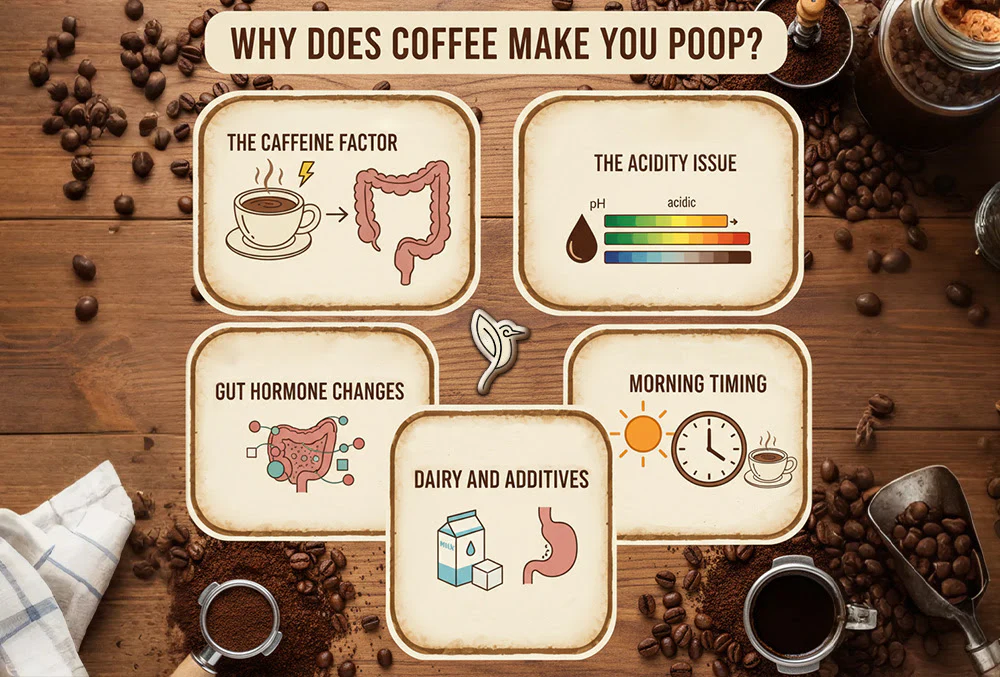
Caffeine is a powerful stress hormone trigger. It stimulates the release of cortisol and adrenaline, activating the body’s fight-or-flight response. This stress response directly influences gut function through the gut-brain axis.
When your body is in fight-or-flight mode, it diverts resources away from digestion and speeds up the emptying of the bowels. In people with anxiety, this effect is even more pronounced, making coffee a double trigger for both psychological stress and physical digestive distress.
10. Individual Gut Microbiome Differences
Research published in 2024 found that moderate coffee consumption influences the composition of the gut microbiome, increasing beneficial bacteria like Bifidobacterium. However, in people with an already dysbiotic gut microbiome, coffee can worsen bacterial imbalances and increase sensitivity to its stimulating compounds.
If you have recently completed a course of antibiotics or have a history of gut infections, your microbiome may be in a vulnerable state that makes coffee-induced diarrhea more likely.
Summary of Causes and Triggers:
| Cause | Who Is Most Affected | How It Triggers Diarrhea |
|---|---|---|
| Gastrocolic reflex | Everyone | Colon contractions speed up massively |
| Caffeine | Sensitive individuals, IBS sufferers | Accelerates peristalsis |
| Chlorogenic acids | Everyone, including decaf drinkers | Raises gastric acid, speeds transit |
| Lactose intolerance | 65% of adults globally | Undigested lactose draws water into colon |
| Empty stomach | Morning coffee drinkers | No food to buffer acids |
| Artificial sweeteners | Those using sugar-free products | Sugar alcohols cause osmotic diarrhea |
| High-fat additives | Bulletproof coffee drinkers | Triggers excess bile release |
| IBS | IBS-D sufferers | Hypersensitive gut overreacts |
| Too much coffee | Heavy coffee drinkers | Cumulative compound overload |
| Anxiety response | Anxious individuals | Cortisol activates gut-brain axis |
Does Decaf Coffee Also Cause Diarrhea?
This surprises many people: yes, decaf coffee can still cause diarrhea. About 30% of people report a laxative effect from decaf coffee, compared to 50 to 60% with regular coffee.
Decaf still contains chlorogenic acids, N-alkanoyl-5-hydroxytryptamides, and small amounts of caffeine (typically 2 to 15mg per cup). These compounds are enough to stimulate the gastrocolic reflex and increase gastric acid production in sensitive individuals.
If you switched to decaf hoping to stop your diarrhea and found it only helped partially, this is the reason. Decaf reduces but does not eliminate the digestive stimulation that coffee provides.
Coffee and Gut Conditions: What You Need to Know
Coffee and IBS
IBS is characterized by a hypersensitive gut that reacts disproportionately to normal stimuli. Coffee is identified as one of the top ten digestive triggers for IBS patients.
For IBS-D sufferers, coffee worsens already-fast colonic transit. For IBS-C sufferers, moderate coffee may be helpful. The key for IBS patients is identifying their personal threshold, the amount of coffee they can drink without triggering symptoms.
A low-FODMAP diet is commonly recommended for IBS management, and black coffee itself is considered a low-FODMAP beverage. However, common coffee additives like lactose-containing dairy products are high in FODMAPs and should be avoided.
Coffee and Inflammatory Bowel Disease (IBD)
People with Crohn’s disease or ulcerative colitis have inflamed intestinal tissue that is highly sensitive to irritants. Coffee’s acids, caffeine, and stimulating compounds can worsen inflammation and trigger flare-ups characterized by severe diarrhea, cramping, and urgency.
During active IBD flares, eliminating coffee entirely is often recommended by gastroenterologists. During remission, small amounts of low-acid coffee may be tolerated by some patients.
Coffee and Gastritis
Gastritis is inflammation of the stomach lining. Coffee’s high acidity and its ability to increase gastric acid production directly irritate an already-inflamed stomach lining.
People with gastritis who drink coffee often experience significant pain, nausea, and diarrhea. Switching to cold brew or dark roast coffee, which are naturally lower in acid, and always drinking coffee with food can reduce but not eliminate this irritation.
How to Stop Coffee from Giving You Diarrhea: Proven Fixes
Fix 1: Always Eat Before or With Your Coffee
This is the single most effective change most people can make. Food in your stomach buffers coffee’s acidity, slows the absorption of its stimulating compounds, and reduces the intensity of the gastrocolic reflex.
Even a small snack like a piece of toast, a banana, or a handful of crackers is enough to significantly reduce the laxative effect of your morning cup.
Fix 2: Switch to Cold Brew Coffee
Cold brew coffee is brewed without heat, which means significantly fewer chlorogenic acids are extracted from the beans compared to hot-brewed coffee. Cold brew is naturally less acidic, with a pH typically 1 to 2 points higher than hot coffee.
For people whose diarrhea is driven primarily by coffee’s acidity and chlorogenic acid content, switching to cold brew can be a game-changing solution while still delivering caffeine and coffee flavor.
Fix 3: Choose Dark Roast Over Light Roast
Dark roast coffees contain less chlorogenic acid than light roasts because the roasting process breaks these compounds down. Dark roasts also contain more N-methylpyridinium, a compound that actually reduces stomach acid secretion.
If you enjoy hot coffee and cannot switch to cold brew, choosing a dark roast blend is a simple way to reduce your gut’s reactive response.
Fix 4: Reduce Your Daily Coffee Intake
Cutting back to one or two cups per day can dramatically reduce diarrhea frequency. The digestive impact of coffee is dose-dependent, meaning the more you drink, the stronger the laxative effect becomes.
If you currently drink three or more cups daily, try stepping down by one cup every few days rather than stopping abruptly. Sudden caffeine withdrawal causes headaches, fatigue, and irritability, so a gradual reduction is far more comfortable.
Fix 5: Switch to Dairy-Free Alternatives
If you add milk or cream to your coffee, try replacing it with oat milk, almond milk, coconut milk, or soy milk for one week. If your diarrhea resolves or significantly improves, lactose intolerance was the primary trigger rather than the coffee compounds themselves.
Dairy-free alternatives eliminate the lactose problem entirely while allowing you to continue enjoying your coffee with a creamy texture.
Fix 6: Eliminate Artificial Sweeteners
Switch from sugar-free sweeteners, particularly those containing sorbitol, mannitol, or xylitol, to a small amount of regular sugar, honey, or maple syrup. This simple change can eliminate osmotic diarrhea caused by poorly absorbed sugar alcohols.
Read the labels on flavored syrups and coffee creamers carefully, as many contain sugar alcohols even when not marketed as sugar-free products.
Fix 7: Try a Half-Caf Blend

A half-caf coffee blends regular and decaffeinated coffee in equal proportions. This reduces your caffeine intake by about 50% while maintaining the familiar coffee experience.
This approach can reduce the severity of peristalsis acceleration without requiring you to fully give up caffeine. Many people find that half-caf is the sweet spot that lets them enjoy coffee without disruptive digestive consequences.
Fix 8: Drink Coffee Later in the Morning
Timing your coffee after you have been awake for an hour or so can reduce its laxative impact. Your digestive system is most sensitive in the first 30 to 60 minutes after waking. Allowing this initial wave of gut activity to settle before adding coffee to the equation often reduces urgency and diarrhea frequency.
Eating breakfast first and then having your coffee reduces the morning gastrocolic reflex to a much more manageable level.
Fix 9: Try Lower-Acid Coffee Brands
Some coffee brands specifically market low-acid coffee blends formulated for sensitive stomachs. These typically use dark roast beans, specific processing methods, or alkaline water during brewing to reduce overall acidity.
Low-acid coffee options can be helpful for people with gastritis, GERD, or acid sensitivity who want to keep drinking coffee without the painful digestive consequences.
Fix 10: Reduce Fat Additives in Your Coffee
If you practice bulletproof coffee or regularly add heavy cream, coconut oil, or MCT oil to your cup, scaling back the fat content can significantly reduce your diarrhea risk. Start by reducing the amount of fat added by half and monitor how your digestive system responds over several days.
Summary: Fixes That Work Best for Each Cause:
| Root Cause | Best Fix |
|---|---|
| Empty stomach | Eat before or with coffee |
| High acidity | Switch to cold brew or dark roast |
| Too much caffeine | Reduce to 1 to 2 cups daily or try half-caf |
| Lactose intolerance | Switch to oat milk or almond milk |
| Artificial sweeteners | Use regular sugar or honey instead |
| High-fat additives | Reduce or eliminate butter/MCT oil |
| Morning sensitivity | Eat breakfast first, delay coffee by 60 minutes |
| IBS | Drink black coffee in small amounts with food |
| Gastritis or GERD | Choose low-acid or dark roast cold brew |
| Heavy coffee volume | Cap intake at 2 cups per day maximum |
When Should You See a Doctor?
Occasional loose stools after coffee are common and usually not a concern. However, certain symptoms alongside coffee-triggered diarrhea indicate you need to see a gastroenterologist.
See a doctor if you experience:
- Diarrhea that occurs after every single cup of coffee, every day
- Blood or mucus in your stool
- Unexplained weight loss
- Severe cramping or abdominal pain alongside diarrhea
- Diarrhea that wakes you up at night
- Symptoms that do not improve after eliminating coffee for two weeks
- Fever accompanying your digestive symptoms
- Symptoms that have progressively worsened over several weeks
These could indicate IBS, IBD, lactose intolerance requiring formal testing, GERD, celiac disease, or other gastrointestinal conditions that need proper diagnosis and treatment.
Can Coffee Ever Be Good for Your Gut?
Despite causing diarrhea in many people, coffee does have some genuinely positive effects on gut health when consumed in moderation.
Research published in Nutrients (2024) found that moderate coffee consumption of fewer than four cups per day increased the relative abundance of beneficial gut bacteria including Bifidobacterium and Firmicutes while reducing potentially harmful Bacteroidetes.
Coffee is also one of the most effective natural remedies for constipation. For people with IBS-C or sluggish digestive transit, one or two cups of coffee daily can provide the exact stimulation needed for regular, comfortable bowel movements.
The key distinction is between a normal laxative effect that produces a firm, comfortable bowel movement and excessive stimulation that causes watery, urgent diarrhea. The former is generally beneficial. The latter is your digestive system telling you that something needs to change.
Coffee Types and Their Digestive Impact Compared
| Coffee Type | Acid Level | Caffeine | Laxative Effect | Best For Sensitive Stomachs |
|---|---|---|---|---|
| Regular hot brewed | High | High | Very strong | No |
| Espresso | Very high | Very high | Very strong | No |
| Light roast | Highest | Highest | Strongest | No |
| Dark roast | Lower | Moderate | Moderate | Better option |
| Decaf hot brewed | High | Very low | Moderate | Partial improvement |
| Cold brew | Lowest | High | Moderate | Best option |
| Dark roast cold brew | Lowest | Moderate | Mildest | Best for sensitive guts |
| Instant coffee | Moderate | Moderate | Moderate | Reasonable option |
Frequently Asked Questions (FAQs)
Why does coffee give me diarrhea but not other people?
Individual sensitivity to caffeine, chlorogenic acids, gut microbiome composition, and underlying conditions like IBS or lactose intolerance all vary. Some people’s colons are simply more reactive to coffee’s stimulating compounds than others.
Does decaf coffee still cause diarrhea?
Yes, for about 30% of people. Decaf still contains chlorogenic acids, small amounts of caffeine, and other gut-stimulating compounds that can trigger the gastrocolic reflex and increase gastric acid production.
Why does coffee give me diarrhea immediately after drinking it?
Coffee triggers the gastrocolic reflex, which can activate colon contractions within minutes. Combined with caffeine’s direct stimulation of intestinal muscles, some people feel the urge to go within 4 to 20 minutes of drinking coffee.
Can I develop a tolerance to coffee’s laxative effect?
Yes. Regular coffee drinkers often develop some tolerance to its digestive effects over weeks or months. However, people with IBS, IBD, or lactose intolerance are less likely to develop full tolerance due to their underlying gut sensitivity.
Is it bad for my gut to drink coffee every day?
For most healthy people, 1 to 3 cups daily is well tolerated and may even support a healthy gut microbiome. Daily diarrhea from coffee is not normal and indicates a need to adjust your intake, type of coffee, or additives.
Does the temperature of coffee affect diarrhea?
Yes. The warm temperature of hot coffee independently stimulates the gastrocolic reflex. Cold brew coffee served cold bypasses this temperature-driven trigger, which is one reason it is gentler on the digestive system.
Should I stop drinking coffee entirely if it gives me diarrhea?
Not necessarily. Try adjusting your coffee type, timing, additives, and volume first. Many people resolve their coffee-diarrhea problem without giving up coffee completely by making targeted changes.
Can coffee cause diarrhea if I have a healthy gut?
Yes, even people with healthy digestive systems can experience diarrhea from coffee, especially when drinking on an empty stomach, consuming multiple cups, or using dairy or artificial sweeteners that add additional digestive triggers.
Is cold brew coffee better for people with sensitive stomachs?
Yes. Cold brew is significantly lower in acid than hot-brewed coffee and produces a milder gastrocolic reflex. It is widely recommended by nutritionists and gastroenterologists as the gentlest option for coffee-sensitive individuals.
Can coffee make IBS worse permanently?
Coffee does not permanently worsen IBS, but regular consumption can keep your gut in a state of chronic irritation. Reducing or eliminating coffee typically improves IBS symptoms within a few days to two weeks and does not cause lasting damage.
Conclusion
Why does coffee give me diarrhea? The answer is a combination of powerful compounds working together: caffeine accelerating peristalsis, chlorogenic acids raising stomach acid, gastrin and cholecystokinin amplifying the gastrocolic reflex, and common additives like dairy and artificial sweeteners adding their own digestive disruption on top. For some people, individual factors like IBS, lactose intolerance, GERD, or a sensitive gut microbiome intensify these effects significantly.
The good news is that most cases of coffee-induced diarrhea are completely manageable without giving up coffee entirely. Eating before you drink, switching to cold brew or dark roast, eliminating dairy and artificial sweeteners, and limiting your intake to one or two cups are all practical changes that make a real difference.
If your symptoms are severe, persistent, or come with blood, pain, or weight loss, see a gastroenterologist to rule out an underlying condition. With the right approach, you can get back to enjoying your morning cup without dreading what comes next.