Why Should College Athletes Be Paid? Pros & Cons 2026
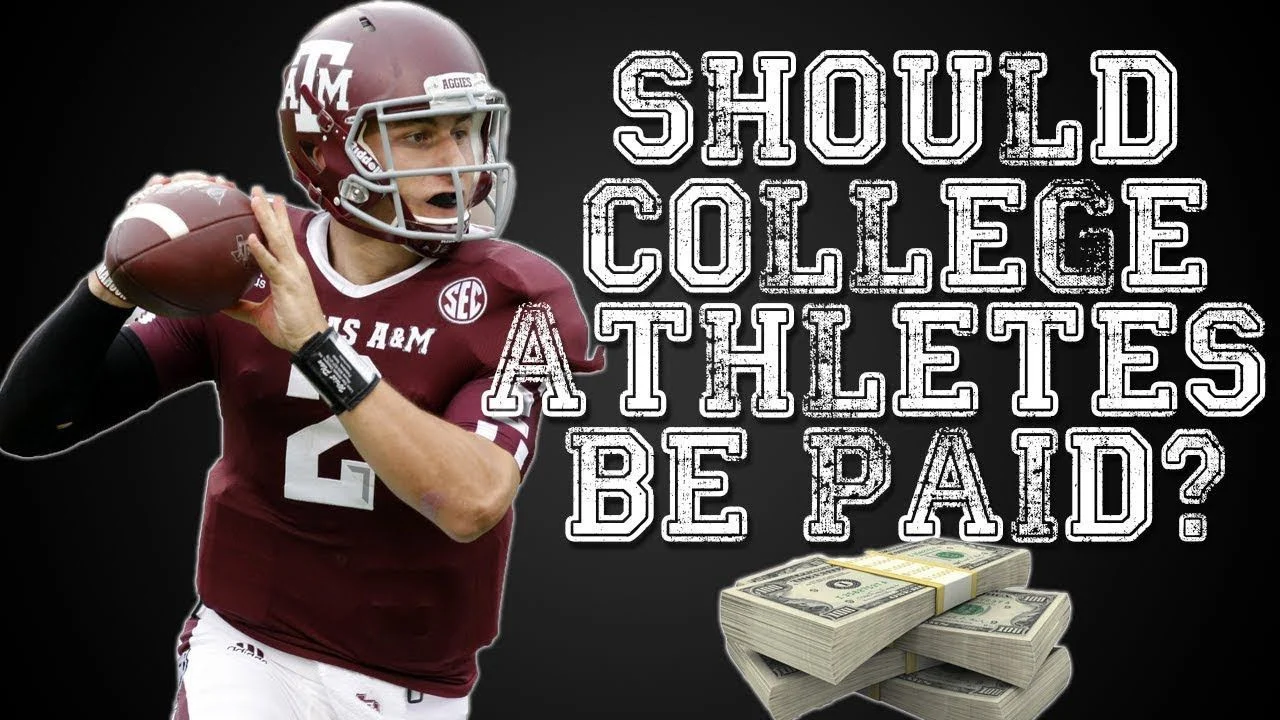
Why should college athletes be paid is one of the most debated questions in American sports today. College athletics is a multi-billion dollar industry — NCAA Division I programs reported nearly $19 billion in total revenue in 2023 — yet for most of its history, the athletes generating that revenue received no direct payment.
In 2025, the House v. NCAA settlement changed the landscape dramatically, allowing schools to directly share up to $20.5 million per year with their athletes. But the core debate remains alive.
What Is the College Athlete Pay Debate

The debate over whether college athletes should be paid centers on a fundamental tension between two competing ideas: amateurism and fair compensation for labor.
Since 1906, the NCAA has classified student-athletes as amateurs and prohibited direct salary payments, arguing this distinction separates college sports from professional leagues. Schools, coaches, and administrators built enormously profitable programs on top of that rule.
In 2021, the NIL (Name, Image, and Likeness) policy shift and the 2025 House v. NCAA settlement began dismantling that framework — but the debate over full direct payment continues in 2026.
The State of College Athlete Compensation in 2026
The landscape changed dramatically in 2025. The House v. NCAA settlement, approved by Judge Claudia Wilken in June 2025, authorized schools to directly pay college athletes for the first time in NCAA history.
Starting in the 2025–2026 academic year, each school can distribute up to $20.5 million annually to its athletes. This cap rises each year, reaching $32.9 million by the end of the 10-year agreement.
The NIL market — which allows athletes to earn money through endorsements, sponsorships, and personal branding — is projected to grow from $1.17 billion in 2024 to $2.55 billion in 2026, according to Opendorse.
Revenue vs. Athlete Pay: The Numbers Gap
| Category | Figure |
|---|---|
| NCAA Division I Total Revenue (2023) | ~$19 billion |
| Revenue Sharing Cap Per School (2025–26) | $20.5 million |
| Projected NIL Market Size (2026) | $2.55 billion |
| Power 4 Schools in Revenue Sharing | 68 universities |
| Average Starting Power 5 Football Player Market Value (estimated) | $120,000 – $1.7 million/year |
| Top NIL Deal (Shedeur Sanders, estimated) | $6.2 million/year |
| Typical Annual Scholarship Value (elite school) | $60,000 – $80,000 |
The gap between what programs earn and what athletes receive remains enormous — and it is the core economic argument behind why college athletes should be paid.
Why Should College Athletes Be Paid: The Pro Arguments
The following section lays out every major argument in favor of paying college athletes, with supporting data and context for each.
Pro Argument 1: Athletes Generate Massive Revenue They Do Not Share In
- NCAA Division I athletic programs collectively reported revenues approaching $19 billion in 2023.
- That figure grew from $15.8 billion in 2019 to $17.5 billion in 2022, an upward trend that shows no signs of reversing.
- College football and men’s basketball drive the majority of that revenue through massive TV contracts, ticket sales, and sponsorship deals.
- The coaches, administrators, and conference executives at the top of this system earn multi-million dollar salaries — Nick Saban’s annual salary as Alabama’s football coach reached $9.3 million.
- The NCAA’s president earned $2.7 million in 2018, with nine other executives earning above $500,000.
- The athletes at the center of all this value generation received, until 2025, zero direct compensation from their schools.
- This is the most straightforward economic argument: if you generate the product that produces billions in revenue, you should receive a proportionate share of that value.
Pro Argument 2: Being a College Athlete Is a Full-Time Job
- College athletes routinely spend 40 to 50 hours per week on athletic obligations — practice, games, travel, media appearances, and training.
- This schedule is structured, mandatory, and continuous throughout the academic year.
- The time commitment leaves virtually no room for part-time employment, cutting off the income source available to every other college student.
- Non-athlete students can take internships, freelance jobs, or part-time roles that build career experience and income simultaneously.
- Student-athletes are denied this opportunity, creating an economic disadvantage relative to their classmates that extends well beyond graduation.
- When any other full-time worker is denied wages for their labor, that is a violation. The same logic applies directly to the question of why should college athletes be paid.
- Legal analysts in the House v. NCAA case argued that the structure and intensity of athletic participation bears strong resemblance to an employment relationship — a framing the courts ultimately supported.
Pro Argument 3: Scholarships Do Not Cover All Costs
- Not every college athlete receives a scholarship — only Division I and Division II schools offer athletic scholarships at all.
- Division III schools — which include hundreds of institutions — offer zero athletic scholarships.
- The majority of Division II scholarships are partial awards, not full-ride scholarships that cover every expense.
- Even full-ride Division I scholarships cover tuition, room, board, and books — but not personal expenses, transportation, technology, or the costs of daily life.
- Many college athletes, despite scholarships, still struggle to afford basic necessities during their playing years.
- Former NBA star Chris Bosh described his experience as: generating millions for his school while being unable to afford a meal off campus.
- A scholarship is valuable compensation — but it is not complete compensation, particularly for athletes contributing millions in revenue value.
Pro Argument 4: Other Students Are Allowed to Monetize Their Talents
- A college student who is a talented musician can sign a record deal while enrolled and keep every dollar.
- A student who is a gifted visual artist can sell their work, take commissions, and earn freely throughout college.
- A student who writes a bestselling novel, creates a viral app, or starts a business faces zero NCAA restriction on their income.
- Before the NIL era, only college athletes were categorically prohibited from profiting from their own talents and name recognition.
- This selective restriction on a single group of students has no principled justification — it existed to protect the commercial interests of the NCAA and its member institutions.
- Notre Dame’s President John I. Jenkins and Athletics Director Jack Swarbrick publicly argued: other students are allowed to profit from their celebrity, and athletes should have the same opportunity.
- The fundamental fairness principle — equal treatment for all students — is one of the clearest reasons why college athletes should be paid.
Pro Argument 5: Athletes Bear Significant Physical and Career Risk
- College sports, particularly football, involve serious injury risks — torn ligaments, concussions, fractures, and long-term neurological damage.
- Athletes carry these risks without guaranteed long-term financial security.
- Athletic scholarships are typically awarded on a year-to-year basis and can be reduced or revoked, including after an injury that was incurred while playing for the institution.
- A career-ending injury at 19 years old can leave a college athlete with no scholarship, no professional playing career, and no income from years of labor contributed to a program worth hundreds of millions of dollars.
- The asymmetry is stark: the institution retains the revenue generated by the athlete, while the athlete absorbs all the physical downside risk alone.
- Paying athletes provides financial security that reflects both their contribution and the genuine risks they accept by competing.
- It also creates an economic buffer against the scenario where a player loses their scholarship due to injury and suddenly has no financial support at all.
Pro Argument 6: Paying Athletes Could Reduce Exploitation
- The current system — even post-NIL — allows a small number of elite athletes to earn large sums, while the vast majority of college athletes earn very little from NIL deals.
- NIL deals flow disproportionately to athletes with large social media followings and star power — factors that have nothing to do with the labor they contribute on the field.
- Pay-for-play arrangements disguised as NIL deals are already effectively happening through collectives and frontloaded contracts, operating in a gray area that lacks transparency.
- A structured direct payment system would be more transparent, more equitable, and harder to manipulate than the current patchwork of NIL collectives and collective bargaining workarounds.
- California Governor Gavin Newsom argued that collegiate student-athletes put everything on the line — their physical health, future prospects, and years of their lives — and deserve fair compensation for it.
- Formalized pay structures could protect athletes from exploitative third-party arrangements that currently operate with minimal oversight.
- Bringing compensation into a structured, regulated framework is better for athletes than leaving it in the current unregulated NIL collective system.
Pro Argument 7: Paying Athletes Supports Academic Focus
- Athletes who are not financially stressed can concentrate better on both their academic coursework and athletic performance.
- A college athlete working a part-time job to cover personal expenses — on top of a 40-hour athletic schedule and a full academic load — is under a level of pressure that directly affects academic outcomes.
- Financial stability removes one major source of stress, allowing athletes to be more present in class, more engaged in their studies, and more likely to complete their degree.
- Paying athletes could increase graduation rates by giving financially struggling athletes a reason to stay enrolled rather than leaving early to chase professional contracts.
- It may also reduce the incentive for athletes to skip remaining eligibility and enter professional leagues before their education is complete.
- The argument that paying athletes would harm academic integrity is not supported by evidence — financial stability generally improves academic performance, not undermines it.
- A student who is not worried about paying for food and rent is a student who can focus on learning.
Why College Athletes Should Not Be Paid: The Con Arguments
The debate over why should college athletes be paid has serious counterarguments. The following section presents every major argument against direct payment.
Con Argument 1: Scholarships Already Represent Significant Compensation
- Full athletic scholarships at elite universities cover tuition, room, board, books, and living expenses for four or five years.
- At a private university like Duke, this scholarship value exceeds $200,000 over a collegiate career.
- The average American college student graduates with approximately $30,000 in student loan debt — a burden that scholarship athletes avoid entirely.
- From this perspective, scholarship athletes are already receiving substantial financial compensation that their non-athlete peers do not receive.
- The argument that scholarships are not compensation ignores the real dollar value of avoiding six figures of student loan debt.
- A Gallup survey of NCAA athletes found that 70% graduate within four years, compared to 65% of all undergraduate students — suggesting scholarship athletes are succeeding academically at rates above average.
- Opponents argue that the scholarship, combined with coaching, facilities, and athletic development, constitutes a comprehensive and valuable compensation package.
Con Argument 2: Title IX Compliance Creates Serious Financial Complications
- Title IX requires equal treatment of male and female athletes across NCAA programs.
- If football and men’s basketball players receive direct salary payments, institutions face a legal obligation to provide equivalent compensation to athletes in women’s sports and non-revenue sports.
- Most college athletic departments already operate at a financial loss — Big Ten schools averaged over $48 million in net operating losses in 2025, even before the new revenue-sharing costs were added.
- Extending direct pay to hundreds of athletes across all sports — not just football and basketball — would push many schools into financial crisis or force them to cut athletic programs entirely.
- Women’s sports programs and non-revenue men’s sports are the most financially vulnerable in this scenario.
- Schools in lower-revenue conferences do not generate the TV contract money that Power 4 programs do, and could not sustain a salary model without eliminating sports teams.
- The Title IX and financial sustainability concern is the most practically serious obstacle to a universal pay model.
Con Argument 3: It Could Destroy Competitive Balance

- If schools can offer salaries in addition to NIL deals and scholarships, wealthier programs will simply outbid smaller ones for every top recruit.
- The richest conferences — the SEC, Big Ten, and ACC — already dominate recruiting. Direct pay would accelerate that concentration of talent dramatically.
- Smaller schools with less TV revenue and smaller donor bases would be unable to compete financially, effectively creating a two-tiered college sports system.
- Competitive balance is part of what makes college sports culturally compelling — an upset from a smaller school over a powerhouse is a defining feature of March Madness and bowl season.
- If top talent concentrates entirely in a handful of wealthy programs, the competitive drama that drives fan interest and revenue would diminish.
- Some analysts argue this is already happening through the NIL collective system — and that formalizing pay would accelerate the problem further.
- Protecting competitive balance is not just about fairness between schools — it protects the long-term economic health of college sports as an industry.
Con Argument 4: Defining “Employee” Status Creates Legal Complexity
- Classifying college athletes as employees would trigger an entirely new set of legal obligations: workers’ compensation, health insurance mandates, collective bargaining rights, and payroll tax requirements.
- Schools would face potential liability for on-field injuries under employment law rather than the current scholarship-based framework.
- Employment classification could also affect athletes’ financial aid eligibility, scholarship terms, and academic standing under existing university policies.
- Congress has introduced at least eight NIL and college athlete compensation reform bills since 2021 — none have passed — in part because the legal complexity of employment classification is genuinely difficult to resolve.
- The absence of a federal framework means each state currently has its own NIL rules, creating wildly uneven playing fields that already disadvantage athletes at schools in certain states.
- Adding salary payments on top of this patchwork would deepen the legal complexity exponentially.
- The regulatory and legal infrastructure required to pay college athletes as employees does not currently exist at either the federal or state level.
Con Argument 5: Not All Athletes Generate Revenue
- College athletics includes hundreds of sports beyond football and basketball — swimming, tennis, wrestling, track and field, gymnastics, rowing, golf, volleyball, and more.
- The vast majority of these programs generate little or no revenue, relying entirely on subsidies from football and basketball profits.
- If schools are required to pay all athletes equally, the funding gap becomes mathematically unsustainable for most programs.
- If only revenue-generating sport athletes get paid, the inequality between programs creates new resentment and potentially new Title IX violations.
- Neither option is clean — a universal pay model may be financially impossible, and a selective pay model is legally and ethically problematic.
- The revenue generation argument, which is the strongest reason why college athletes should be paid, applies to a very small fraction of all college athletes across all sports and all divisions.
- Designing a fair pay structure that works equitably across all sports, all divisions, and all revenue levels is a problem that no one has yet solved satisfactorily.
Comparing Pros and Cons Side by Side
| Argument For Paying | Argument Against Paying |
|---|---|
| Athletes generate billions in revenue | Scholarships already provide real dollar value |
| 40–50 hour weekly commitment resembles a job | Employment classification creates legal complexity |
| Scholarships don’t cover all personal costs | Title IX requires equal pay across all sports |
| Other students can profit from their talents | Most programs operate at a financial loss |
| Athletes absorb physical risk without security | Competitive balance would further erode |
| Financial stability improves academic focus | Not all athletes contribute revenue |
| Formalizing pay reduces exploitative NIL deals | Federal regulatory framework does not yet exist |
How NIL Changed the Debate in 2026
The NIL era, which began in 2021, and the House v. NCAA settlement of 2025 have already shifted the ground considerably. Schools can now share revenue directly. Athletes can earn from endorsements. The question is no longer whether any compensation is allowed — it is whether the current system is fair, sustainable, and equitable.
The NIL market is projected to reach $2.55 billion in 2026. Star players like those at Power 4 schools already earn millions through endorsement portfolios. But the median college athlete still earns very little from NIL — most deals are small or nonexistent.
The House v. NCAA settlement introduced a $20.5 million per-school revenue-sharing cap, rising to $32.9 million over 10 years. But Big Ten schools are already averaging $48 million in net operating losses — meaning even the current system may be financially unsustainable for many programs.
What a Fair Compensation Model Might Look Like
Advocates for paying college athletes have proposed several models. None are perfect, but each addresses a different dimension of the problem.
- A tiered payment model where revenue-sport athletes receive direct pay proportional to program revenue, while other athletes continue on scholarship-only terms.
- A trust fund model where athletes receive deferred compensation held in escrow until they graduate or exhaust their eligibility, preserving academic incentive.
- A revenue-sharing percentage model where a fixed percentage of each program’s annual revenue is distributed equally among all scholarship athletes in that program.
- A market-rate NIL model where schools facilitate NIL deals for all athletes — not just stars — through collective structures that distribute money more broadly.
- A unionization model where college athletes collectively bargain for wages, benefits, and working conditions in the same way professional athletes do.
- A hybrid model combining scholarship preservation, revenue sharing up to a cap, and open NIL access — similar to what the House settlement created, but with clearer federal oversight.
- None of these models resolves every tension between Title IX compliance, competitive balance, and financial sustainability simultaneously — which is why the debate continues.
The International Perspective
- The United States is essentially unique in the world in building a multi-billion dollar commercial sports industry on top of unpaid amateur collegiate competition.
- No other major country has college sports at anything close to this commercial scale, making direct international comparisons limited.
- Countries with professional youth development academies — common in European football — pay young athletes directly through club contracts rather than routing talent through universities.
- Some argue the American college sports system should move toward this model: professional teams fund development academies, universities return to purely amateur competition, and the commercial machinery around college sports is reorganized entirely.
- This would be a more radical restructuring than any currently proposed reform — but it is one that would eliminate the fundamental contradiction between amateurism and billion-dollar commercialism.
- For now, the American model remains intact, even as the NIL and revenue-sharing changes chip steadily away at its amateurism foundation.
- The direction of travel in 2026 is clearly toward more athlete compensation, not less — the debate is over how much, how fairly, and through what legal structure.
The Academic Argument Revisited
- Critics of paying college athletes often argue that academic mission should come first — universities exist to educate, not to run commercial sports franchises.
- The counterargument is that the commercial sports franchises already exist inside these universities and generate enormous profit that flows to everyone except the athletes.
- Paying athletes does not change the academic mission of the institution — it changes who receives a share of the commercial revenue the institution generates.
- 70% of NCAA scholarship athletes graduate within four years according to Gallup data — a rate above the national average — which suggests the current system does not academically harm those who receive scholarships.
- But for athletes who do not receive full scholarships, or who face financial stress that scholarship packages do not cover, academic outcomes may be different.
- Financial support and academic performance are positively correlated across virtually every studied population. There is no evidence that paying athletes would reduce graduation rates.
- The academic argument against paying athletes is more of a values statement about what universities should be — not an evidence-based prediction about what would happen if athletes were paid.
Frequently Asked Questions (FAQs)
Why should college athletes be paid if they already get scholarships?
Scholarships cover tuition costs but often leave gaps in personal living expenses, especially for athletes at lower-division schools. Athletes generating millions in revenue receive compensation far below the value of their contribution.
How much money do college athletes make from NIL deals in 2026?
The NIL market is projected to reach $2.55 billion in 2026. Top athletes earn millions from endorsement deals, but most college athletes earn little or nothing from NIL arrangements.
What is the House v. NCAA settlement and how does it affect athlete pay?
The House v. NCAA settlement, approved in 2025, allows schools to directly pay athletes up to $20.5 million per school per year. It is the first time in NCAA history that universities can share revenue directly with student-athletes.
Does Title IX require equal pay for male and female college athletes?
Title IX requires equitable treatment of male and female athletes. If schools pay revenue-sport athletes directly, they may face legal obligations to compensate athletes across all sports equally, creating significant financial challenges.
Would paying college athletes hurt smaller schools and programs?
Yes, in many models it would. Schools without large TV contracts and donor revenue cannot compete financially with Power 4 programs, and adding salary obligations could force many smaller programs to cut sports teams.
Can college athletes currently earn money while playing?
Yes. Since 2021, athletes can earn through NIL deals — endorsements, sponsorships, social media partnerships, and appearances. Since 2025, schools can also share revenue directly with athletes under the House settlement framework.
Do college athletes have time to work a regular job on the side?
Generally no. A college athlete’s schedule — 40 to 50 hours per week in athletic obligations plus a full academic load — leaves virtually no time for conventional employment, which is one of the core arguments for why they should receive direct compensation.
Would paying college athletes improve or harm academic performance?
Evidence consistently shows that financial stability improves academic outcomes. Paying athletes would likely reduce financial stress and improve academic engagement, not undermine it.
What happens to non-revenue sports if colleges start paying athletes?
Non-revenue sports — tennis, swimming, wrestling, gymnastics — are financially supported by football and basketball revenue. If that revenue is redirected to athlete salaries, many non-revenue programs face cuts, raising significant Title IX concerns.
Is there a federal law governing college athlete pay in 2026?
No. Congress has introduced multiple bills since 2021 but none have passed. The current system is governed by a combination of state NIL laws, the House v. NCAA settlement, and NCAA policies — with no unified federal framework in place.
Conclusion
Why should college athletes be paid is ultimately a question about who should benefit from a commercial enterprise that generates billions of dollars. The athletes are the product. The evidence that they are underpaid relative to their market value is overwhelming.
The NIL era and the House v. NCAA settlement have moved the system meaningfully toward compensation — but the debate over fairness, equity, Title IX compliance, and competitive balance is far from resolved in 2026. Both sides of the argument contain real substance.
The strongest long-term answer is likely a federally regulated framework that pays athletes fairly, protects non-revenue programs, and preserves competitive balance — a solution that, as of 2026, still does not exist.