Why Does My Jaw Click When I Chew? Quick Relief Tips 2026
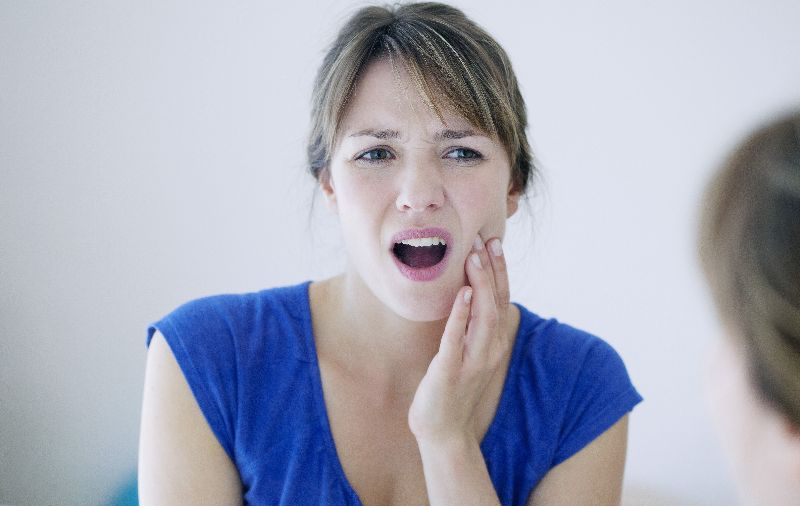
Why does my jaw click when I chew? This is one of the most searched dental concerns in 2026, and for good reason.
That annoying popping or clicking sound coming from your jaw is not just a minor inconvenience. It can signal a real problem with your temporomandibular joint (TMJ).
Whether you hear it occasionally or every single meal, understanding what causes it and how to fix it can save you from long-term discomfort, pain, and even surgery.
What Is the Temporomandibular Joint (TMJ)?
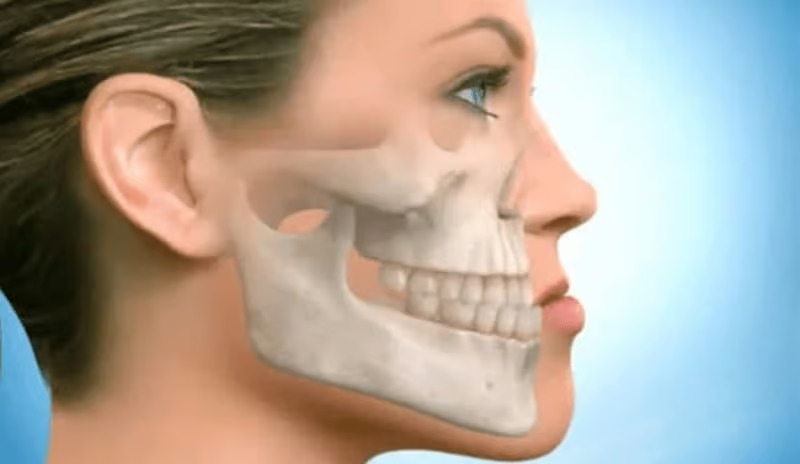
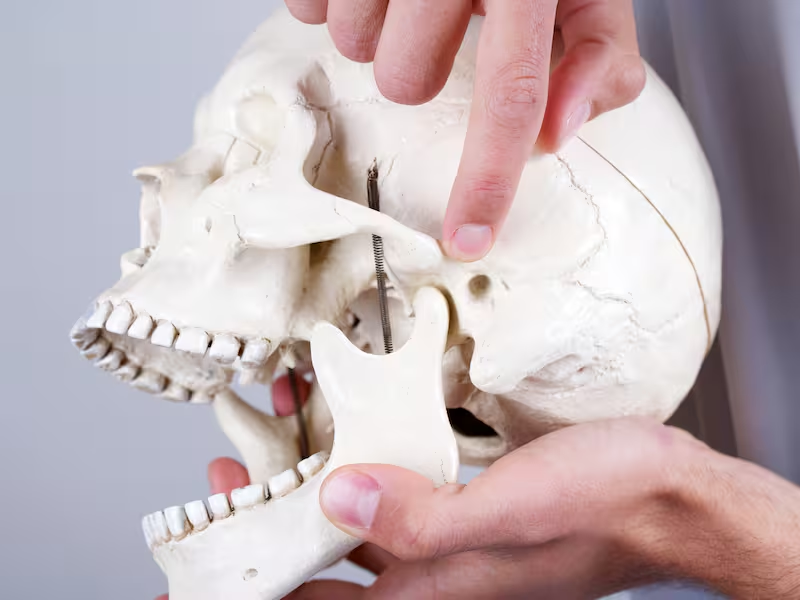
Your jaw moves because of a small but incredibly complex joint called the temporomandibular joint (TMJ). It sits on both sides of your head, right in front of your ears, and connects your lower jawbone (mandible) to your skull.
The TMJ works like a hinge and a sliding joint at the same time. It allows you to open, close, move side to side, and push your jaw forward and backward.
Inside this joint sits a small cartilage disc that acts as a cushion between the bones. When everything is aligned and healthy, the joint moves silently. When something disrupts that balance, the clicking starts.
Why Does My Jaw Click When I Chew? The Core Answer
The clicking sound happens when the articular disc inside your TMJ slips out of its normal position. As your jawbone moves during chewing, it glides over a bump in the cartilage and creates that audible pop or click.
This disc displacement is the most common mechanical cause of jaw clicking. It can happen on one side or both sides of the jaw.
Not all clicking is the same. Some clicks are soft and painless. Others are loud enough for people around you to hear, and may come with sharp pain, stiffness, or a locked jaw.
Two Types of Jaw Clicking You Should Know
Understanding which type of clicking you have helps determine how serious it is.
Type 1 — Clicking on Wide Opening (Usually Normal)
This happens when you yawn or open your mouth very wide. The lower jaw briefly passes over a ridge in the upper jaw socket — this is called subluxation. It is generally harmless.
Type 2 — Clicking During Chewing or Speaking (Needs Attention)
This is the more concerning type. The cartilage disc displaces on jaw closure and snaps back into place when you open again. If this is accompanied by pain, it usually means the ligament holding the disc is being stretched or the surrounding muscles are under strain.
Main Causes of Jaw Clicking When Chewing
| Cause | Description | Severity |
|---|---|---|
| TMJ Disc Displacement | Cartilage disc slips out of position | Moderate to High |
| Bruxism (Teeth Grinding) | Puts excessive pressure on the joint | Moderate to High |
| Jaw Misalignment (Malocclusion) | Upper and lower teeth don’t meet properly | Moderate |
| Stress and Muscle Tension | Clenching due to anxiety strains the joint | Low to Moderate |
| Arthritis (OA or RA) | Cartilage breakdown in the joint | High |
| Jaw Injury or Trauma | Accident or sports injury shifts joint alignment | Moderate to High |
| Bad Habits | Nail biting, chewing gum, eating hard foods | Low to Moderate |
| Sleep Apnea | Increases nighttime grinding behavior | Moderate |
| Myofascial Pain Syndrome | Chronic muscle pain from repetitive strain | Moderate |
| Missing Teeth | Uneven chewing causes muscle imbalance | Moderate |
TMJ Disc Displacement — The #1 Cause Explained
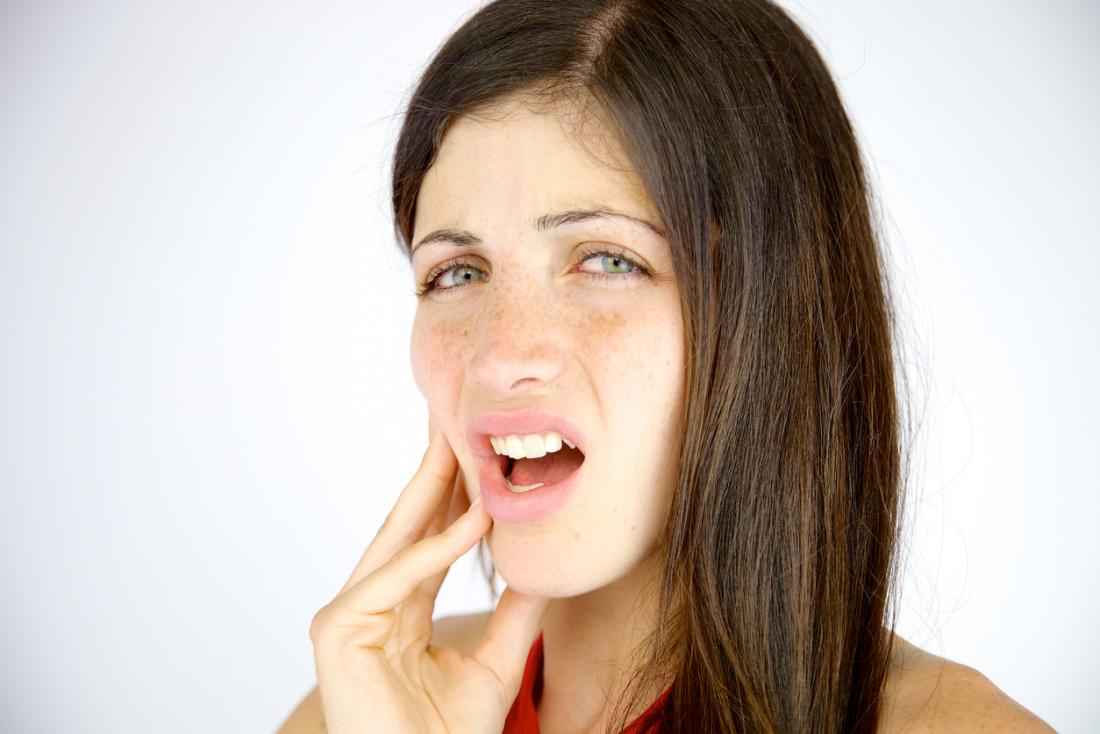
The articular disc is a small oval-shaped pad made of fibrocartilage. It sits between the ball and socket of your TMJ and absorbs shock during chewing.
When this disc slips forward or sideways (called anterior disc displacement), the jawbone has no cushion. Every time you move your jaw, it grinds over or snaps across the displaced disc — creating that click or pop.
Over time, without treatment, the cartilage breaks down further. This leads to bone grinding on bone, causing crackling sounds and persistent pain.
How Bruxism Destroys Your Jaw Joint
Bruxism means grinding or clenching your teeth, usually during sleep. Most people have no idea they do it.
The force generated during nighttime grinding can be up to 10 times the normal chewing force. This enormous pressure wears down the cartilage disc, inflames the joint lining, and fatigues the jaw muscles.
Over months and years, bruxism is one of the leading causes of progressive TMJ damage. If you wake up with jaw soreness, headaches, or worn-down teeth, bruxism may be behind your jaw clicking.
Stress, Anxiety, and Your Jaw
When you are under stress, your body tends to hold tension in the jaw. Many people clench their teeth during the day without even realizing it — at their desk, in traffic, or during an argument.
This constant clenching overloads the TMJ muscles and ligaments. It leads to inflammation, muscle fatigue, and eventually the disc displacement that causes clicking.
Stress is also closely linked to bruxism at night, creating a double burden on the jaw joint.
How Jaw Misalignment Causes Clicking
Malocclusion means your upper and lower teeth do not meet properly when you bite down. The TMJ has to compensate for this bad bite by moving in an abnormal pattern every single time you chew.
Over time, this unusual movement pattern strains the joint and shifts the disc out of its normal position. The result is clicking, soreness, and restricted movement.
Misalignment can be caused by genetics, missing teeth, poorly fitting dental work, or jaw injuries.
Arthritis and Your Jaw Joint
Both osteoarthritis and rheumatoid arthritis can affect the TMJ.
Osteoarthritis is the most common. It involves the gradual breakdown of the cartilage inside the joint. As cartilage wears away, bone begins to rub against bone — this is often felt as a grinding or crunching sensation rather than a simple click.
Rheumatoid arthritis is an autoimmune condition. It attacks the joint tissue, causing inflammation, stiffness, clicking, and pain. Around 17% of people with RA experience jaw symptoms.
Symptoms That Come Along With Jaw Clicking
Jaw clicking does not always stand alone. Pay attention if you also have:
- Pain or tenderness around the jaw, ear, or temple
- Headaches, especially in the morning
- Earaches or a feeling of fullness in the ear
- Difficulty or pain when chewing certain foods
- Limited range of motion when opening the mouth
- Jaw locking in an open or closed position
- Neck and shoulder pain
- Tinnitus (ringing in the ears)
- Facial swelling or puffiness near the cheek
If you have two or more of these symptoms alongside jaw clicking, you likely have temporomandibular disorder (TMD) and should see a dental professional.When Is Jaw Clicking Harmless vs. When to Worry?
| Harmless Clicking | Concerning Clicking |
|---|---|
| Happens only during wide yawning | Happens during every meal |
| No pain at all | Accompanied by pain or tenderness |
| Infrequent and brief | Frequent and worsening over time |
| No other symptoms | Headaches, ear pain, limited movement |
| Resolves on its own | Persists for weeks or months |
| One side, occasional | Both sides, consistent |
A good rule: if the clicking is painless and does not limit what you can eat or how wide you can open your mouth, it is often harmless. If pain is present or movement is restricted, seek professional evaluation.
Quick Relief Tips for Jaw Clicking at Home in 2026
These home remedies will not cure a structural problem, but they can significantly reduce pain and inflammation while you wait for professional care.
Apply Heat and Cold Therapy
Place an ice pack wrapped in cloth on your jaw for 10 to 15 minutes to reduce swelling. Follow it with a warm compress for 5 to 10 minutes to relax tight muscles.
Alternating hot and cold several times a day can provide noticeable relief within a few days.
Switch to a Soft Food Diet
Give your jaw a break. For one to two weeks, eat only soft foods such as yogurt, mashed potatoes, cooked vegetables, scrambled eggs, smoothies, and soups.
Avoid hard foods like raw carrots, nuts, hard bread, and crusty pizza. Cut food into small pieces so you do not have to open your mouth wide.
Rest Your Jaw — The “Lips Together, Teeth Apart” Rule
Throughout the day, keep your lips gently closed but your teeth slightly apart. Teeth should only touch when you are actively chewing or swallowing.
Constant tooth contact puts pressure on the joint. This simple habit gives your TMJ space to decompress and heal.
Jaw Stretching and Strengthening Exercises
Simple jaw exercises can improve mobility, reduce muscle tension, and help the disc return to its proper position over time.
Exercise 1 — Chin Tucks: Pull your chin straight back to create a “double chin” position. Hold for 3 seconds. Repeat 10 times.
Exercise 2 — Side-to-Side Jaw Movement: With your mouth slightly open, slowly move your jaw to the left, hold for 5 seconds, then to the right. Do 5 reps per side.
Exercise 3 — Controlled Opening: Place your tongue on the roof of your mouth. Slowly open your mouth as far as comfortable without letting it pop. Close slowly. Repeat 10 times.
Do not force any exercise through pain. If clicking worsens during exercise, stop.
Over-the-Counter Pain Relief
Non-steroidal anti-inflammatory drugs (NSAIDs) such as ibuprofen can help reduce both pain and inflammation in the joint.
Follow the dosage on the label. For persistent pain, consult your doctor about stronger options. Do not use NSAIDs long-term without medical supervision.
Reduce Stress and Stop Jaw Clenching
Practice mindfulness, deep breathing, or meditation daily to lower overall muscle tension. Be aware of clenching habits during work or driving.
Some people find it helpful to set phone reminders to check in on their jaw position throughout the day.
Buy an Over-the-Counter Night Guard
Pharmacy-sold night guards provide a soft barrier between your upper and lower teeth. They prevent grinding damage while you sleep and reduce pressure on the joint.
For a better result, ask your dentist for a custom-fitted stabilizing splint. These are more precise and more effective than generic guards.
Professional Treatments for Jaw Clicking
When home remedies are not enough, your dentist or TMJ specialist will offer targeted treatments.
Dental Splints and Occlusal Appliances
A custom-made dental splint creates an optimal resting position for the jaw. It decompresses the joint, reduces muscle strain, and gives the inflamed tissues time to heal.
It must be properly calibrated. A poorly fitted splint can create new problems rather than solve them.
Physical Therapy for the Jaw
A physiotherapist trained in orofacial conditions can guide you through manual techniques, targeted jaw exercises, and posture correction.
Good posture is often overlooked. A forward head posture misaligns the entire jaw-neck system and contributes significantly to TMJ strain.
Prescription Medications
For more severe cases, doctors may prescribe muscle relaxants to reduce jaw clenching, antidepressants to manage stress-related symptoms, or corticosteroid injections to reduce joint inflammation directly.
Orthodontic Treatment
If malocclusion is the root cause, correcting the bite with braces or aligners will relieve the abnormal stress on the TMJ. This is a long-term solution that addresses the structural problem.
TENS Therapy and Advanced Procedures
TENS (Transcutaneous Electrical Nerve Stimulation) uses micro-pulses of electrical current to relax overworked jaw muscles and reset the joint to its natural resting position.
In rare and severe cases, minimally invasive procedures like arthrocentesis (joint lavage) or arthroscopy may be performed. Open surgery is a last resort.
Bad Habits That Are Making Your Jaw Worse
Many everyday habits silently damage the TMJ. Stop these immediately if you want to reduce jaw clicking:
- Chewing gum regularly (keeps the joint under constant strain)
- Biting nails, pens, or ice
- Eating hard, crunchy, or chewy foods every day
- Propping your chin on your hand for long periods
- Sleeping on your stomach with your face turned to one side
- Cradling your phone between your ear and shoulder
- Chewing on only one side of the mouth
Eliminating even one or two of these habits can reduce symptoms noticeably within a few weeks.
Jaw Clicking in Children and Teens
Jaw clicking is not just an adult problem. One in ten young people also experience jaw noises. In teenagers, common triggers include stress, orthodontic treatment, sports injuries, and habits like chewing on pens or excessive gum chewing.
If a child complains of jaw clicking with pain, ear discomfort, or difficulty eating, a pediatric dentist or orthodontist should evaluate the joint. Early intervention prevents long-term damage.
The Link Between Sleep Apnea and Jaw Clicking
Sleep apnea increases the risk of nighttime teeth grinding (bruxism). When breathing stops during sleep, the body’s stress response activates, often causing the jaw to clench tightly.
People with untreated sleep apnea can unknowingly grind their teeth hundreds of times per night. This wears down the disc rapidly and leads to progressive TMJ damage.
If you snore loudly, feel tired despite sleeping, or wake with jaw pain, ask your doctor about a sleep study.
Jaw Clicking and Diet — What to Eat and Avoid
| Eat These | Avoid These |
|---|---|
| Yogurt and soft dairy | Hard nuts and seeds |
| Cooked vegetables | Raw carrots, celery |
| Scrambled eggs | Chewy bagels or bread |
| Smoothies and soups | Hard candy or ice |
| Mashed potatoes | Tough steaks or jerky |
| Soft fish | Crunchy chips or crackers |
| Oatmeal and porridge | Chewing gum |
A jaw-friendly diet is not a permanent change. It is a short-term strategy to reduce joint stress while you heal. Once symptoms improve, gradually reintroduce firmer foods.
Posture and Jaw Health — The Hidden Connection
Your jaw does not work in isolation. It is directly connected to the muscles of your neck, shoulders, and upper back.
A forward head posture (common from looking at phones and computers) pushes the lower jaw backward and up, compressing the TMJ. Over time, this chronic compression causes the disc to wear unevenly and leads to clicking and pain.
Correcting posture through exercise, ergonomic adjustments, and physical therapy can dramatically reduce jaw symptoms without touching the jaw itself.
How Is Jaw Clicking Diagnosed?
A proper diagnosis involves more than just listening for the click. Your dentist or specialist will typically:
- Review your full dental and medical history
- Physically examine jaw movement and feel for popping
- Check your bite and tooth alignment
- Order X-rays to assess bone structure
- Request an MRI scan to visualize the soft tissue disc and check for displacement
Getting a thorough diagnosis is critical. Treating the wrong cause will not resolve the problem and may waste time and money.
Jaw Clicking and Its Impact on Quality of Life
TMD and jaw clicking are often underestimated. Research shows that even mild TMD causes people to avoid certain foods, eat less frequently, and experience reduced enjoyment of meals.
Beyond eating, persistent jaw pain affects sleep, concentration, mood, and social interactions. The chronic discomfort of a painful, clicking jaw can contribute to anxiety and depression over time.
Taking jaw clicking seriously — especially when accompanied by pain — is not overreacting. It is protecting your long-term oral and overall health.
Can Jaw Clicking Go Away on Its Own?
Sometimes, yes. If clicking is caused by temporary muscle tension from stress, a hard meal, or sleeping in a bad position, it can resolve within days with rest and soft food.
However, if the clicking is caused by disc displacement, arthritis, or structural misalignment, it will not self-correct without treatment. In many cases, untreated TMD progressively worsens, leading to more severe symptoms, chronic pain, and eventually the risk of jaw locking.
Early action is always better than waiting.
Summary of Treatment Options by Severity
| Severity Level | Recommended Approach |
|---|---|
| Mild (no pain, occasional click) | Soft diet, rest, hot/cold therapy, habit changes |
| Mild-Moderate (pain after eating) | NSAIDs, night guard, jaw exercises, stress reduction |
| Moderate (daily clicking + pain) | Dentist consultation, custom splint, physical therapy |
| Severe (locking, constant pain) | Specialist referral, prescription meds, advanced procedures |
| Structural (arthritis, misalignment) | Orthodontics, TENS therapy, surgery if needed |
Frequently Asked Questions (FAQs)
Why does my jaw click every time I chew?
Your jaw clicks every time you chew because the cartilage disc inside the TMJ is displaced and snaps across the bone with each jaw movement. This usually indicates early-stage TMD that benefits from professional evaluation.
Is jaw clicking dangerous?
Jaw clicking on its own without pain is usually not dangerous. However, if clicking is accompanied by pain, limited opening, or locking, it can signal a progressive joint disorder that worsens without treatment.
Can stress cause jaw clicking?
Yes. Stress causes people to clench and grind their teeth unconsciously, which strains the TMJ and can displace the cartilage disc, leading directly to clicking sounds.
Does a jaw click mean I have TMJ disorder?
Not always. Occasional painless clicks can be normal. Frequent clicking with pain, stiffness, or limited movement does strongly suggest temporomandibular disorder (TMD) and warrants dental assessment.
How do I stop my jaw from clicking when I chew?
Start with soft foods, hot/cold therapy, jaw rest, and over-the-counter NSAIDs. If symptoms persist beyond two weeks, see a dentist for a custom splint or physical therapy referral.
Can a night guard fix jaw clicking?
A night guard can reduce grinding damage and decompress the joint, which often reduces clicking and pain over time. A custom-fitted splint from a dentist is more effective than a pharmacy guard.
Can jaw clicking lead to jaw locking?
Yes. Without treatment, progressive disc displacement can lead to the disc fully locking in front of the joint, making it impossible to open the mouth fully — a condition called closed lock TMD.
What foods make jaw clicking worse?
Hard, crunchy, and chewy foods like raw vegetables, nuts, crusty bread, tough meat, and chewing gum all increase joint strain and worsen clicking. A soft diet helps reduce symptoms.
Should I see a dentist or a doctor for jaw clicking?
Start with a dentist who specializes in TMJ disorders. They can diagnose the problem, provide a splint, and refer you to a physical therapist or oral surgeon if needed.
Can jaw clicking come back after treatment?
Yes, it can return if the root cause is not addressed. Managing bruxism, correcting bite alignment, maintaining good posture, and reducing stress are essential for long-term prevention.
Conclusion
Why does my jaw click when I chew? Now you have the full answer.
Jaw clicking is most often caused by TMJ disc displacement, bruxism, jaw misalignment, arthritis, stress, or injury.
While painless occasional clicking may be harmless, frequent or painful clicking is a clear sign that your temporomandibular joint needs attention.
The good news is that most jaw clicking cases can be successfully treated without surgery.
Starting with simple home remedies like a soft diet, hot and cold therapy, jaw exercises, and a night guard can provide meaningful relief.
For persistent or painful symptoms, a qualified dentist or TMJ specialist can offer a custom splint, physical therapy, or other targeted treatments.
Do not ignore jaw clicking. The earlier you address it, the easier and more affordable the treatment becomes.
Protect your jaw health in 2026 and beyond by taking the first step — whether that is changing your diet today or booking a dental consultation this week.