The Soft Gamblification Across Modern Entertainment
As the concept of variable reward emphasizes, there is a very interesting fusion between the idea of receiving something and not knowing exactly what it is. The certainty of a prize already has dopamine percolating, but its potential for a surprise is what actually moves and motivates.
There will always be a sense of wonder about the unknown and unpredictability of luck. Leaving one’s fate, even on an extremely minor level, to the chaos of chance is a point of fascination that keeps one on one’s toes.
These psychological realities are the exact reason why gamblification has become an increasingly prevalent feature of our daily lives, not just by making decisions that focus on jumping into the unknown, but by willingly participating in activities or spending patterns that have chance as their main premise.
This is not accidental, nor is it necessarily a new thing. As we will explain in this article, the facets of this phenomenon have been developing for a while, which is why this piece. Let’s see what we can infer.
Why are gambling features rising in popularity?
There are various important reasons why gambling, as a method of creating an entertainment mechanic, is increasingly visible. We will assess some of them for the sake of a better contextual understanding:
- Destigmatization is doing a lot of heavy lifting here. It manifests itself in various ways, including the willingness of celebrities to associate themselves with gambling. However, the most important side is the legalization across various high-profile markets. The combination of commercial demand and taxation revenue plays an important role here. As the image of gambling has risen to a socially acceptable degree, finding its core in other areas has provided a similar effect.
- High upside invites a level of comfort with risk. Knowing that something with a nominal cost can lead to far greater value than that expense is enticing. It works in the same way as the idea of slot gaming. A small bet can turn into a large win, just like buying some cheap shares can turn into valuable stocks.
- Successful and, sometimes, alternative gambling-like entertainment models are bridging the gap. Social casinos, using sweepstakes-style loopholes, do not cost money for gameplay akin to gambling. Moreover, entry-level online casino play has led to numerous operators trying to invite more people to try it, which gets them used to the model. Betbrain.com reports such a trend across various markets of varying degrees of regulatory tightness.
Going forward, we will be getting into actual examples that showcase clear methods of gamblifying entertainment and commerce.

Loot boxes have entered modern video gaming at all levels
We begin with one of the most high-profile examples of gamblification in modern media. Loot boxes, which gave rise to the problematic practice of skin gambling, became a sore point, especially for the purists of the video gaming fandom.
Now, the idea revolves around the chance to win something valuable or rare. That box, which contains a form of ‘loot’ (or however the game names its inventory), is a consumable virtual object that you can buy, usually with real money.
You open it, and the reward that pops up can be common, with low or no value, or rare, which can either help your gaming exploits or become a valuable item on the open market. This mechanic has its roots in experimental microtransaction models from the 2000s, but gained a lot of prevalence in the race for monetization in the 2010s.
The thing with these is that they became a phenomenon on their own. We’re talking about the skin gambling gray market that has attracted major coverage, but also content creation centered around opening these loot boxes.
If you operate with the premises of anticipation and high upside value, it’s a great model. However, it also creates issues when there are dubious or opaque systems. You may open these boxes at nauseam and land nothing, especially if you need an item to progress or be competitive in that video game.
Gacha games have an immense market
We decided to talk about gacha games in a different section because, in some ways, they spawned a different mechanism of implementing gambling.
We’re talking about a simple crux: you are buying a package that may or may not give you what you want. Until now, the loot box model has been almost the same because they, too, were inspired by gachapon machines that became popular in Japan.
One thing that gachas have introduced from the gambling side of things is the near-miss effect. It’s similar to when you play slots. You get the symbols and the combination, only to see that a few different placements would’ve secured a high-paying combo.
The applicability here is that you see items roll in something pretty roulette-style. You see that the item that you wanted, perhaps a very valuable one, was actually extremely close to becoming yours, which makes you want to try again. You may think that better luck is coming.
Progression within that game is similar to how it works in loot boxes, while its gambling-style core has attracted even more ire due to allegations of dark patterns.
Blind boxes leverage the excitement of the unknown
Unlike gachas and other video game applications, blind boxes do not operate within a wider circumstance that can impact your progression. Instead, it operates on the idea of a collector’s mentality, especially if the theoretical item can be something prestigious.
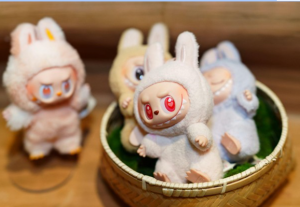
This is where the famous Labubu phenomenon slots in. At its core, the Labubu toy is a creation coming from Hong Kong and, starting in 2019, manufactured and distributed by Pop Mart.
Labubus are, indeed, cute, or you can see the vision of why someone would see them as cute. The gambling part is that you get them via blind boxes, which means that you know for sure that you get a Labubu, but have no idea which color or design.
It’s part of the appeal, especially if you want to collect them. You may find Labubus of certain colors that match your outfits, or are looking to flip them on the resale market, especially since they became popular in 2024.
Overall, the anticipation and wonder of what kind of Labubu you’ll get is gambling-esque. However, you know for sure that you get what you pay for: a Labubu toy, which is expensive in the first place.
Trading cards packages
You might’ve heard of various news when first-edition trading cards for superstar athletes, past or present, sell in the millions of dollars. For some reason, collectors love these, especially if they’re in pristine or mint condition.
The older a trading card is, the more valuable it becomes, especially if its status makes it a high-quality collectible. If the athlete had a short but high-profile career, the value is even higher.
Buying official trading cards and opening a package is both a gamble and a long-term investment. If you land on a high-profile name, especially an immense one, that card can become monetarily valuable. If you’re just wishing to collect cards of your favorite players, there’s an impact as well.
However, buying these packages and hoping to land something nice is still a gambling-like feature. You have no guarantees that you’ll like any player, but that’s the fun of it.
Conclusion
There are gratifying aspects in every gambling-like activity, including traditional casino gambling or sportsbooks. However, all of them have one core thing in common: you should enjoy them responsibly, so take care!