Why Does My Cat Lay on My Chest? Explained! 2026
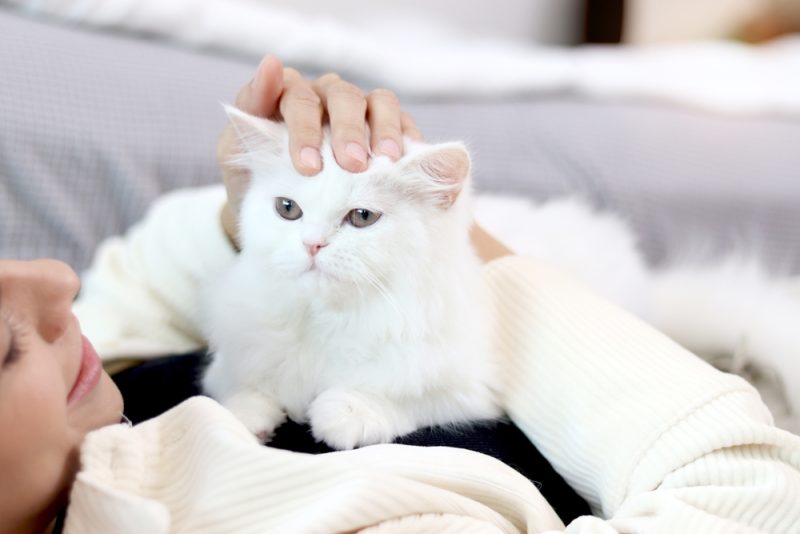
Why does my cat lay on my chest is one of the most common questions cat owners ask, and the answer is more meaningful than you think.
Your cat is not just looking for a comfy nap spot.
This behavior is rooted in trust, instinct, warmth-seeking, and deep emotional bonding.
Understanding the science and psychology behind it can completely change how you see those cozy cuddle sessions.
What Does It Mean When a Cat Lays on Your Chest?
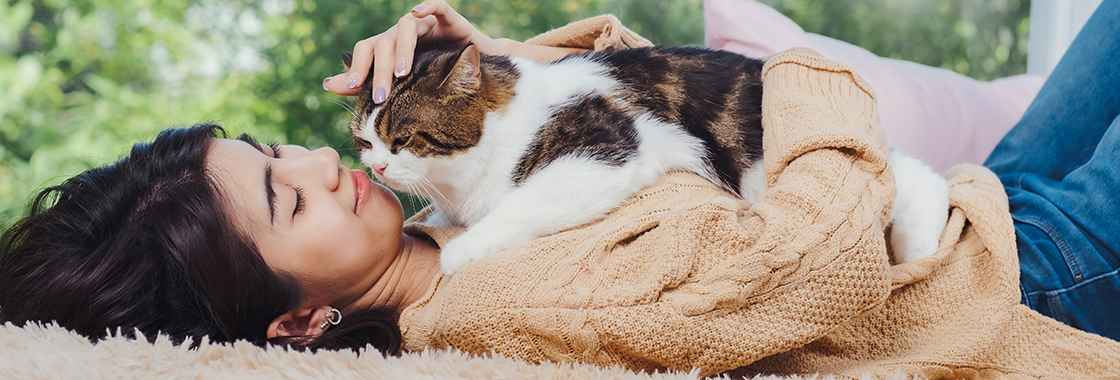
Fluffy and cute scotish cat laying down on asian woman chest while she lay dow on brown carpet at living room, touching cat with love feeling.
When your cat chooses your chest over every other surface in the house, it is sending you a message. That message is simple: you are safe, warm, and loved.
Cats are selective about where they rest. They do not curl up just anywhere. Your chest offers a unique combination of warmth, rhythm, scent, and emotional safety that no cat bed can replicate.
This behavior is one of the strongest signs of feline affection and trust a cat can show.
Top Reasons Why Your Cat Lays on Your Chest
1. Your Chest Is Warm and Comfortable
Cats are natural heat-seekers. Their ideal body temperature is around 101–102.5°F, slightly higher than humans. So they are always looking for warm spots to conserve energy.
Your chest, sitting at around 98.6°F, is like a living, breathing heated pad. It is soft, stable, and always available. During cold nights especially, your chest becomes the most attractive sleeping spot in the room.
2. Your Heartbeat Reminds Them of Their Mother
This is one of the most touching reasons. The steady rhythm of your heartbeat mimics the sounds kittens hear when snuggled against their mother in the early weeks of life.
That familiarity creates an instant sense of security. Your cat is not just resting on you. They are reliving the comfort of early kittenhood every time they settle on your chest.
3. It Is a Sign of Deep Trust and Affection
Cats are cautious animals. They do not place themselves in vulnerable positions unless they feel completely safe. Lying on your chest puts them close to your face, in an open posture, with no easy escape route.
That choice is deliberate. It means your cat trusts you fully. It is one of the clearest signs of love a cat can express.
4. They Are Marking You as Their Territory
Cats have scent glands on their face, cheeks, and paws. When they lie on your chest, they are actively transferring their scent onto you.
This is not aggressive. It is their way of saying “you are mine and I am yours.” It is a quiet but powerful act of claiming you as part of their social group.
5. Your Breathing Pattern Soothes Them
The rise and fall of your chest creates a gentle, rhythmic motion. For a cat, this steady movement feels like a natural rocking sensation that promotes relaxation.
Combined with the sound of your heartbeat, your breathing creates a full sensory experience that is deeply calming for your feline friend.
6. They Are Seeking Emotional Comfort
Cats feel stress, anxiety, and even sadness. When they are feeling off, they naturally move toward the person they trust most.
Lying on your chest gives them access to your warmth, scent, and presence all at once. It is their version of a comfort hug. If your cat suddenly becomes clingier, it may be worth checking if something in their environment has changed.
7. They Want Your Attention
Cats are clever. They quickly learn that lying on your chest almost always results in pets, strokes, and focused attention from you.
If your cat jumps on you the moment you sit down or lie back, they may have learned that this is the fastest way to get your undivided love. Smart move, honestly.
8. Territorial Behavior Around Other Pets
If you have recently added a new pet to the household, your cat may start laying on your chest more frequently. This is territorial behavior.
By sitting on you, they are signaling to the other animal that you belong to them. It is not aggressive, just a clear social statement made through body language and scent.
9. It Is an Instinct Passed Down From Ancestors
Kittens in a litter pile on top of each other for warmth and security. This behavior, sometimes called “cat pillowing,” is passed down through generations.
Your chest replicates that pile-up feeling. Your cat is following ancient instinct, and you just happen to be the perfect stand-in for a litter of siblings.
10. They May Sense You Are Unwell
Cats have a highly refined sense of smell. They can detect changes in your body chemistry, body temperature, and even breathing patterns. Many cat owners report their cat becomes more clingy when they are sick or stressed.
This is not mystical. It is simply your cat responding to real physical and behavioral changes they can detect before you even notice them yourself.
The Science Behind Cat Chest-Laying Behavior
| Behavior | Scientific Explanation |
|---|---|
| Lying on chest | Warmth-seeking + trust + scent marking |
| Purring on chest | Vibrational therapy, 25–150 Hz frequency |
| Kneading on chest | Kitten behavior carried into adulthood |
| Slow blinking | Sign of relaxed trust and affection |
| Head butting | Scent gland activation, social bonding |
Health Benefits of Letting Your Cat Lay on Your Chest
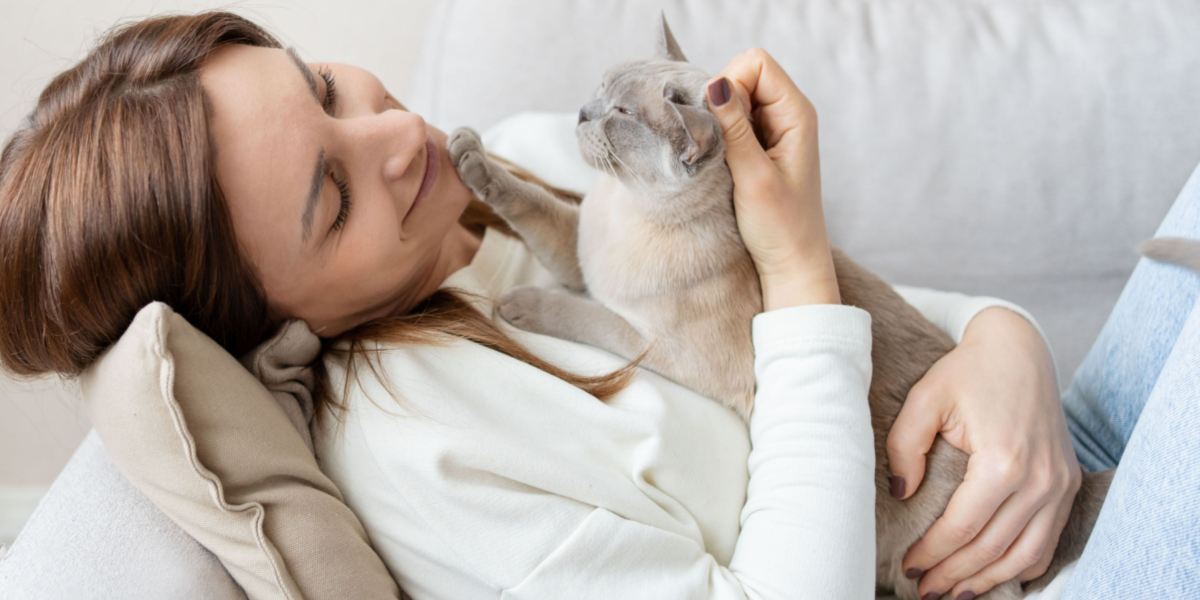
This is not just good for your cat. It is good for you too.
Purring Frequency May Promote Healing
Research shows that a cat’s purr vibrates at 25–150 Hz. This frequency range overlaps with therapeutic vibration used in physical therapy to promote bone healing, reduce inflammation, and ease muscle tension.
Studies suggest cat owners have a 40% lower risk of heart attacks compared to non-cat owners. That is a remarkable statistic tied directly to the calming effect of feline companionship.
Stress and Anxiety Reduction
The rhythmic sound and vibration of a cat purring on your chest can trigger your body’s relaxation response. It lowers cortisol levels, slows your heart rate, and promotes a sense of calm similar to meditation.
If you have had a rough day, your cat lying on your chest is doing more than being cute. It is actively helping your nervous system recover.
Lower Blood Pressure
Multiple studies confirm that petting a cat and hearing them purr can measurably lower blood pressure. This has real long-term cardiovascular benefits for regular cat owners.
Even just 10–15 minutes of a purring cat on your chest can noticeably lower your heart rate and ease built-up tension.
Emotional Bonding and Mental Health
The human-animal bond releases oxytocin, the same bonding hormone that strengthens relationships between people. Regular physical closeness with your cat reduces symptoms of depression and loneliness.
Your cat lying on your chest is a two-way emotional exchange. You both feel better for it.
Cat Chest-Laying vs. Other Common Cat Behaviors
| Behavior | What It Means |
|---|---|
| Laying on your chest | Deep trust, warmth-seeking, bonding |
| Sleeping near your feet | Affection with slight independence |
| Sitting on your lap | Comfort-seeking, moderate affection |
| Laying on your face | Extreme closeness, attention-seeking |
| Sleeping by your head | Territorial, scent-sharing behavior |
| Kneading your stomach | Security, comfort, kitten instinct |
When Should You Be Concerned?
Chest-laying is almost always a positive behavior. But there are a few signs worth watching for.
Sudden Increase in Clinginess
If your normally independent cat suddenly cannot stop laying on your chest, something may have changed. New pets, new people, a change in routine, or even a health issue can trigger this.
Observe other behaviors. Is your cat eating normally? Are they using the litter box? A vet visit is worth it if the clinginess comes with lethargy or appetite changes.
Breathing Difficulties
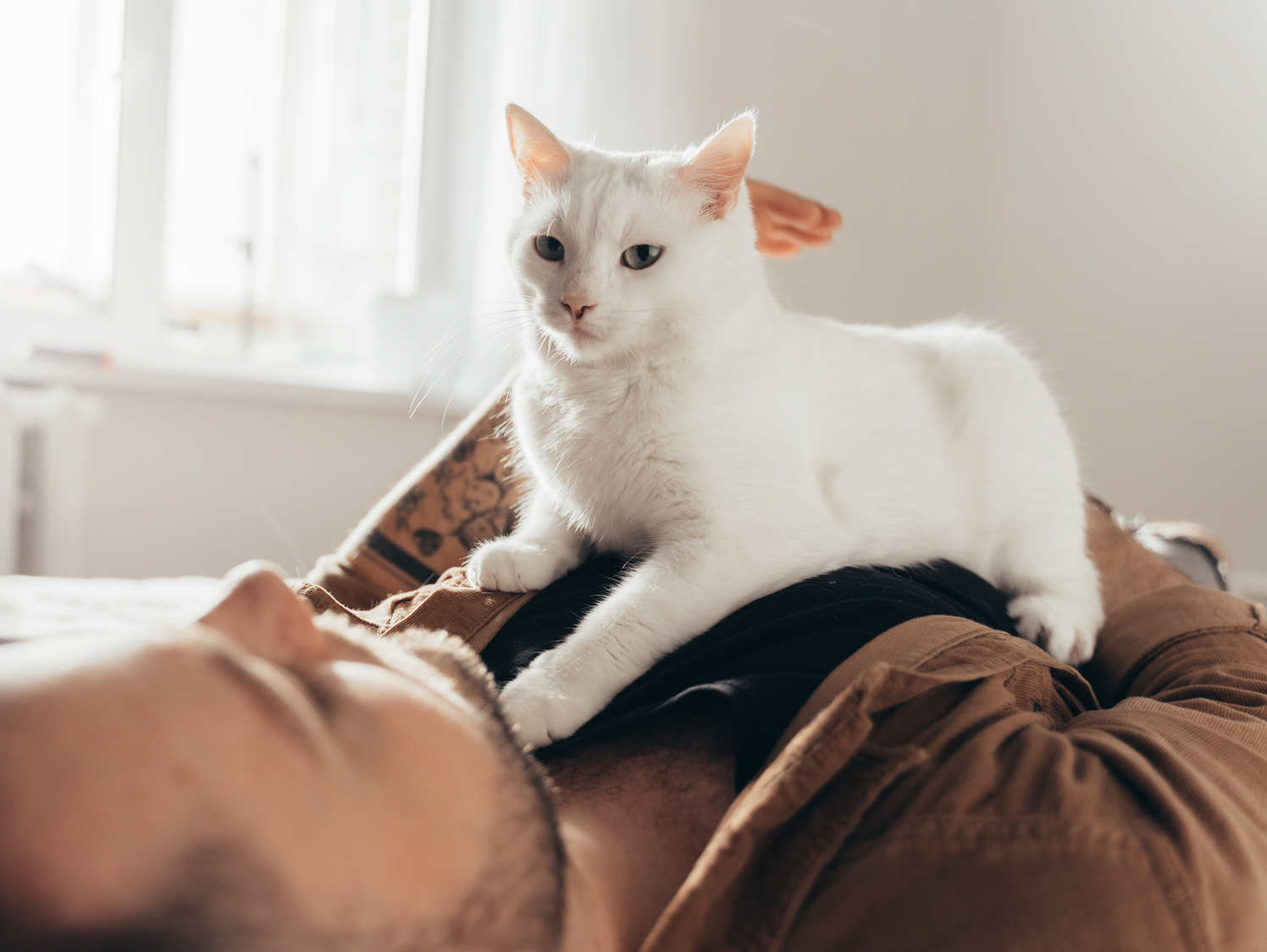
Close up view of the calm white cat laying at his bearded owner and looking at the camera while relaxing. Tattooed man stroking his pet. Animals and people concept
A large or heavy cat lying directly on your chest can sometimes make breathing slightly uncomfortable, especially if you have respiratory issues. If you find yourself waking up short of breath, it is okay to gently move your cat.
Excessive Dependency
A cat that refuses to leave your chest and becomes distressed when separated may be showing signs of separation anxiety. This is a real condition in cats and can be addressed with behavioral support and environmental enrichment.
How to Encourage or Discourage This Behavior
If You Love It
Let it happen. Relax your body language so your cat feels welcome. Gentle strokes while they are settled reinforce the bond. Slow blink back at them to communicate safety and affection in their own language.
If You Need to Set Limits
You do not have to sacrifice sleep or comfort to honor your cat’s affection. Try these approaches:
- Place a warm cat bed right next to where you sleep so they have a nearby alternative.
- Use a soft blanket with your scent on it to draw them toward their own space.
- Never push your cat away harshly. Gently lift and redirect them to their designated spot consistently.
- Reward them with treats when they use their own bed.
If It Bothers You at Night
Close the bedroom door if needed. Make sure your cat has a cozy alternative with a warm blanket. Most cats adapt quickly when their needs for warmth and comfort are met elsewhere.
Cat Breeds Most Likely to Lay on Your Chest
Some breeds are naturally more inclined toward this behavior than others.
| Breed | Tendency to Lay on Chest |
|---|---|
| Ragdoll | Very High – known as “puppy cats” |
| Maine Coon | High – affectionate and large |
| Siamese | High – very social and vocal |
| Burmese | Very High – deeply people-oriented |
| Scottish Fold | Moderate to High |
| British Shorthair | Moderate – affectionate but independent |
| Bengal | Moderate – energetic, bonds selectively |
Why Does My Cat Lay on My Chest and Purr?
When your cat combines chest-laying with purring, they are expressing peak contentment. The purring signals they are completely relaxed and happy right where they are.
The purring also has that therapeutic vibration effect mentioned earlier. So when your cat purrs on your chest, you are both benefiting simultaneously. It is one of the most mutually rewarding behaviors in the human-cat relationship.
Why Does My Cat Knead My Chest?
Kneading, sometimes called “making biscuits,” is when your cat rhythmically pushes their paws in and out against your chest. This goes back to kitten behavior when they kneaded their mother’s belly to stimulate milk flow.
When an adult cat kneads your chest, it means they feel completely safe and loved. They are in a state of deep comfort. It can feel a little sharp if they use claws, so keeping your cat’s nails trimmed helps make the experience more comfortable for you both.
Why Does My Cat Lay on My Chest When I Am Sick?
This is a common experience for cat owners. When you are ill, your body temperature changes slightly, your breathing pattern shifts, and your scent changes. Cats can detect all of this.
Your cat is not healing you with magical powers. But they are responding to real physical cues and instinctively moving closer to offer comfort. The warmth, purring, and closeness do have measurable stress-reducing and physiological benefits, even during illness.
Spiritual and Cultural Perspectives on Cats and Healing
Some spiritual traditions believe cats can sense and respond to human energy fields or “chakras.” The idea is that cats are drawn to areas of stress or illness and work to soothe that energy through their presence and purring.
While this is not scientifically verified, it is widely reported by cat owners across cultures. Whether you believe in energy healing or not, the emotional comfort cats provide during difficult times is very real.
Quick Summary: Why Does My Cat Lay on My Chest?
| Reason | Category |
|---|---|
| Seeking warmth | Physical need |
| Heartbeat mimics mother | Emotional/instinctual |
| Trust and affection | Emotional bonding |
| Scent marking | Territorial behavior |
| Soothing breathing rhythm | Sensory comfort |
| Attention-seeking | Behavioral/learned |
| Anxiety or stress relief | Emotional need |
| Kneading and instinct | Ancestral behavior |
| Healing response | Sensory perception |
Frequently Asked Questions (FAQs)
Why does my cat lay on my chest and stare at me?
Your cat is showing affection and checking in with you. Staring combined with slow blinking means they feel deeply safe and connected to you.
Is it safe to let my cat sleep on my chest at night?
Yes, for most healthy adults it is completely safe. Use common sense if you have allergies, asthma, or a very large cat that affects your breathing comfort.
Why does my cat only lay on my chest and not anyone else’s?
You are their person. Cats bond selectively and your scent, voice, and energy are what they associate with safety and comfort above all others.
Why does my cat lay on my chest when I am sad?
Cats can sense emotional and physical changes in their owners. Your altered breathing, body language, and even scent shift when you are upset, drawing your cat in to offer comfort.
Does my cat lay on my chest because they love me?
Yes. Chest-laying is one of the strongest expressions of feline love and trust. It means you are their safe place.
Why does my cat knead my chest before lying down?
Kneading is a comfort behavior from kittenhood. They are preparing their “nest” and expressing a deep sense of security before settling in.
Why does my cat suddenly lay on my chest more than usual?
A change in environment, routine, or your own health can trigger increased clinginess. It is worth monitoring other behaviors to rule out stress or illness in your cat.
Can my cat sense when I am sick?
Yes, cats can detect changes in body temperature, scent, and breathing. Many owners report increased chest-laying when they are unwell.
Why does my cat purr while laying on my chest?
Purring means your cat is fully content and relaxed. It also has measurable health benefits for you through its 25–150 Hz vibrational frequency.
Should I stop my cat from laying on my chest?
Only if it disrupts your sleep or causes physical discomfort. If it bothers you, redirect gently with a warm cat bed placed nearby rather than pushing them away.
Conclusion
Why does my cat lay on my chest comes down to one simple truth: you are their safe place in the world.
Every time your cat climbs onto your chest, they are choosing you above every other option available to them.
They are drawn by your warmth, comforted by your heartbeat, and anchored by your scent.
This behavior is rooted in instinct, shaped by trust, and expressed through deep feline affection.
Understanding why your cat does this makes the experience richer for both of you
You are not just a human pillow. You are a source of security, love, and comfort for a creature that has decided you are worth trusting completely.
Embrace it when you can. Redirect it gently when you need to.
And the next time your cat settles on your chest and starts to purr, remember that the science, the instinct, and the emotion are all pointing to the same thing: your cat loves you, and in their world, there is no higher compliment than choosing to rest on your heart.