Why More Women Are Making the Switch to Menstrual Cups and Discs
The conversation around menstrual health has changed significantly in the past decade. Products that were once considered niche or unconventional have moved into mainstream awareness as more women start asking practical questions about what they are putting in their bodies, how much they are spending on period products every year, and what the environmental cost of their choices actually looks like. Menstrual cups and discs are at the centre of that shift.
Sales data and search trends both point to the same pattern: a growing segment of menstruating people, particularly those in their twenties and thirties, are switching away from disposable pads and tampons toward reusable alternatives. The drivers are not identical for everyone, but a few consistent themes emerge in the conversations happening in wellness spaces, health forums, and social media.
The Case for Reusable Period Products
The economics alone make a compelling argument. The average person who menstruates spends a significant amount on disposable period products over their lifetime. A menstrual cup or disc represents a one-time or infrequent purchase that, with proper care, lasts for years. The financial math tends to become obvious fairly quickly when laid out directly.
Beyond cost, there is a comfort argument. Many people who make the switch report that they become less aware of their period during the day because cups and discs, when fitted correctly, create a seal that prevents leakage without the external bulk or absorbency of a pad or tampon. For athletes, active people, and those with physically demanding jobs or lifestyles, this functional difference is meaningful.
There is also the ingredient transparency question. Disposable menstrual products have been subject to increasing scrutiny regarding the materials used in their manufacture. Cups and discs made from medical-grade silicone provide a material profile that many consumers find easier to understand and feel confident about using internally over the long term.
Cups vs. Discs: Understanding the Difference
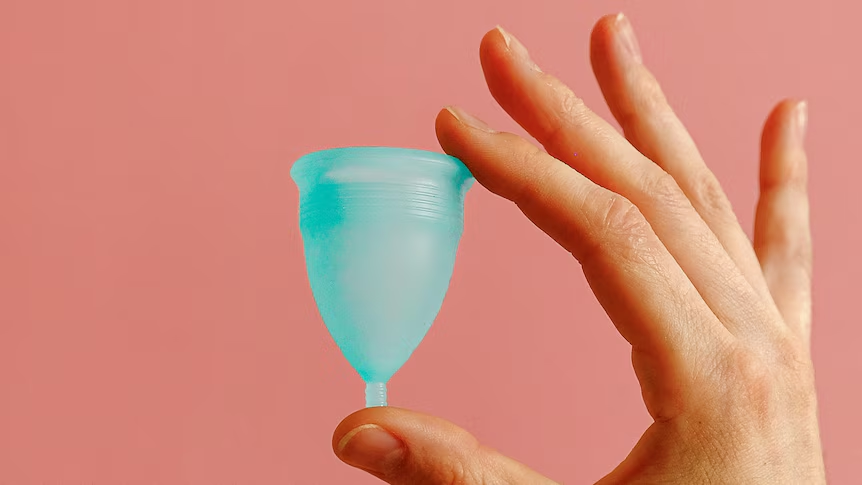
Menstrual cups are bell-shaped and sit in the lower vaginal canal, collecting menstrual fluid. They are removed, emptied, rinsed, and reinserted. Most users find a learning curve of one or two cycles before they feel fully comfortable with insertion and removal.
Menstrual discs are flatter in shape and sit at the base of the cervix, tucked behind the pubic bone. Some users find them easier to insert than cups, and they are compatible with penetrative sex during menstruation. Both formats offer high capacity compared to tampons, which is particularly useful for people with heavier flows.
Among the options on the market, the best menstrual cups are those made from body-safe materials, available in multiple sizes to accommodate different anatomies, and backed by brands that provide clear guidance for new users. Saalt offers both cups and discs made from 100% medical-grade silicone, with sizing options that account for the variation in what works best for different bodies.
What the Learning Curve Actually Looks Like
The most common barrier people cite when considering the switch is uncertainty about getting it right. This is understandable, but it is also the kind of concern that tends to diminish quickly with use. Most first-time cup users report that by their second or third period they handle insertion and removal without thinking about it.
Tips that consistently help new users include: trying insertion in the shower, using different fold techniques, and making sure the cup or disc has fully opened after insertion by running a finger around the base. The learning curve is real but short, and most people who get through it do not go back.
Frequently Asked Questions
How long does a menstrual cup last? With proper care, including thorough cleaning between cycles and sterilisation by boiling at the start and end of each period, a good quality medical-grade silicone menstrual cup can last for several years. Some manufacturers recommend replacement every one to two years, while others suggest up to ten years with proper maintenance.
How do I know what size menstrual cup to use? Most brands offer two sizes, typically differentiated by flow volume and whether the user has given birth vaginally. Many brands also offer guidance tools or quizzes on their websites to help new users identify a starting size. It is worth noting that vaginal anatomy varies considerably, and some trial may be needed to find the best fit.
Can you sleep with a menstrual cup in? Yes. Menstrual cups are designed for wear of up to eight to twelve hours depending on flow volume, making overnight use straightforward. Many users find this one of the most practical benefits compared to overnight pad or tampon use.
Are menstrual cups safe to use? Menstrual cups made from medical-grade silicone are considered safe for internal use. They do not absorb fluid in the way tampons do, which means they are not associated with the same risks as high-absorbency tampons. As with any internal product, proper hygiene practices including clean hands during insertion and removal and thorough cleaning between uses are important.
What is the difference between a menstrual cup and a menstrual disc? A menstrual cup sits in the lower vaginal canal and is held in place by suction. A menstrual disc sits at the base of the cervix and is held in place by the pubic bone. Discs generally offer higher capacity, are compatible with penetrative sex, and some users find them easier to insert. Both collect rather than absorb menstrual fluid.
How do you clean a menstrual cup? During your period, rinse the cup with cold water first (to prevent staining) followed by warm water between uses. At the start and end of each cycle, sterilise the cup by submerging it in boiling water for a few minutes. Store it in the breathable pouch it typically comes with rather than an airtight container.