Why Is My Tongue Sore? Home Remedies That Help 2026
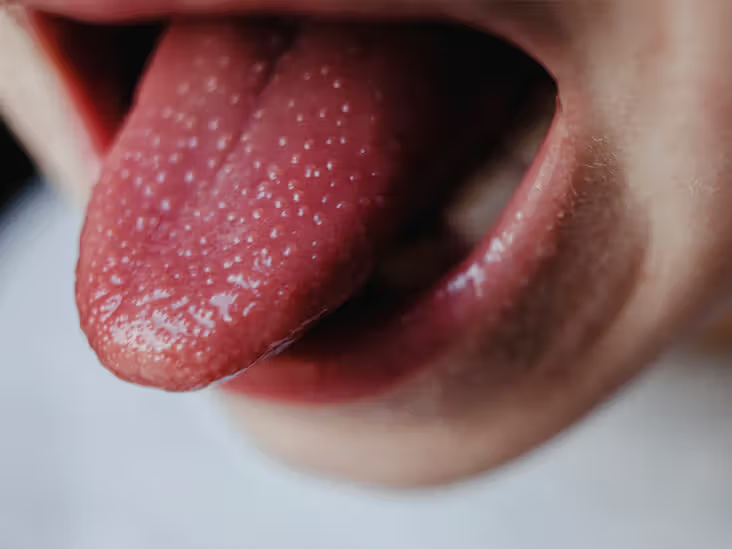
Why is my tongue sore is a question that catches most people off guard — because tongue pain is hard to ignore and even harder to diagnose on your own.
Your tongue does so much work every single day: chewing, tasting, swallowing, and speaking.
When it hurts, everything feels harder. The good news is that most causes of a sore tongue are completely harmless and resolve within a week or two with the right care.
What Makes the Tongue So Sensitive to Pain?
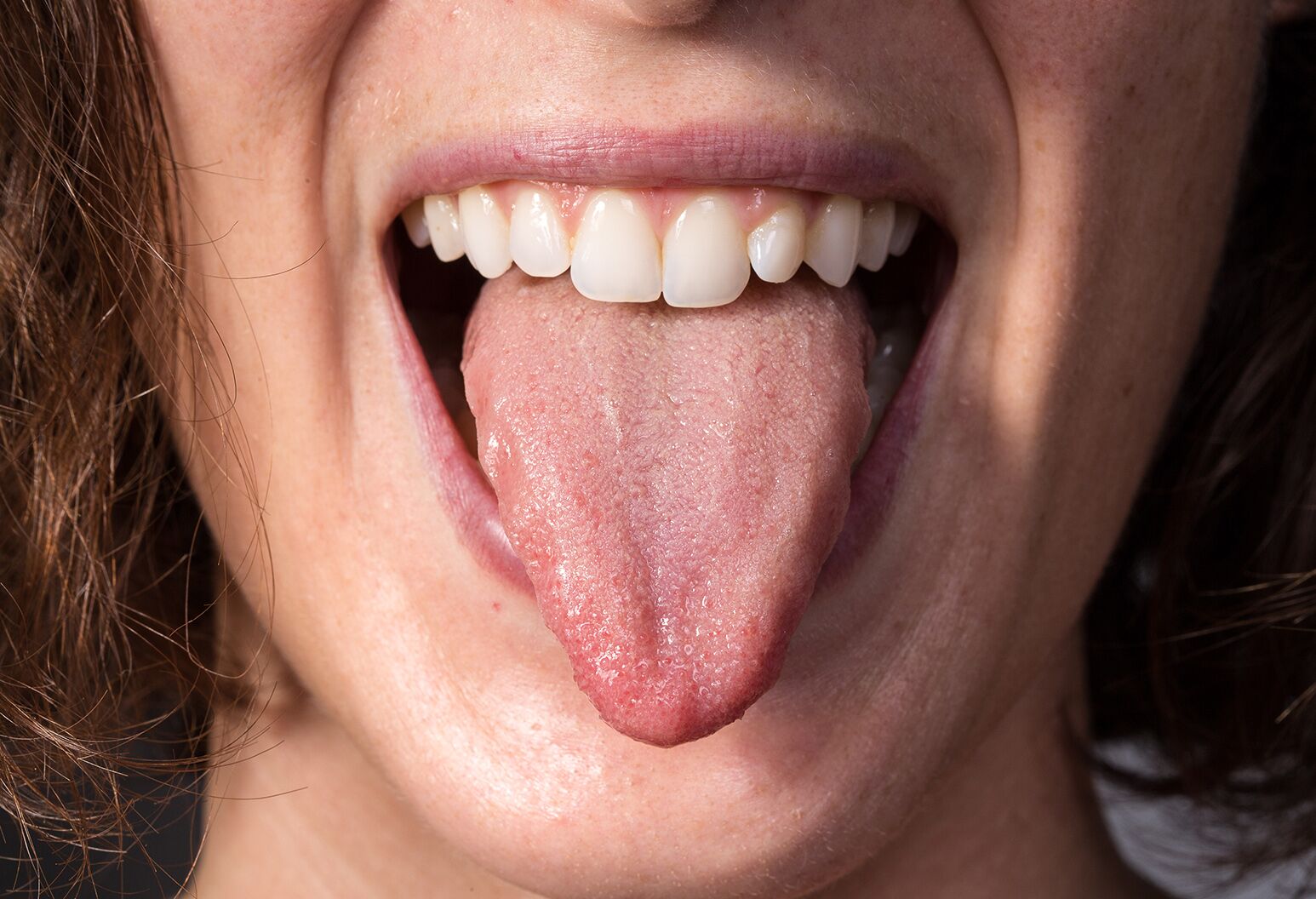
The tongue is one of the most densely innervated muscles in the entire human body. It contains thousands of nerve endings that detect temperature, pressure, taste, and pain.
Because the tongue is constantly in motion — pressing against teeth, moving food, forming speech — even minor irritation can feel disproportionately painful. A small cut or ulcer on the finger might go unnoticed for days. The same size injury on the tongue is felt immediately and constantly.
This heightened sensitivity is why tongue soreness demands attention even when the underlying cause turns out to be minor.
Why Is My Tongue Sore? 14 Common Causes Explained
Here is a complete breakdown of every likely reason your tongue is sore, from the most common and harmless to the more serious conditions that need medical attention.
1. Tongue Injury or Trauma
Accidentally biting your tongue while eating, burning it with hot food or drinks, or scraping it against sharp or broken teeth are the most frequent causes of sudden tongue soreness.
Grinding or clenching your teeth at night also irritates the sides and edges of the tongue over time. Most trauma-related soreness heals on its own within a few days once the source of irritation is removed.
2. Canker Sores (Aphthous Ulcers)
Canker sores are small, shallow ulcers that appear on the tongue, inner cheeks, or gums. They look white or yellow with a clearly defined red border and can be surprisingly painful relative to their size.
They are not contagious and cannot be spread through kissing or sharing utensils. Common triggers include stress, hormonal fluctuations, nutritional deficiencies (especially iron, B12, and folate), and acidic foods. Most minor canker sores heal within 7 to 14 days without treatment.
3. Burning Mouth Syndrome (Glossodynia)
Burning mouth syndrome (BMS) causes a persistent burning, scalding, or tingling sensation in the tongue, lips, gums, or the entire mouth — often without any visible cause. The burning can last for hours and may return daily.
BMS is more common in postmenopausal women. Triggers and associated factors include vitamin B12 deficiency, iron deficiency, dry mouth, acid reflux, anxiety, depression, and diabetes. Cleveland Clinic notes that this condition can significantly affect quality of life. Treatment depends on identifying the underlying trigger.
4. Oral Thrush (Fungal Infection)
Oral thrush is caused by an overgrowth of Candida albicans yeast inside the mouth. It produces creamy white or yellowish patches on the tongue and inner cheeks that may be raised, cottage cheese-like in texture, and sore.
If you scrape off a white patch and see a raw red surface underneath, thrush is the likely cause. It is more common in people with weakened immune systems, those using steroid inhalers, antibiotic users, and people with diabetes or dry mouth. Treatment involves antifungal medication prescribed by a doctor.
5. Cold Sores and Oral Herpes (HSV-1)
The herpes simplex virus type 1 (HSV-1) causes fluid-filled blisters that can appear on the tongue, lips, and inside the mouth. They are painful, highly contagious through direct contact or saliva, and may recur throughout a person’s life.
Other symptoms can include sore throat, fever, swollen lymph nodes, and headache. While there is no cure, antiviral medications like acyclovir can shorten the duration and reduce the severity of outbreaks significantly.
6. Geographic Tongue (Benign Migratory Glossitis)
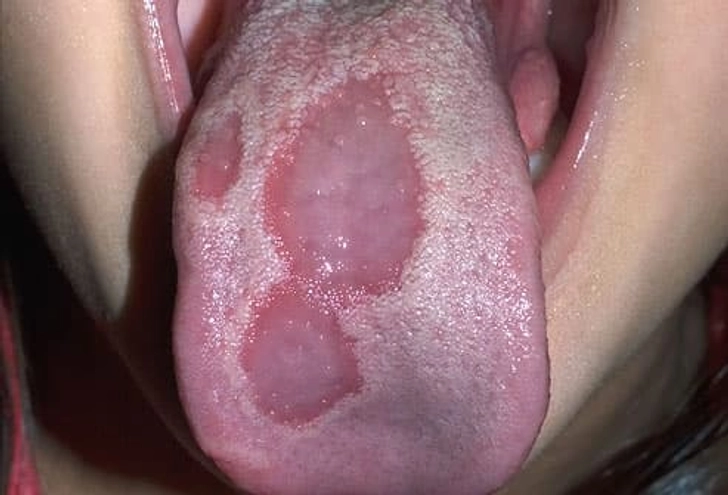
Geographic tongue creates smooth, irregular red patches surrounded by white or light gray borders on the surface of the tongue — resembling a road map. These patches can shift in location, pattern, and size within minutes to hours.
It is a harmless inflammatory condition with no known single cause. It has been linked to stress, hormonal changes, psoriasis, and certain food sensitivities. Most people with geographic tongue experience no pain, though some feel burning or sensitivity to hot, spicy, or acidic foods.
7. Nutritional Deficiencies
A deficiency in key nutrients is one of the most overlooked causes of a chronically sore tongue. Deficiencies in vitamin B12, B2 (riboflavin), B6 (pyridoxine), folic acid, niacin, iron, zinc, and vitamin E are all directly linked to tongue inflammation and soreness.
Vitamin B12 deficiency, in particular, can cause atrophic glossitis — a condition where the tiny bumps on the tongue (papillae) gradually disappear, leaving the tongue looking abnormally smooth, red, and feeling very sore. A simple blood test can confirm nutritional deficiencies.
8. Oral Lichen Planus
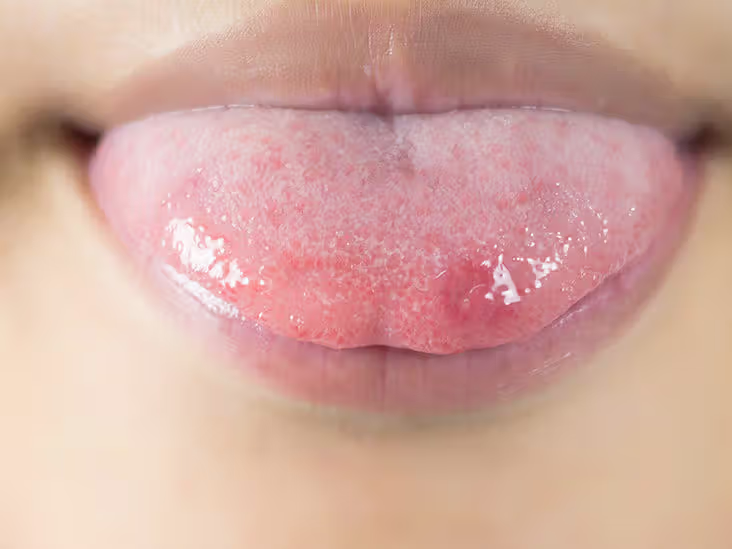
Oral lichen planus is a chronic inflammatory condition that appears as lacy white patches, redness, or open sores on the tongue and inner cheeks. Johns Hopkins Medicine notes that it affects about 1 in 100 people and is twice as common in women as in men.
It cannot be cured but can be managed with topical corticosteroids to reduce flare-ups. Importantly, some evidence suggests oral lichen planus may be an early warning for oral cancer, making regular dental monitoring essential for anyone with this condition.
9. Allergic Reactions
Certain foods, toothpaste ingredients, mouthwash components, or dental materials can trigger tongue irritation and swelling. Common food triggers include shellfish, nuts, citrus fruits, cinnamon, and spicy seasonings.
Sodium lauryl sulfate (SLS), a foaming agent found in many toothpastes, is a well-known irritant that worsens canker sores and general tongue soreness in some individuals. Switching to an SLS-free toothpaste often brings noticeable improvement.
10. Dry Mouth (Xerostomia)
Saliva plays a crucial protective role in keeping the oral tissues moist and lubricated. When saliva production drops, the tongue becomes dry, rough, and more vulnerable to friction injuries and infections.
Dry mouth is a common side effect of many medications — including antihistamines, antidepressants, blood pressure drugs, and diuretics. It can also result from dehydration, Sjogren’s syndrome, and diabetes. A persistently dry tongue that feels burning or raw should be evaluated by a dentist.
11. Acid Reflux (GERD)
Gastroesophageal reflux disease (GERD) allows stomach acid to travel back into the mouth, where it can irritate and damage the delicate tissues of the tongue and oral mucosa. The acid exposure can cause a burning sensation, soreness, and increased sensitivity.
If your tongue soreness is worse in the morning, or if you frequently experience heartburn or a sour taste in the mouth, GERD may be contributing. Managing acid reflux through diet, medication, and lifestyle changes can relieve associated tongue symptoms.
12. Fissured Tongue
A fissured tongue has deep grooves or cracks across its surface. These fissures are usually harmless and often present from birth or develop gradually. However, food debris, bacteria, and fungi can collect inside the cracks, leading to irritation, bad breath, or infection.
The National Institutes of Health reports that the incidence of fissured tongue is around 5%. Proper daily tongue cleaning is the most effective way to keep the grooves clean and prevent soreness or secondary infection.
13. Leukoplakia
Leukoplakia presents as thick white or gray patches on the tongue that cannot be scraped off with a toothbrush. Unlike oral thrush, these patches are caused by prolonged irritation — most commonly from tobacco use (smoking, chewing, or dipping), as well as alcohol.
Leukoplakia is considered a precancerous lesion. While not all cases progress to cancer, a dentist should evaluate and biopsy any persistent white patch to rule out malignancy. Early detection makes a significant difference in treatment outcomes.
14. Tongue or Oral Cancer (Rare But Important)
A persistent, painless sore or lump on the tongue that does not heal after two weeks could indicate tongue or oral cancer. The American Cancer Society estimated approximately 59,660 Americans would be diagnosed with oral or oropharyngeal cancer in 2025.
Risk factors include tobacco use in any form, heavy alcohol consumption, HPV infection, and a family history of oral cancer. Importantly, the soreness from early tongue cancer is often mild or absent — which is why routine dental checkups and prompt evaluation of any non-healing sore matter so much.
Where Is Your Tongue Sore? Location Matters
The location of the soreness helps narrow down the most likely cause significantly.
| Location | Most Likely Cause |
|---|---|
| Tip of tongue | Burns, trauma, lie bumps, canker sores |
| Sides of tongue | Dental irritation, canker sores, oral cancer (if persistent) |
| Back of tongue | Infection, strep throat, tonsil-related issues |
| Underneath tongue | Blocked salivary gland, mucocele, canker sore |
| All over tongue | Oral thrush, geographic tongue, vitamin deficiency |
| One side only | Trauma from sharp tooth or appliance, canker sore |
| With white patches | Oral thrush, leukoplakia, oral lichen planus |
What Does Your Sore Tongue Look Like? A Visual Guide
Paying attention to what the soreness looks like — not just how it feels — can help pinpoint the cause quickly.
| Appearance | What It Suggests |
|---|---|
| White or yellow ulcer with red border | Canker sore |
| Creamy white patches that scrape off | Oral thrush |
| White patch that will not scrape off | Leukoplakia (see a dentist) |
| Red map-like patches with white borders | Geographic tongue |
| Lacy white pattern or open sores | Oral lichen planus |
| Fluid-filled blisters | Oral herpes (HSV-1) |
| Smooth, red, bald tongue surface | Vitamin B12 deficiency / atrophic glossitis |
| Deep grooves or cracks | Fissured tongue |
| Painless lump or thickening | Requires urgent dental evaluation |
Home Remedies for a Sore Tongue That Actually Work
Most causes of a sore tongue respond well to targeted home care. Here are the most effective evidence-supported remedies.
Warm Salt Water Rinse
Mix one teaspoon of salt in a cup of warm water, swish for 30 seconds, and spit. Repeat two to three times a day.
Salt water reduces inflammation, draws out fluid from swollen tissue, kills bacteria, and promotes faster healing of ulcers and minor wounds. It is the most universally recommended home treatment for tongue soreness across every cause.
Baking Soda Rinse or Paste
Mix one teaspoon of baking soda in half a cup of warm water and rinse thoroughly. Alternatively, make a paste with a small amount of water and apply it directly to the sore area.
Baking soda neutralizes acids in the mouth, which helps relieve burning caused by canker sores, acid reflux exposure, or food irritants. It also has mild antimicrobial properties.
Honey
Raw or medical-grade honey applied directly to a sore on the tongue provides natural antibacterial and anti-inflammatory benefits. It forms a soothing protective coating over the ulcer.
Apply a small amount to the sore two to three times daily, or add it to warm (not hot) tea. Manuka honey has particularly strong antimicrobial properties if available.
Aloe Vera Gel
Pure food-grade aloe vera gel can be applied directly to the sore or inflamed area. Aloe vera has well-documented anti-inflammatory and cooling properties that help reduce tongue burning and swelling.
Let the gel sit on the sore for a few minutes before rinsing. Use only food-grade or certified oral-safe aloe vera — not cosmetic products intended for skin.
Ice, Cold Water, and Ice Pops
Ice has natural numbing properties that provide fast temporary relief for tongue pain, burning, and swelling. Sip ice-cold water slowly, let ice chips melt on your tongue, or suck on a cold ice pop.
This is particularly effective for tongue burns, lie bumps, and canker sores. The cold temperature calms nerve endings and reduces localized inflammation quickly.
Coconut Oil Pulling
Swishing a tablespoon of pure coconut oil around the mouth for 5 to 10 minutes (oil pulling) can help reduce bacteria and fungal load in the mouth. Coconut oil has antifungal, antibacterial, and antiviral properties.
This is especially useful for soreness related to oral thrush, general oral infections, or inflamed tongue tissue. Spit out the oil after pulling — never swallow it.
Chamomile Tea Rinse
Brew a strong cup of chamomile tea, let it cool to room temperature, and use it as a mouth rinse. You can also press a cooled chamomile tea bag directly against the sore area.
Chamomile contains compounds with anti-inflammatory and mild analgesic properties. It is a gentle, soothing option for sensitive tongue tissue.
Milk of Magnesia
Milk of magnesia is a mild antacid that can be dabbed onto a sore tongue to neutralize acids and help relieve pain. It creates a thin protective coating over ulcers and irritated tissue.
Apply a small amount with a cotton swab to the affected area two to three times per day. It is particularly helpful for canker sores and acid-related irritation.
Vitamin Supplements
If a nutritional deficiency is contributing to your sore tongue, targeted supplementation can bring improvement within a few weeks. Vitamin B12, folic acid, iron, and zinc are the nutrients most commonly linked to tongue soreness and inflammation.
Have your doctor run a blood panel to confirm deficiencies before supplementing, as over-supplementing some nutrients carries its own risks. Once levels normalize, tongue soreness associated with deficiency typically resolves fully.
Switch to an SLS-Free Toothpaste
If your tongue soreness is persistent and you cannot identify a specific cause, your toothpaste may be the problem. Sodium lauryl sulfate (SLS), found in most mainstream toothpaste brands, is a foaming agent known to irritate oral tissues and worsen canker sores in sensitive individuals.
Switching to an SLS-free toothpaste for two to three weeks and monitoring whether soreness improves is a simple, low-cost diagnostic step worth trying.
Foods to Avoid When Your Tongue Is Sore
Diet choices have a direct impact on how quickly tongue soreness heals — and how badly it hurts in the meantime.
| Avoid | Eat Instead |
|---|---|
| Spicy foods (chili, hot sauce) | Soft cooked vegetables |
| Acidic foods (citrus, tomatoes, vinegar) | Bananas, melons, plain yogurt |
| Very hot beverages or soups | Cool or lukewarm liquids |
| Crunchy, sharp foods (chips, crackers) | Oatmeal, mashed potatoes, soft bread |
| Salty snacks | Plain rice, pasta, eggs |
| Alcohol | Water, herbal teas, smoothies |
| Carbonated drinks | Still water, diluted fruit juice |
Switching to a soft, bland, cool diet while your tongue heals is one of the fastest ways to reduce daily pain and stop re-irritating the sore area every time you eat.
Medical Treatments for a Sore Tongue
When home remedies are not enough or when the cause requires professional intervention, these medical treatments are commonly used.
Topical Anesthetics and Oral Gels
Over-the-counter gels containing benzocaine (such as Orajel) can be applied directly to painful sores on the tongue for temporary numbing relief. They do not treat the underlying cause but make the healing period more manageable.
These are appropriate for canker sores, minor injuries, and general tongue soreness. Follow package instructions and avoid applying to very young children.
OTC Pain Relievers
Ibuprofen (an NSAID) and acetaminophen can reduce both pain and inflammation associated with a sore tongue. Ibuprofen is particularly useful because it targets inflammation directly, which is at the root of most tongue soreness.
Take according to package directions and avoid overuse. If you need pain relief daily for more than a week, consult a doctor rather than continuing OTC medication.
Antifungal Medications
When oral thrush is the cause, a dentist or doctor will prescribe antifungal medications — most commonly nystatin rinse or fluconazole tablets. These directly eliminate the Candida overgrowth causing the white patches and soreness.
Treatment typically lasts 7 to 14 days. It is important to complete the full course even if symptoms improve sooner, to prevent recurrence.
Antiviral Medications
For cold sores and oral herpes outbreaks on the tongue, antiviral medications like acyclovir, valacyclovir, or famciclovir can shorten outbreak duration and reduce pain. They work best when started early — ideally at the first sign of tingling or discomfort.
Topical Corticosteroids
For oral lichen planus, severe canker sores, and other inflammatory tongue conditions, a dentist or doctor may prescribe a topical corticosteroid gel or rinse. These reduce immune-mediated inflammation quickly and effectively.
Common options include triamcinolone acetonide paste and dexamethasone rinse. Long-term use should be monitored by a healthcare professional.
When Should You See a Doctor or Dentist?
Not every sore tongue requires a professional visit, but certain signs should always prompt you to seek evaluation.
See a Doctor or Dentist If:
- The soreness has lasted more than two weeks with no sign of improvement
- There are white patches that cannot be scraped off
- A painless lump, thickening, or ulcer is present on the tongue
- The sore is growing in size or changing in appearance
- Tongue soreness is accompanied by difficulty swallowing, speaking, or breathing
- You notice unexplained weight loss alongside mouth sores
- Swollen lymph nodes are present in the neck
- Soreness is accompanied by fever or spreading redness
Seek Emergency Care If:
- The tongue is swelling rapidly, making breathing difficult (possible severe allergic reaction)
- There is significant bleeding from the tongue that will not stop
- Tongue swelling follows an insect sting or new medication
How to Prevent a Sore Tongue
Prevention focuses on protecting the tongue from common triggers and maintaining good overall oral and nutritional health.
Practice Thorough Oral Hygiene Daily
Brush your teeth twice daily using a soft-bristle toothbrush and an SLS-free toothpaste. Clean the tongue with a tongue scraper every morning to remove bacteria, food debris, and dead cells.
Floss once a day and rinse with an alcohol-free antibacterial mouthwash. Consistent oral hygiene dramatically reduces the risk of infection-related tongue soreness and keeps existing irritation from worsening.
Maintain a Nutrient-Rich Diet
Include foods rich in vitamin B12 (eggs, meat, dairy, fortified cereals), folic acid (leafy greens, beans, lentils), iron (red meat, spinach, lentils), and zinc (pumpkin seeds, chickpeas, cashews) regularly.
Nutritional deficiencies are among the most common preventable causes of tongue soreness. A varied, balanced diet significantly reduces the risk of developing glossitis or related conditions.
Stay Hydrated
Drinking at least 8 glasses of water per day keeps saliva flowing and prevents the dry mouth conditions that lead to increased oral irritation and infection risk.
If you frequently have a dry mouth despite adequate water intake, mention it to your dentist — it may be a medication side effect or a sign of an underlying condition like Sjogren’s syndrome that can be managed.
Manage Stress Effectively
Stress is a well-established trigger for canker sores, immune suppression leading to oral infections, and burning mouth syndrome. Regular physical exercise, adequate sleep, and relaxation practices like deep breathing, yoga, or meditation can all reduce baseline stress levels.
Even small daily habits — a 10-minute walk, reducing caffeine, or maintaining a consistent sleep schedule — make a measurable difference in oral health over time.
Avoid Tobacco and Limit Alcohol
Tobacco in all forms irritates the oral mucosa, reduces blood supply to tongue tissue, and significantly increases the risk of leukoplakia and oral cancer. Alcohol is also a known oral irritant and cancer risk factor.
Quitting tobacco is the single most impactful lifestyle change for long-term tongue and oral health. Your doctor can recommend effective cessation programs and support tools.
Sore Tongue in Special Populations
Sore Tongue During Pregnancy
Hormonal changes during pregnancy can increase sensitivity to canker sores and general oral inflammation. Many pregnant women also experience nutritional deficiencies — particularly iron and folate — that contribute directly to tongue soreness.
Safe home remedies such as salt water rinses, honey, and cold foods are appropriate during pregnancy. Avoid OTC oral gels containing benzocaine without consulting a healthcare provider. Any persistent sore should be evaluated by a dentist.
Sore Tongue in Older Adults
Older adults are more prone to dry mouth (often caused by medications), nutritional deficiencies, and denture-related irritation that causes tongue soreness. Geographic tongue and burning mouth syndrome are also more common with age.
Regular dental checkups are especially important for older adults to monitor for early signs of oral cancer, adjust ill-fitting dentures, and address medication-related dry mouth.
Sore Tongue in Children
Children commonly develop canker sores from minor mouth injuries, and hand-foot-mouth disease can cause painful ulcers on the tongue. Oral thrush is also common in young children and infants.
Salt water rinses with child-safe proportions, cold foods, and soft diets are appropriate home remedies. A pediatrician should be consulted if the child has a high fever, difficulty eating, or symptoms lasting more than a week.
Frequently Asked Questions (FAQs)
H4: Why is my tongue sore for no reason?
A tongue that hurts without an obvious cause may be linked to vitamin deficiencies, burning mouth syndrome, dry mouth, or stress-triggered canker sores. A blood test and dental checkup can help identify the underlying factor.
H4: How long does a sore tongue usually last?
Most minor causes like canker sores, burns, and small injuries heal within 7 to 14 days. If soreness persists beyond two weeks, consult a dentist or doctor to rule out more serious conditions.
H4: What vitamin deficiency causes a sore tongue?
Deficiencies in vitamin B12, folic acid, iron, riboflavin (B2), niacin, and zinc are all directly linked to tongue soreness and inflammation. B12 deficiency is the most commonly associated with a smooth, painful, red tongue.
H4: Can stress cause a sore tongue?
Yes. Stress triggers canker sores, suppresses immune function leading to oral infections, and is a recognized contributor to burning mouth syndrome. Managing stress can reduce the frequency and severity of tongue soreness significantly.
H4: What does a sore on the side of the tongue mean?
A sore on the side of the tongue is most often a canker sore, a bite injury, or irritation from a sharp tooth or dental appliance. If it is painless, growing, or does not heal within two weeks, it should be evaluated to rule out tongue cancer.
H4: Is a sore tongue a sign of something serious?
Most causes are harmless and temporary. However, a non-healing sore lasting more than two weeks, a painless lump, white patches that do not scrape off, or soreness alongside difficulty swallowing are warning signs that need prompt professional evaluation.
H4: What home remedy works fastest for a sore tongue?
A warm salt water rinse combined with avoiding spicy, acidic, and hot foods provides the fastest baseline relief. Ice chips or cold water can numb the area quickly. Honey or aloe vera applied directly to the sore also brings rapid soothing relief.
H4: Can acid reflux make your tongue sore?
Yes. Stomach acid that backs up into the mouth from GERD can irritate and damage tongue tissue, causing burning, soreness, and sensitivity. Morning-onset tongue soreness combined with heartburn is a common presentation of this pattern.
H4: Should I use mouthwash for a sore tongue?
Use only alcohol-free mouthwash when your tongue is sore. Alcohol-based mouthwashes can dry out and further irritate inflamed tissue. An alcohol-free antibacterial or saline rinse is a better choice during the healing period.
H4: When should I go to the doctor for a sore tongue?
See a doctor or dentist if the soreness lasts more than two weeks, is accompanied by white patches, a lump, difficulty swallowing, unexplained weight loss, or swollen lymph nodes. Rapid tongue swelling requires emergency care immediately.
Conclusion
Why is my tongue sore is a question with a wide range of answers — and identifying the right one is the key to finding the right fix.
The vast majority of tongue soreness cases are caused by something harmless: a minor bite injury, a canker sore, a food sensitivity, or a mild nutritional deficiency.
With the right home remedies and a few days of avoiding irritating foods, most people recover fully without needing medical treatment.
The home remedies that work best include warm salt water rinses, baking soda paste, raw honey, aloe vera gel, ice chips, and switching to an SLS-free toothpaste.
These address the most common causes directly and support faster healing.
That said, knowing when to seek professional help is equally important.
Any sore that does not improve after two weeks, any non-healing lump or white patch, or any soreness paired with systemic symptoms deserves prompt evaluation by a dentist or doctor.
Early detection of conditions like oral lichen planus, leukoplakia, or oral cancer makes an enormous difference in treatment success.
Keep your tongue clean, your diet balanced, and your stress managed — your tongue will thank you for it.