The Hidden Risks of Neglected Gutters Before an Alberta Winter
By late fall, most Alberta homeowners are thinking about furnaces, winter tires, outdoor faucets, and getting the yard ready for snow. Gutters don’t always make the list.
That’s understandable. Once the leaves are off the trees and the rainy season is mostly behind us, it can feel like gutters have finished their job for the year.
In reality, winter is one of the worst times to leave a drainage problem unresolved.
A gutter that’s half-full of leaves in October may be holding water and ice a few weeks later. A slow downspout can freeze completely. A small sag that wasn’t causing much trouble during summer can become a low spot where meltwater collects every time Edmonton gets a warmer afternoon.
None of these problems sounds particularly dramatic on its own. The trouble starts when they sit there through several months of freezing, thawing, snow, and ice.
What Actually Happens to Gutters in Winter?
Snow on a roof doesn’t stay frozen all winter.
Even when the air temperature is below zero, sunlight and heat escaping from the home can cause some melting. Edmonton also gets plenty of winter days when temperatures climb enough for snow and ice to begin thawing.
That water heads toward the gutters.
If the system is clear, properly sloped, and draining, much of it can move through the downspouts as intended.
If the gutter is packed with debris, things happen differently.
Water gets trapped between leaves and other material. Then the temperature drops. It freezes. The next warm period brings more water, and the process starts again.
By the middle of winter, what began as a layer of fall debris can become a solid frozen mass that’s much harder to deal with.
1. Clogged Gutters Give Ice Somewhere to Build
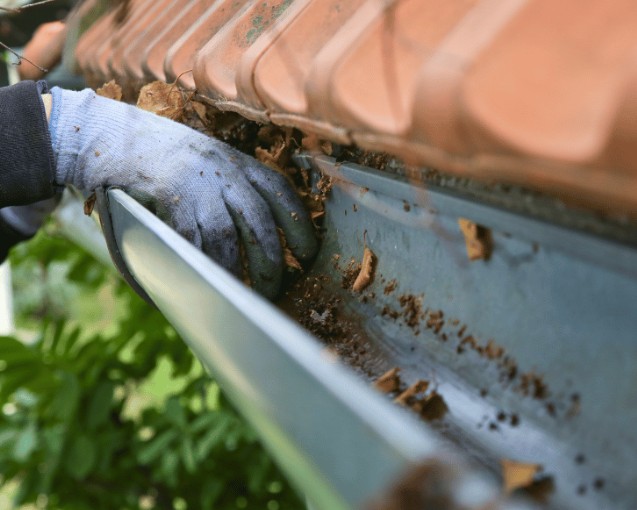
A few leaves in a gutter aren’t necessarily a problem. A thick layer of wet, compacted leaves is another story.
Debris slows water down and can block outlets leading to the downspouts. Instead of draining, water sits in the gutter.
In October, you might notice a little standing water after rain.
In January, that same drainage issue can mean ice.
As additional snow melts, more water reaches the blocked area and can freeze on top of what’s already there. The gutter gradually becomes heavier.
That’s why having a gutter cleaning before winter is about more than making them look tidy. The goal is to leave a clear path for water whenever temperatures allow snow and ice to melt.
2. Ice Is Heavy
Residential gutters are designed to collect and carry water. They’re not intended to spend months supporting large amounts of ice.
Once a gutter fills with frozen water and debris, the load on its hangers and fasteners increases.
A newer, well-secured system may handle some winter buildup without obvious damage. An older gutter that’s already slightly loose or sagging has less room for error.
You may not notice anything immediately.
Then spring arrives, and one section looks lower than it did last year. Or a gap has appeared between the gutter and fascia. Sometimes a hanger has loosened enough that the gutter no longer maintains its original slope.
At that point, the winter problem has created a drainage problem for the next rainy season.
3. A Partially Blocked Downspout Can Freeze Solid
Cleaning the horizontal gutter is only half the job.
Downspouts matter just as much.
Leaves and small pieces of debris can collect around the outlet or become lodged farther down the pipe. Water may still trickle through, so the blockage isn’t always obvious during light rain.
Once temperatures fall, the remaining water can freeze around that debris.
Now there’s even less space for the next round of meltwater.
Eventually, a partially restricted downspout can become effectively blocked. Water backs up into the gutter above it and looks for another route.
Usually, that means spilling over the edge or finding its way through a weak connection.
If one section of your gutters consistently overflows near a downspout, the problem may be inside the downspout rather than in the gutter itself.
4. Water Can End Up Behind the Gutter
Overflow doesn’t always go over the front where it’s easy to see.
Water can also work its way behind a gutter, particularly if the system has pulled slightly away from the fascia or isn’t positioned correctly at the roof edge.
That’s more concerning because the damage may be hidden.
Repeated moisture can affect the fascia and, depending on the home’s construction, surrounding soffit areas as well.
During winter, water can also freeze in small gaps. Alberta’s repeated freeze-thaw cycles aren’t particularly kind to areas that are already loose or deteriorating.
By spring, the homeowner may notice staining, peeling finishes, or a gutter section that no longer sits tightly against the roofline.
The gutter gets blamed, but the repair may now involve the material behind it too.
5. Winter Can Make Existing Sagging Worse
A gutter doesn’t have to be visibly hanging off the house to have a slope problem.
Sometimes there’s only a slight low point.
During summer, you might see a small puddle remaining there after a storm. It doesn’t look urgent, so nothing gets done.
Then winter arrives.
Meltwater settles into that same low area and freezes. That adds weight exactly where the gutter is already sagging.
More weight can make the low point worse, which allows even more water to collect during the next thaw.
It’s a simple cycle, and it can continue for months.
If you regularly see standing water in the same gutter section during warmer weather, it’s worth dealing with before that water starts freezing.
6. Overflowing Gutters Can Create Problems at Ground Level
A clogged gutter isn’t only a roofline issue.
Water that spills over the side eventually reaches the ground.
In warmer weather, that can mean washed-out mulch, soil erosion, or a very wet strip beside the house.
In winter, it can create ice.
Overflow near a walkway, entrance or driveway can freeze into slippery patches. Water may also collect around the base of the home rather than being carried to the intended downspout discharge point.
Then there’s spring.
Edmonton can go from winter conditions to significant snowmelt surprisingly quickly. A gutter system that enters spring already blocked with frozen debris may have difficulty handling the additional runoff.
That is exactly when you want the drainage system working properly.
7. Small Leaks Have All Winter to Get Worse
A dripping corner doesn’t always seem worth worrying about.
During a summer storm, it may be nothing more than a few drops. But small gutter leaks don’t tend to improve on their own.
Temperature changes cause materials to expand and contract. Water can enter small openings, freeze, and put pressure on connections that are already beginning to fail.
By the following spring, a minor drip can become a much more noticeable leak.
The good news is that localized problems don’t always require a new gutter system. A loose section, leaking connection, or damaged downspout may be something that can be corrected with a targeted gutter repair.
Finding those issues before winter simply makes the job easier.
What About Ice Dams?
Ice along the roof edge is often associated with gutters, but gutters aren’t always the underlying cause.
Ice dams can involve roof temperature, insulation, ventilation, and snow conditions. Cleaning the gutters alone won’t correct a problem originating in the attic or roofing system.
That said, blocked gutters certainly don’t help drainage.
When meltwater reaches the roof edge, you want a clear route available whenever conditions allow it to drain. A gutter packed with frozen leaves removes that route.
If a home repeatedly develops significant ice buildup along the eaves, it’s worth looking at the bigger picture rather than assuming the gutter is the only issue.
When Should Edmonton Homeowners Clean Their Gutters?
There isn’t a single date that works for every property.
For many homes, late fall is a practical time because most leaves have already dropped but the gutters haven’t frozen for the season.
Homes with mature trees may need attention more frequently. Pine needles, seeds, and other debris don’t necessarily follow the same schedule as fall leaves.
The easiest way to judge is to look at how the system behaves.
If water is slow to drain, spilling over during moderate rain or leaving standing water behind, waiting for the calendar isn’t particularly useful. Something is already restricting the system.
Spring is another good time to inspect gutters, especially after a difficult winter.
A Five-Minute Check Before Winter
Homeowners can spot quite a few warning signs without climbing onto the roof.
Walk around the house and look along the gutter line.
Does anything appear to sag? Are there gaps between the gutter and fascia? Is one downspout loose or disconnected?
After rain, check the ground beneath the gutters. A washed-out area directly below the roofline can indicate overflow.
You can also watch the system during rainfall. Water should reach the downspouts rather than pouring over random sections.
If the same area causes trouble every time, there’s usually a reason.
Cleaning Doesn’t Fix Every Gutter Problem
It’s also important to know when cleaning isn’t enough.
Removing leaves won’t correct a gutter that has lost its slope. It won’t repair a leaking corner, secure loose hangers, or fix a damaged downspout.
If the system is older and several sections are already failing, cleaning it may only reveal the larger problem.
That’s why www.niceexteriors.ca looks at gutter condition as well as debris and drainage. For Edmonton homeowners, the question isn’t simply whether the gutter is clean. It’s whether water can actually travel from the roof, through the system, and away from the house without creating another problem along the way.
Sometimes cleaning is all that’s needed. Sometimes a section needs repair. And when deterioration is widespread, replacing the existing gutters may be the more practical long-term option.
Don’t Send a Known Gutter Problem Into Winter
There are plenty of exterior projects that can reasonably wait until next year.
A gutter that’s already overflowing, sagging, or holding water isn’t one of the best candidates.
Winter adds weight, ice, and months of freeze-thaw cycles to whatever condition already exists. A problem that’s manageable in the fall can look quite different after an Alberta winter.
Before temperatures settle below freezing, make sure leaves and debris aren’t blocking the system, downspouts are draining, and the gutters are still securely attached and properly sloped.
It isn’t complicated maintenance, but it can prevent a lot of unnecessary water from ending up where it doesn’t belong.