5 Underground Surprises That Can Send Construction Costs Soaring
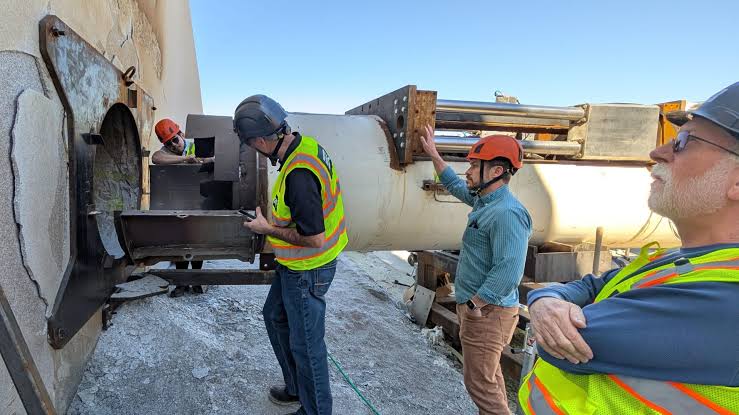
A construction budget can look perfectly sensible on paper. Then excavation starts, the first bucket of soil comes out of the ground and somebody discovers something nobody expected. Suddenly, equipment needs to change, engineers need to revisit plans and the contingency budget starts disappearing.
That’s why understanding what’s beneath a site can be just as important as planning what will eventually sit above it. Depending on the project and ground conditions, investigations involving methods such as auger drilling can provide information about subsurface materials before major excavation begins, helping engineers and project teams make better-informed decisions.
Site investigations can’t guarantee that every underground surprise will be found. They can, however, reduce uncertainty. Here are five hidden conditions that can turn a straightforward construction project into something considerably more complicated.
1. Unexpected Rock
Finding rock isn’t necessarily a problem. Finding it when nobody expected it can be.
Excavating ordinary soil and excavating hard rock can require very different equipment, methods and timeframes. If contractors price a job expecting relatively straightforward excavation and encounter significant rock instead, costs can rise quickly.
Rock may affect more than excavation itself. It can influence:
- Foundation construction
- Underground services
- Drainage installation
- Basement excavation
- Equipment requirements
- Construction schedules
Even the depth and type of rock can matter.
Understanding local geology and conducting appropriate site investigation can give the project team a better idea of what may be encountered before heavy equipment arrives.
2. Weak or Unstable Soil
The opposite problem can be just as troublesome.
You excavate expecting competent ground and discover soft, loose or otherwise unsuitable material where foundations are supposed to go.
Buildings transfer their loads into the ground, so the characteristics of the underlying material influence how foundations need to be designed. If the soil isn’t suitable for the originally planned approach, engineers may need to consider alternatives.
Depending on the circumstances, that might involve deeper foundations, removing and replacing unsuitable material or using other ground-improvement techniques.
The appropriate solution depends on the project and site. The important point is that an unexpected change can affect both the design and the budget.
3. Groundwater Where You Didn’t Expect It
An excavation can look very different once water starts entering it.
Groundwater may complicate excavation and foundation work, particularly when construction extends below the water table. Keeping an excavation workable may require additional planning, equipment and specialist advice.
Water conditions can also vary.
A site that appears dry during one part of the year may behave differently after prolonged rainfall or during another season. Local geology and drainage conditions can influence where groundwater is encountered too.
This is why a dry surface doesn’t necessarily mean everything underneath is dry.
Identifying potential groundwater issues early gives the project team time to consider how they might affect excavation, drainage, waterproofing and the construction program.
4. Buried Remains From Previous Development
Just because you can’t see the old building anymore doesn’t mean every part of it disappeared.
Previously developed sites may contain buried foundations, slabs, pipes, tanks, demolition material or other remnants beneath the surface.
Old services can be particularly troublesome. Unexpected pipes, cables or drainage infrastructure may interfere with excavation or require further investigation before work can continue safely.
Historical plans and service records can provide useful information, but documentation isn’t always complete, particularly on properties that have changed significantly over many years.
This makes site history worth investigating alongside the physical ground itself.
What appears to be an empty block may have a surprisingly complicated past.
5. Contaminated Soil
Some underground discoveries aren’t simply construction problems.
Previous industrial activities, fuel storage, waste disposal and certain historical land uses can potentially leave contaminants in soil or groundwater. Even fill brought onto a site many years earlier may require investigation depending on its origin and composition.
If potentially contaminated material is discovered unexpectedly, work may need to pause while qualified professionals assess the situation.
Depending on local requirements and what is found, contaminated material may require specific handling, treatment or disposal. That can create additional costs that weren’t included in the original excavation budget.
Researching previous land uses and conducting appropriate environmental investigations where risks are identified can therefore be an important part of due diligence.
Why Early Investigation Matters
You can’t simply look across a block of land and know exactly what’s underneath it.
That’s what makes ground-related risk difficult. By the time a major problem becomes obvious, machinery may already be operating, contractors may be booked and the project schedule may be underway.
Appropriate investigation gives the design and construction teams more information earlier.
The scope should match the project. A small structure on a straightforward site may require a different level of investigation from a large building with deep foundations or basement excavation.
Engineers, geotechnical professionals and other relevant specialists can determine what information is appropriate for the proposed development.
The Cheapest Surprise Is Usually the One You Find Early
Spending money investigating something you can’t even see may not feel as satisfying as spending it on the finished building.
But underground uncertainty has a habit of becoming expensive at exactly the wrong time.
Rock, weak soils, groundwater, buried structures and contamination can all affect costs, engineering decisions and construction schedules.
Not every surprise can be prevented. The ground doesn’t conveniently reveal all its secrets before work begins.
The more you learn about a site before committing to major construction, however, the better prepared you are to budget realistically, design appropriately and deal with problems before there’s an excavator sitting idle waiting for an answer.