How SMS Marketing Helps Businesses Build Stronger Customer Connections
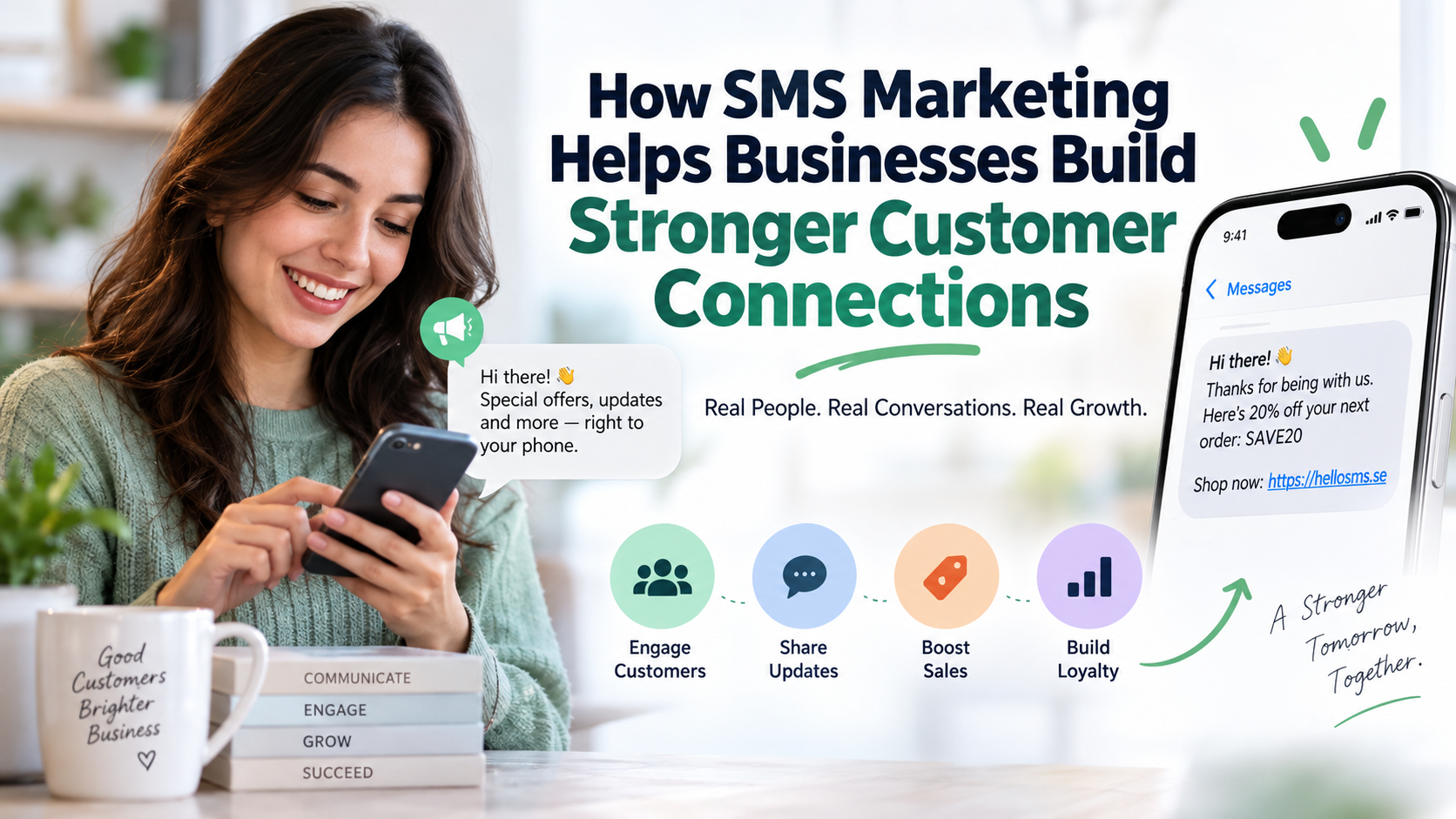
Businesses today have more ways than ever to communicate with their customers, but getting people’s attention has become increasingly difficult. Email inboxes are crowded, social media feeds move quickly, and online advertisements can easily be overlooked. This has encouraged companies to explore communication channels that are simple, direct, and convenient for customers. SMS has become an important part of that strategy because it allows businesses to deliver relevant information directly to a customer’s mobile phone.
Why SMS Remains an Important Business Communication Channel
Mobile phones are an essential part of everyday life. People use them for communication, shopping, banking, entertainment, navigation, and many other activities. Because text messages are available on virtually every mobile phone, businesses can use SMS without requiring customers to download another application or learn a new platform.
This simplicity makes SMS marketing useful for companies that want a straightforward way to communicate promotions, updates, reminders, and other timely information. A carefully planned SMS campaign can complement email, social media, websites, and other digital channels rather than replacing them.
SMS can also be particularly valuable when timing matters. A restaurant might announce a limited-time lunch promotion, while an online retailer could inform subscribers that a sale is ending soon. Service businesses can send appointment reminders, and companies can communicate important changes that customers may need to know quickly.
Creating More Direct Customer Communication
One of the main advantages of SMS is its direct nature. Instead of requiring a customer to open an email application or visit a social media platform, a message can arrive directly through the phone’s standard messaging system.
For businesses, this creates opportunities to make communication more relevant to each stage of the customer relationship. A new subscriber might receive a welcome message, while an existing customer could receive an update related to a recent purchase or service. Returning customers may receive information about new products, special promotions, or events based on the preferences they have chosen to share.
Effective SMS communication should always focus on usefulness. Sending too many messages or providing irrelevant information can reduce customer interest. Companies therefore need to consider frequency, timing, audience preferences, and the purpose of every message before sending it.
Using Text Messaging Across Different Types of Businesses
SMS is flexible enough to support businesses in many industries. Retailers can announce promotions, new collections, or restocked products. Restaurants can communicate special offers and reservation information. Healthcare and professional service providers can use text messages for appropriate appointment-related communications, subject to applicable privacy and regulatory requirements.
E-commerce companies can use messages to support different parts of the customer journey. Depending on their systems and customer permissions, they might send order-related updates, promotional announcements, or reminders about relevant offers.
The growing use of text messaging for businesses reflects the need for communication that fits naturally into customers’ daily routines. The most effective approach is generally to use SMS as part of a broader communication strategy in which customers can interact with a company through the channels they prefer.
Personalization Can Make Messages More Relevant
Generic promotional messages may not appeal equally to every customer. Personalization gives businesses an opportunity to make their communications more meaningful by using information that customers have appropriately provided.
For example, an online store could separate customers according to product interests or purchasing history. Instead of sending the same promotion to everyone, the business could create messages that correspond more closely with different customer groups. A customer interested in men’s clothing might receive different information from someone who primarily purchases home products.
Personalization does not necessarily require complicated messaging. Even simple segmentation can help businesses avoid sending obviously irrelevant promotions. The objective should be to provide value while respecting customer preferences and privacy.
SMS Can Support Time-Sensitive Campaigns
Many marketing campaigns have a limited timeframe. Flash sales, event registrations, seasonal promotions, product launches, and appointment reminders often become less useful if customers see the information too late.
SMS can work well in these situations because businesses can schedule messages around specific events or deadlines. For example, a company running a weekend promotion might send an initial message when the campaign begins and, where appropriate, a final reminder before it ends.
However, urgency should be genuine. Constantly describing ordinary promotions as urgent can make marketing messages feel repetitive or untrustworthy. Businesses should reserve time-sensitive language for situations where there is a real deadline, limited availability, or another legitimate reason for customers to act promptly.
Integrating SMS With Other Marketing Channels
SMS does not need to operate independently. It can work alongside email marketing, social media, paid advertising, content marketing, and customer relationship management systems.
A business launching a new product might publish detailed information on its website, introduce the product through social media, send an email to subscribers, and use SMS to alert customers who have specifically opted in to receive text updates. Each channel serves a different purpose while supporting the same campaign.
This coordinated approach can also improve customer experience. SMS is particularly suitable for concise information, while websites and emails can provide longer explanations, images, specifications, terms, and other details. Businesses can therefore use text messages to direct interested customers toward more comprehensive information when needed.
Consent and Customer Trust Matter
Permission is an essential part of responsible SMS communication. Businesses should obtain the appropriate consent before sending marketing messages and follow the laws and regulations that apply to their customers and operations.
Customers should understand what they are signing up for and how they can stop receiving marketing communications. Providing clear expectations around message frequency and purpose can also help establish trust.
Privacy should receive similar attention. Businesses need appropriate processes for handling customer information and should avoid collecting data that is unnecessary for their communication objectives. Responsible data practices can support a healthier long-term relationship between companies and their audiences.
Measuring and Improving SMS Campaigns
Like other digital marketing activities, SMS campaigns should be reviewed over time. Businesses can evaluate metrics relevant to their goals, such as link engagement, conversions, opt-outs, campaign responses, or other measurable actions.
These results can help companies understand which types of messages are useful to their audience. If certain campaigns generate little engagement or cause increased opt-outs, the business can reconsider its content, targeting, frequency, or timing.
Testing can also help improve future campaigns. Companies might experiment with different message structures, calls to action, or sending times while keeping customer experience at the center of their decisions.
Building a Sustainable SMS Strategy
Successful SMS communication is not simply about sending more messages. It requires a balance between business objectives and customer expectations. Messages should have a clear purpose, provide relevant information, and arrive at appropriate times.
Businesses should also think about SMS as part of a long-term customer relationship rather than only as a short-term promotional tool. Welcome communications, useful reminders, customer updates, relevant offers, and timely announcements can all contribute to a consistent communication experience.
Conclusion
SMS gives businesses a direct and accessible way to communicate with customers in an increasingly crowded digital environment. Its value comes from simplicity, immediacy, and the ability to support many stages of the customer journey.
When businesses combine thoughtful targeting, appropriate personalization, customer consent, sensible frequency, and integration with other marketing channels, SMS can become a useful component of their broader communication strategy. The goal is not simply to reach a customer’s phone, but to make each message relevant enough to deserve their attention.