
Breaking Down Data Silos: Why Modernization and Integration Are the Real Drivers of Enterprise AI
Everyone’s talking about AI adoption. But here’s what a lot of organizations are figuring out the hard way: having a powerful model doesn’t mean much if the data feeding it is scattered across a dozen disconnected systems.
The real bottleneck isn’t the AI itself. It’s what sits underneath it.
As companies explore initiatives backed by BayOne AI solutions, the focus is shifting away from experimenting with shiny tools and toward building data environments where AI can actually do its job. That means unified platforms, clean pipelines, and governance that doesn’t fall apart at scale.
And the single biggest thing standing in the way? Data silos.
Fragmented datasets, legacy infrastructure, inconsistent governance, and systems that refuse to talk to each other are still holding back most enterprise AI programs. Data modernization and integration services exist to fix that by turning scattered information into something AI can actually work with.
Why AI Falls Apart in Siloed Setups
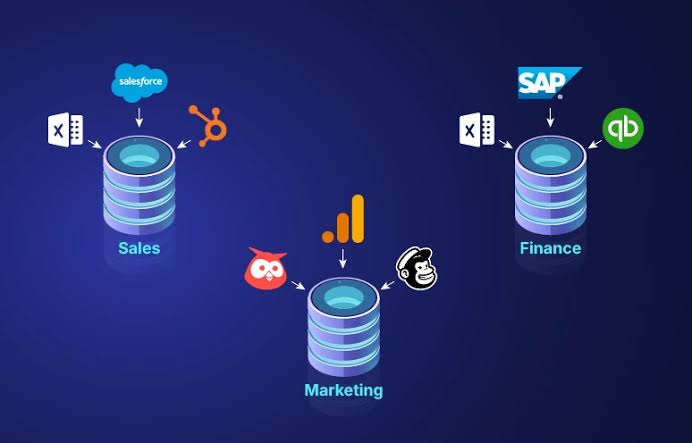
Most enterprises have accumulated systems over years, sometimes decades. Customer data lives in a CRM, operational data in an ERP, analytics in some cloud warehouse, and historical records in an on-premise database nobody wants to touch.
When those systems don’t communicate, AI projects run into trouble fast:
- Training data ends up incomplete or inconsistent
- Real-time insights get delayed
- Duplicate records tank data quality
- Governance and compliance risks pile up
- Nobody has full visibility across business functions
This is why so many AI initiatives get stuck in the pilot phase. The models work fine in a sandbox. But production? That’s a different story when your data foundation is fragmented.
Industry research backs this up. AI adoption keeps accelerating, but analysts and technology leaders increasingly point to data readiness, governance, and integration as the things that separate successful deployments from expensive experiments.
What Data Modernization Actually Looks Like Now
Modernization used to mean “move to the cloud.” That’s table stakes now. Today it’s about building flexible, connected architectures that give AI systems reliable, contextual information from across the entire organization.
That typically involves a few things.
Unified data platforms. Organizations are pulling fragmented environments together into centralized or federated platforms. Cloud-based data lakes, modern warehouses, real-time streaming pipelines, metadata management systems, and AI-ready semantic layers all play a role. The goal is giving AI models broader context so they produce better outputs.
Real-time data integration. Batch processing is too slow for most modern AI use cases. Businesses need real-time synchronization between applications, analytics systems, and AI models. That enables faster operational insights, dynamic recommendations, predictive maintenance, and more responsive customer experiences.
As agentic AI systems become more common, interoperability between tools and workflows is becoming a priority too. Industry observers expect integration standards and orchestration frameworks to play a growing role in enterprise AI scalability over the next few years.
Note: Data modernization today goes well beyond cloud migration. It involves building unified platforms with real-time integration, semantic layers, and metadata management so AI models can access reliable, contextual data across the enterprise.
Governance Isn’t Optional Anymore
AI systems depend on trustworthy data. Without proper governance, even the most advanced models can spit out unreliable or biased results.
That’s why modernization and integration efforts increasingly bundle governance frameworks alongside the technical buildout. We’re talking about data lineage tracking, role-based access controls, compliance monitoring, data quality validation, and observability tools.
Recent research on enterprise modernization suggests that governance gaps remain one of the top reasons digital transformation projects underperform. Organizations that get this right tend to prioritize reliability, transparency, and measurable controls across their AI ecosystems.
Tearing Down Departmental Walls
One of the biggest wins from modernization is cross-functional visibility.
When data flows freely between departments, organizations get a much more complete picture of what’s happening across the business. AI systems can then spot patterns that isolated setups miss entirely.
Picture this:
- Sales and customer service sharing unified customer intelligence
- Supply chain teams connecting logistics data with demand forecasting
- Finance combining operational metrics with predictive analytics
- Healthcare providers improving patient insights across disconnected record systems
That kind of synergy makes both human decisions and AI outputs significantly better.
Important: Cross-functional data integration lets AI identify patterns that siloed systems miss. When departments share unified data, both human decision-making and AI accuracy improve across the board.
Hybrid and Multi-Cloud Are the New Normal
Very few enterprises run everything in a single environment anymore. Most are managing some combination of on-premise infrastructure, public cloud, private cloud, and edge computing.
Because of that complexity, modernization strategies are leaning heavily into hybrid and multi-cloud integration. Industry analysts note that hybrid architectures are becoming the go-to enterprise design pattern because they offer flexibility, cost control, and scalability for AI workloads.
This approach also supports better disaster recovery, improved compliance management, lower latency for AI applications, and easier integration with legacy systems that aren’t going anywhere anytime soon.
Keeping an Eye on AI Performance
As AI ecosystems get more complex, organizations need real-time visibility into how everything is actually performing.
Observability tools are becoming a core part of AI infrastructure. They help teams monitor pipeline failures, data drift, latency issues, infrastructure costs, and model reliability.
AI-driven monitoring systems are proving particularly useful for managing distributed enterprise environments. When you’re running workloads across multiple clouds and on-prem systems, having automated observability isn’t a nice-to-have. It’s a requirement.
Moving Past Experimentation
The enterprise AI conversation has matured. Businesses aren’t just testing models or running isolated proofs of concept anymore. The priority now is operational AI that scales reliably, integrates across workflows, delivers measurable ROI, supports governance requirements, and adapts as the business evolves.
That shift is pushing data modernization and integration to the center of enterprise AI strategy. Organizations that successfully scale AI tend to be the ones investing in modern data foundations, governed architectures, and integrated operational ecosystems, not just isolated AI tools.
Must Read: Enterprises scaling AI successfully are investing in modern data foundations and governed, integrated ecosystems. Isolated tools and disconnected pilots rarely make it to production-grade deployment.
FAQs
1. Why do data silos limit enterprise AI performance?
Silos create incomplete training data, duplicate records, and governance gaps. AI models need consistent, unified datasets to produce reliable outputs, and fragmented systems prevent that from happening.
2. What does data modernization involve beyond cloud migration?
It includes building unified data platforms, real-time integration pipelines, metadata management, semantic layers, and governance frameworks that make data accessible and trustworthy for AI workloads.
3. How does real-time data integration improve AI outcomes?
Real-time integration feeds AI models with current information instead of stale batch data. This enables faster insights, dynamic recommendations, predictive maintenance, and more responsive automation.
4. Why is governance important for AI-ready data environments?
Without governance, AI models risk producing biased or unreliable outputs. Lineage tracking, access controls, quality validation, and compliance monitoring ensure the data feeding AI systems is trustworthy.