Canceled or Cancelled? Learn the Right Usage 2026
Canceled or cancelled is one of the most searched grammar questions in the English language, and the answer confuses writers every single day. Both spellings are correct.
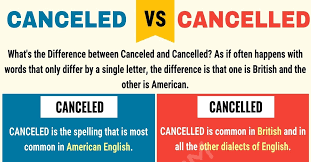
The real difference is not about grammar at all. It is about geography and your audience. American English uses canceled with one L, while British, Canadian, and Australian English use cancelled with two Ls.
The Simple Answer: Both Are Correct
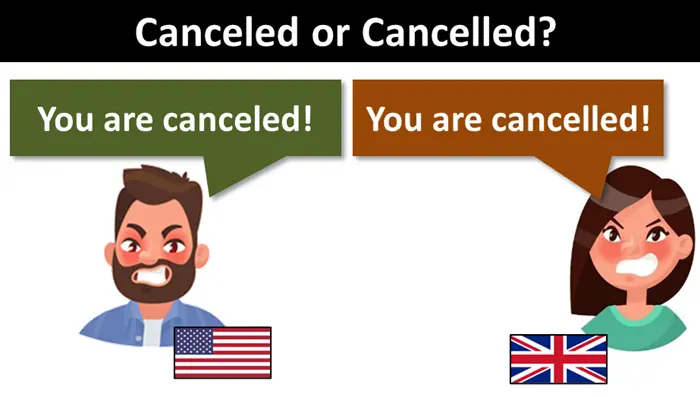
Canceled or cancelled — both are the past tense of the verb cancel. Neither one is wrong. The spelling you use depends entirely on where you are writing and who your audience is.
This kind of regional spelling difference is not unique to this word. American English and British English have dozens of words that follow the same pattern. Think about traveling vs travelling, labeled vs labelled, or focused vs focussed.
The exact same rule applies to canceled and cancelled. One L for Americans, two Ls for the rest of the English-speaking world.
What Does Cancel Mean?
Before going deeper into canceled vs cancelled, it helps to understand the base word.
Cancel is a verb that means to decide that something previously planned will no longer take place. It can also mean to mark something as void, to stop an ongoing service, or to reverse a decision.
The word comes from the Latin cancellare, which meant to cross out or make a lattice pattern over something to mark it as void.
Over centuries, English borrowed this word and built a full family of related word forms around it.
The Origin of the Spelling Difference
The reason canceled and cancelled both exist is directly tied to Noah Webster and the history of American English spelling reform.
Noah Webster was an American lexicographer who wanted to simplify English spelling for American audiences. In the early 1800s, he published dictionaries that deliberately changed certain British spellings to make them shorter and more logical.
One of his key rules was to drop the double consonant at the end of words when the final syllable is not stressed. Since cancel is stressed on the first syllable — CAN-cel — Webster argued there was no phonetic reason to double the L when adding a suffix.
His 1828 dictionary introduced canceled with one L. However, the spelling did not fully replace the double-L version in everyday American usage until around the 1980s.
British English, on the other hand, traditionally doubles the final consonant before adding a suffix regardless of stress. That is why cancelled, cancelling, and canceller are the standard forms across the UK, Australia, Canada, Ireland, and most other Commonwealth countries.
Canceled: American English Standard
In American English, canceled with one L is the accepted and preferred spelling. It is what you will find in major American publications, style guides, and dictionaries.
The Associated Press Stylebook, which governs most American journalism and news writing, specifically recommends canceled and canceling with one L.
Merriam-Webster Dictionary, the primary American English dictionary, lists canceled as the main entry.
Here are example sentences using the American English spelling:
- The concert was canceled due to severe weather.
- She canceled her gym membership after moving to a new city.
- The airline canceled three flights because of the storm.
- He canceled the meeting at the last minute.
- The school canceled classes for the rest of the week.
Use canceled anytime you are writing for an American audience, following AP Style, publishing on American platforms, or working within a US-based organization.
Cancelled: British, Canadian, and Australian Standard
In British English, cancelled with two Ls is the standard and preferred spelling. The same applies to Canadian English, Australian English, Irish English, and most other varieties of English outside the United States.
The Oxford English Dictionary, which is the authority for British English, lists cancelled as the primary form.
Here are example sentences using the British English spelling:
- The train was cancelled due to a signal failure.
- She has cancelled her appointment with the dentist.
- The match was cancelled because of the rain.
- He cancelled his subscription to the streaming service.
- The event was cancelled with very little notice.
Use cancelled anytime you are writing for a British, Australian, or Canadian audience, following Oxford Style, working in academic writing outside the US, or publishing for Commonwealth markets.
Head-to-Head Comparison Table
| Feature | Canceled (US) | Cancelled (UK/Commonwealth) |
|---|---|---|
| Spelling | One L | Two Ls |
| Region | United States | UK, Canada, Australia, Ireland |
| Dictionary Authority | Merriam-Webster | Oxford English Dictionary |
| Style Guide | AP Style | Oxford Style |
| Correctness | Correct in US | Correct outside US |
| Example | The trip was canceled. | The trip was cancelled. |
Canceling vs Cancelling
The same regional rule that applies to canceled and cancelled also applies to the present participle and gerund forms.
In American English, canceling with one L is preferred. In British English, cancelling with two Ls is preferred.
American English examples:
- She is canceling her order right now.
- The airline is canceling all flights tonight.
- He kept canceling his plans at the last minute.
British English examples:
- She is cancelling her order right now.
- The airline is cancelling all flights tonight.
- He kept cancelling his plans at the last minute.
The meaning is identical in both cases. Only the spelling changes based on your regional English variety.
Cancellation: The Universal Exception
Here is one spelling rule that overrides the regional split entirely.
Cancellation is always spelled with two Ls, no matter whether you are writing in American English or British English.
This is the most important exception to remember. While the verb forms follow a regional pattern, the noun form cancellation is standardized globally.
The single-L version, cancelation, technically exists as a variant in some American English references. However, it is extremely rare, widely considered nonstandard, and almost never appears in published writing.
Here are example sentences showing the correct noun form:
- The cancellation of the event disappointed thousands of fans.
- We received the cancellation notice by email.
- There is a $50 cancellation fee for last-minute changes.
- The sudden cancellation left many questions unanswered.
- Flight cancellations were at an all-time high this winter.
Always write cancellation, not cancelation, in both American and British English. This is one area where there is no regional debate.
Cancelable vs Cancellable
The adjective form of cancel also follows a regional split, though it appears less frequently in everyday writing.
In American English: cancelable with one L is preferred. In British English: cancellable with two Ls is preferred.
Example sentences:
- This ticket is fully cancelable up to 24 hours before the event. (US)
- The policy is cancellable at any time without a fee. (UK)
Again, same meaning, different spelling based on geography.
Canceler vs Canceller
The noun referring to a person or device that cancels something also follows the same regional pattern.
In American English: canceler with one L. In British English: canceller with two Ls.
This form appears rarely in everyday writing but comes up in technical, legal, or formal contexts.
Full Word Family Comparison Table
| Word Form | American English (US) | British English (UK) |
|---|---|---|
| Past tense | Canceled | Cancelled |
| Present participle | Canceling | Cancelling |
| Adjective | Cancelable | Cancellable |
| Noun (person/device) | Canceler | Canceller |
| Noun (act of canceling) | Cancellation | Cancellation |
Note that cancellation is the same in both columns. That is the one universal form across all English varieties.
What AP Style Says About Canceled
The Associated Press Stylebook is the dominant style guide for American journalism, news writing, and most US media content.
AP Style clearly recommends canceled and canceling with one L. If you write for a newspaper, news website, press release, or any journalism-adjacent content aimed at US audiences, canceled is your correct form.
AP Style follows American English conventions broadly, which is why single-L forms are preferred across most verb endings in this category.
What Chicago and Oxford Style Say
The Chicago Manual of Style, used widely in American book publishing and academic writing, also recommends canceled and canceling with one L for American English content.
The Oxford Style Manual, which governs British English academic and publishing standards, recommends cancelled and cancelling with two Ls. Oxford is widely used across UK universities, publishers, and government organizations.
If your style guide is AP or Chicago and your audience is American, use canceled. If your style guide is Oxford and your audience is British or international, use cancelled.
Regional Style Guide Summary Table
| Style Guide | Recommended Spelling | Primary Audience |
|---|---|---|
| AP Stylebook | Canceled, Canceling | US journalism and media |
| Chicago Manual of Style | Canceled, Canceling | US books and academic |
| Oxford Style Manual | Cancelled, Cancelling | UK and Commonwealth |
| Merriam-Webster Dictionary | Canceled (main entry) | US general reference |
| Oxford English Dictionary | Cancelled (main entry) | UK general reference |
Common Mistakes Writers Make
Understanding canceled vs cancelled is only half the battle. Here are the most common mistakes people make with this word family and how to avoid each one.
Mixing spellings in the same document. This is the most frequent mistake. A writer starts with canceled in the first paragraph, then writes cancelled three paragraphs later. Even if both are regionally correct, mixing them looks careless and unprofessional. Pick one form and use it consistently throughout your entire document.
Spelling cancellation with one L. Because some writers learn that American English uses one L, they apply that rule to the noun too. This is wrong. Cancellation always uses two Ls regardless of regional variety. There is no American exception here.
Using spellcheck set to the wrong language. If you write for a British audience but your word processor is set to American English, spellcheck will flag cancelled as an error. Always set your language preference to match your target audience before you start writing.
Assuming one version is wrong. Many writers genuinely believe one spelling is a mistake. Teachers sometimes mark the other version as incorrect. Both are right. The only question is whether the form matches your intended audience.
How to Remember the Rule
Here is a simple memory trick that works every time.
Think of it this way: America has one Capitol building. American English uses one L.
The United Kingdom has multiple parliaments across its nations. British English uses multiple Ls — two to be precise.
Another approach is to connect the spelling to your audience. Ask yourself one question before you write: Am I writing for readers in the United States? If yes, use one L. If no, use two Ls.
Canceled or Cancelled in SEO Writing
For writers creating web content or blog posts, the canceled vs cancelled question has an additional dimension.
Both spellings are searched globally. American users search for canceled. British and Australian users search for cancelled. Search engines are smart enough to understand both versions and will generally serve relevant results for either query.
That said, matching your spelling to your primary audience still matters. If your website targets American readers, using canceled throughout your content aligns with their natural language expectations.
If you write for a global audience, some SEO writers use both forms strategically across different parts of their content to capture both search variants. However, doing this requires care. Never mix the spellings within a single paragraph or sentence, even for SEO purposes.
The most professional and effective approach remains simple: identify your primary audience, choose the spelling that matches their English variety, and stay consistent from start to finish.
Real-World Examples From Published Sources
Here are real-world examples that show both spellings in action across different types of writing.
American English (one L):
- The president canceled the scheduled press conference. (US news style)
- Amazon canceled the Prime Video original after two seasons. (US tech media)
- Delta canceled over 200 flights ahead of the storm. (US airline news)
British English (two Ls):
- The BBC cancelled its coverage of the event. (UK media)
- The premier cancelled plans to visit the flood-affected regions. (UK/Australian news)
- The festival was cancelled for the third consecutive year. (UK events reporting)
Both styles use cancellation for the noun:
- The sudden cancellation of the tour shocked fans worldwide.
- Travellers filed complaints over the flight cancellation without notice.
- The policy includes a full refund in the event of cancellation.
Quick Reference Decision Guide
Use this simple decision tree every time you are unsure which form to use.
Step 1: Who is your primary audience?
- United States readers → Go to Step 2a
- UK, Canada, Australia, or other readers → Go to Step 2b
Step 2a (US audience): Use canceled, canceling, cancelable, canceler.
Step 2b (Non-US audience): Use cancelled, cancelling, cancellable, canceller.
Step 3 (Both audiences): Always use cancellation for the noun form. No exceptions.
Step 4: Check your entire document for consistency. Do not mix forms.
Canceled or Cancelled in Different Writing Contexts
Different writing contexts may guide your spelling choice beyond just geography.
Formal business writing: Follow your organization’s chosen style guide. Most US companies use American English, most UK companies use British English. Ask your team for the house style guide.
Academic writing: Match the style guide required by your institution or publication. US universities often use Chicago or APA. UK universities often use Oxford or Harvard referencing styles.
Social media writing: Generally use the spelling most natural to your own English variety. Your followers are usually from a similar regional audience.
Email communication: Match the English variety of the person you are writing to. If you are emailing a client in London, cancelled is the more respectful choice.
Legal and contract writing: Follow the jurisdiction. US contracts use American English. UK or Australian contracts use British English.
Frequently Asked Questions (FAQs)
Is canceled or cancelled correct?
Both are correct. Canceled is standard in American English and cancelled is standard in British, Canadian, and Australian English. The choice depends on your audience and region.
Which spelling does AP Style use?
AP Style recommends canceled and canceling with one L, following American English conventions used in US journalism and media writing.
Is it always cancellation or can you write cancelation?
Always write cancellation with two Ls. The single-L form cancelation technically exists as a variant in American English but is extremely rare and considered nonstandard in most published writing.
Why does American English use one L instead of two?
Noah Webster dropped the second L as part of his 19th-century American English spelling reforms, arguing that the unstressed final syllable in can-CEL made the double consonant phonetically unnecessary.
Does the spelling change the meaning of the word?
No. Canceled and cancelled mean exactly the same thing. Both are the past tense of the verb cancel, meaning something previously planned will no longer take place.
What about canceling vs cancelling?
The same regional rule applies. American English uses canceling with one L and British English uses cancelling with two Ls. Always match this form to your chosen spelling of canceled or cancelled.
Which version does Google consider correct for SEO?
Both versions are treated as valid by search engines. Google understands regional spelling variants. Match your spelling to your target audience’s English variety for the best user experience and consistency.
Can I use both spellings in the same article?
No. Mixing canceled and cancelled in the same document looks unprofessional. Choose one form that matches your target audience and use it consistently throughout the entire piece.
What does Merriam-Webster say about canceled vs cancelled?
Merriam-Webster lists canceled as the main entry for American English but acknowledges both spellings as acceptable. It notes that cancelled is more common in British English.
Is it cancellable or cancelable?
Cancelable with one L is the American English form. Cancellable with two Ls is the British English form. The same regional rule that applies to canceled and cancelled applies here as well.
Conclusion
Canceled or cancelled is not a grammar error on either side. It is a regional spelling difference that reflects the natural evolution of English across different parts of the world.
American English standardized on canceled with one L, while British, Canadian, Australian, and most other English-speaking regions kept cancelled with two Ls. The same split applies to canceling versus cancelling and cancelable versus cancellable.
The one exception that overrides all regional rules is cancellation, which always takes two Ls in every variety of English worldwide.
The most important takeaway is consistency. Choose the spelling that matches your audience, apply it throughout your entire document, and never mix both versions in the same piece.
Mixing spellings signals carelessness, while consistent usage signals professionalism and attention to detail. Whether you are writing an email, a blog post, a news article, or a formal contract, getting this right is a small but meaningful mark of a skilled writer.