Hologic Insight FD and the Evolving Role of Flat-Detector Mini c-arms in Extremity Imaging
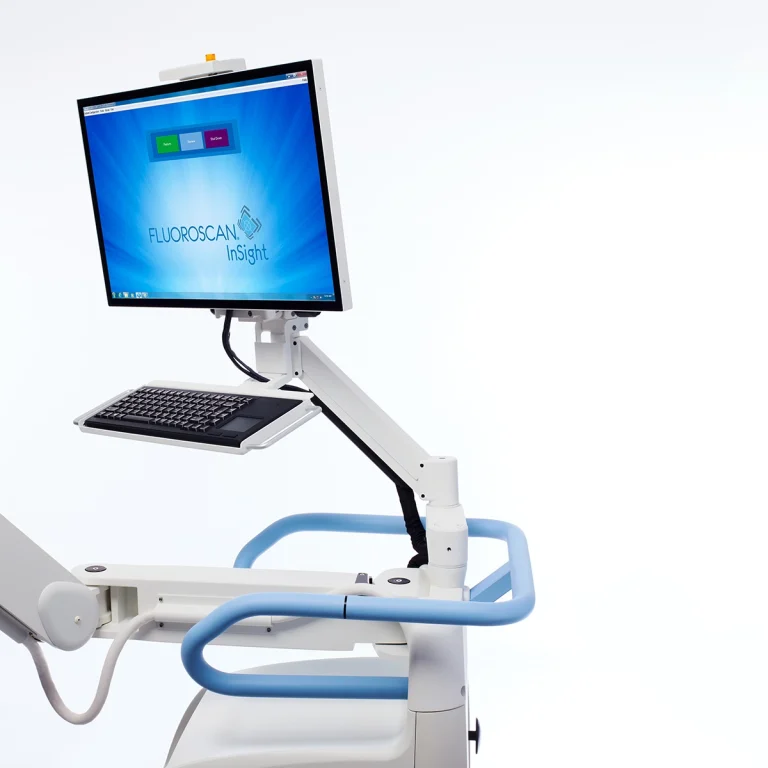
In orthopedic and outpatient imaging, the most meaningful technology shifts are often the ones that improve daily workflow rather than simply adding more complexity. That is one reason flat-detector mini c-arms continue to draw attention across extremity-focused care settings. As clinical teams look for systems that can support image clarity, procedural efficiency, and compact room layouts at the same time, the category has become more strategically important in orthopedic surgery, sports medicine, and ambulatory care.
That broader trend helps explain the relevance of platforms like the Hologic Insight FD. The system is positioned as a compact, high-resolution mini c-arm designed for extremity imaging in orthopedic surgery, outpatient centers, and sports medicine, with a rotating flat-panel detector, 2k x 1.5k resolution, and dose optimization technology.
Why Flat-Detector Mini c-arms Matter in Modern Extremity Imaging
Extremity imaging has different practical demands than broader fluoroscopic applications. In procedures involving hands, wrists, feet, ankles, and similar anatomy, clinicians often need fast image acquisition, easy positioning, and equipment that does not overwhelm limited procedural space. That is why compact imaging platforms have remained relevant even as the broader imaging landscape has become more sophisticated.
Flat-detector systems have pushed that category forward by combining a smaller footprint with imaging capabilities intended to improve usability and image consistency. In the case of the Insight FD, key features include a rotating flat detector with ±90-degree rotation and 2k x 1.5k resolution, reinforcing the market preference for systems that can better adapt to extremity workflows without forcing constant patient repositioning.
How Imaging Flexibility Is Becoming a Bigger Workflow Priority
One of the clearest shifts in equipment evaluation is that imaging performance is no longer judged only by the image itself. Buyers are increasingly asking how a system supports procedural flow. Can it move efficiently around the patient? Can clinicians capture what they need without disrupting sterile setup? Does the platform fit naturally into smaller ORs and outpatient suites?
That is where flexibility becomes a meaningful differentiator. THe Insight FD’s rotating detector, compact ergonomic design, 20-inch c-arm depth, and narrow footprint, all point to the same larger idea: in modern extremity imaging, maneuverability is not just a convenience feature. It is part of workflow performance.
Why Dose Efficiency and Image Quality Now Go Hand in Hand
Radiation management is one of the most practical concerns in fluoroscopy, especially in environments where clinicians may rely on imaging repeatedly across orthopedic and sports medicine cases. As a result, dose efficiency has become part of the core value proposition rather than a secondary specification.
The Insight FD offers dose optimization technology that automatically adjusts for patient size and anatomy while preserving image quality. Compared to the older Insight 2 image-intensifier model, the flat-panel in the Insight FD has better image quality, lower radiation exposure, more compact design, and distortion-free images. The bigger takeaway is that modern buyers increasingly expect dose efficiency and image quality to advance together, not as tradeoffs.
How the Outpatient Shift Is Changing Mini c-arm Buying Decisions
As more procedures move into ambulatory surgery centers, orthopedic urgent care, and specialized outpatient environments, imaging systems are being judged within a different operational context. In these spaces, every square foot matters, setup time matters, and the ability to support high-frequency extremity imaging without unnecessary friction matters.
The Insight FD reflects that trend directly with the system’s applications in orthopedic surgery, pain management and joint injections, sports medicine clinics, and outpatient surgery centers, with emphasis on fast setup, low-dose imaging, and compact design. That positioning aligns with a larger market reality: imaging technology is increasingly being selected based on how well it fits the care environment, not just how it performs in isolation.
Why Practical Usability Matters More Than a Longer Feature List
One of the most common mistakes in evaluating a mini c arm machine is assuming that a bigger list of capabilities automatically creates more value. In practice, value usually comes from fit. Does the machine support the case mix? Does it make the room easier to manage? Does it help staff and physicians work with less friction over time?
That is where the Hologic Insight FD mini c arm becomes relevant in a broader sense. It includes features such as a 24-inch full HD multi-touch monitor, MegaView imaging capability, wireless footswitch support, DICOM 3.0 compliance, PACS connectivity, and 8,000-image SSD storage. But the larger lesson is not the feature inventory itself. It is that practical usability, connectivity, and procedural fit now matter at least as much as raw specifications.
What the Hologic Insight FD Signals About the Future of Extremity Imaging
The future of extremity imaging will likely continue to reward technologies that solve practical problems well. Compact footprint, image flexibility, lower-dose performance, intuitive controls, and outpatient readiness are not niche considerations anymore. They are becoming central to how providers think about equipment investment.
That is why systems like the Hologic Insight FD continue to stand out. They represent a category of imaging technology built around the operational realities of extremity-focused care rather than a one-size-fits-all approach. In a healthcare environment that increasingly values specialization and efficiency, that is exactly the kind of alignment that tends to matter most.