How Connected Exercise Equipment Is Changing Daily Life
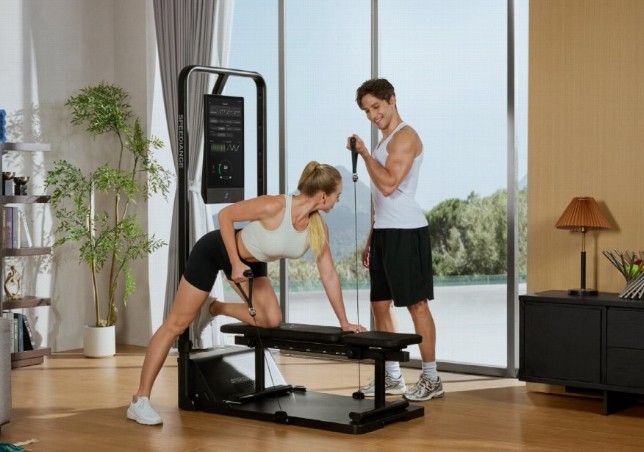
Technology plays a role in many areas of daily life today. Smartphones manage schedules, smartwatches track activity, and connected home appliances can be controlled via apps. Digitalization is increasingly making its way into the world of sports and exercise as well. New opportunities are emerging—especially for home gyms—to more closely integrate workouts with digital applications.
Connected exercise equipment combines traditional fitness functions with software, data, and digital training programs. This is changing not only how people work out but also how physical activity can be integrated into a modern lifestyle.
Why Connected Exercise Equipment Is Becoming Increasingly Attractive
Traditional exercise equipment primarily serves a mechanical function. For instance, a machine might provide resistance, while the user decides which exercises to perform and how to track their workout.
Connected exercise equipment goes a step further. It can store information about completed sessions, display workout data, and—in some cases—connect to digital platforms or apps. This creates an interplay between hardware and software.
The advantage lies not so much in offering a multitude of technical features; rather, the crucial factor is whether the technology actually makes the workout routine more organized and convenient.
Workouts Become More Data-Driven
Workout data is a key component of digital fitness solutions. Metrics such as weight, repetitions, workout duration, and completed sessions can be recorded. Fitness trackers like the Speediance Strap can complement this by monitoring activity and other training-related data throughout the day. Together, these tools give regular exercisers a clearer picture of their training routine. This applies to various types of training—even targeted leg workouts at home can be integrated into a personal training plan in a more structured way.
Planning can also benefit from this. Instead of relying solely on memory, users can review and compare past sessions. This can help, for example, in gradually adjusting the workload or incorporating specific exercises into a training plan more strategically.
However, data does not replace personal judgment. Instead, it serves as an additional source of information that can bring more structure to the training process.
Greater Flexibility in Daily Life
Another factor is flexibility regarding time. Work schedules, family life, and other obligations can make it difficult to schedule regular gym sessions. Working out at home offers a potential alternative.
This approach becomes particularly appealing when multiple workout options can be combined within a relatively small footprint. Consequently, modern home fitness equipment is increasingly designed to support a variety of exercises while remaining easy to integrate into daily routines.
For many users, the goal isn’t to replicate a professional gym entirely; rather, it is about creating a workout space that can actually be used consistently.
From Conventional Equipment to the Connected Home Gym
The concept of the home gym is evolving alongside increasing digitalization. Instead of relying on multiple standalone machines—each dedicated to a single type of exercise—modern systems emphasize a combination of diverse exercises, digital controls, and workout data tracking.
One example of this trend is the Speediance Gym Monster 3, the latest generation in the Speediance Gym Monster series. This system combines various strength training options with a digital interface, catering to users who want a more structured approach to their home workouts.
The integration of physical training with a digital environment is particularly noteworthy. The machine does not stand in isolation; instead, it becomes part of a training ecosystem that links exercises, resistance levels, and progress tracking more effectively.
What Users Should Consider Regarding Smart Fitness Equipment
However, technical features alone shouldn’t be the deciding factor. Before purchasing a smart fitness device, it is worth considering your specific training goals.
Which exercises do you plan to perform regularly? How much space is available? Do you prefer strength training, functional training, or a mix of different workout styles? Ease of use and the long-term utility of digital features are also important considerations.
A good system should simplify your workout routine rather than making it unnecessarily complicated. Features such as data tracking and digital workout programs are only truly valuable if they are used consistently.
Where is digital training headed?
The convergence of fitness and technology is likely to evolve further in the coming years. Sensors, artificial intelligence, digital training platforms, and data analytics are opening up new possibilities for personalized training concepts.
In the process, the line between traditional fitness equipment and digital systems may increasingly blur. Much like with other smart home applications, the focus is shifting from the individual device to the interplay of various functions.
Despite all these technological advancements, physical movement remains the crucial element. Technology can provide information, structure routines, and create new training opportunities—but it cannot replace regular physical activity.
Conclusion: Technology as a tool for a more active lifestyle
Connected fitness equipment demonstrates how digital technologies are integrating into more and more areas of daily life. For home workouts, data, software, and modern hardware can help make sessions more flexible and make it easier to track personal progress. As a result, fitness is increasingly becoming part of our digital lives. What matters most is not how many technical features a device has, but whether those features offer tangible benefits and can be integrated into one’s daily routine in the long term.