Is Ohio a Red or Blue State 2026 Update
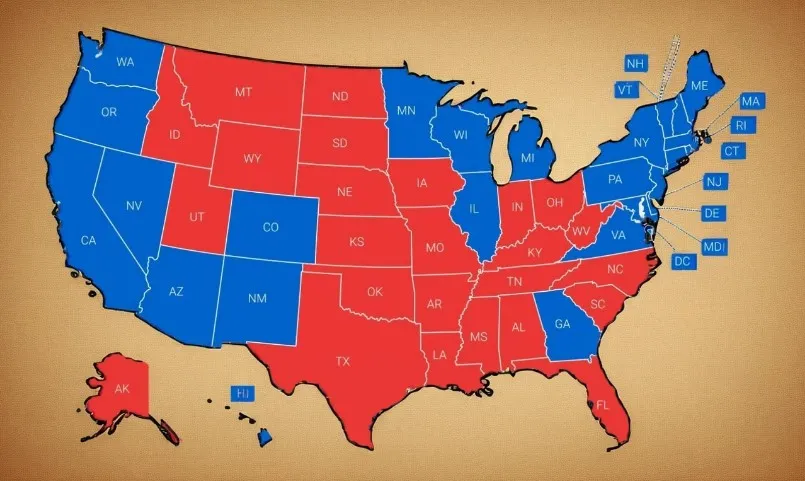
Is Ohio a red or blue state 2026? The short answer is red — but it is a lot more complicated than that one word suggests. Ohio was once the most important swing state in the entire country, the ultimate political bellwether that voted with the winning presidential candidate in almost every election for a century.
That era is over. Since 2016, Ohio has shifted firmly into Republican territory.
But 2026 is shaping up to be the most competitive year Ohio has seen in a long time — and Democrats are showing up ready to fight for it.
Is Ohio a Red or Blue State 2026? The Official Answer: Ohio Is a Red State in 2026
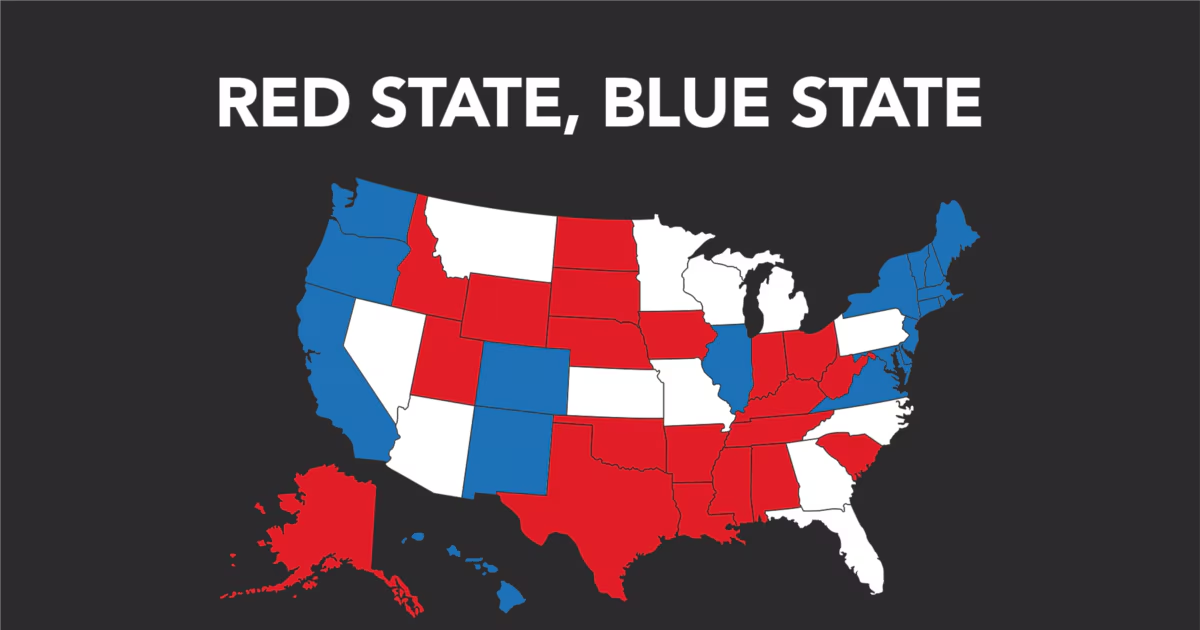
Ohio is currently classified as a red state at both the federal and state level.
Republicans control all major statewide offices. They hold both U.S. Senate seats, the governor’s office, supermajorities in the Ohio House and Senate, and a majority of the state’s congressional delegation.
Ohio’s Cook Partisan Voting Index (CPVI) sits at R+6, meaning the state votes about 6 points more Republican than the national average. That puts it in the same general category as Florida and Alaska.
Ohio’s Presidential Voting History — From Bellwether to Red State
Ohio’s political journey is one of the most dramatic in American history.
For decades, it was the nation’s most reliable bellwether state. From 1912 to 2012, Ohio voted for the winning presidential candidate in every election except 1944 and 1960. Political strategists and journalists treated Ohio as the ultimate pulse of the American electorate. “As Ohio goes, so goes the nation” was not just a saying — it was treated as political fact.
That all changed starting in 2016.
Ohio Presidential Election Results — Recent History
| Year | Winner | Margin | Party |
|---|---|---|---|
| 2008 | Barack Obama | +4.6% | Democrat |
| 2012 | Barack Obama | +2.9% | Democrat |
| 2016 | Donald Trump | +8.1% | Republican |
| 2020 | Donald Trump | +8.0% | Republican |
| 2024 | Donald Trump | +11.2% | Republican |
Trump’s 2024 margin of 11.2 points was the largest Republican presidential victory in Ohio since Ronald Reagan’s 18.76 point win in 1984.
Ohio has not voted for a Democratic presidential nominee since Barack Obama in 2012. That is now a 12-year losing streak for Democrats at the presidential level.
Since 1900, Ohio has voted Democratic 37.5% of the time and Republican 62.5% of the time. Since 2000, those numbers skew even further — Ohio has voted Democratic just 28.6% of the time and Republican 71.4% of the time.
Why Ohio Shifted from Swing State to Red State
The transformation did not happen overnight. Several structural forces combined to push Ohio rightward.
The Collapse of Organized Labor
For most of the 20th century, Ohio’s powerful manufacturing economy meant powerful labor unions. Those unions were the backbone of Democratic strength in the state.
As factories closed and Rust Belt deindustrialization accelerated through the 1980s, 1990s, and 2000s, union membership plummeted. The Democratic Party lost a critical organizing force and a major source of working-class votes. Republicans stepped into that vacuum, especially with messaging focused on trade, manufacturing jobs, and economic nostalgia.
Education Demographics and Rural Realignment
Ohio has fewer college-educated residents than the national average. This matters because in modern American politics, college education has become one of the strongest predictors of party preference — college-educated voters lean heavily Democratic, while non-college voters lean heavily Republican.
Ohio’s large rural and small-town population gave Republicans a structural edge that has only grown stronger since 2016. Nearly every county in Ohio leaned more Republican in 2024 than in 2020 — even counties where the Democratic candidate won.
The Trump Effect
Donald Trump’s political brand resonated especially well with Ohio’s white working-class voters. His focus on trade protectionism, manufacturing revival, and direct anti-establishment messaging hit the exact demographic Ohio has in abundance.
Trump carried Ohio by 8 points in both 2016 and 2020, then expanded that margin to over 11 points in 2024 — all while national polling suggested the race would be much closer.
Democratic Campaign Neglect
By 2024, the Democratic Party had essentially written off Ohio at the presidential level. Kamala Harris held no major campaign events in the state. National Democratic strategy concentrated resources in states like Pennsylvania, Michigan, Wisconsin, Arizona, and Georgia.
This lack of investment compounded the party’s existing structural disadvantages in the state.
Gerrymandering and Legislative Dominance
Republicans control the district-drawing process in Ohio. Republicans hold approximately 68% of seats in the Ohio House and 78% of seats in the Ohio Senate — far beyond what the raw statewide vote totals would suggest is proportionate.
An attempt to create an independent redistricting commission — Issue 1 in 2024 — was defeated, keeping Republican control over future maps. Critics argue the maps locked in Republican legislative dominance regardless of statewide vote swings.
Ohio’s Current Political Control — The Full Picture
Statewide Offices Held by Party (2026)
| Office | Holder | Party |
|---|---|---|
| Governor | Mike DeWine | Republican |
| U.S. Senate Seat 1 | Jon Husted (appointed) | Republican |
| U.S. Senate Seat 2 | Bernie Moreno | Republican |
| Attorney General | Dave Yost | Republican |
| Secretary of State | Frank LaRose | Republican |
| State Treasurer | Robert Sprague | Republican |
| Ohio House | Republican supermajority (68%) | Republican |
| Ohio Senate | Republican supermajority (78%) | Republican |
Democrats hold zero statewide executive offices as of 2026. The last Democrat to win a statewide race in Ohio was Jennifer Brunner, who won a seat on the Ohio Supreme Court in 2020.
Democrats have not won the governor’s race in Ohio since Ted Strickland in 2006.
The Urban-Rural Political Divide in Ohio
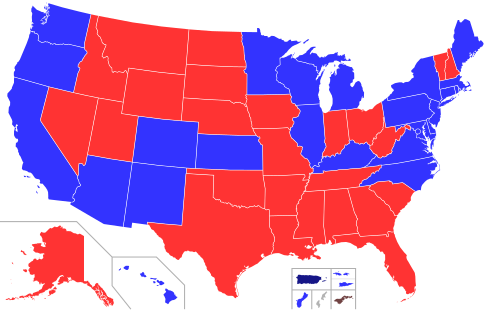
Ohio is red statewide — but it is not uniformly red everywhere.
Urban centers remain strong Democratic islands in a Republican sea. Columbus, Cleveland, Cincinnati, Akron, Dayton, and Toledo all lean Democratic. These cities delivered large margins for Democratic candidates in 2024.
But the rural and suburban areas that surround them have shifted dramatically. Suburban voters, who once provided competitive margins for Democrats, now lean Republican in Ohio more than in most other states.
This geographic sorting — urban blue, suburban and rural red — defines Ohio’s modern political landscape.
Is Ohio Still a Swing State?
Technically, no. But it is more nuanced than a flat no.
Ohio’s CPVI of R+6 places it outside the traditional swing-state range. Political analysts and both major parties no longer treat it as a true battleground at the presidential level.
However, Ohio has repeatedly shown a split political personality. Voters here have passed ballot initiatives that directly contradict the Republican Party platform.
In 2023, Ohio voters approved a constitutional amendment protecting abortion rights — a major victory for progressive policy in a red state. In the same year, voters also approved a measure legalizing recreational marijuana.
These results reveal a state where voters trust Republicans with political office but are not ideologically committed to the full Republican platform on social issues.
As University of Dayton political science professor Daniel Birdsong observed, Ohio voters have a pattern of “bucking the trend” on ballot measures even while voting Republican in candidate races.
Ohio in 2026 — The Most Competitive Election in Years
2026 may be the year Ohio surprises everyone.
Two major statewide races are set for November 3, 2026 — the governor’s race and a special U.S. Senate election. Both are more competitive than Ohio has seen in recent memory.
The 2026 Ohio Governor’s Race
Republican Vivek Ramaswamy — former biotech CEO and 2024 presidential candidate — is the expected Republican nominee for governor, endorsed by term-limited Gov. Mike DeWine, Donald Trump, and JD Vance.
Democrat Amy Acton — former Ohio Department of Health director who led the state’s COVID-19 response — is the expected Democratic nominee.
Polling from Emerson College in late 2025 showed Acton at 46% and Ramaswamy at 45% — a statistical dead heat and a massive shift from earlier polls that showed Ramaswamy leading by 10 points.
Cook Political Report and Sabato’s Crystal Ball both shifted the Ohio governor’s race from “Likely Republican” to “Lean Republican” — a significant move in a state Republicans have dominated for four consecutive gubernatorial cycles.
The 2026 Ohio Special Senate Election
This race stems from JD Vance’s resignation from the Senate after becoming Vice President in January 2025. Governor Mike DeWine appointed Lt. Governor Jon Husted to fill the seat temporarily.
The special election on November 3, 2026 will decide who holds the seat for the remainder of Vance’s term, which runs through 2028. The winner then needs to run again in 2028 for a full term.
Democrat Sherrod Brown — the longest-serving statewide Democrat in Ohio history — chose to run against Husted rather than for governor.
Emerson polling in late 2025 showed Husted leading Brown 49% to 46% — within the margin of error.
Why 2026 Could Be Competitive
Several national factors are creating a favorable environment for Democrats in 2026.
Trump’s approval rating had slipped significantly since taking office in early 2025, and midterm elections historically favor the party out of the White House. Democrats had been on a winning streak in special elections across the country heading into 2026.
Ohio analyst Howard Wilkinson drew a parallel to 1994, when a deeply unpopular president (Bill Clinton) created the conditions for a major party wave in the opposite direction. He argued that 2026 in Ohio looks similar — except this time it could benefit Democrats instead of Republicans.
DDHQ analysts wrote in a memo that “Ohio could recover some of its lost battleground patina” in 2026 — the first time that kind of language has been applied to Ohio in years.
Ohio’s Cook Partisan Voting Index (CPVI) — Compared to Other States
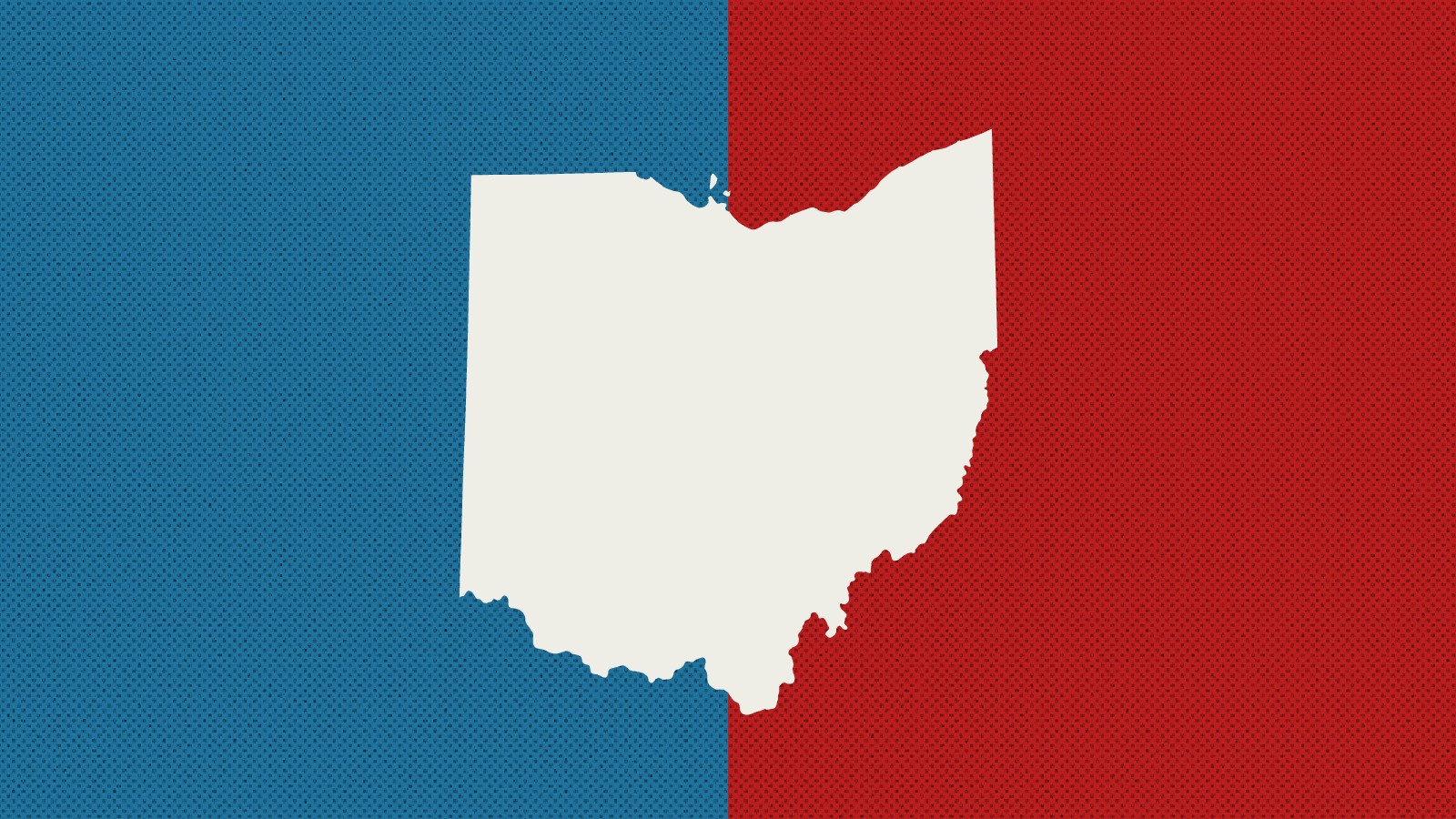
Understanding where Ohio sits relative to other states helps clarify just how red — or not — it really is.
| State | CPVI | Classification |
|---|---|---|
| Wyoming | R+25 | Deep Red |
| Alabama | R+15 | Deep Red |
| Tennessee | R+14 | Deep Red |
| Texas | R+10 | Red |
| Florida | R+7 | Red/Lean Red |
| Ohio | R+6 | Moderate Red |
| Georgia | R+4 | Lean Red |
| North Carolina | R+3 | Lean Red |
| Arizona | R+3 | Lean Red |
| Pennsylvania | R+1 | True Purple |
| Michigan | D+1 | Lean Blue |
| Wisconsin | R+1 | True Purple |
Ohio at R+6 is meaningfully redder than Pennsylvania, Michigan, and Wisconsin — the three Rust Belt states that form the so-called “Blue Wall.” It is in similar territory to Florida, which most analysts no longer consider a competitive swing state.
What Ohio Voters Think — The Nuanced Reality
Ohio voters defy easy categorization.
They keep voting for Republican candidates in statewide races. But they also approve abortion rights amendments, legalize marijuana, and show genuine concern about healthcare costs — issues that align more closely with Democratic platforms.
Exit polling from 2024 showed that 89% of Black voters in Ohio backed Kamala Harris. Women, college-educated voters, and young voters in urban areas also trended Democratic.
Yet Trump gained ground in 2024 among Hispanic voters, young voters, and working-class white voters without a college degree — the largest single demographic bloc in the state.
The 5.7 million “unaffiliated” Ohio voters — those who did not vote in either a Democratic or Republican primary in the previous two elections — represent the biggest wild card. How they move in 2026 will be decisive.
Ohio’s Role in the National Political Map
Ohio’s declining competitiveness has reduced its importance in presidential election strategy.
The state once carried 26 electoral votes. Today it has 17. Candidates spend less time and money in Ohio than they once did, further marginalizing the state’s influence.
For the 2026 midterms, however, Ohio is back on the national radar. Democrats need to flip Senate seats in red states if they want to retake the Senate majority, and Ohio is one of their few credible targets.
A Democratic win in either the Senate or governor’s race in Ohio in 2026 would be significant — both symbolically and practically. It would signal that the party can still compete in Rust Belt red states and potentially revive their organizational infrastructure for future cycles.
Could Ohio Ever Go Blue Again?
Experts are divided but most agree it is possible under the right conditions.
Demographic trends offer Democrats some long-term hope. Younger voters in major cities lean Democratic. College enrollment in Columbus and its suburbs has grown significantly. Non-white populations — who lean Democratic — are a growing share of Ohio’s electorate, though still smaller than in many other competitive states.
Political science professor Zachary Morris of Kent State argued that if voters broadly feel the country is “going in the wrong direction” by 2028 or beyond, a Democratic wave in Ohio is not impossible.
The 2026 elections are the first real test of that hypothesis.
Frequently Asked Questions (FAQs)
Is Ohio currently a red or blue state in 2026?
Ohio is a red state in 2026. Republicans control all statewide offices, both U.S. Senate seats, the governor’s office, and supermajorities in both chambers of the state legislature.
When did Ohio stop being a swing state?
Ohio effectively stopped being a swing state after the 2012 presidential election. Donald Trump won Ohio by 8 points in both 2016 and 2020, then expanded to an 11-point margin in 2024, removing it from the competitive battleground category.
What is Ohio’s Cook Partisan Voting Index?
Ohio’s CPVI is R+6, meaning the state votes approximately 6 percentage points more Republican than the national average. That is similar to Florida and Alaska in terms of partisan lean.
Did Ohio vote for Trump in 2024?
Yes. Donald Trump won Ohio in 2024 with 55.2% of the vote, defeating Kamala Harris by 11.21 percentage points — the largest Republican presidential margin in Ohio since Ronald Reagan’s win in 1984.
Who controls Ohio state government in 2026?
Republicans hold a trifecta and triplex in Ohio — controlling the governor’s office, attorney general, secretary of state, and both chambers of the state legislature. Ohio has had no Democratic trifecta and 28 years of Republican trifecta control.
Are there any competitive Ohio elections in 2026?
Yes. Both the Ohio governor’s race (Vivek Ramaswamy vs. Amy Acton) and the U.S. Senate special election (Jon Husted vs. Sherrod Brown) are rated competitive, with both polling within the margin of error as of early 2026.
When was the last time Ohio voted for a Democratic president?
Ohio last voted for a Democratic presidential candidate in 2012, when Barack Obama defeated Mitt Romney. Obama also won Ohio in 2008. Before that, Democrat Al Gore lost Ohio narrowly in 2000.
When was the last time a Democrat won the Ohio governor’s race?
The last Democrat to win the Ohio governor’s race was Ted Strickland in 2006. Democrats have lost the last four consecutive gubernatorial elections in the state.
Can Democrats win in Ohio in 2026?
Possibly. Both major statewide races — governor and Senate — are polling within the margin of error heading into 2026. A national anti-Republican wave, driven by presidential disapproval, could give Democrats a genuine shot at one or both seats.
Why did Ohio turn red?
Ohio turned red primarily due to the decline of organized labor, the loss of manufacturing jobs, the state’s lower-than-average college education rate, rural realignment toward Republicans, effective GOP campaign strategies, and a decrease in Democratic campaign investment and messaging in the state.
Conclusion
Is Ohio a red or blue state in 2026? Ohio is a red state — but with a rapidly shifting political environment that makes it one of the most interesting places to watch in this year’s midterm elections.
Republicans have dominated Ohio politics at every level since 2016, holding every major statewide office and expanding their legislative supermajorities through district maps they drew themselves. Trump’s 11-point victory in 2024 made the state’s red status clearer than ever at the presidential level.
Yet 2026 tells a more complicated story. Competitive polling in both the governor’s race and the special Senate election suggests that Ohio is not fully out of reach for Democrats under the right conditions.
A deeply unpopular national environment for Republicans, strong Democratic recruitment, and Ohio voters’ demonstrated willingness to support progressive ballot measures all create genuine opportunity. Whether Democrats can capitalize on that window — or whether Ohio’s structural Republican advantages prove too deep — will be one of the defining political stories of 2026.