Leverage AI for Accounting: Transform Financial Data into Business Insights

A single business transaction may look insignificant when viewed on its own. A customer payment arrives, an employee submits an expense, or a supplier sends an invoice. Yet thousands of these small financial events eventually shape the story of a business.
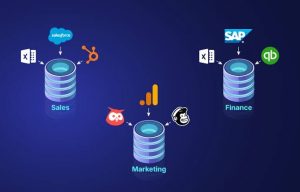
The challenge is that this story is rarely visible in its original form. Financial information arrives through documents, bank records, invoices, spreadsheets, and accounting entries. Someone has to organize it before management can understand what it means. This is where AI for Accounting introduces a different way of working. Instead of treating accounting as a collection of isolated entries, intelligent technology can help turn scattered financial activity into structured information that supports better business understanding.
Where Traditional Processes Slow Down
Traditional accounting workflows often depend on several manual steps between receiving information and producing useful reports.
An invoice may first need to be opened, read, and entered into an accounting system. A bank transaction may need to be compared with an internal record. An expense may need to be assigned to the appropriate category. Later, someone may need to check whether the information has been recorded correctly.
Each individual task may appear manageable. The difficulty emerges when hundreds or thousands of transactions arrive. The more information a business generates, the more time finance professionals spend moving data between stages. This can create a gap between when something happens financially and when management becomes aware of its significance.
Turning Documents Into Usable Data
Financial information often begins as something that was never designed for direct analysis. An invoice might arrive as a PDF. A receipt may be scanned. A bank statement can contain numerous transaction descriptions. An expense document may use a format completely different from another supplier’s document.
Intelligent document processing helps convert this information into structured data. Technology can identify relevant fields, interpret financial details, and prepare information for accounting workflows.
This changes the first stage of accounting. Instead of starting with manual transcription, finance teams can begin with information that has already been interpreted and organized for review.
Finding Meaning In Financial Patterns
Businesses rarely change overnight. Many important financial developments begin as small patterns. A particular expense category may increase gradually. A group of customers may begin paying later than usual. Supplier costs may rise across several purchasing cycles. Revenue from one product may consistently outperform another.
Looking at individual transactions makes these developments difficult to notice. AI for Accounting can help identify recurring patterns across large datasets. These observations give finance teams useful starting points for investigation.
The technology does not need to make the final decision. Its value can come from bringing important patterns to human attention sooner.
Giving Finance Teams A Wider View
Accountants often work with detailed information because accuracy requires attention to individual records. Business leaders, however, usually need a wider perspective. They may want to understand the relationship between sales, expenses, cash flow, and profitability rather than examining each category separately.
Intelligent reporting can help bring these perspectives together. Financial information can be organized into meaningful views that allow management to move from an overall picture into specific details when necessary.
This creates a more connected reporting experience instead of forcing decision makers to navigate multiple disconnected sources.
Creating A More Responsive Finance Cycle
The value of financial information decreases when it takes too long to reach the people who need it. A business may already be experiencing a change in customer payments or operating expenses while its formal reports are still being prepared.
Automation can shorten the distance between financial activity and financial visibility. As transactions are processed, updated information can become available sooner for review and analysis.
A more responsive finance cycle helps businesses react to changes while they are still relevant rather than waiting until the next reporting period.
Keeping Human Judgment At The Center
Artificial intelligence can process information at a scale that would be difficult to achieve manually, but accounting still requires professional judgment. AI for Accounting can assist by highlighting relevant financial information while leaving critical decisions in the hands of experienced professionals.
A system may identify an unusual transaction, but an accountant needs to determine whether it represents an error, an exceptional business event, or a legitimate transaction.
Similarly, technology may identify a trend, while management must decide what action should follow. This makes human expertise more important, not less. Intelligent tools provide information and signals, while finance professionals provide interpretation, context, and accountability.
Making Financial Information More Accessible
Financial knowledge should not remain limited to the accounting department. When important information is organized clearly, managers across an organization can better understand the financial consequences of their decisions.
A purchasing manager can consider supplier costs. A sales leader can examine revenue patterns. Senior management can evaluate profitability and cash flow.
Making financial information easier to understand encourages stronger collaboration between finance and other areas of the business. Accounting becomes a shared source of business intelligence rather than a function that only prepares reports at the end of a period.
Preparing Data For Strategic Growth
Growth creates more than additional revenue. It also produces more financial information. A larger customer base creates more invoices. New suppliers generate more payments. Additional employees create more expenses. Expansion into new markets introduces new financial activity.
If accounting processes remain entirely manual, this increasing volume can eventually create operational pressure.
Intelligent systems can help businesses establish more scalable ways of processing and organizing financial information. This creates a stronger foundation for growth without requiring every new transaction to generate the same amount of manual administrative work.
Conclusion
Financial information begins as individual transactions, but its real value emerges when those transactions are organized, connected, interpreted, and used to guide decisions. AI for Accounting can support this journey by helping businesses transform scattered financial activity into clearer and more timely insight. The strongest approach combines intelligent technology with professional judgment, allowing businesses to process information efficiently while retaining human oversight. Organizations exploring this evolution can consider AI Accountant as a practical way to bring greater intelligence and structure into modern accounting workflows.