RPG Stats Explained: Meaning of Every Character Attribute 2026
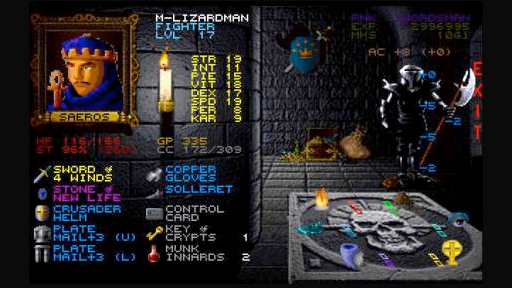
RPG stats are the numerical backbone of every role-playing game ever made.
Whether you are rolling dice in Dungeons and Dragons, grinding levels in a JRPG, or customizing your build in an open-world RPG, every decision you make ties back to character attributes.
Understanding what each stat does, how it works, and why it matters can completely transform the way you play and build characters.
What Are RPG Stats?
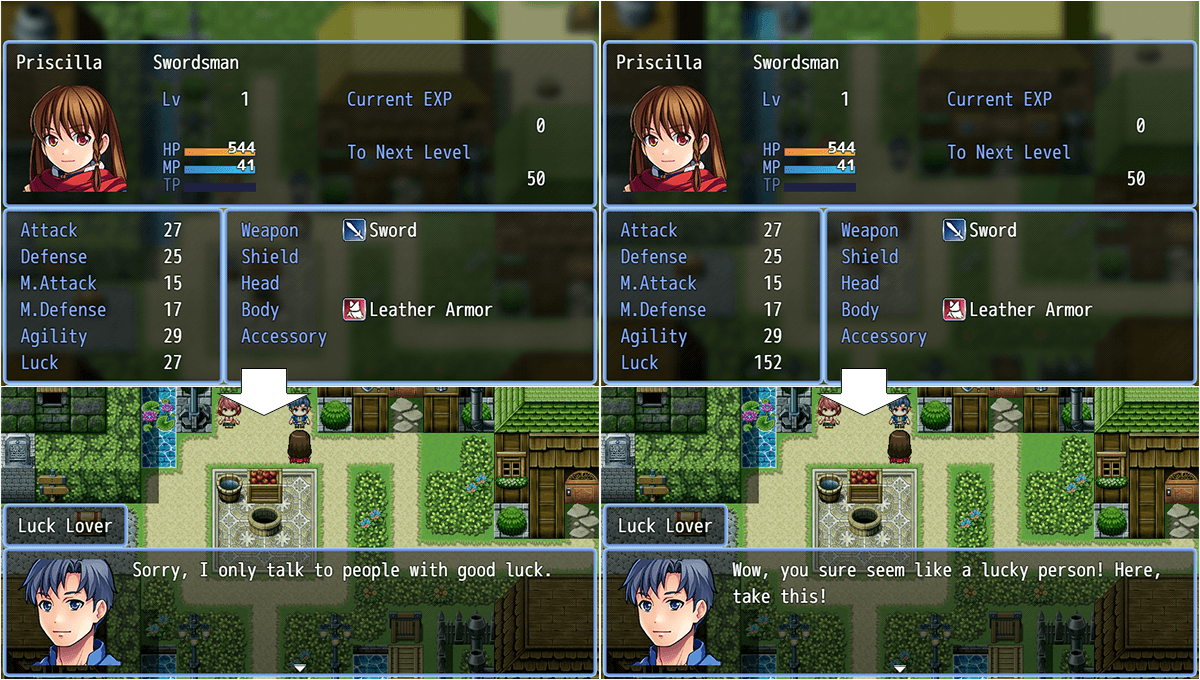
RPG stats are abstract numeric values assigned to a character that define their capabilities in the game world. They are sometimes called attributes, ability scores, characteristics, or traits depending on the system.
Every game with RPG elements uses some form of stat system. The numbers govern how your character fights, thinks, speaks, survives, and grows over time.
Stats are not just for combat. In tabletop RPGs especially, they influence every action a character can attempt — from climbing a wall to persuading a king.
The History of RPG Stats
The modern RPG stat system traces directly back to Dungeons and Dragons, first published in 1974. The original six stats — Strength, Intelligence, Wisdom, Dexterity, Constitution, and Charisma — became the template the entire industry borrowed from.
Video game RPGs inherited this blueprint from tabletop design. Games like Final Fantasy, Dragon Quest, and Baldur’s Gate translated the pen-and-paper model into digital form and added new resource stats like HP and MP.
Today, every major RPG system — whether it is Pathfinder, Elden Ring, or Final Fantasy XVI — still builds on the same core concepts Gary Gygax and Dave Arneson laid out over 50 years ago.
The Six Classic RPG Stats (D&D and Tabletop)
The foundation of most tabletop RPG stat systems is the classic six. Here is what each one means:
| Stat | Abbreviation | Also Called | Core Function |
|---|---|---|---|
| Strength | STR | Might, Brawn, Power | Physical force, melee damage, carrying capacity |
| Dexterity | DEX | Agility, Reflexes, Finesse | Speed, precision, dodge, ranged accuracy |
| Constitution | CON | Endurance, Vitality, Toughness | Hit points, stamina, poison resistance |
| Intelligence | INT | Intellect, Reason, Mind | Magic power, skill points, knowledge checks |
| Wisdom | WIS | Perception, Insight, Will | Awareness, willpower, divine magic |
| Charisma | CHA | Presence, Personality, Grace | Persuasion, leadership, social checks |
These six stats shaped the design of hundreds of games across decades of RPG history.
Strength (STR) — The Physical Power Stat
Strength measures raw physical force. It directly determines how hard a character can hit in melee combat and how much damage their weapon attacks deal.
In D&D 5e, Strength governs melee attack rolls, melee damage, and Athletics skill checks. It also determines how much weight a character can carry before becoming encumbered.
Out of combat, Strength covers lifting boulders, forcing doors open, climbing rough surfaces, and any task that demands raw muscle. Some games let high Strength characters intimidate NPCs through sheer physical presence.
A low Strength character is not useless — they simply rely on other stats like Dexterity to deal damage through finesse weapons, or Intelligence to fight through magic.
Dexterity (DEX) — The Agility and Precision Stat
Dexterity represents how nimble, fast, and precise a character is. It covers fine motor skills, reaction time, balance, and overall body coordination.
In most RPG systems, DEX is one of the most versatile stats in the game. It affects ranged attack accuracy, the ability to dodge incoming attacks, stealth movement, and initiative order in combat.
Many experienced players consider Dexterity the single most powerful core stat in games like D&D 5e because it influences so many different mechanics at once — from how often you get hit to whether you act first in a fight.
Rogues, rangers, monks, and assassin-type characters are typically built around maximizing DEX. Its equivalent in video game RPGs is often called Agility, Speed, or Reflex.
Constitution (CON) — The Endurance Stat
Constitution measures how durable and resilient a character is. It directly controls maximum Hit Points (HP) in most systems, meaning it determines how much damage a character can absorb before going down.
Every single class in D&D benefits from Constitution because everyone needs hit points. It also affects saving throws against poison, disease, exhaustion, and other physical hazards.
In video game RPGs, Constitution is often split into two separate stats: Vitality (which controls HP) and Endurance or Stamina (which controls stamina and running/rolling capacity, seen in games like Elden Ring and Dark Souls).
High CON makes a character nearly unkillable in a straight fight. Low CON means even minor hits can become dangerous, pushing players toward cautious, avoidant playstyles.
Intelligence (INT) — The Knowledge and Magic Stat
Intelligence represents a character’s reasoning ability, memory, and raw problem-solving capacity. In tabletop games, INT governs how many skill points a character gets at level up and how well they understand arcane magic.
Wizards in D&D use Intelligence as their primary spellcasting stat. A high INT wizard can learn more spells, cast them more accurately, and deal more magical damage than a low INT counterpart.
In video game RPGs, INT is commonly relabeled as Magic Attack, M.ATK, or Spell Power. It determines how much damage spells deal and sometimes how many spells can be memorized or equipped at once.
Intelligence also drives lore checks, language comprehension, crafting formulas, and any mechanics tied to understanding complex systems within the game world.
Wisdom (WIS) — The Awareness and Willpower Stat
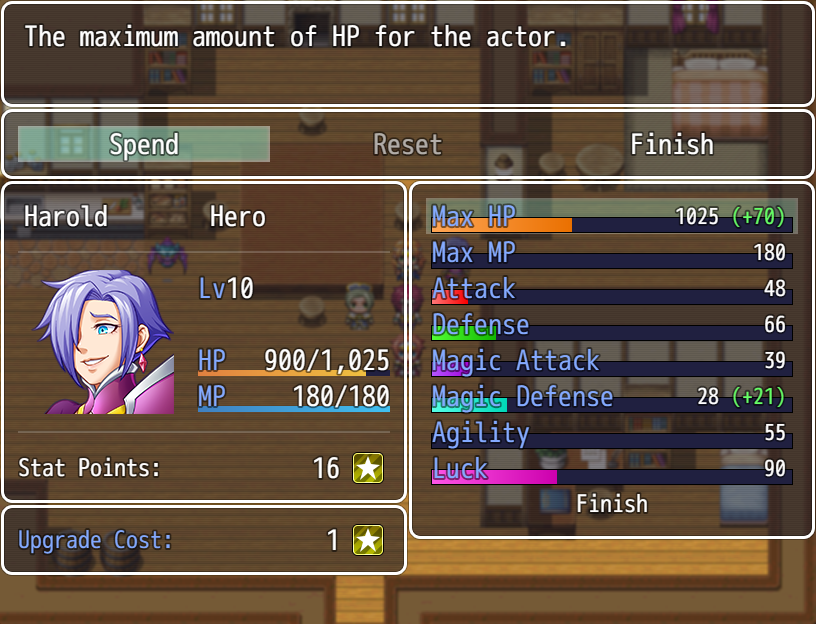
Wisdom measures a character’s perceptiveness, intuition, and mental fortitude. It is distinct from Intelligence — where INT covers logic and learning, WIS covers gut instinct and awareness of the world around you.
In D&D, Wisdom governs the Perception skill (used to spot hidden enemies or traps), Insight (to detect lies), and Survival (navigation and tracking). It is also the spellcasting stat for clerics, druids, and rangers.
Wisdom is frequently described as the difference between book smarts and street smarts. A high INT, low WIS character is the classic absent-minded professor who knows everything but notices nothing.
In video game RPGs, WIS is often absorbed into a combined stat like Spirit, Mind, or Magical Defense, particularly in JRPGs where the spiritual and intuitive dimensions of Wisdom get folded together.
Charisma (CHA) — The Social and Leadership Stat
Charisma defines a character’s force of personality, charm, confidence, and ability to lead or persuade others. It is the primary social stat in most RPG systems.
In D&D 5e, CHA governs Persuasion, Deception, Intimidation, and Performance skill checks. Bards, sorcerers, paladins, and warlocks all use CHA as their primary spellcasting attribute.
Many players underestimate Charisma in combat-heavy campaigns. But in roleplay-rich settings, a high CHA character can talk their way past encounters that would be lethal fights for a pure warrior.
In video game RPGs, Charisma often appears as Luck, Reputation, or a dialogue skill that unlocks special conversation options. Games like Fallout and Mass Effect center entire gameplay systems around a Charisma equivalent.
Video Game RPG Stats: HP, MP, and Combat Attributes
Video game RPGs typically use a different set of stats from their tabletop cousins. Instead of the six D&D attributes, they expose direct combat resource bars and performance numbers.
| Stat | Full Name | What It Does |
|---|---|---|
| HP | Hit Points | How much damage you can take before dying |
| MP | Mana Points | Fuel for spells and magic abilities |
| ATK | Attack / Physical Attack | How much physical damage you deal |
| DEF | Defense / Physical Defense | How much physical damage you absorb |
| MATK | Magic Attack | How much magical damage you deal |
| MDEF | Magic Defense | How much magical damage you absorb |
| SPD | Speed / Agility | Turn order in combat and dodge chance |
| CRIT | Critical Hit Rate | Chance to deal double or bonus damage |
| EVA | Evasion / Dodge | Chance to completely avoid an incoming attack |
| ACC | Accuracy | Probability that your attacks land successfully |
| LCK | Luck | Random bonuses to crits, drops, and outcomes |
These stats are derived from or inspired by the classic six, but condensed into direct gameplay-facing numbers that players can read and compare at a glance.
Primary Stats vs. Derived Stats
Most RPG systems separate stats into two tiers: primary (or core) stats and derived (or secondary) stats.
Primary stats are the ones you directly invest in — Strength, Dexterity, Intelligence, and so on. Derived stats are calculated from those primary values automatically by the game’s formulas.
For example, your maximum HP is a derived stat calculated from your Constitution score. Your magic damage is derived from your Intelligence. Your dodge chance is derived from your Dexterity or Agility.
Understanding this distinction is critical for min-maxing a character. Boosting one primary stat can simultaneously raise multiple derived stats at once, multiplying your efficiency with a single point investment.
Stat Scaling and Soft Caps
In many RPGs — particularly action RPGs like Elden Ring, Dark Souls, and Baldur’s Gate 3 — stats use a scaling system where returns diminish as a stat climbs higher.
This is called a soft cap. Below the soft cap, each point invested in a stat gives a strong return. Above it, additional points give smaller and smaller gains.
Elden Ring’s soft caps are well-documented: Strength and Dexterity cap out their primary scaling benefits around 50–60, while Vigor (the game’s equivalent of Constitution) soft caps at 40 for HP gains.
Knowing soft caps allows players to spread points intelligently across multiple stats rather than dumping everything into one value and hitting diminishing returns.
The SPECIAL System (Fallout)
Fallout created one of gaming’s most famous custom stat acronyms — SPECIAL. Each letter stands for a core attribute that shapes the entire character build:
| Letter | Stat | Core Role |
|---|---|---|
| S | Strength | Melee damage, carry weight |
| P | Perception | Ranged accuracy, awareness |
| E | Endurance | HP, resistances, stamina |
| C | Charisma | Dialogue, companion morale, prices |
| I | Intelligence | Skill points per level, science/medicine |
| A | Agility | Action Points, sneaking |
| L | Luck | Critical hits, random outcomes |
SPECIAL is widely praised for how it ties stats to roleplay, skill expression, and combat simultaneously — each attribute genuinely changes how the game is experienced.
The Storyteller System (Vampire: The Masquerade)
Vampire: The Masquerade uses a 3×3 grid of attributes that is one of the most structured and sophisticated stat systems in tabletop RPG history.
Attributes are divided by category (Physical, Social, Mental) and type (Power, Finesse, Resistance), producing nine distinct attributes:
| Power | Finesse | Resistance | |
|---|---|---|---|
| Physical | Strength | Dexterity | Stamina |
| Social | Charisma | Manipulation | Composure |
| Mental | Intelligence | Wits | Resolve |
This system ensures no single stat dominates the way Dexterity can in D&D, and forces players to think about both the category and application of every attribute they invest in.
Three-Stat RPG Systems
Many modern video game RPGs simplify the stat model down to just three core attributes. The classic three-stat grouping follows Body, Mind, and Soul — representing physical, intellectual, and spiritual dimensions.
Common three-stat combinations include Strength, Dexterity, and Intelligence — the RPG design shorthand for fighter, rogue, and mage archetypes. DOTA 2 famously built its entire hero system around this exact trio before updating in later patches.
The advantage of three-stat systems is accessibility. New players can understand and engage with a smaller number of variables without being overwhelmed, while still having seven distinct build archetypes available through specialization and hybrid approaches.
How Stats Differ Across Popular RPGs
| Game | Core Stat System | Notable Unique Stats |
|---|---|---|
| D&D 5e | STR, DEX, CON, INT, WIS, CHA | Proficiency Bonus (derived) |
| Pathfinder 2e | Same as D&D 5e | Free Attribute Boost system |
| Elden Ring | VIG, MND, END, STR, DEX, INT, FAI, ARC | Arcane (governs item discovery and bleed) |
| Fallout 4 | SPECIAL (7 stats) | Luck governs critical meter |
| Final Fantasy VII | HP, MP, STR, VIT, MAG, SPR, DEX, LCK | Materia slots modify all stats |
| Cyberpunk 2077 | Body, Reflex, Technical, Intelligence, Cool | Cool governs stealth and critical hits |
| Baldur’s Gate 3 | Full D&D 5e six stats | Spell Save DC derived from spellcasting stat |
| Vampire: The Masquerade | 3×3 Storyteller grid | Humanity and Blood Pool as resource stats |
| Pokémon | HP, ATK, DEF, SP.ATK, SP.DEF, SPD | EVs and IVs as hidden modifiers |
Stat Points and Character Building
Most RPGs give players a pool of stat points at character creation and additional points at level-up. How you allocate these points defines your entire playstyle.
Fighters and warriors typically dump points into Strength and Constitution. Rogues and rangers prioritize Dexterity. Mages and spellcasters focus on Intelligence or Wisdom depending on their spell list.
The most interesting builds mix stats in ways the game does not explicitly suggest. A Strength-based paladin who also invests in Charisma gets both hard-hitting attacks and powerful support spells — a combination that rewards players who understand how stats interact.
Stat Modifiers and Ability Score Bonuses
In D&D 5e, raw ability scores run from 1 to 20 for most playable characters. But the game does not use these raw numbers directly — it converts them into modifiers using a simple formula.
A score of 10 or 11 equals a modifier of +0 (baseline average human). Each two points above 10 adds +1 to the modifier, and each two points below 10 subtracts one. So a score of 18 gives a +4 modifier, while a score of 8 gives a -1 modifier.
These modifiers are added to dice rolls for attacks, skill checks, and saving throws. A +4 modifier means you add 4 to every relevant die roll — a significant advantage that compounds over hundreds of rolls throughout a campaign.
Common Mistakes When Building RPG Stats
New players almost always over-invest in offensive stats and neglect Constitution or Endurance. The result is a character who hits hard but dies to the first serious attack they cannot avoid.
Another common mistake is ignoring dump stats entirely. Most RPG systems design encounters that test every attribute at some point. A character with 8 Wisdom will eventually fail a critical Perception check at the worst possible moment.
The best stat builds account for minimum thresholds across all attributes rather than maximizing one or two. Ensuring no stat is truly catastrophic while still specializing in two or three core areas produces the most resilient characters in both tabletop and video game RPGs.
Frequently Asked Questions (FAQs)
What are RPG stats?
RPG stats are numeric values that define a character’s abilities in a role-playing game. They cover physical power, mental acuity, social skills, and combat performance.
What do STR, DEX, CON, INT, WIS, and CHA mean in RPGs?
These six abbreviations stand for Strength, Dexterity, Constitution, Intelligence, Wisdom, and Charisma — the classic D&D attributes that most tabletop and video game RPGs are built on.
What is the difference between HP and Constitution?
Constitution is a primary stat that represents endurance. HP (Hit Points) is a derived stat calculated from your Constitution score — it shows exactly how much damage you can take before dying.
What does MP mean in RPG stats?
MP stands for Mana Points or Magic Points. It is a resource bar that fuels spell-casting and special abilities. When MP runs out, most spells and magical skills become unavailable.
Which RPG stat is most important?
It depends on the game and character build. Dexterity is widely considered the strongest all-around stat in D&D 5e. Constitution matters for every class because it governs survivability through HP.
What does the Luck stat do in RPGs?
Luck influences random outcomes — critical hit chances, item drop rates, rare encounter triggers, and sometimes dialogue results. In the Fallout SPECIAL system, Luck directly charges the critical hit meter.
What is a dump stat in RPGs?
A dump stat is an attribute a player intentionally leaves at a minimum value to free up points for more important stats. Strength is often dumped by mage-type characters who rely on spells rather than melee.
What is the difference between primary and derived stats?
Primary stats are the base attributes you invest points into directly. Derived stats are calculated automatically from primary values — for example, HP is derived from Constitution, and dodge chance is derived from Dexterity.
What does the SPECIAL acronym stand for in Fallout?
SPECIAL stands for Strength, Perception, Endurance, Charisma, Intelligence, Agility, and Luck — the seven core stats of the Fallout character system introduced in Fallout 1 (1997).
Do all RPGs use the same stat system?
No. While most RPGs borrow from the D&D model, every major system adapts or redesigns stats differently. Elden Ring uses eight primary stats, Cyberpunk 2077 uses five, and Vampire: The Masquerade uses a 3×3 grid of nine attributes.
Conclusion
RPG stats are the invisible engine running underneath every great role-playing game experience.
From the original six attributes Gary Gygax defined in 1974 to the elaborate multi-tier systems powering modern titles like Elden Ring and Baldur’s Gate 3, these numbers shape every swing of a sword, every spell cast, and every conversation had.
Understanding RPG stats does not just make you a better builder — it gives you a deeper appreciation for the design craft behind the games themselves. Whether you play tabletop or digital, mastering your character attributes is always the first step toward mastering the game.