The Online Slot Craze: Why are They the Most Popular Casino Games in the World?
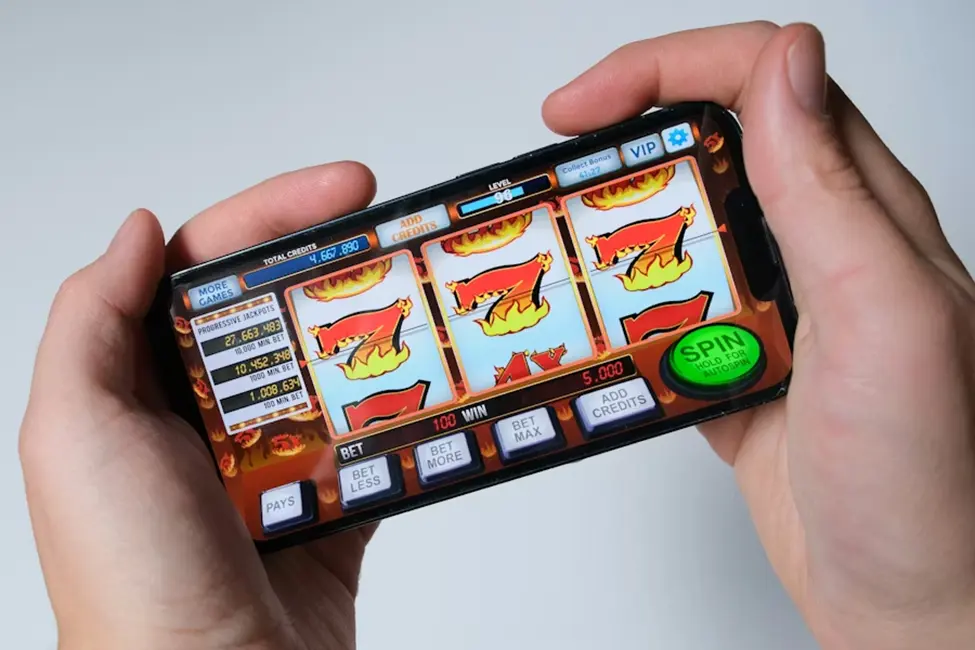
Out of the classic big five casino games, everyone knows that the slots are by far the most played variety on the planet. But why is this so? What makes them so dominant? How come poker, blackjack, roulette, and baccarat are nowhere near as dominant on physical casino floors and in the libraries of online platforms when they are more intricate and older as game types?
For a variety of reasons, some deep and detailed and others superficial and obvious, the online slot game has a chokehold on the casino gambling industry. As a player and a fan, you have to know why that is if you mean to elevate your game. Understanding the hobby is how you get better at it, and in order to help you, what follows is a detailed overview answering the titular question.
Why are slot games the most played casino games on Earth?
Slot games occupy a unique position in the gambling world because they combine accessibility, simplicity, and entertainment in a way few (or rather, no) other casino products can match. Unlike table games that often require knowledge of rules, experience, strategies, and betting structures, slots invite participation almost instantly. A new player can sit down, select a wager, and begin spinning within seconds. This low barrier to entry has made slots appealing to a remarkably broad audience spanning age groups, cultures, and levels of gambling experience. Whether in a physical casino or on a digital platform, the basic premise remains intuitive and easy to understand, helping the format attract millions of players globally.
Another major factor behind their popularity is the sheer variety available. Modern platforms can offer thousands of distinct slot titles, each featuring different themes, graphics, narratives, and bonus mechanics. Players can choose adventures based on mythology, fantasy, movies, ancient civilizations, sports, science fiction, or virtually any subject imaginable. Whatever you may like, there is a slot theme for you to enjoy. This diversity transforms slots from a simple gambling activity into a form of entertainment that caters to countless personal interests. The experience feels less repetitive because each title presents its own visual identity and gameplay structure that encourages exploration and engagement.
The overall growth of online gambling has amplified these advantages dramatically. Digital platforms make slot games available around the clock for all platforms, smartphones, tablets, and computers alike. Players no longer need to travel to a casino to enjoy the experience. Combined with relatively low betting minimums and the ability to play at one’s own pace, online slots have become one of the most convenient forms of casino entertainment ever created. Their universal accessibility, combined with endless variety and instant gratification, explains why slots consistently account for the largest share of casino gaming activity worldwide.
Why has the format outlasted every competitor?
The longevity of slot games can be traced to their remarkable ability to adapt without abandoning their core identity. Since the earliest mechanical machines appeared more than a century ago, the central concept has remained largely unchanged. The players place a wager, trigger a spin, and await an outcome determined by randomness and chance, i.e., luck.
While many forms of entertainment become obsolete as technology advances, slots have continuously reinvented themselves while preserving the simplicity that originally made them successful. This balance between familiarity and innovation has allowed them to remain relevant across multiple generations of players.
Competing casino games often face limitations that slots largely avoid. Card games and table games may rise and fall in popularity depending on cultural trends, skill requirements, or regional preferences. Slots, however, rely on a universal appeal that transcends language, geography, and expertise.
Players do not need extensive training or prior experience to participate. The format is equally approachable for someone visiting a casino for the first time and for a seasoned gambling enthusiast. This broad accessibility has given slots a larger potential audience than many competing forms of casino gaming.
The industry’s ongoing investment in slot development has also contributed significantly to the format’s durability. Software studios and casinos themselves, like Stake, release their own new games at an extraordinary pace, introducing fresh themes, mechanics, and technological enhancements every year. As gaming technology evolved from mechanical reels to video displays, and then to sophisticated online platforms, slot developers embraced each advancement.
Rather than resisting change, the format incorporated new possibilities, ensuring it remained contemporary and engaging. The constant evolution has prevented stagnation and enabled slots to maintain their dominant position even as countless other entertainment options compete for consumer attention. No other casino game can claim this.
What player psychology drives its staying power?
The enduring appeal of slot games is closely tied to several psychological mechanisms that make the experience engaging and emotionally rewarding. One of the most significant factors is anticipation. Every spin creates a brief period of uncertainty during which players imagine potential outcomes. Human beings are naturally drawn to situations involving suspense and possibility, and slots deliver these moments repeatedly. The excitement generated before the reels stop spinning can be as compelling as the actual result, encouraging players to continue engaging with the game.
Variable rewards also play an important role in maintaining player interest. Unlike activities that provide predictable outcomes, slots operate on randomized reward structures. Players never know exactly when a win might occur or how large it could be. Psychological research has long demonstrated that unpredictable rewards can be highly motivating because they sustain attention and curiosity over extended periods. Small wins, bonus features, and occasional larger payouts create moments of positive reinforcement that enhance the overall entertainment experience. The unpredictability itself becomes part of the attraction.
Besides the rewards, modern slot games often create emotional engagement through immersive design elements. Complete with music, animations, storytelling, visual effects, and thematic progression, spins are transformed into a more complete entertainment experience. Many games incorporate achievements, unlockable features, and evolving bonus sequences that give players a sense of progression and involvement.
These features can generate feelings of excitement, accomplishment, and discovery even when gambling outcomes remain entirely based on chance. Through the combination of anticipation, randomness, sensory stimulation, and emotional engagement, slot games tap into psychological drivers that help explain their extraordinary staying power in the global gambling market.
How have modern online slots evolved far beyond their mechanical origins?
The transformation of slot games from simple mechanical devices into sophisticated digital experiences represents one of the most significant evolutions in gambling history. Early machines relied on physical reels, gears, springs, and a limited number of symbols. Their functionality was constrained by mechanical engineering, which, although marvelous for the time, restricted the complexity of gameplay and prize structures. Modern online slots, by contrast, are powered by advanced software systems capable of supporting intricate game mechanics, elaborate visual effects, and highly dynamic player experiences that would have been impossible in the mechanical era.
Today’s online slots frequently resemble regular video games as much as traditional casino products. Developers incorporate cinematic graphics, animated characters, interactive bonus rounds, and narrative driven features that unfold over time. Some games include expanding reels, cascading symbols, multipliers, collection mechanics, mission systems, and progressive gameplay elements. These innovations create experiences that extend far beyond simply matching symbols on a payline. The result is a richer and more immersive form of entertainment that appeals not only to traditional casino players but also to audiences accustomed to modern digital gaming as a whole.
Technological advancements continue to push the boundaries even further. Mobile optimization allows players to access games from virtually anywhere, while cloud infrastructure supports seamless performance across devices. Progressive jackpot networks can connect players across multiple platforms, enabling prize pools that reach life changing amounts. Emerging technologies such as virtual reality, augmented reality, and enhanced social gaming features have the potential to redefine the slot experience once again. Although the fundamental concept of spinning reels remains recognizable, modern online slots have evolved into sophisticated entertainment products that carry only a distant resemblance to the mechanical machines that first introduced the world to slot gaming.
Slots account for the majority of online casino revenue globally
It may go without saying that slots account for the majority of online casino revenue globally because they are the most common game people play, but there is more to it than meets the eye. This alone makes them the financial backbone of the modern iGaming industry, which is a continuously growing branch of entertainment. Across regulated markets, slot games consistently generate more revenue than poker, blackjack, roulette, baccarat, and most other casino products combined. Combined!
Industry research indicates that slot focused casino gaming represents the largest segment of the online casino market, with iSlots accounting for more than 65% of online casino revenue in 2024. Their dominance is so significant, in fact, that many operators derive the majority of their gross gaming revenue from slot activity alone.
Several factors explain why slots outperform virtually every competing casino product. First, they appeal to the broadest possible audience because no prior knowledge, strategy, or skill is required. Players can begin immediately without learning complex rules or betting systems. Second, slots encourage high frequency gameplay, with rounds often lasting only a few seconds.
This allows substantially more wagering activity than games such as poker or blackjack, which typically unfold at a slower pace. The availability of thousands of titles, frequent game releases, progressive jackpots, bonus features, and mobile accessibility further increases player engagement and retention. These advantages have helped slots become the primary revenue driver for online casino operators worldwide.
The commercial importance of slots extends beyond individual casinos, too. Their revenue generating power has influenced how online gambling platforms are designed, marketed, and expanded into new jurisdictions. Many operators prioritize slot content partnerships, promotional campaigns, and exclusive game launches because player demand remains exceptionally strong.
New games and genres of online casino games utilize slot mechanics and, although not slots themselves, are heavily inspired by the formula. As mobile gaming adoption continues to rise and developers introduce increasingly sophisticated slot experiences, the category is expected to remain the dominant force within online casino gaming for the foreseeable future. This has been decades in the making. It will never truly change, and that is more than fine.
10 Interesting FAQs about mechanical slot machines
- What is a mechanical slot machine?
A mechanical slot machine is a gambling device that uses physical reels, gears, springs, and levers to determine outcomes rather than computer software. These machines were the original form of slot gaming in the 19th century, before electronic and digital versions became widespread. - Why are slot machines sometimes called “one armed bandits”?
The nickname comes from the large side lever found on early machines, which players pulled to spin the reels. The term “bandit” referred to the machine’s tendency to take players’ money while only occasionally paying out prizes. Robbery in broad daylight, as they say! - Who invented the first successful mechanical slot machine?
The first widely recognized mechanical slot machine was developed by Charles Fey in San Francisco during the 1890s. His Liberty Bell machine became the foundation for modern slot gaming. - How did mechanical slot machines determine winners?
Winning combinations were determined entirely by the positions of physical reels after they stopped spinning. Internal gears and mechanisms controlled the movement and final placement of symbols. - What symbols appeared on the earliest slot machines?
Common symbols included horseshoes, stars, bells, playing card suits, and various fruit icons. Many of these symbols remain associated with slot games and overall gambling today. - Why did fruit symbols become so popular?
In some jurisdictions where cash gambling restrictions existed, machines awarded chewing gum or candy flavored like the displayed fruits. The symbols eventually became a permanent part of slot machine culture. - How many reels did classic mechanical slots usually have?
Most traditional mechanical slot machines featured three reels, though some later models experimented with additional reels and more complex configurations. - Could mechanical slot machines be manipulated?
Early machines were sometimes vulnerable to cheating techniques and mechanical tampering. Manufacturers would continuously improve security features to reduce these risks. - When did electronic slot machines begin replacing mechanical models?
Electronic slot machines started gaining popularity during the 1960s and 1970s, almost a century after the first ones appeared. This led to video slots and online games that dominate the industry today. - Do mechanical slot machines still exist?
Yes. While they are far less common than digital machines, mechanical slots can still be found in certain saloons, casinos, museums, and private collections. They are appreciated for their historical significance and nostalgic appeal.