What Are Synonyms? Meaning & Examples Explained 2026
What are synonyms is one of the most searched grammar questions in the English language, and for good reason. Synonyms sit at the very heart of effective writing, vocabulary development, and clear communication.
Whether you are a student building your word bank, a writer hunting for the perfect word, or a professional trying to sound polished in a report, understanding synonyms is a fundamental skill.
What Are Synonyms? The Core Definition
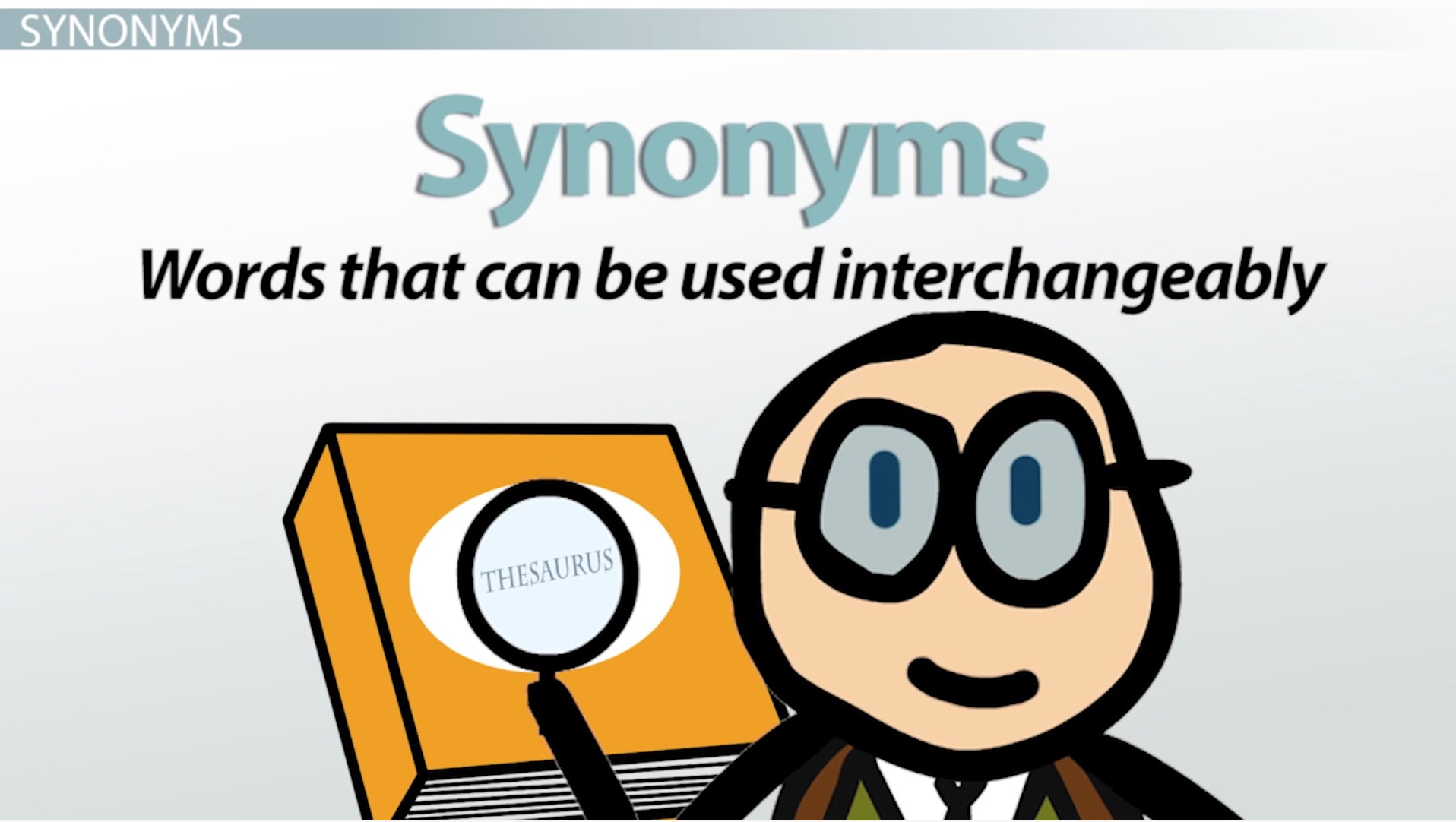
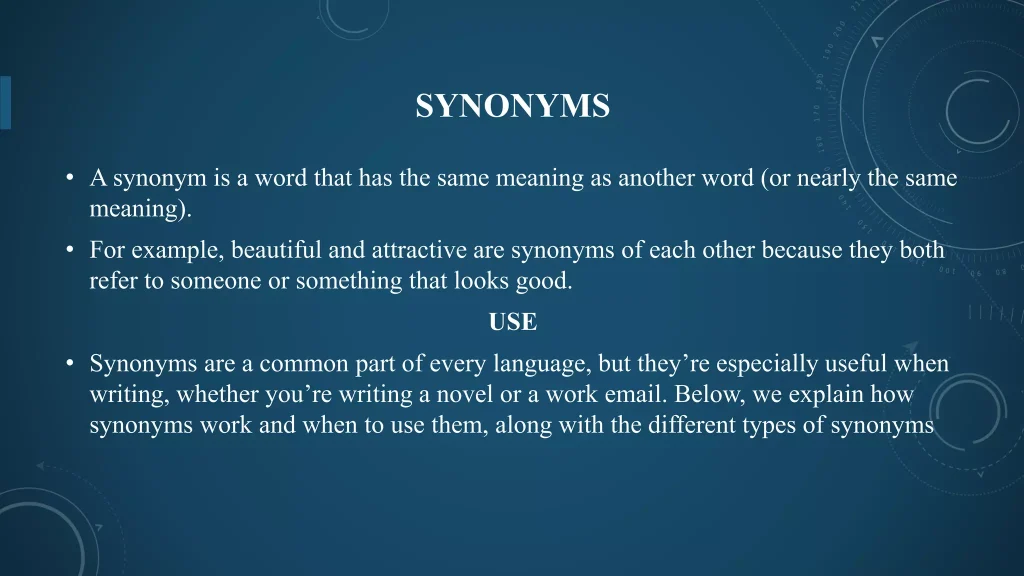
What are synonyms in the simplest possible terms? A synonym is a word or phrase that has the same or very similar meaning as another word or phrase in the same language.
The word “synonym” itself comes from the Ancient Greek “synōnymon” — combining “syn” meaning “together” or “alike” and “onyma” meaning “name.” So a synonym is literally another name for the same thing.
For example, the words “happy,” “joyful,” and “glad” are synonyms. They all describe a feeling of positivity and emotional warmth. You can swap them in most sentences without changing the core meaning.
The Simple Synonym Definition with Examples
Here is the cleanest synonym definition you will find: a synonym is a word that means the same or nearly the same thing as another word.
Note the word “nearly.” Pure, perfect synonyms — where two words are completely interchangeable in every possible context — are actually quite rare. Most synonyms share a core meaning but carry slightly different shades, tones, or levels of formality.
Consider “begin,” “start,” “commence,” and “initiate.” All four mean to set something in motion. But “commence” and “initiate” sound more formal, while “begin” and “start” are casual and conversational.
The Origin and History of the Word Synonym
The concept of synonymy has existed as long as language itself. The formal study of synonyms became prominent in English lexicography when Peter Mark Roget published his famous Thesaurus of English Words and Phrases in 1852.
Roget’s thesaurus revolutionized how writers and speakers found alternative words. Before it, finding a synonym required deep vocabulary knowledge or consulting multiple dictionaries.
Today the thesaurus concept lives on in digital tools like Thesaurus.com, Google’s built-in dictionary, Merriam-Webster, and grammar assistants like Grammarly. These tools have made synonym lookup instant and accessible to everyone.
The 3 Main Types of Synonyms
Understanding what are synonyms fully requires knowing the different categories. Not all synonyms work the same way. There are three recognized types, each with distinct properties and use cases.
Absolute Synonyms
Absolute synonyms are words that are fully interchangeable in every context without changing meaning at all. They are the rarest type of synonym.
A common example is “couch” and “sofa.” In virtually every sentence you can swap one for the other and nothing changes. Another example is “autumn” and “fall” when referring to the season — both are perfectly equivalent in standard American English.
True absolute synonyms are uncommon because language is nuanced. Even words that seem identical often carry different tones, regional preferences, or connotations that make them imperfect substitutes in certain contexts.
Partial Synonyms
Partial synonyms are words that share a similar but not completely identical meaning. They overlap in core concept but differ in degree, tone, connotation, or context of use.
“Smart” and “intelligent” are a classic example. Both refer to mental ability, but “intelligent” typically implies a higher or more formal level of intellect. You could call someone “smart” as a casual compliment but “intelligent” carries more academic weight.
Partial synonyms are by far the most common type. The majority of words you find in a thesaurus are partial synonyms, not perfect equivalents.
Near Synonyms
Near synonyms are words that are closely related in meaning but have distinct enough differences that they cannot always substitute for each other.
“Big” and “enormous” are near synonyms. Both describe large size, but “enormous” signals much greater magnitude. Calling a sandwich “enormous” versus “big” creates very different mental images.
Near synonyms are valuable precisely because of those differences. Writers use them to add precision, emphasis, and emotional weight to their language.
Synonyms Across All Parts of Speech
What are synonyms limited to? Not at all — synonyms can exist across every part of speech in English. Here is a breakdown by category with clear examples.
| Part of Speech | Word | Synonyms |
|---|---|---|
| Noun | Car | Vehicle, automobile, auto |
| Noun | House | Home, residence, dwelling, abode |
| Noun | Child | Kid, youngster, youth, minor |
| Verb | Walk | Stroll, stride, amble, march, trudge |
| Verb | Eat | Consume, devour, dine, feast, nibble |
| Verb | Look | Gaze, glance, stare, observe, peer |
| Adjective | Happy | Joyful, content, elated, cheerful, pleased |
| Adjective | Sad | Unhappy, sorrowful, melancholy, dejected |
| Adjective | Big | Large, huge, enormous, vast, massive |
| Adverb | Quickly | Rapidly, swiftly, hastily, promptly, speedily |
| Adverb | Slowly | Gradually, leisurely, sluggishly, gently |
| Adjective | Smart | Intelligent, clever, sharp, bright, astute |
Every single part of speech has its own rich ecosystem of synonyms. This is what makes the English language so expressive and flexible in the hands of a skilled communicator.
100 Common Synonym Examples in English
One of the best ways to understand what are synonyms is to see hundreds of them in action. Here is an extensive list organized by base word, covering the most commonly used vocabulary in English.
Synonyms for Positive Emotions
- Happy — joyful, cheerful, content, pleased, elated, delighted, thrilled, overjoyed, ecstatic, gleeful.
- Excited — enthusiastic, eager, animated, energized, pumped, thrilled, keyed up, fired up.
- Calm — peaceful, serene, tranquil, composed, relaxed, untroubled, placid, collected.
- Brave — courageous, bold, daring, fearless, valiant, heroic, audacious, intrepid.
- Kind — generous, thoughtful, considerate, compassionate, warm, benevolent, gentle, caring.
Synonyms for Negative Emotions
- Sad — unhappy, sorrowful, downcast, dejected, melancholy, gloomy, heartbroken, despondent.
- Angry — furious, irritated, enraged, annoyed, livid, irate, infuriated, resentful.
- Scared — frightened, terrified, anxious, fearful, alarmed, horrified, petrified, apprehensive.
- Tired — exhausted, weary, fatigued, drained, worn out, spent, sluggish, lethargic.
Synonyms for Common Verbs
- Say — state, declare, mention, express, communicate, utter, voice, articulate, pronounce.
- Go — travel, move, proceed, advance, head, depart, journey, venture, trek.
- Make — create, produce, craft, build, construct, generate, form, develop, assemble.
- Think — believe, consider, suppose, reflect, contemplate, ponder, deliberate, reason, assume.
- Help — assist, support, aid, contribute, facilitate, guide, serve, back, enable.
- Show — display, demonstrate, present, reveal, exhibit, illustrate, indicate, highlight.
- Get — obtain, acquire, receive, gain, secure, retrieve, earn, collect, achieve.
Synonyms for Common Adjectives
- Good — excellent, great, wonderful, superb, outstanding, fine, superior, admirable, commendable.
- Bad — terrible, awful, dreadful, poor, inferior, unacceptable, unpleasant, appalling, dreadful.
- New — fresh, modern, current, recent, novel, latest, contemporary, innovative.
- Old — ancient, aged, dated, antique, elderly, vintage, outdated, obsolete, worn.
- Important — significant, essential, critical, vital, major, crucial, key, fundamental, necessary.
- Small — tiny, little, minor, miniature, compact, petite, microscopic, diminutive.
- Fast — quick, rapid, swift, speedy, brisk, hasty, fleet, nimble, prompt.
- Hard — difficult, tough, challenging, demanding, arduous, strenuous, complex, rigorous.
- Easy — simple, straightforward, effortless, uncomplicated, manageable, smooth, basic.
Synonyms vs Antonyms: The Key Difference
When learning what are synonyms, the concept of antonyms almost always comes up in the same conversation. Understanding the difference is essential for vocabulary clarity.
A synonym is a word with the same or similar meaning. An antonym is a word with the opposite meaning. They are related concepts that work in opposite directions.
Here are clear side-by-side examples showing both relationships:
| Word | Synonym | Antonym |
|---|---|---|
| Hot | Warm, burning, scorching | Cold, cool, freezing |
| Fast | Quick, rapid, swift | Slow, sluggish, gradual |
| Happy | Joyful, pleased, content | Sad, miserable, depressed |
| Strong | Powerful, mighty, robust | Weak, frail, feeble |
| Bright | Smart, brilliant, radiant | Dim, dull, dark |
| Clean | Spotless, tidy, pure | Dirty, messy, filthy |
| Brave | Courageous, bold, daring | Cowardly, timid, fearful |
| Expensive | Costly, pricey, premium | Cheap, affordable, budget |
| Ancient | Old, aged, historic | Modern, new, contemporary |
| Generous | Kind, giving, charitable | Selfish, stingy, greedy |
Synonyms and antonyms together form the backbone of vocabulary learning. Knowing both for a given word gives you full command of its meaning and its place in the spectrum of related concepts.
Synonyms vs Homonyms: Another Important Distinction
Understanding what are synonyms also requires knowing how they differ from homonyms. These two terms are frequently confused by learners at all levels.
Synonyms are different words with the same meaning. Homonyms are the same word (or same-sounding words) with different meanings.
“Bank” is a classic homonym. It can mean the edge of a river or a financial institution. The word is identical but the meanings are completely unrelated.
Homophones are a type of homonym where words sound the same but have different spellings and meanings. “There,” “their,” and “they’re” are homophones — they sound identical but mean entirely different things.
This distinction matters in writing because confusing homonyms and homophones is one of the most common grammar errors people make. Synonyms never create this problem since they are distinct words with overlapping meanings.
How Connotation Changes Synonym Choice
One of the most important nuances in understanding what are synonyms is the role of connotation. Two synonyms can share a denotation (literal dictionary meaning) but differ significantly in connotation (emotional or cultural tone).
Consider “aroma” and “odor.” Both words technically mean a smell. But “aroma” carries a positive, pleasant connotation — you would describe fresh coffee or baked bread as having an aroma. “Odor” carries a more neutral or negative connotation — something unpleasant usually has an odor.
Using the wrong synonym in a sentence can completely change its tone. Calling a chef’s cooking an “odor” instead of an “aroma” would be insulting rather than complimentary, even though both words technically refer to smell.
This is why choosing the right synonym requires more than just finding a word with a similar meaning. It requires understanding the emotional and cultural weight the word carries.
Formal vs Informal Synonyms
Synonyms also vary significantly by register — the level of formality appropriate for a given situation. Knowing whether a synonym is formal or informal is critical for professional and academic writing.
Here are examples of the same concepts expressed with formal synonyms and informal alternatives:
| Informal Word | Formal Synonym | Example Use |
|---|---|---|
| Broke | Destitute, insolvent | Financial documents, formal reports |
| Tired | Fatigued, exhausted | Medical or professional contexts |
| Smart | Intelligent, astute | Academic papers, professional profiles |
| Fake | Counterfeit, fraudulent | Legal documents, official reports |
| Sad | Despondent, melancholic | Literary writing, clinical contexts |
| Use | Utilize, employ | Business and technical writing |
| Talk | Communicate, converse | Professional correspondence |
| Start | Initiate, commence | Legal, academic, and business writing |
| Show | Demonstrate, illustrate | Academic papers, presentations |
| Buy | Acquire, procure | Business and financial documents |
In casual conversation with a friend, “tired” works perfectly. In a medical record or a job application, “fatigued” sounds more appropriate and professional.
Why Writers Use Synonyms: The Benefits Explained
Understanding what are synonyms becomes much more practical when you see exactly why skilled writers rely on them so heavily in their work.
Avoiding Repetition. Using the same word multiple times in close proximity makes writing feel monotonous and amateurish. Synonyms allow writers to vary their vocabulary while keeping the meaning consistent.
Adding Precision. Synonyms let you choose exactly the right shade of meaning. Instead of writing “he walked across the room,” a novelist might write “he shuffled,” “he strode,” or “he sauntered” — each conveying a completely different emotional tone.
Matching Tone and Register. A formal report needs formal language. A casual blog post benefits from approachable, everyday vocabulary. Synonyms let you shift registers while keeping your core ideas intact.
Building Vocabulary. Regularly looking up synonyms for common words is one of the fastest and most effective ways to expand your vocabulary. Each synonym you learn adds another tool to your communication toolkit.
Improving SEO and Content. In digital content writing, using synonyms throughout an article helps search engines understand the topic more fully. Google’s NLP algorithms recognize synonym clusters and reward content that covers a topic with breadth and natural language variation.
Common Mistakes When Using Synonyms
Knowing what are synonyms also means knowing the pitfalls of using them incorrectly. These are the most common mistakes writers make when reaching for synonyms.
Assuming All Synonyms Are Interchangeable. This is the most frequent error. Just because two words are listed as synonyms does not mean they can substitute for each other in every sentence. “Close” and “shut” are synonyms in many contexts, but you can close a bank account — not shut one.
Ignoring Connotation. As covered above, two words can share a meaning but carry very different emotional tones. Always consider the connotation of a synonym before using it.
Over-Using Rare or Fancy Synonyms. Using obscure synonyms in an attempt to sound sophisticated can backfire badly. If your reader needs to look up every other word, the communication has failed.
Using Synonyms to Avoid Plagiarism. Swapping out words in someone else’s writing with synonyms is not a legitimate way to make the content your own. That is still plagiarism in academic and professional contexts.
Mixing Formal and Informal Synonyms. Switching registers mid-sentence — for example, writing “the CEO utilized the info” — creates tonal awkwardness. “Info” is informal while “utilized” is formal. Choose synonyms that match the register of your overall piece.
How to Find Synonyms: Tools and Resources
Now that you understand what are synonyms and why they matter, here are the best tools for finding them quickly and accurately.
Thesaurus.com is the most widely used online thesaurus. Simply type any word and you get an instant list of synonyms organized by relevance, with antonyms included.
Merriam-Webster Thesaurus at merriam-webster.com/thesaurus provides synonyms along with subtle explanations of how their meanings differ — which is invaluable for choosing the right one.
Google Search gives you a quick synonym by typing “synonym for [word]” directly into the search bar. The results include meaning and example sentences.
Microsoft Word and Google Docs both have built-in synonym tools. Right-click on any word in either application and select “Synonyms” to see alternatives instantly without leaving your document.
Grammarly offers a double-click synonym feature that shows you contextually appropriate alternatives while you write. It is one of the most convenient tools for real-time synonym selection.
Synonyms in Literature: How Authors Use Them
Great literature depends on synonyms more than most readers realize. Authors use them to paint vivid pictures, control emotional tone, and reveal character — all through word choice alone.
Consider the verb “walk.” In a single novel, a skilled author might describe a character who “ambles” through the park on a relaxed Sunday, “strides” into a board meeting with confidence, “shuffles” home after a crushing defeat, and “trudges” through rain on a miserable commute. Each synonym carries an entire story within a single word.
This technique is sometimes called “elegant variation” — using synonyms to prevent repetition and keep the reader’s attention alive. While modern style guides sometimes caution against overusing it, strategic variation through synonyms remains a cornerstone of engaging literary prose.
Synonyms in Academic Writing
In academic writing, synonym selection is particularly consequential. The wrong word can undermine credibility, introduce bias, or change the meaning of an argument.
Academic writers must be especially careful about connotation. Words like “claim,” “argue,” “suggest,” and “prove” are partial synonyms for expressing an author’s position, but they carry very different levels of confidence and evidence requirements.
Writing that a researcher “claims” something implies uncertainty or controversy. Writing that they “demonstrate” something implies solid evidence. These are not interchangeable synonyms in an academic context, even though they describe the same basic action of making a statement.
Synonyms in Everyday Speech
You use synonyms in everyday conversation far more than you realize. Most people naturally vary their vocabulary when speaking without consciously thinking about synonym selection.
When you say “let’s grab something to eat” instead of “let’s consume nutrition,” you are choosing an informal synonym over a formal one. When you say “my car is wrecked” instead of “my vehicle is damaged,” you are choosing an emotionally charged synonym over a neutral one.
This natural fluency with synonyms is what makes speech feel human and authentic. Flat, repetitive language that uses the same word over and over signals monotony. Varied synonym use signals intelligence, confidence, and communicative richness.
Synonyms for the 20 Most Common English Words
Here is a practical reference table for the 20 most frequently used words in English, paired with their most useful synonyms.
| Common Word | Useful Synonyms |
|---|---|
| Good | Great, excellent, wonderful, superb, fine |
| Bad | Terrible, awful, poor, dreadful, unpleasant |
| Big | Large, huge, enormous, massive, vast |
| Small | Tiny, little, petite, compact, minor |
| Old | Aged, ancient, dated, elderly, vintage |
| New | Fresh, modern, recent, current, novel |
| Fast | Quick, rapid, swift, speedy, brisk |
| Slow | Gradual, leisurely, sluggish, unhurried |
| Happy | Joyful, pleased, content, elated, cheerful |
| Sad | Unhappy, sorrowful, dejected, gloomy, blue |
| Smart | Intelligent, clever, bright, sharp, astute |
| Nice | Pleasant, lovely, agreeable, delightful, kind |
| Important | Significant, vital, critical, essential, key |
| Hard | Difficult, tough, challenging, demanding, complex |
| Easy | Simple, effortless, straightforward, smooth |
| Many | Numerous, several, various, countless, abundant |
| More | Additional, further, extra, greater, increased |
| Use | Utilize, employ, apply, exercise, deploy |
| Say | State, declare, express, mention, articulate |
| Get | Obtain, acquire, receive, gain, secure |
This table is a practical vocabulary-building reference you can return to anytime you are writing and want to elevate your word choices quickly.
Synonyms in Different Languages
The concept of what are synonyms exists in virtually every language on Earth. English is particularly rich in synonyms because of its unique history of absorbing vocabulary from multiple language families.
English has deep roots in both Germanic Old English and Latin-derived Norman French. When the Normans conquered England in 1066, they brought an entirely new layer of vocabulary that coexisted alongside native English words — creating enormous synonym pairs.
Old English “freedom” and Latin-derived “liberty” are synonyms born from this dual heritage. “Ask” (Old English) and “inquire” (Latin) are synonyms with different formality levels. “Kingly” (Germanic) and “regal” (Latin) both mean relating to a king, but sound completely different in register.
This dual-heritage vocabulary is one reason English has one of the largest lexicons of any language — and why English offers such extraordinary synonym richness compared to most other languages.
How Synonyms Help Children Learn Language
Teaching what are synonyms to children is one of the most effective ways to accelerate vocabulary growth. When a child already knows the word “big,” introducing “large,” “huge,” and “enormous” as synonyms immediately triples their vocabulary for that concept.
Word maps — visual diagrams that connect a central word to its synonyms — are a widely used educational tool in primary schools. They help children understand that language is not just a list of words but a rich network of interconnected meanings.
Reading aloud to children exposes them naturally to synonym variation. A picture book that describes a bear as “enormous,” “massive,” and “giant” on different pages teaches synonym use through context rather than rote memorization.
Synonyms in Digital Writing and SEO
Understanding what are synonyms has a direct practical application for anyone writing online content in 2026. Search engine optimization (SEO) depends significantly on synonym usage.
Google’s NLP algorithms no longer just match exact keywords. They understand semantic meaning — which means an article that uses “happy,” “joyful,” “pleased,” and “content” throughout is recognized as genuinely about happiness, rather than just keyword stuffing the single word “happy” repeatedly.
This is called Latent Semantic Indexing (LSI) and it rewards writers who use natural, varied language over those who robotically repeat a single target keyword. Writing well with synonyms is now both a language skill and an SEO skill simultaneously.
The best-ranking content on any topic uses the target keyword naturally, surrounds it with related synonyms and contextual terms, and covers the topic with genuine depth and variety. That is exactly what this article has done from the opening paragraph.
Synonyms for Academic Transition Words
One extremely practical subset of synonym knowledge is academic transition words. These are the synonyms writers use to connect ideas, show contrast, or signal conclusions in formal writing.
| Transition Purpose | Common Word | Synonyms |
|---|---|---|
| Adding information | Also | Furthermore, moreover, additionally, in addition |
| Showing contrast | But | However, yet, nevertheless, on the other hand |
| Showing cause | So | Therefore, thus, consequently, as a result |
| Giving examples | For example | For instance, specifically, to illustrate, namely |
| Concluding | In conclusion | To summarize, in summary, ultimately, in closing |
| Emphasizing | Importantly | Notably, significantly, crucially, above all |
| Comparing | Similarly | Likewise, in the same way, correspondingly |
| Sequencing | First | Initially, to begin with, to start, first of all |
| Continuing | Then | Next, subsequently, following this, afterward |
| Summarizing | Overall | In general, on the whole, broadly speaking |
Mastering these transition word synonyms dramatically improves the flow and sophistication of any academic or professional writing.
Frequently Asked Questions (FAQs)
What are synonyms in simple words?
Synonyms are words that have the same or very similar meaning as another word. For example, “happy,” “joyful,” and “glad” are all synonyms because they all describe a feeling of positivity.
What is the difference between a synonym and an antonym?
A synonym has the same or similar meaning as another word, while an antonym has the opposite meaning. “Hot” and “warm” are synonyms; “hot” and “cold” are antonyms.
Are all synonyms completely interchangeable?
No. Most synonyms are partial synonyms, meaning they share a core meaning but differ in tone, connotation, or formality. Always check context before swapping one word for another.
What is an absolute synonym?
An absolute synonym is a word that is perfectly interchangeable with another in every context without changing meaning. “Couch” and “sofa” are a classic example of absolute synonyms.
How do I find synonyms for a word?
Use tools like Thesaurus.com, the Merriam-Webster thesaurus, right-click synonym menus in Word or Google Docs, or grammar tools like Grammarly for contextual synonym suggestions.
What are synonyms used for in writing?
Synonyms help writers avoid repetition, add precision, match the tone and register of their writing, and build reader engagement. They are one of the most essential tools in any writer’s vocabulary toolkit.
What is the difference between a synonym and a homonym?
A synonym is a different word with the same meaning. A homonym is the same word with different meanings. “Big” and “large” are synonyms; “bank” (river bank vs. financial bank) is a homonym.
Can synonyms cause mistakes in writing?
Yes. Using a synonym without understanding its connotation, formality level, or exact shade of meaning can change the tone or accuracy of a sentence. Always verify a synonym’s nuance before using it.
Why does English have so many synonyms?
English absorbed vocabulary from Old Germanic English and Latin-derived Norman French after 1066, creating enormous synonym pairs. This dual heritage gives English one of the richest synonym collections of any language.
What are synonyms for the word “good”?
Common synonyms for “good” include excellent, great, wonderful, fine, superb, outstanding, admirable, satisfactory, and commendable. The best choice depends on the context and desired level of enthusiasm.
Conclusion
What are synonyms is a question that opens the door to the full richness of the English language. At their simplest, synonyms are words with the same or similar meanings.
At their most powerful, they are precision tools that let writers, speakers, students, and professionals express exactly what they mean with exactly the right emotional weight, formality, and impact.
From the three types — absolute, partial, and near synonyms — to the vast difference connotation makes in word choice, synonyms reward anyone who takes the time to understand them deeply.
Use the tables, examples, and tools in this guide as a practical reference every time you sit down to write.
The right synonym in the right place does not just improve a sentence — it transforms it. And that transformation is the difference between writing that is merely understood and writing that is truly felt and remembered by every reader who encounters it.