What Kind of Assets Are Sold at Texas Business Liquidation Auctions?
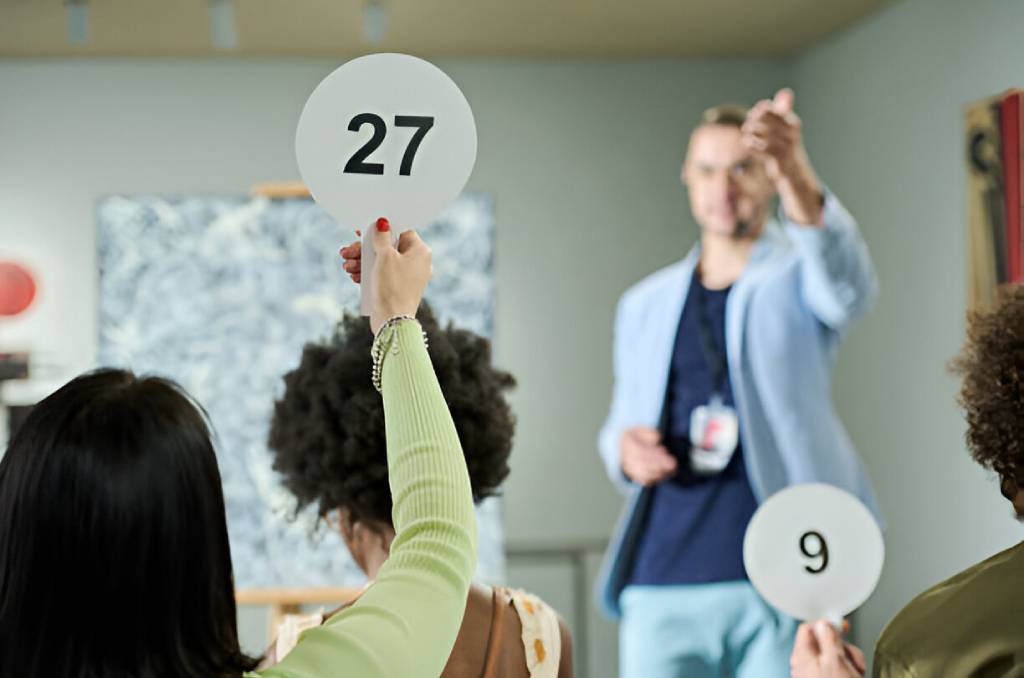
Liquidation auction services have become a reliable solution for quickly converting assets into cash globally. Businesses looking forward to satisfying creditors’ claims or rescaling themselves are the primary beneficiaries of these services. In Texas, businesses can liquidate diverse types of assets through business liquidation auctions. Having an in-depth understanding of these asset types will give stakeholders an essential edge in determining the amount of cash return.
Kinds of Assets Sold at Texas Business Liquidation Auctions
Auctionable liquid assets in Texas fall under all three primary asset categories:
-
- Tangible assets: Any assets with physical properties
- Intangible assets: Assets whose values don’t depend on their physical properties. Their value appraisal requires specialized techniques
- Other types: Assets that can’t be determined as tangible or intangible, mostly include financial assets
Let’s dig into the depths of the assets of each category:
Tangible Assets
Tangible assets, as their name addresses, have physical, or to be more precise, touchable properties. You can easily know these assets by their other key characteristic. That means you can take them to any of your local markets and sell them at a price set by the market.
Major tangible assets are:
Real Estate: Building and Land
Real estate refers to land and any permanent properties attached to it. In terms of business assets, examples of real estate can be office buildings, warehouses, or plots. Businesses can liquidate their real estate properties in Texas via auction houses.
Plant and Machinery
Different machinery used in production, process, and logistics fall into this category. You can take different industrial machinery, like CNC machines, textile looms, and injection molding, as examples of such assets. They are among the wide varieties of assets auctionable through on-site or online auction services.
Office Equipment and Furniture
Equipment and furniture used in an office setting, like laptops, printers, desks, chairs, and cabinets, can also be sold via auctions in Texas. Businesses can sell these assets in bulk or in pieces based on convenience. Bulk sales are quick compared to individual sales.
Inventory
Inventory products are those that businesses keep in storage before or after the product manufacturing process. These include raw and in-process materials and finished products waiting for delivery. For example, apparel stock, electronic parts, and raw chemicals. These assets are mostly sold in bulk.
Vehicles
Companies can also put the vehicle in possession at auctions in Texas. Types of vehicles that can be categorized as auctionable are:
- Company-owned; not the vehicles on rent or lease
- Small or large vehicles used in logistics, sales, or transportation
- Private vehicles given to employees by the company
Documents regarding ownership of the vehicles, vehicle history, current status, and mileage are essential submitables. Without validating these papers, auction services or houses may deny them to sell.
Intangible Assets
Unlike tangible assets, intangible assets don’t have value for their physical features. Also, no market value can determine their worth. Their value appraisal depends on the ideas and knowledge they hold, the innovations and opportunities they scope out, and the reputation of the creator or owner. To name a few of such assets, patents, trademarks, intellectual properties, and so on.
Intellectual Properties
Documents, symbols, and signatures produced by someone’s intellectual efforts and protected by a company’s legal rights are regarded as the company’s intellectual property. Their perfect example would be product designs and prototypes, brand logo, and source code of a software owned by a company. When sold at an auction, from appraisal to circulation, these properties demand intellectual property specialists’ concern.
Domain Names
Websites and their domain names are popular auctinable assets. They are intangible, and their worth relies on several criteria, like daily or monthly traffic, ranking potential on search engines, and competitive authority.
Work-in-Progress
A company may have decided to relocate, reduce, or dissolve its operations in the midst of a few productions running. In such cases, these productions may stop halfway, but they will have a long line of pre-production materials guiding further into the production process. Such half-made virtual products are auctionable under the intelligible asset category.
Other Types
Apart from tangible and intelligible assets, there is a third type. Though under this type may fall miscellaneous assets, financial assets fill the lion’s share. They are financial instruments with value set by different financial institutions, like Banks or other investment organizations.
Accounts Receivable
If a company sales its products in advance and expects to be paid later, the money it is owed from the customer becomes accounts receivable. Suppose a company has delivered a $1000 product to a customer and owes the money. Sales contracts, memos, or ledgers that keep records of such due and have the legal authority to claim the due money are typical accounts receivable. Usually sold in bulk, these assets, when liquidated through auction companies, generate a quick cash return.
Conclusion
Texas business liquidation auction services provide the fastest asset liquidation solutions. Whether by falling into a financial pitfall or being swept by sudden economic turmoil, a business may need to liquidate its assets. It can get quick money by liquidating assets categorized from tangible assets like real estate, machinery, vehicles, to intangible intellectual properties or work in progress.