Why Backup Pads Matter For Smooth And Consistent Finishes
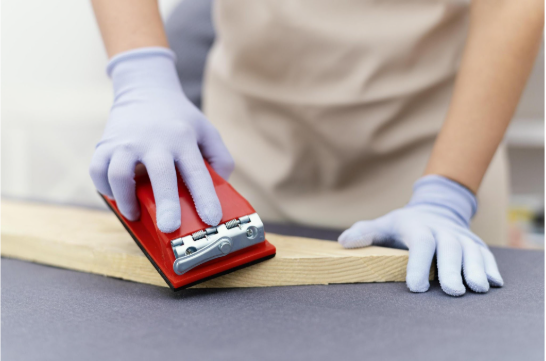
Inconsistent sanding marks, swirls, and finishes can slow you down and influence the surface finish. Although people tend to think of abrasives and sanding machines, the backup pad is also important for a smooth process.
If it is not matched properly, pressure imbalance can result, control can be lost, and abrasives can wear out sooner than anticipated. The right setup, on the other hand, helps you get more consistent sanding results, reduce the risk of damaging delicate surfaces, and achieve better contact on curves, edges, and flat areas.
The finishing quality is related to the degree of precision, so all parts of your sanding system are important from beginning to end.
This article explains why backup pads are used in woodworking and refinishing applications.
1. Enhance Surface Consistency

A good fiber disc backing pad will provide more even pressure during sanding, minimizing swirl marks and irregular sanding patterns. This means you’ll end up with a cleaner, more professional look, and less rework.
It is particularly important for use on wood, metal, primed, or painted surfaces that require a consistent appearance. Also, the correct pad for backing up the abrasive is used for sanding.
Harder pads have a heavier grip and are designed to remove material; softer pads are used to achieve a smoother finish on surfaces that are sensitive to damage. So, when the pad matches the project, the results are more predictable during sanding.
2. Extends Abrasive Life
A major problem with sanding is that the abrasives wear out too fast. But backup pads provide even support for sanding discs during use, helping alleviate excess stress on the discs. Thereby, abrasives remain in good contact with the surface and won’t need to be replaced for long.
This is also a productivity benefit, as you will spend less time changing discs during projects. Furthermore, it helps avoid edge curling, inconsistent cutting, and tearing from the pads when they are not properly supported.
Some types of backup pads are designed to release abrasives faster, and some have more holding power for film, paper, and non-woven abrasives. Selecting the right style can ensure sanding efficiency in various applications.
3. Help Sand Curves and Detailed Areas Smoothly
It is generally easier to sand flat surfaces evenly, but curved edges, profiles, and moldings require greater flexibility and control. The use of backup pads can be very useful here. The softer, more flexible pad setups conform to the contours and do not create hard pressure points that can harm the surface.
In addition, interface pads with compatible backup pads provide extra padding while sanding. The additional flexibility enables free flow at rounded edges, corners, and decorative features. The sanding process is more effective than flattening delicate contours.
This increased adaptability allows more control and decreases the chances of over-sanding certain areas. This results in a smoother finish, generally, particularly for any fine woodworking or refinishing project.
4. The Right Backup Pad Makes Dust Control More Effective
Dust accumulation may hinder sanding efficiency and make it difficult to get a smooth finish. Many modern back-up pads, however, have a dust extraction pattern that helps air to circulate while sanding. This causes sanding debris to more easily be carried away from the abrasive surface rather than being trapped beneath the disc.
More effectively removing the dust also results in a more uniform cutting action during the sanding process. Dust, which is not removed, can cause scratches, abrasive disc clogging, and lower the quality of the finishing. So, it is important to use a compatible backup pad and to have a suitable dust extraction system to assist with cleaner sanding for more uniform results.
In addition, better dust management makes it easier to see what you’re doing when sanding and makes the work area cleaner. This is particularly handy when it comes to fine finishing work, where surface clarity and precision are most important.
5. Reduce Heat And Vibration

Heat buildup can affect both sanding quality and tool performance. Fortunately, backup pads help absorb and distribute friction more efficiently during operation. This reduces heat transfer between the abrasive and the sanding machine, which protects hooks, adhesives, and sanding discs from premature wear.
At the same time, better support minimizes excessive vibration. Reduced vibration improves operator comfort and helps you maintain steadier sanding control across the surface. Consequently, the finish appears smoother because the sander remains more stable throughout the process.
Heat reduction also matters when working on coatings, finishes, or sensitive materials. Excessive friction can damage surfaces or create uneven sanding marks.
Therefore, the right backup pad setup supports both surface protection and long-term tool performance. Additionally, controlled sanding temperatures help reduce finish discoloration and lower the risk of damaging delicate coatings during extended sanding sessions.
6. Different Projects Require Different Backup Pad Designs
Not every sanding task requires the same level of firmness, flexibility, or attachment style. Because of this, backup pads are available in multiple configurations designed for specific applications. Hook and loop pads allow fast abrasive changes, J-hook styles provide stronger holding power, and PSA pads support adhesive-backed abrasives for flat sanding jobs.
Selecting the proper pad design improves both efficiency and finishing quality. For example, flexible pads work well for contours and profiles, whereas firmer pads provide better stability for flat surfaces. Similarly, vacuum-compatible pads help improve dust extraction during sanding, keeping the workspace cleaner and improving visibility.
When you choose the correct backup pad for the material and sanding style, the entire finishing process becomes more controlled, efficient, and consistent from beginning to end. Proper pad selection also helps reduce operator fatigue by improving sanding balance and minimizing unnecessary pressure during repetitive finishing tasks.
Final Thoughts
Backup pads may appear to be a small part of a sanding setup, yet they directly influence finish quality, abrasive performance, surface protection, and overall sanding control. When the correct pad supports the abrasive properly, you achieve smoother finishes with fewer defects and less wasted effort.
In addition, the right combination of firmness, flexibility, and attachment style allows you to work more effectively across flat panels, curved edges, and detailed surfaces. Backup pads also reduce vibration, control heat buildup, and help extend abrasive life during demanding projects.
Because finishing results depend on consistency and precision, choosing the appropriate backup pad is a practical step that improves efficiency, protects materials, and delivers cleaner, professional-looking surfaces across a wide range of sanding applications.