Why Do People Smoke Cigars? Culture & Habits 2026
Why do people smoke cigars is a question that goes far deeper than tobacco — it touches on history, identity, ritual, celebration, and human psychology. Cigars have been part of human culture for over five centuries, long before modern marketing or brand loyalty existed.
In 2026, millions of people around the world still light up a cigar not out of addiction but out of choice, tradition, and a desire to slow down in a fast world.
A Brief History of Cigar Smoking

Cigars have a history that stretches back more than 1,000 years. The indigenous peoples of the Americas were the first to roll and smoke tobacco leaves in rituals, ceremonies, and as medicine.
Spanish explorers brought tobacco to Europe in the 16th century after Christopher Columbus’s 1492 voyage to Cuba. What began as a medicinal curiosity quickly transformed into a luxury commodity for the European aristocracy.
By the 19th century, cigars had become a symbol of wealth, power, and sophisticated taste. In the United States, the late 1800s became known as the Golden Age of Cigars — the country had over 250,000 registered cigar brands at its peak. Famous figures from Mark Twain to Winston Churchill became inseparable from their cigars, embedding the habit into the popular imagination of success and intellect.
Cigars vs. Cigarettes: A Fundamentally Different Motivation
Before exploring why people smoke cigars, it is important to understand that cigar smoking and cigarette smoking are driven by very different motivations.
| Factor | Cigars | Cigarettes |
|---|---|---|
| Primary Motivation | Ritual, celebration, leisure | Nicotine craving, habit, stress relief |
| Frequency | Occasional, event-based | Daily, multiple times per day |
| Inhalation Method | Smoke held in mouth, not lungs | Deep lung inhalation |
| Nicotine Absorption | Slow, gradual, through mouth lining | Fast, intense, through lungs |
| Time to Smoke | 30 minutes to 2+ hours | 5–10 minutes |
| Perceived Identity | Connoisseur, celebrant, sophisticated | Habitual smoker, stress reliever |
| Social Setting | Lounges, special occasions, outdoors | Breaks, alone, any environment |
This table reveals an important truth: most cigar smokers are not addicted daily users. They are occasional participants in a cultural and sensory ritual. The motivation is entirely different from cigarette smoking.
Why Do People Smoke Cigars? 12 Core Reasons
1. Celebration and Marking Life’s Milestones
Cigars are one of the oldest celebration tools in human culture. A cigar at a wedding, a birth, a graduation, or a business victory is not just smoking — it is punctuation. It says “this moment matters.”
The tradition of handing out cigars after a baby’s birth goes back centuries. In many cultures, it was a way for a new father to announce the arrival of his child and share a bonding moment with family and close friends.
Today the tradition has expanded. Sports teams celebrate championships with cigars. Entrepreneurs celebrate funding rounds and major deals. Golfers light up after a great round. The cigar has become shorthand for “something worth celebrating.”
2. Relaxation and Mental Decompression
One of the most consistently reported reasons people smoke cigars is the deep sense of relaxation that follows. A cigar forces you to slow down — physically and mentally.
A premium cigar takes between 30 minutes and two hours to smoke. During that time, you cannot rush. You sit, breathe slowly, let your thoughts drift, and focus entirely on the sensory experience in front of you. This enforced stillness is inherently decompressive.
In a world where most people are mentally overstimulated by screens, notifications, and demands, the act of sitting quietly with a cigar creates what many describe as a meditative state. The ritual itself — cutting, lighting, the first draw — signals to the brain that it is time to disengage from urgency.
3. The Neuroscience of Nicotine: Dopamine and the Cigar Buzz
Nicotine is the primary psychoactive compound in tobacco, and it plays a real neurological role in why cigars feel relaxing and enjoyable. When nicotine is absorbed — even slowly through the mouth’s mucous membranes — it triggers the release of dopamine in the brain.
Dopamine is the neurotransmitter associated with reward, pleasure, and well-being. This is why the first few puffs of a cigar produce a gentle head rush — often described as a “cigar buzz” — that feels like tension leaving the body.
The key difference is that cigar smokers typically do not inhale deeply. This means nicotine is absorbed more slowly and gradually compared to cigarette smoking. The result is a softer, more sustained calm rather than the intense rapid spike associated with lung-inhaled smoke. Some research also suggests that nicotine at low doses triggers the release of beta-endorphins — the body’s natural stress-relief chemicals.
4. The Ritual Itself: Cutting, Lighting, Savoring
For many cigar enthusiasts, the ritual surrounding a cigar is just as meaningful as the smoke itself. Every step is intentional: selecting the cigar, examining the wrapper leaf, choosing a cutter, making a precise cut, toasting the foot, and performing the first light.
These steps take several minutes and require full attention. In behavioral psychology, this kind of deliberate, multi-step ritual creates what is known as a “behavioral pause” — a mental break from automatic thought patterns and stress loops.
Cigar expert Benjamin Patock describes cigar smokers as “pleasure-oriented, confident people.” The ritual is not a chore; it is part of the pleasure. It is the opposite of a vending machine transaction. It is slow, considered, and personal.
5. Social Bonding and Community
Cigar smoking is inherently social. Cigar lounges, clubs, and events bring together people across age groups, professions, and backgrounds in a shared sensory experience.
There is something unique about the pacing of cigar conversation. Because a cigar demands patience and lasts up to two hours, conversations deepen naturally. You cannot rush a cigar lounge discussion the way you rush a coffee break. Deep topics get explored. Friendships form.
Cigar lounges have long served as informal networking spaces for business people, creatives, and professionals. The relaxed, unhurried atmosphere lowers social defenses and creates genuine connection. Many longtime smokers say their most meaningful friendships were formed or deepened over cigars.
6. Status, Success, and Self-Identity
Cigars carry a powerful symbolic weight in global culture. They are associated with success, confidence, power, and accomplishment — associations built over centuries and reinforced by some of the most iconic figures in modern history.
Winston Churchill was rarely photographed without a cigar. Che Guevara, John F. Kennedy, Mark Twain, and Groucho Marx were all known cigar smokers whose identities became partly defined by the image. In business culture, “victory cigars” remain a recognized ritual after a major deal closes.
For many people, smoking a cigar is a conscious act of self-presentation. It signals that they have arrived — that they can afford the time, the quality, and the occasion. Cigars communicate without words.
7. Flavor Exploration and Connoisseurship
Premium cigars offer an extraordinarily complex flavor profile that cigarettes simply cannot replicate. Depending on the tobacco’s origin, fermentation process, wrapper leaf, and construction, a single cigar can deliver notes of cedar, leather, earth, cocoa, coffee, cream, nuts, spice, and pepper.
This complexity appeals to people who appreciate artisanal food, wine, whiskey, or specialty coffee. The language of cigar tasting mirrors that of wine: body, finish, balance, retrohale, construction, burn quality. Exploring this flavor landscape is genuinely intellectually engaging.
Many cigar enthusiasts become lifelong learners of tobacco geography — the difference between a Nicaraguan puro, a Dominican blend, a Honduran leaf, and a Cuban Habanos. This educational dimension keeps the hobby compelling and never repetitive.
8. Pairing Culture: Cigars With Whiskey, Coffee, and Wine
One of the fastest-growing areas of cigar culture in 2026 is pairing — the intentional matching of a cigar’s flavor profile with a complementary beverage. This has turned cigar smoking from a solitary habit into a full sensory experience.
A medium-bodied, creamy cigar pairs beautifully with a single malt Scotch whiskey. A bold, peppery Nicaraguan cigar can elevate an aged bourbon. A mild, Connecticut-wrapped cigar softens perfectly alongside a black espresso or a light red wine.
This pairing culture gives cigars an entry point for people who are already enthusiasts of craft beverages. It positions cigar appreciation in the same category as sommelier culture and whiskey collecting — a refined, educated sensory practice.
| Cigar Strength | Flavor Notes | Best Pairing |
|---|---|---|
| Mild (Connecticut wrapper) | Cream, cedar, light spice | Espresso, light white wine, mild rum |
| Medium (Dominican, Honduran) | Nuts, cocoa, earth, leather | Bourbon, aged rum, Malbec |
| Full (Nicaraguan, Ligero) | Pepper, dark chocolate, wood | Peated Scotch, strong coffee, Cabernet |
| Maduro (fermented wrapper) | Sweet, cocoa, espresso | Dessert wine, cognac, dark beer |
9. Craftsmanship and Appreciation of Artistry

Premium cigars are among the most labor-intensive consumer products in the world. A single hand-rolled premium cigar may take a master roller (torcedor) years of training to make correctly.
The curing of the tobacco leaves, the fermentation process, the aging of the filler and binder tobaccos, the selection of the wrapper leaf — each step affects the final flavor and smoking experience. In regions like Cuba, Nicaragua, the Dominican Republic, and Honduras, cigar-making is a multigenerational craft tradition.
For many smokers, part of the pleasure is knowing what went into the object in their hand. Lighting a handmade cigar is an acknowledgment of craftsmanship in a world dominated by mass production. It is the tobacco equivalent of choosing a handmade piece of furniture or a hand-stitched leather boot.
10. Masculine Tradition and Rite of Passage
Cigar smoking has long carried strong associations with masculinity — not in an exclusionary sense, but as a cultural rite of passage. In many families and cultures, sharing a cigar marks a moment of transition: from boy to man, from student to professional, from single to married.
A father handing his son a cigar at his college graduation is not just sharing tobacco — he is performing a cultural transfer of identity and belonging. This rite-of-passage aspect gives cigars meaning that no other product quite replicates.
This tradition is evolving, however. The modern cigar community has broadened considerably, and the idea of cigars as exclusively male territory is fading. The ritual and symbolism remain powerful regardless of gender.
11. The Growing Female Cigar Community
One of the most significant shifts in cigar culture in recent years is the rapid growth of female cigar smokers. Women now make up an estimated 15–20% of the cigar-buying market in the United States, a figure that has grown steadily since the early 2000s.
Women are drawn to cigars for many of the same reasons as men — relaxation, flavor exploration, social connection, and celebration. Female-led cigar events, women’s cigar clubs, and female cigar influencers have created a visible and growing community.
This demographic shift has pushed premium cigar brands to expand their marketing, events, and product offerings beyond the traditional male-only cigar lounge aesthetic. The culture is more inclusive and diverse in 2026 than it has ever been.
12. Mindfulness and Slowing Down
In an era defined by speed, distraction, and digital overwhelm, the cigar offers something genuinely rare: a reason to be completely present for an extended period of time.
You cannot smoke a premium cigar while scrolling on your phone, eating, or walking briskly. The act demands presence. It demands that you sit down, breathe deliberately, and focus on the experience in front of you. This enforced mindfulness is one of the most underappreciated benefits of cigar culture.
Many cigar enthusiasts describe their smoking time as their most reflective and creatively productive. Decisions get clearer. Problems become smaller. The mind does its best work when it is allowed to rest — and a long, slow cigar is one of the most reliable ways to create that condition.
Cigar Smoking by Occasion: When People Light Up
Not all cigar smokers follow the same patterns. Understanding when people smoke cigars helps explain the motivations more clearly.
| Occasion | Who Smokes | Motivation |
|---|---|---|
| Wedding / bachelor party | Groom, groomsmen, close family | Celebration, tradition, bonding |
| Birth of a child | New father, family, close friends | Announcement, shared joy |
| Business deal closing | Executives, entrepreneurs | Victory, status, bonding |
| Golf round | Recreational golfers | Leisure, sport culture, camaraderie |
| End of workday | Professionals, enthusiasts | Relaxation, decompression, reward |
| Cigar lounge visit | Aficionados, collectors | Flavor, community, ritual |
| New Year / holiday | Occasional smokers | Celebration, tradition |
| Graduation | Graduates, family | Achievement, rite of passage |
This table shows that the vast majority of cigar smoking is tied to positive life events or intentional leisure — not daily dependence. This is what fundamentally distinguishes the cigar world from cigarette culture.
The Cigar Lounge: A Cultural Institution
The cigar lounge is one of the most distinctive environments in modern leisure culture. It is a space designed specifically for slowing down — leather armchairs, low lighting, quality beverages, and the shared understanding that no one is in a hurry.
Cigar lounges function as community centers for enthusiasts. Regulars develop relationships over months and years. Staff become trusted advisors for choosing new blends. Newcomers are welcomed into a world that rewards curiosity and patience.
Many premium tobacco shops offer walk-in humidor rooms — large climate-controlled spaces where hundreds of cigar boxes are displayed and available for personal selection. Browsing a walk-in humidor is itself a sensory experience, with the rich smell of aging tobacco filling the air.
In cities across the United States, Europe, and Latin America, the cigar lounge is experiencing a renaissance in 2026. Younger enthusiasts are discovering the culture through social media, events, and whiskey-and-cigar pairing nights. The community is growing, diversifying, and innovating.
Types of Cigars and Their Typical Smoker Profiles
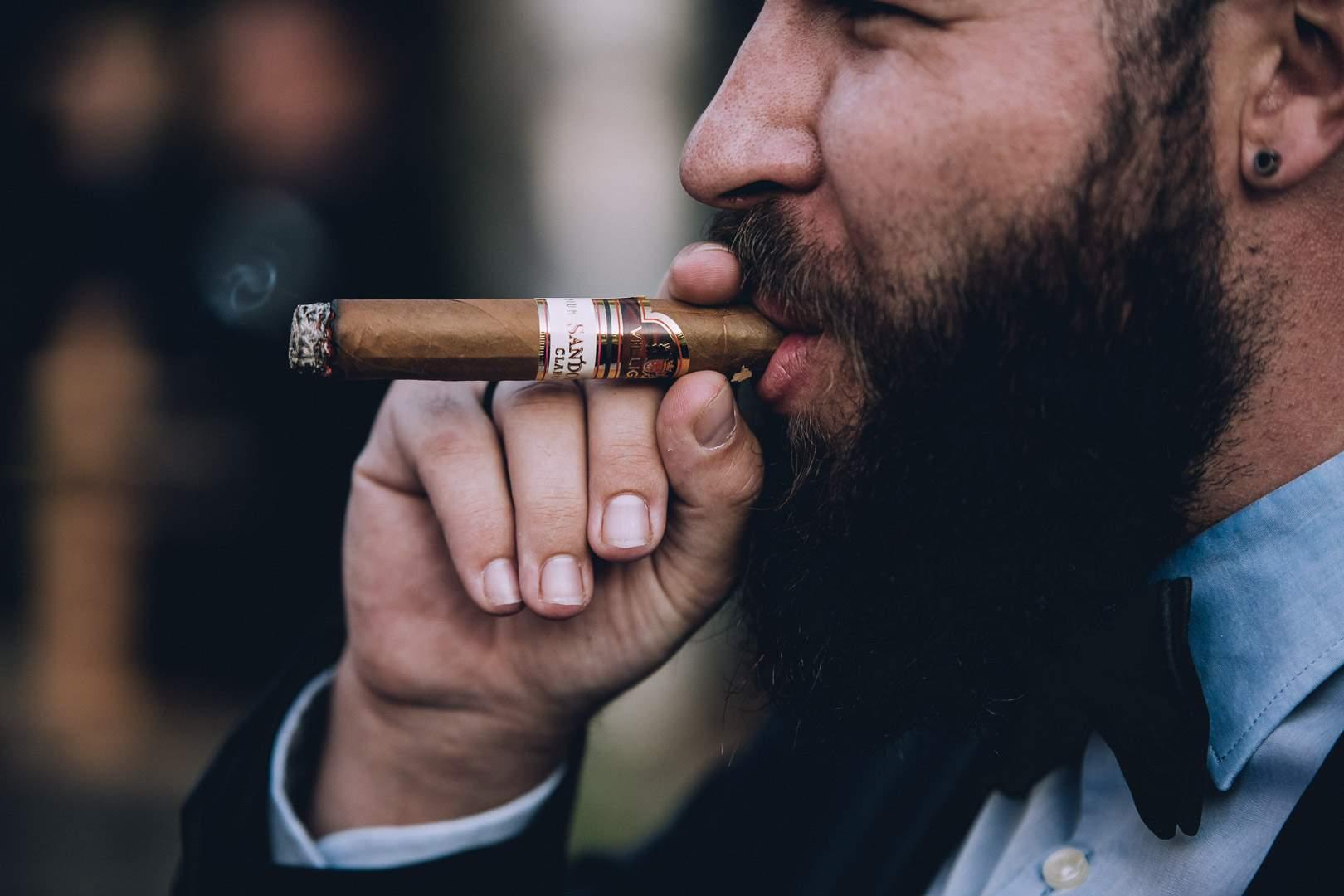
| Cigar Type | Description | Typical Smoker Profile |
|---|---|---|
| Premium Hand-Rolled | Hand-crafted, natural leaf wrapper, 30–120 min smoke | Enthusiast, connoisseur, collector |
| Cigarillo | Small, quick smoke, 10–15 minutes | Social smoker, occasional celebrant |
| Machine-Made | Consistent, affordable, widely available | Casual smoker, budget-conscious |
| Flavored Cigar | Infused with vanilla, honey, rum etc. | New smokers, those preferring mild sweetness |
| Cuban Habanos | Highly regulated, prestigious origin | Collector, status-conscious smoker |
| Maduro | Dark fermented wrapper, rich sweet flavor | Experienced smoker seeking complexity |
How Cigar Culture Differs Around the World
Cigar culture is not uniform — it varies dramatically by country, class, and tradition.
In Cuba, cigars are a matter of national identity. The island produces some of the world’s most sought-after tobacco, and Havana remains the spiritual homeland of cigar culture. Local Cubans have smoked cigars for centuries as a daily cultural practice, not a luxury indulgence.
In the United States, cigars have historically been tied to business, sport, and male social rituals. American cigar culture surged in the 1990s with the “Cigar Boom” and is experiencing another growth cycle in the mid-2020s driven by a younger, more diverse demographic.
In Europe — particularly in Germany, Switzerland, and the United Kingdom — cigar smoking carries strong associations with intellectual and artistic life. Mark Twain, Sigmund Freud, and numerous philosophers and writers were noted cigar smokers.
In Latin American countries such as the Dominican Republic, Honduras, and Nicaragua, cigar production is a major industry and cultural cornerstone. The master rollers in these countries are respected artisans, and local cigar culture is deeply embedded in daily life.
What the Research Says: Why People Report Smoking Cigars
The Population Assessment of Tobacco and Health (PATH) Study asked thousands of cigar smokers directly why they use cigars. The most commonly reported reasons were:
| Reported Reason | Percentage Reporting |
|---|---|
| Enjoyment / pleasure | 82% |
| Relaxation | 76% |
| Social reasons / with others | 54% |
| Celebration / special occasion | 49% |
| Flavor / taste appeal | 47% |
| Stress relief | 43% |
| Part of a routine / ritual | 38% |
| Image / status association | 22% |
Source: Population Assessment of Tobacco and Health (PATH) Study, 2013–2014 (published in Nicotine & Tobacco Research)
Enjoyment and relaxation dominate — reinforcing the view that cigars are primarily a leisure and sensory experience rather than a dependence-driven habit for most users.
Health Considerations: What Every Cigar Smoker Should Know
While this article explores why people smoke cigars culturally and psychologically, no honest discussion of cigar smoking is complete without acknowledging the health risks.
Regular cigar smoking is associated with increased risk of cancers of the mouth, throat, esophagus, and lung. The risk of oral cancer is elevated even for smokers who do not inhale. Cardiovascular disease and chronic obstructive pulmonary disease (COPD) are also linked to regular cigar use.
The key phrase is “regular.” Research consistently shows that occasional, non-inhaling cigar smokers face lower absolute risks than daily cigarette smokers. However, “lower risk” is not “no risk.” Any use of tobacco products carries health implications.
Nicotine is also addictive regardless of the delivery method. While most premium cigar smokers smoke infrequently, daily or near-daily use can establish nicotine dependence even without lung inhalation.
Anyone considering cigar smoking — or already smoking — should discuss their habits with a healthcare professional for personalized guidance.
Tips for Beginners Exploring Cigar Culture
If you are curious about cigar culture and considering trying a cigar for the first time, a few basic guidelines will make the experience far better.
Start Mild. A Connecticut shade-wrapped cigar is the classic recommendation for beginners. It is light, creamy, and forgiving — unlikely to cause the nausea that can accompany a full-bodied cigar for a new smoker.
Do Not Inhale. Cigars are meant to be puffed and savored in the mouth, not inhaled into the lungs. Inhaling a cigar will cause significant discomfort and is not how cigars are traditionally enjoyed.
Pace Yourself. One to two puffs per minute is approximately the right pace. Smoking too fast overheats the cigar, destroys the flavor, and can cause bitterness and discomfort.
Visit a Cigar Lounge. The staff at a quality cigar lounge will ask about your preferences and guide you to an appropriate first cigar. This guided introduction is far better than buying online without knowledge.
Pair Thoughtfully. Start with a mild cigar and a simple espresso or sparkling water. Avoid alcohol until you know how your body responds to nicotine on its own.
Frequently Asked Questions (FAQs)
Q1. Why do people smoke cigars if they know the health risks?
Most cigar smokers smoke infrequently and view the experience as a deliberate, occasional indulgence — similar to how some people drink alcohol or eat red meat despite knowing the health considerations.
Q2. Why do rich people smoke cigars?
Cigars have centuries-long associations with wealth, power, and sophistication. Premium cigars are expensive, slow, and demand leisure time — all signals of financial and social status that affluent individuals have long used to communicate success.
Q3. Is cigar smoking a hobby?
Yes. For millions of people worldwide, cigar smoking is a legitimate hobby centered on flavor appreciation, craftsmanship knowledge, collection, and community — similar to wine collecting or whiskey appreciation.
Q4. Do people actually enjoy the taste of cigars?
Yes. Premium cigars deliver complex flavors — leather, cedar, cocoa, spice, cream, earth — that experienced smokers find genuinely pleasurable. Taste appreciation develops with exposure and knowledge, similar to appreciating fine wine.
Q5. Why do athletes and sports teams smoke cigars to celebrate?
Cigars have been a victory ritual in sports culture for generations. They signal triumph, reward hard work, and create a shared bonding moment — the cigar is the physical embodiment of “we did it.”
Q6. Why is cigar smoking considered relaxing?
The slow pace, the enforced stillness, the sensory engagement, and nicotine’s gradual dopamine-triggering effect combine to create a genuinely calming physiological and psychological state for most cigar smokers.
Q7. Are cigars more socially acceptable than cigarettes?
In many social contexts, yes. Cigars are associated with occasional, intentional use rather than daily addiction. Cigar lounges are dedicated social spaces, and the cultural framing around cigars is more celebratory than habitual.
Q8. Why do people smoke cigars but not inhale?
Cigar tobacco is fermented differently from cigarette tobacco and is not designed for lung inhalation. The flavor and nicotine are absorbed through the mouth’s mucous membranes. Inhaling cigar smoke is painful and is not how cigars are traditionally used.
Q9. How are cigars different from cigarettes in terms of why people use them?
Cigarettes are primarily driven by nicotine dependence and daily habit. Cigars are primarily driven by occasion, ritual, relaxation, flavor exploration, and social bonding. The motivations and usage patterns are fundamentally different for most users.
Q10. Is the cigar culture growing or declining in 2026?
Cigar culture is growing. Annual U.S. cigar consumption doubled between 2000 and 2016, and the market has continued expanding. Younger demographics and growing female participation are driving a cultural renewal of interest in premium cigars.
Conclusion
Why do people smoke cigars is ultimately a question about human nature — our need for ritual, community, celebration, and stillness.
Cigars have endured for over five centuries because they fulfill something real: a structured pause, a shared experience, a sensory journey, and a moment of acknowledged accomplishment. In 2026, the cigar world is more diverse, more educated, and more culturally rich than at any point in its history.
Whether it is a Cuban Habanos shared between business partners, a mild Connecticut on a quiet porch, or a bold Nicaraguan at a cigar lounge among friends, the cigar remains one of humanity’s most enduring leisure rituals.
Understanding why people smoke cigars means understanding something fundamental about how humans mark time, build bonds, and celebrate life — one slow, deliberate puff at a time.