Why Does My Cat Bite Me When I Pet Her: Causes Explained 2026
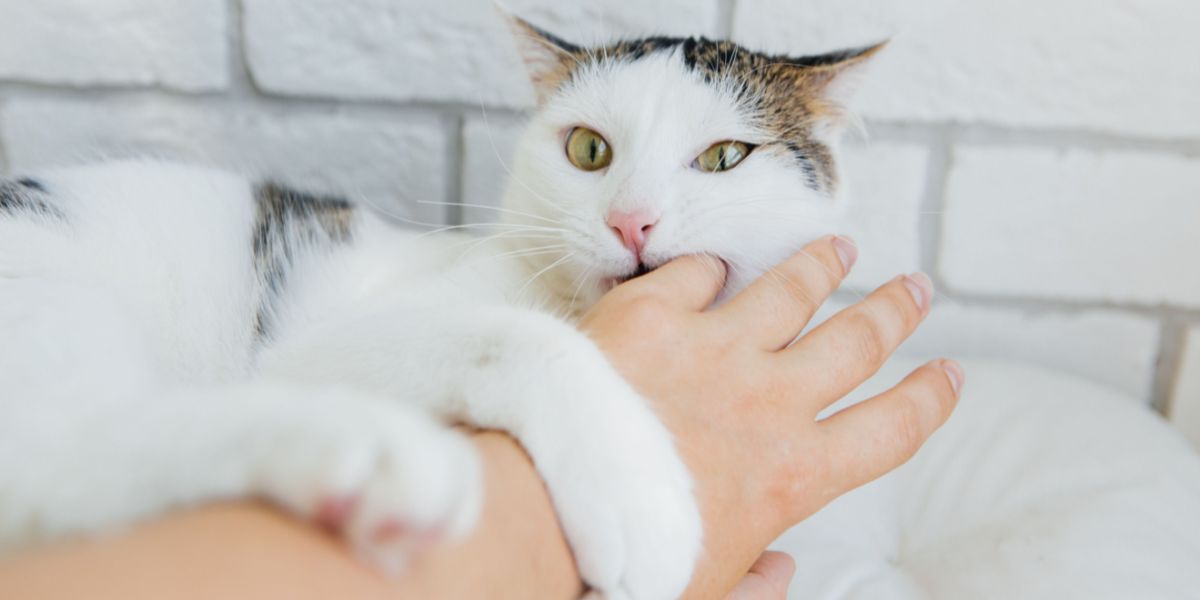
Why does my cat bite me when I pet her? If you have asked this question, you are not alone.
Millions of cat owners experience this confusing moment — one second your cat is purring peacefully in your lap, the next she has nipped your hand.
This behavior is called petting-induced aggression, and it is far more common than most people realize.
Understanding the real causes behind it can help you build a stronger, safer bond with your feline companion.
What Is Petting-Induced Aggression in Cats?
Petting-induced aggression, also called overstimulation aggression, happens when a cat bites during or after a petting session. It is not a sign that your cat hates you or is being mean.
It simply means your cat has reached her comfort limit and is using the only language she knows — a bite — to tell you to stop. Recognizing this distinction is the first step to fixing the problem.
How Common Is This Behavior?
This is one of the most frequently reported cat behavior complaints among pet owners worldwide. It affects cats of all ages, breeds, and backgrounds.
Even cats that are generally affectionate and social can display petting-induced aggression. The behavior is not a character flaw — it is a natural feline communication style that humans often misread.
Top Causes: Why Does My Cat Bite Me When I Pet Her
1. Overstimulation — The Number One Reason
Overstimulation is the leading cause of biting during petting sessions. Cats have highly sensitive nerve endings across their skin, and what starts as a pleasant sensation can quickly become irritating.
When the same spot is stroked repeatedly, it can send the cat’s nervous system into overdrive. The bite is her way of saying, “That’s enough now.”
2. She Has Reached Her Petting Threshold
Every cat has a personal tolerance level for physical contact. Some cats enjoy long cuddle sessions; others can only handle a few strokes before they want space.
Once your cat hits her threshold, she will communicate it — usually with a bite if her earlier, subtler signals were ignored. Each cat’s threshold is different and can even vary by day or mood.
3. Love Bites — Affection, Not Aggression
Not every bite is a bad sign. Some cats give what are known as “love bites” — gentle nibbles that do not break the skin. These often happen when a cat is relaxed, content, and engaged in a bonding moment.
Love bites are usually soft, paired with purring, and occur during calm petting. They are a leftover behavior from kittenhood when cats nibbled on littermates during grooming sessions.
4. She Does Not Like Where You Are Petting Her
Cats have preferred and sensitive zones on their body. Most cats enjoy being touched around the head, chin, cheeks, and the back of the neck.
Areas like the belly, base of the tail, legs, and paws are commonly disliked. If you pet her in a zone she finds uncomfortable, she will bite to redirect you — even if she seemed relaxed moments earlier.
| Pet-Friendly Zones | Zones to Avoid |
|---|---|
| Top of the head | Belly |
| Cheeks and chin | Base of the tail |
| Behind the ears | Legs and paws |
| Back of the neck | Along the tail length |
5. Play Instinct and Hunting Behavior
Cats are natural hunters. Fast-moving hands during a petting session can trigger their predatory instinct, making your hand look like prey.
Kittens that were allowed to play with human hands and feet often carry this habit into adulthood. The biting feels playful to them but can be painful to you.
6. Pain or Underlying Health Issues
A sudden change in biting behavior — especially if your cat was never a biter before — can be a red flag for a medical problem. Conditions such as arthritis, dental disease, skin irritation, or dermatitis can make petting painful.
If your cat bites when you touch a specific spot consistently, schedule a vet visit. Pain-triggered biting is not behavioral — it is a health signal that needs professional attention.
7. Fear and Stress
Cats are highly sensitive to changes in their environment. New pets, unfamiliar visitors, moving furniture, or loud noises can raise a cat’s stress levels significantly.
A stressed cat has a much lower tolerance for petting. She may bite defensively not because she dislikes you, but because she is already overwhelmed and the petting is one thing too many.
8. Poor Socialization as a Kitten
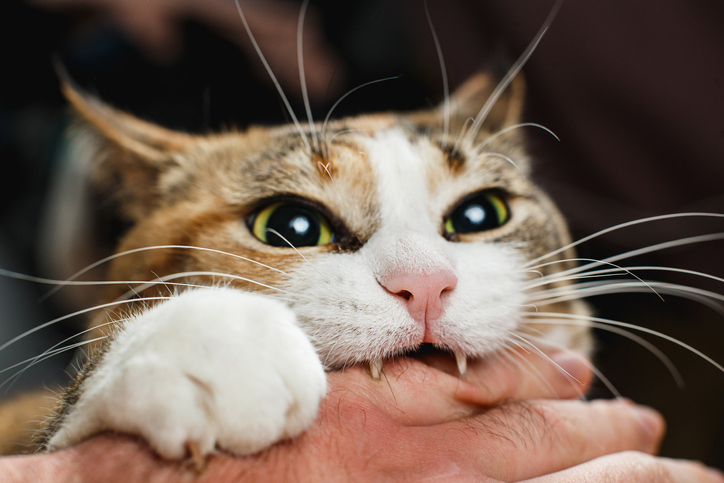
Kittens that grew up without littermates or a mother cat may never have learned proper bite inhibition. They did not have other cats to teach them how hard is too hard.
These cats often bite more intensely and with less warning than well-socialized cats. Gentle, consistent training can help them develop better habits over time.
9. Redirected Aggression
Sometimes a cat is already agitated by something — a stray cat outside the window, a loud noise, or a stressful interaction — and your hand just happens to be nearby when she boils over.
This is called redirected aggression. She is not actually angry at you; you are simply the closest target. Giving her space after this type of bite is the safest response.
10. She Simply Wants to Be in Control
Cats are deeply independent animals. Even the most affectionate cat wants to decide when interaction starts and ends. When she feels like the petting session is being forced on her terms, she will assert control through a bite.
Letting her initiate contact and set the pace of interaction significantly reduces the chance of biting. Respecting her autonomy builds long-term trust.
Warning Signs Your Cat Is About to Bite
Most cats give several clear warning signals before biting. The problem is that humans often miss them, especially while distracted by TV, phones, or conversation.
Learning to read these signals is the single most effective way to prevent biting before it happens.
Early Warning Signs
These are the subtle first signals your cat gives when she is becoming uncomfortable:
- Tail begins to twitch or flick
- Skin along the back ripples or twitches
- Ears rotate or flatten slightly
- Body becomes slightly tense
- She stops purring
Escalating Warning Signs
If early signals are ignored, your cat will communicate more clearly:
- Tail swishes rapidly or thumps
- Ears flatten completely against the head
- Pupils dilate
- She stiffens or freezes
- She turns to look at your hand directly (or gives a side eye)
Final Warning Before the Bite
At this stage, a bite is moments away:
- A sudden growl or low vocalization
- Pulling her head back
- Leaning her body away
- Swatting at your hand without claws
If you notice any of these signs — stop petting immediately, withdraw your hand calmly, and give her space.
How to Tell the Difference Between a Love Bite and an Aggressive Bite
Understanding the type of bite your cat is giving helps you respond correctly.
| Feature | Love Bite | Aggressive Bite |
|---|---|---|
| Pressure | Gentle, no pain | Hard, can break skin |
| Skin broken | Rarely | Often |
| Body language | Relaxed, purring | Tense, ears flat |
| Tail position | Still or slow swish | Rapid thrashing |
| Context | Mid-cuddle, calm | Overstimulated, stressed |
| Eyes | Soft, slow blink | Wide, dilated pupils |
Love bites are generally not a concern. Aggressive bites that break the skin need to be taken seriously — both for your safety and for what they tell you about your cat’s stress or pain levels.
Where Should You Pet Your Cat (and Where to Avoid)
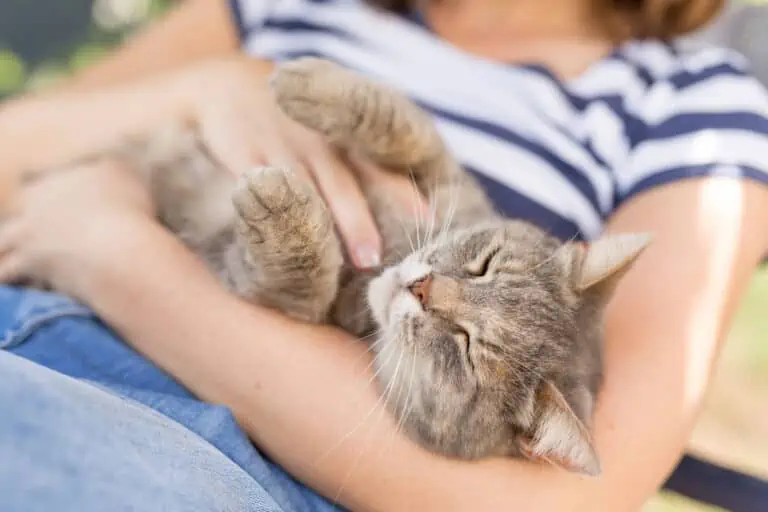
Understanding your cat’s preferred petting zones dramatically reduces biting incidents. Most cats follow a fairly consistent pattern of what they like and dislike.
Safe Zones for Most Cats
Head scratches, chin rubs, and cheek strokes are almost universally enjoyed. These areas correspond to where cats naturally groom each other, which is why they feel comforting.
Behind the ears is another popular spot. Many cats will lean into your hand and even close their eyes when you scratch this area gently.
Zones That Often Trigger Biting
The belly is the most common trigger zone. Even if your cat rolls over and exposes her stomach, this is often a sign of trust — not an invitation to rub. Touching the belly can feel threatening to many cats.
The base of the tail and along the tail itself are also highly sensitive. Some cats find these spots intensely stimulating in an unpleasant way, and biting is a very common response.
How to Stop Your Cat From Biting When You Pet Her
Do a Consent Test Before Petting
Hold your hand about an inch from your cat’s nose or face. If she moves toward it, rubs against it, or leans in — she is giving you consent to pet her. If she pulls back, turns away, or ignores it, she is not in the mood.
This simple step avoids dozens of unwanted biting incidents.
Keep Petting Sessions Short
Start with just a few seconds of petting. Pause. Check her body language. If she seems relaxed and interested, continue for a few more seconds.
This teaches your cat that you respect her limits and builds positive associations with petting over time.
Stop Before She Reaches Her Threshold
If you know your cat bites after about three minutes of petting, stop at one and a half minutes. Always leave her wanting more rather than reaching her limit.
Consistently stopping early teaches her that petting sessions end before they become unpleasant. Over weeks, many cats gradually increase their tolerance.
Never Punish the Bite
Hitting, yelling, spraying water, or flicking your cat’s nose will not reduce biting. It will increase fear, damage trust, and often make the biting worse.
Your cat was communicating — however imperfectly. Punishment teaches her to skip the warnings and go straight to a bite next time because nothing else worked.
Use Toys to Redirect Play Biting
If your cat bites during play, immediately redirect her attention to an appropriate toy — a wand toy, a feather, or a crinkle ball. Never use your hands or feet as toys.
Doing this consistently teaches her over time that toys are for biting and hands are not.
Increase Daily Playtime
Overstimulation biting is sometimes rooted in boredom or pent-up energy. A cat that gets a solid interactive play session daily — chasing a wand toy, stalking a laser pointer — is a calmer, less reactive cat overall.
Aim for at least two ten-minute play sessions per day using toys that mimic prey movement.
Try Counter-Conditioning
Counter-conditioning means building a positive association with petting by pairing it with something your cat loves — usually treats. Pet her for one second, then immediately give a treat.
Repeat this dozens of times over days and weeks, very gradually extending the petting duration. Done patiently, this can significantly raise her petting threshold.
Rule Out Medical Causes
If your cat’s biting has become sudden or more intense, visit your vet before trying behavioral changes. Pain from arthritis, dental disease, skin conditions, or internal illness can make any touch uncomfortable.
A clean bill of health confirms the issue is behavioral. If a health problem is found, treating it may resolve the biting entirely without any behavioral work needed.
What to Do Immediately After Your Cat Bites You
Staying calm is the most important thing. Do not yell, chase, or punish your cat — this will escalate things.
Quietly withdraw your hand, stand up slowly if she is in your lap, and walk away. Give her five to ten minutes of complete space with no interaction.
If the bite broke skin, clean the wound immediately with soap and warm water, pat it dry, and cover it with a clean bandage. Cat bites carry a high risk of bacterial infection because of the bacteria in cat saliva. If the area becomes red, swollen, warm, or you develop a fever, seek medical attention promptly.
Special Cases: Kittens vs. Adult Cats
Kittens Who Bite During Petting
Kittens bite far more frequently than adult cats. This is completely normal — biting is part of how they explore the world and learn social behavior.
The key is never allowing a kitten to bite hands or feet during play. Redirect immediately to toys every single time. Most kittens naturally bite less as they mature if this is handled consistently.
Adult Cats Who Suddenly Start Biting
A previously non-biting adult cat that suddenly starts biting during petting is a more serious concern. This change often points to a health issue, a recent environmental stressor, or a new source of anxiety.
Track when the biting happens. Does it follow a pattern — same time of day, same area of the body, same household event? This information is valuable for your vet or a feline behaviorist.
Cat Breeds More Prone to Petting Sensitivity
While any cat can display petting-induced aggression, certain breeds and temperament types tend to have lower petting thresholds.
| Breed / Type | Petting Sensitivity |
|---|---|
| Siamese | High — very vocal about limits |
| Bengal | High — active and stimulation-prone |
| Russian Blue | Moderate — selective about contact |
| Domestic shorthair | Varies widely by individual |
| Maine Coon | Generally lower — more tolerant |
| Ragdoll | Generally lower — bred for calm temperament |
Breed tendencies are never guaranteed. Individual personality, early socialization, and health always play a larger role than breed alone.
Building a Stronger Bond Through Respectful Interaction
The goal is not to stop petting your cat — it is to learn her language. Every cat is different, and learning your cat’s specific cues, preferences, and limits is one of the most rewarding parts of cat ownership.
When you consistently respect her signals and stop before she reaches her threshold, something interesting happens — she starts initiating contact more often. She trusts that you will listen, and that trust makes her more comfortable being close to you.
A cat that bites during petting is not a broken cat. She is simply a cat that has not yet been fully understood.
Frequently Asked Questions (FAQs)
Why does my cat bite me gently while purring?
This is likely a love bite — a sign of affection and contentment. Gentle nibbles during purring are your cat’s way of bonding, not hurting you.
Why does my cat bite me out of nowhere during petting?
Your cat almost certainly gave warning signals you missed — tail twitching, skin rippling, or ear flattening. The bite felt sudden to you but was not sudden from her perspective.
Is it normal for cats to bite when being petted?
Yes, it is very common and is called petting-induced aggression or overstimulation. It does not mean your cat is aggressive or dislikes you.
Why does my cat bite me on the hand specifically?
Your hand is the petting tool, so it becomes the target when she has had enough. She is not attacking you personally — she is stopping the sensation your hand is creating.
Can I train my cat to stop biting during petting?
Yes. Consistent redirection, short petting sessions, consent testing, and counter-conditioning with treats can significantly reduce or eliminate biting over time.
Why does my cat bite me after I stop petting her?
This can be a demand bite — she wants more petting and is frustrated you stopped. It can also happen if she is still overstimulated after you stop; give her space for a few minutes.
Does my cat bite me because she hates me?
No. Petting bites are a communication behavior, not a rejection. Cats that hate handling typically hiss, hide, or flee — not bite during cuddles.
Should I go to the doctor if my cat bites me?
If the bite breaks skin, clean it immediately. If it becomes red, swollen, or infected, see a doctor. Cat bites are prone to infection from oral bacteria and should never be ignored.
Why does my older cat suddenly bite me when she never used to?
A sudden change in behavior in an older cat often signals pain — arthritis, dental disease, or another age-related condition. A vet visit is strongly recommended.
Why does my cat bite me but not other family members?
She may associate you with longer petting sessions that push her limits. She may also be more relaxed with others who pet her less frequently or more gently. Adjusting your petting style can change this.
Conclusion
Why does my cat bite me when I pet her? The answer almost always comes back to communication.
Your cat is not being aggressive, vindictive, or mean — she is telling you something in the clearest way she knows how.
Petting-induced aggression is one of the most misunderstood cat behaviors, but it is also one of the most manageable.
By learning to read her body language, respecting her petting threshold, avoiding her sensitive zones, and keeping sessions short and positive, you can transform a frustrating biting habit into a respectful, trusting relationship.
If biting is sudden or severe, always rule out a medical cause first. Pain is a powerful trigger, and no amount of behavioral training will fix a bite that is rooted in physical discomfort.
With patience, consistency, and a genuine effort to understand what your cat is telling you, biting during petting can become a thing of the past. Your cat wants to connect with you — she just needs you to learn her language first.