Why Does My Cat Bite Me? Signs You Shouldn’t Ignore 2026
Why does my cat bite me is one of the most searched questions by cat owners worldwide.
If your cat has ever nipped your hand out of nowhere, you know how confusing and sometimes painful it can be.
Cat biting is rarely random. It is almost always your feline trying to communicate something important.
Understanding the reason behind the bite is the first step toward a healthier and happier relationship with your cat.
Why Does My Cat Bite Me: 10 Real Reasons Explained
Understanding cat biting starts with knowing what type of bite you are dealing with. Not every bite means your cat is aggressive or angry.
There are two main categories: love bites and aggressive bites. Each sends a very different message.
The Difference Between a Love Bite and an Aggressive Bite
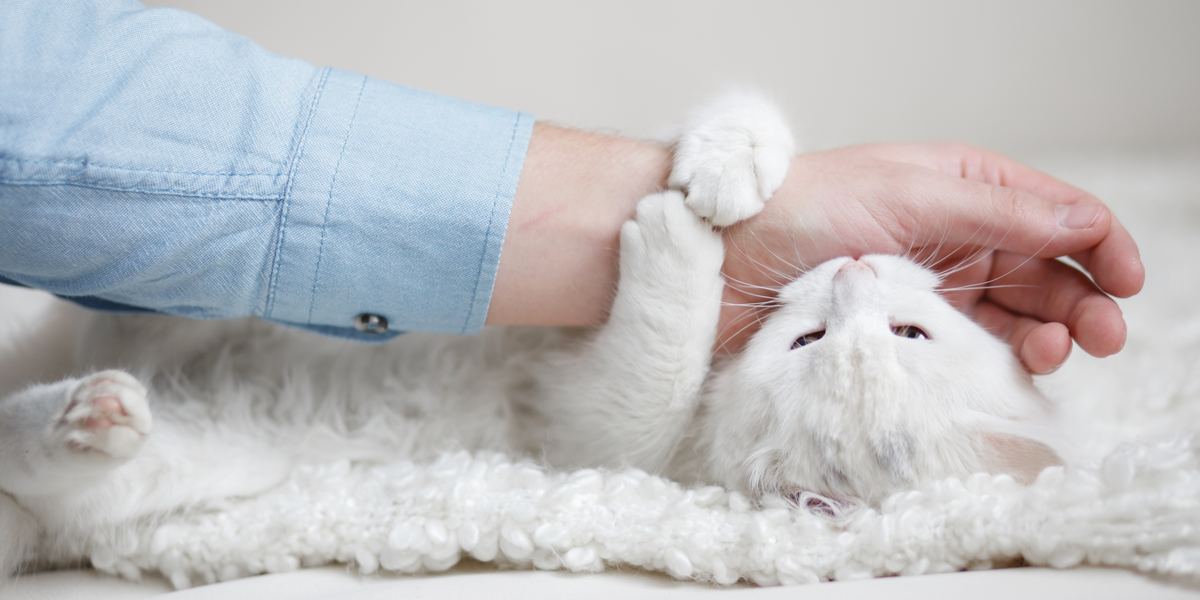
A love bite is gentle, does not break the skin, and usually happens during petting or cuddling. Your cat looks relaxed, may be purring, and shows no signs of tension.
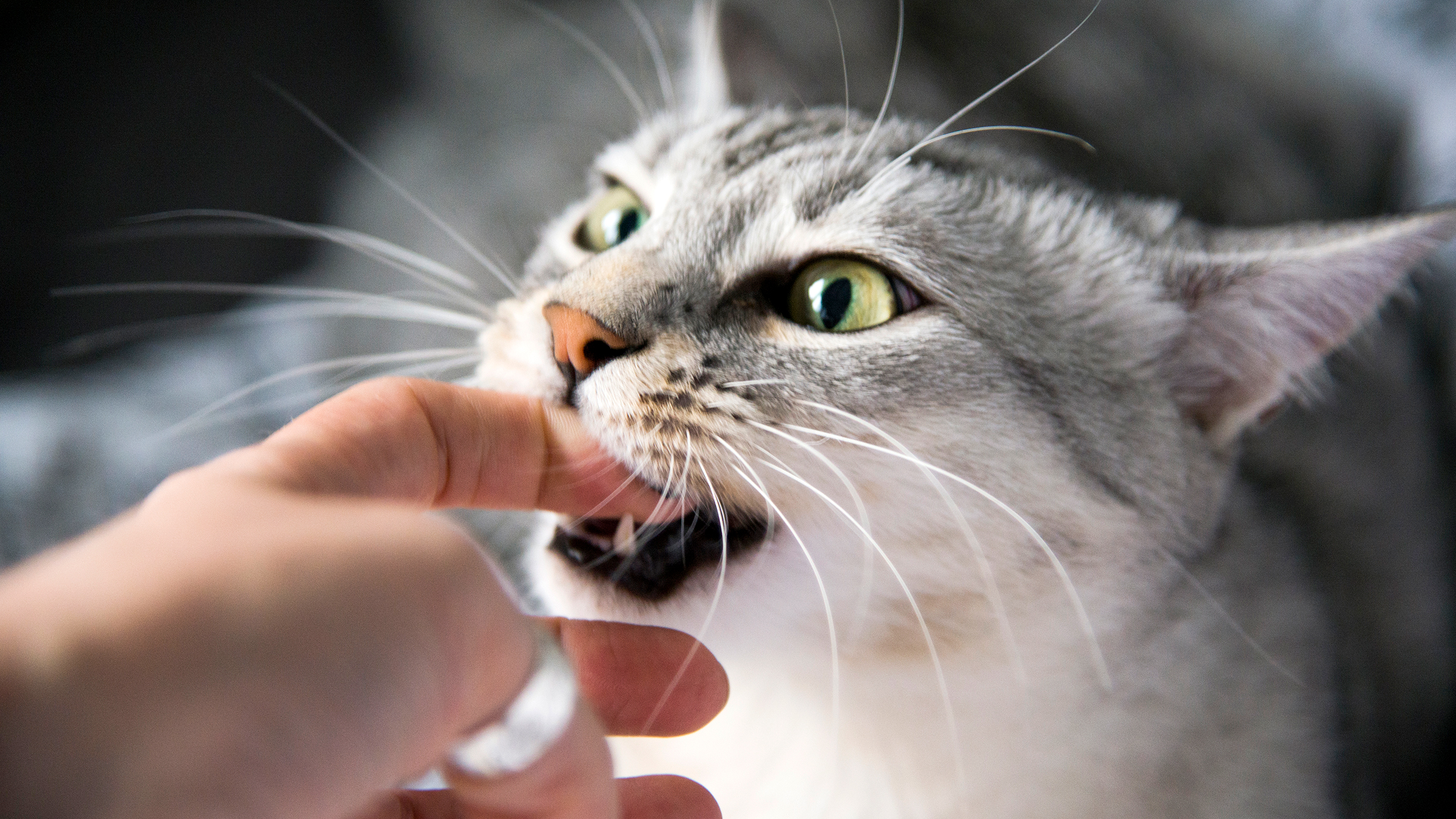
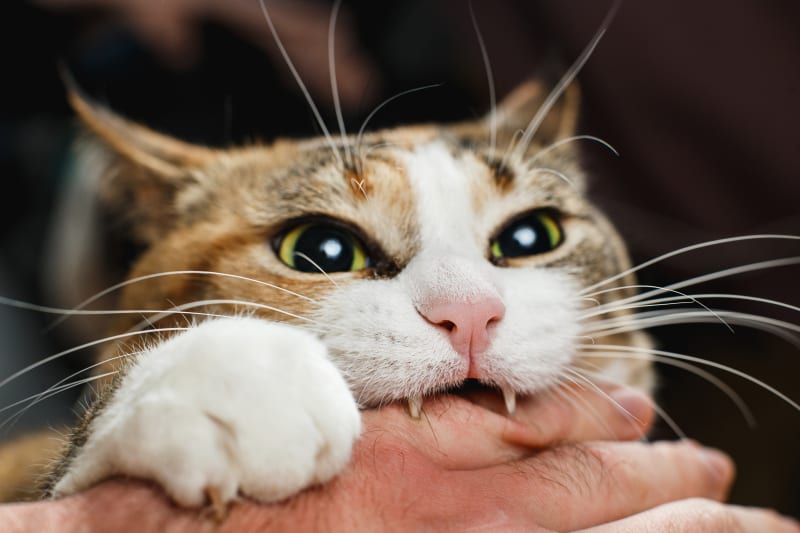
An aggressive bite is harder, may draw blood, and comes with warning signs like flattened ears, a twitching tail, dilated pupils, or hissing.
| Bite Type | Pressure | Skin Broken | Body Language | Meaning |
|---|---|---|---|---|
| Love Bite | Very light | No | Relaxed, purring | Affection or bonding |
| Play Bite | Moderate | Rarely | Playful, excited | Hunting instinct triggered |
| Overstimulation Bite | Sudden, firm | Sometimes | Twitching tail, tense | “Stop petting me” |
| Fear Bite | Hard | Yes | Flattened ears, hissing | Self-defense |
| Pain Bite | Hard, sudden | Yes | Flinching, withdrawing | Medical issue |
Reason 1: Play Aggression and Hunting Instinct
Cats are born predators. Even the most pampered indoor cat carries the instinct to stalk, chase, and bite prey.
When your hand or foot moves quickly, your cat’s brain may register it as prey. This is especially common in kittens and young cats under two years old.
If your cat was encouraged to play with human hands and feet as a kitten, this habit becomes deeply reinforced. It will persist well into adulthood unless corrected with proper redirection.
Reason 2: Overstimulation During Petting
One of the most frequent reasons people ask why does my cat bite me is petting-induced aggression. Your cat may enjoy being petted at first, then suddenly bite without obvious warning.
This happens because cats have a lower tolerance threshold for touch than most people expect. Repetitive stroking along the spine or belly can quickly cross into uncomfortable territory.
Watch for early warning signals: skin twitching on the back, a flicking or lashing tail, ears rotating backward, or a sudden stillness in the body. These signs appear before the bite, not after.
Reason 3: Love Bites and Affectionate Nipping
Some cats bite their owners as a sign of affection. This mirrors the grooming behavior cats use with each other, where light biting and licking are part of bonding.
If your cat gently nips you while purring, licking, or making slow blinks, it is almost certainly a love bite. This is not a red flag. It is actually a sign your cat trusts and feels comfortable with you.
The key distinction is that love bites are soft, do not cause pain, and happen in a calm, relaxed context.
Reason 4: Fear and Defensive Biting
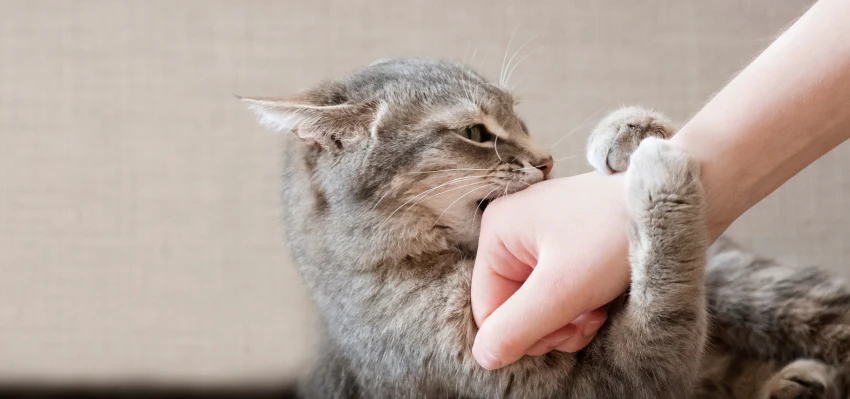
A scared cat will first try to flee. If it cannot escape, biting becomes a last resort. This type of bite is usually sudden and hard.
Common triggers include loud noises, unfamiliar visitors, rough handling, or being picked up without warning. Rescue cats or cats with unknown histories are more likely to exhibit fear-based biting.
Before a fear bite, your cat will almost always show visible distress signals: crouching low, arching the back, puffed-up fur, wide eyes, and whiskers pushed forward. If you see these signs, give your cat space immediately.
Reason 5: Redirected Aggression
This is one of the most misunderstood bite types. Your cat sees something frustrating outside, like a bird or a stray cat, and cannot act on it. The pent-up energy gets redirected onto the nearest target, which is often you.
This explains why your cat might bite you seemingly out of nowhere when you approach them near a window. They are not angry at you. They are overwhelmed by something they could not reach.
Redirected aggression bites are often harder than usual and feel completely random from the owner’s perspective.
Reason 6: Pain or Underlying Medical Issue
When a cat that has never bitten before suddenly starts biting, pain is a top suspect. Conditions like arthritis, dental disease, skin infections, or internal illness can make normal touch unbearable.
Your cat cannot tell you where it hurts. Biting when you touch a sore spot is how they communicate that something is wrong.
If biting is a new behavior and comes with other signs like reduced appetite, hiding, limping, or changes in grooming habits, schedule a vet visit as soon as possible.
Reason 7: Attention-Seeking Behavior
Some cats learn that biting gets a reaction. If your cat has bitten you in the past and you responded loudly or immediately gave them food or attention, you may have accidentally reinforced the behavior.
Cats can develop attention-seeking biting just like they develop other attention-seeking behaviors. The solution is consistent, calm non-reaction, never punishment.
Ignoring the bite by withdrawing all attention and walking away teaches your cat that biting ends the interaction rather than starting one.
Reason 8: Teething in Kittens
Kittens between three and six months old go through a teething phase. Their gums are sore and chewing on things, including your fingers, provides relief.
Teething bites are usually not hard or aggressive. Kittens in this phase benefit greatly from safe chew toys to redirect their need to bite onto appropriate objects.
Most kittens outgrow teething-related biting naturally as long as it is properly redirected from an early age.
Reason 9: Stress from Environmental Changes
Cats are extremely sensitive to environmental disruption. A new baby, a new pet, a house move, construction noise, or even rearranging furniture can elevate a cat’s stress levels significantly.
Stressed cats have a much lower tolerance for interaction. They may bite more quickly because their nervous system is already on high alert.
Providing a safe, quiet retreat space and maintaining a consistent daily routine helps reduce stress-driven biting in most cats.
Reason 10: Nocturnal Biting and Crepuscular Activity
Many cat owners report being bitten at night or very early in the morning. This is directly tied to a cat’s crepuscular nature: cats are naturally most active at dawn and dusk.
If your cat bites your feet under the covers or nips you awake, they are likely bored, hungry, or seeking play during their peak energy window.
An interactive play session before bedtime, followed by a small meal, often resolves nighttime biting in most cats.
How to Read Your Cat’s Body Language Before a Bite
Understanding the pre-bite warning system is the most effective way to prevent getting bitten. Your cat always communicates before they bite. Most owners simply have not learned to read those signals yet.
Warning Signs That a Bite Is Coming
These are the most reliable pre-bite indicators reported by certified cat behaviorists:
| Body Part | Warning Signal | What It Means |
|---|---|---|
| Tail | Lashing or thumping | Increasing agitation |
| Ears | Rotating backward or flattening | Discomfort or fear |
| Skin | Twitching on back or sides | Overstimulation |
| Eyes | Dilated pupils | Arousal or fear |
| Whiskers | Pushed forward | Heightened alertness |
| Posture | Sudden stillness or stiffening | Preparing to react |
When you notice two or more of these signals at the same time, stop what you are doing and give your cat space. Do not wait for the bite.
How to Stop Your Cat From Biting: Proven Methods
There is no single fix for cat biting because the cause determines the solution. Here is a practical breakdown of what actually works.
Use Toys, Not Hands, for Play
This is the single most important rule for preventing play aggression. Never use your fingers, hands, or feet as toys, not even when your cat is a tiny kitten.
Use wand toys, feather teasers, kicker toys, and interactive puzzle feeders to satisfy your cat’s hunting drive. These keep their teeth away from your skin while still providing full engagement.
Redirect Immediately When Biting Starts
The moment your cat begins to bite during play or petting, calmly remove your hand and offer a toy instead. Do not pull away sharply, as quick movement often excites them further.
Stay consistent. Every time your cat bites, the play or petting session ends. Every time your cat interacts gently, the session continues with positive reinforcement.
Never Punish Your Cat for Biting
Physical punishment, loud scolding, spraying with water, or any form of negative reinforcement makes biting worse over time. It creates fear and anxiety, which are two of the main drivers of aggressive biting.
The correct response to a bite is calm withdrawal and temporary removal of attention. This is the message your cat understands.
Respect Your Cat’s Petting Threshold
Every cat has a unique petting tolerance. Some enjoy long stroking sessions. Others prefer short, focused contact. Learn your cat’s limit and stop before you reach it.
Focus petting on areas most cats enjoy: the base of the ears, under the chin, and the cheeks. Avoid the belly and the base of the tail unless your specific cat has shown they enjoy this.
Provide Adequate Daily Enrichment
A bored, under-stimulated cat is more likely to bite. Make sure your cat has access to climbing structures, window perches, scratching posts, and rotating toys.
Dedicate at least fifteen to twenty minutes of interactive play per day. For high-energy breeds like Bengals or Abyssinians, more playtime is necessary.
When to See a Vet About Cat Biting
Most biting is behavioral and manageable at home. However, there are specific situations where professional help is needed.
See a vet if your cat bites suddenly when previously gentle, if biting is accompanied by other behavioral changes, if your cat seems to be in pain when touched, or if biting is escalating in frequency or intensity.
A vet will rule out underlying medical causes. If the issue is purely behavioral, they may refer you to a certified cat behavior consultant for a structured modification plan.
Cat Bite First Aid: What to Do If You Are Bitten
Cat bites can cause serious infections because feline teeth are narrow and create deep puncture wounds that trap bacteria below the skin surface.
If a cat bite breaks the skin, wash the wound immediately with soap and water for at least five minutes. Apply an antiseptic and cover with a clean bandage.
Monitor the wound for signs of infection over the next 24 to 48 hours: increasing redness, swelling, warmth, pus, or red streaks spreading from the wound. If any of these appear, seek medical attention promptly.
Cat bites have a higher infection rate than dog bites due to the depth of the puncture. Do not ignore them, even if they look minor.
Frequently Asked Questions(FAQs)
Why does my cat bite me gently while purring?
This is a love bite, a sign of affection and trust. It mimics how cats groom each other and means your cat feels safe and bonded with you.
Why does my cat bite me out of nowhere?
There is usually a trigger you missed, such as overstimulation, redirected aggression from something outside, or early pain signals. Review what happened in the few seconds before the bite.
Why does my cat bite me when I pet it?
Your cat is likely overstimulated. Watch for tail flicking, skin twitching, or ear rotation as early warning signs, and stop petting before these signals appear.
Why does my cat bite me and then lick me?
Licking followed by biting is normal social grooming behavior. Your cat is bonding with you, though the bite may mean they have become slightly overexcited.
Why does my cat bite me in the morning?
Cats are most active at dawn and dusk. Morning biting is usually an invitation to play or a signal that your cat is hungry and ready to start the day.
Why does my cat bite me hard sometimes but gently other times?
Bite pressure indicates emotional intensity. Gentle bites mean affection or mild communication. Hard bites signal fear, pain, frustration, or high arousal during play.
Is it bad if my cat bites me?
Gentle love bites are harmless. Any bite that breaks the skin should be cleaned immediately due to infection risk. Frequent or escalating biting should be addressed with a vet or behaviorist.
How do I train my cat to stop biting?
Use consistent redirection with toys, end interactions immediately when biting occurs, and reward calm gentle behavior with treats or praise. Never use punishment.
Why does my kitten bite me so much?
Kittens explore the world with their mouths and practice hunting skills through biting. It is normal but should be redirected to toys from day one to prevent the habit from continuing into adulthood.
Can cat biting be a sign of illness?
Yes. Sudden biting in a previously gentle cat can indicate pain from conditions like arthritis, dental disease, or internal illness. A sudden change in biting behavior always warrants a vet check.
Conclusion
Why does my cat bite me is a question that deserves a thoughtful answer rather than frustration.
In almost every case, your cat is communicating something specific: affection, overstimulation, fear, pain, or a need for more play.
Biting is rarely random and almost never “bad behavior” in the way humans define it. It is feline language.
The most important thing you can take away from this guide is that prevention beats reaction.
Learn your cat’s body language, respect their tolerance limits, redirect their hunting energy to appropriate toys, and provide enough daily enrichment to keep them mentally and physically satisfied.
If biting persists or suddenly escalates without clear cause, do not ignore it.
A veterinary checkup can rule out medical triggers, and a certified cat behavior consultant can create a personalized plan for your specific cat.
With patience, consistency, and a willingness to see the world from your cat’s perspective, you can build a relationship where biting becomes a rare exception rather than a daily frustration.