Why Is Gary Indiana So Dangerous? A Closer Look 2026
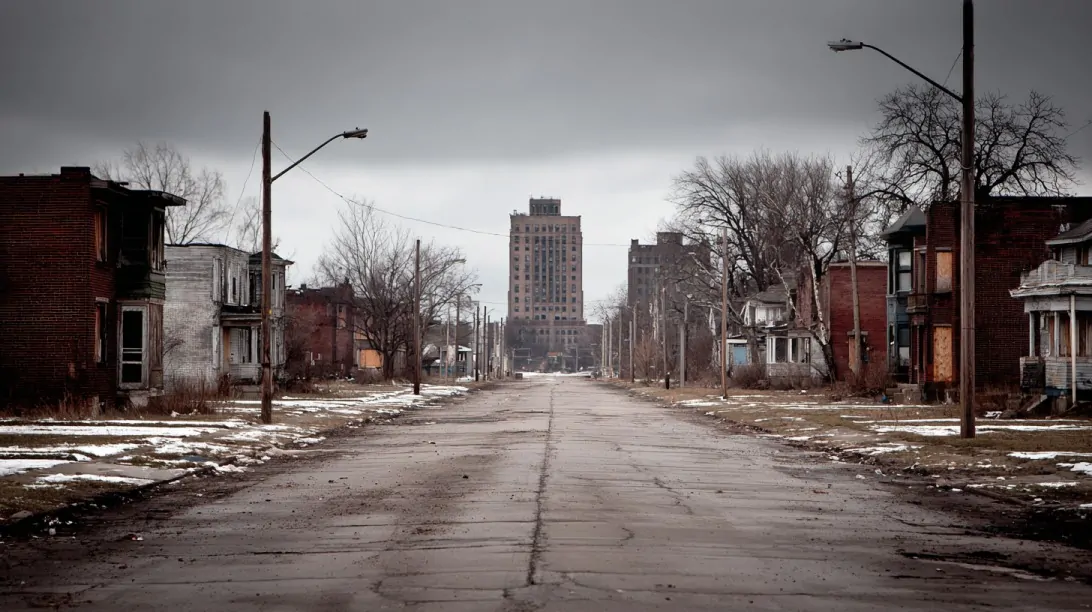
Why is Gary, Indiana so dangerous — and how did a once-thriving American steel city fall so far, so fast? Gary sits just 25 miles from downtown Chicago, yet it regularly appears on lists of the most dangerous cities in the United States.
Its violent crime rate towers well above the national average, its streets are lined with thousands of abandoned buildings, and nearly a third of its residents live below the poverty line. But the story behind Gary’s danger is not simple.
It is a story of industrial collapse, systemic disinvestment, and decades of neglect — and, more recently, a story of cautious but real progress.
A Brief History of Gary, Indiana

Gary was not always a symbol of urban decay. It was once considered one of the great American success stories.
The city was founded in 1906 by the United States Steel Corporation on approximately 10,000 acres of swampland it had purchased along the southern shore of Lake Michigan. It was named after Elbert Henry Gary, the founding chairman of U.S. Steel.
At its peak in the 1950s, Gary had a population of nearly 180,000 residents. More than 30,000 of them worked directly for U.S. Steel’s Gary Works, which was the largest steel mill in the world at the time.
The Rise and Fall of the Steel Industry
The collapse of Gary’s steel industry is the single most important factor behind everything the city faces today.
In 1959, the United States became a net importer of steel for the first time — a turning point that signaled the beginning of the end for cities like Gary. Global competition from rebuilt post-war mills in Japan and Germany undercut American producers.
By 1973, a global recession in the steel market triggered massive layoffs and mill closures across the Rust Belt. The number of steelworkers in Gary fell from 32,000 in 1970 to just 7,000 by 2005 — a loss of over 75% of the industrial workforce in three decades.
Population Collapse and Urban Decay
When the jobs left, the people followed. Gary’s population has declined by over 55% since its peak.
| Year | Population |
|---|---|
| 1950 (peak) | ~178,000 |
| 1970 | 175,415 |
| 2000 | 102,746 |
| 2010 | 80,294 |
| 2021 | ~69,000 |
That kind of population loss decimates a city’s tax base. Schools close. Roads deteriorate. Police and fire departments are understaffed. City services shrink. The spiral feeds itself.
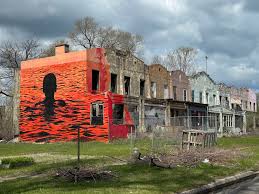
By 2015, the Chicago Tribune estimated nearly 7,000 abandoned buildings in Gary. In 2019, roughly 5,700 single-family homes sat unoccupied. About one in three parcels of land in the city sits vacant today — a landscape that directly enables crime.
Why Is Gary, Indiana So Dangerous? The Root Causes
The danger in Gary did not appear overnight. It is the product of overlapping, compounding causes that have built on each other for decades.
Extreme Poverty
Nearly a third of Gary’s residents live below the federal poverty line. At its worst points, the poverty rate has been estimated as high as 38–40%.
Poverty is the most consistent predictor of elevated crime rates in any city in the world. When basic needs go unmet, survival-driven crime increases. Poverty also limits educational opportunity, restricts social mobility, and creates the conditions where gang recruitment becomes attractive.
Mass Unemployment
The loss of tens of thousands of steel jobs created a structural unemployment problem that Gary has never fully recovered from.
With few stable employment opportunities inside city limits, residents face a choice: commute long distances for low-wage work, seek income through informal or illegal means, or leave the city entirely. Many of those who could leave — did.
Thousands of Abandoned Buildings
Empty buildings are not a passive problem. They are active enablers of crime.
Abandoned homes provide shelter for drug activity, locations for illegal transactions, and cover for violent encounters. The 2014 case of serial killer Darren Vann made national headlines when the bodies of seven women were discovered in vacant Gary homes — a stark illustration of how urban decay enables the worst outcomes.
Gary has received tens of millions in federal funding to demolish vacant structures, and the effort continues, but the scale of the problem remains enormous.
Gang Activity and Drug Trade
Gang activity accounts for a significant portion of Gary’s violent crime. Research cited in Indiana crime analyses suggests that gangs are responsible for approximately 53% of violent crimes in Gary.
The city’s proximity to Chicago — a major hub for gang networks — means that organized crime activity flows across the state line. Drug trafficking, particularly involving fentanyl and methamphetamine, drives a substantial portion of property crime and violent incidents.
Underfunded Law Enforcement and City Services
A shrinking tax base means a shrinking city budget. Gary’s police department has historically been understaffed relative to the size of the crime problem it faces.
Fewer officers mean slower response times, less proactive policing, and lower case clearance rates — all of which reduce deterrence and allow criminal activity to persist. This cycle is common across Rust Belt cities and is one of the hardest to break without external investment.
Systemic Disinvestment and Racial Inequality
Gary became a majority Black city as white residents and businesses relocated during mid-century urban flight. By 2000, 84% of Gary’s population was African American — the highest percentage of any U.S. city over 100,000 at the time.
The pattern of disinvestment that followed aligned closely with patterns of racial discrimination in housing, lending, and public infrastructure investment seen across American cities in the post-war era. Redlining and discriminatory lending practices locked residents out of wealth-building and concentrated poverty in ways that persist to this day.
Gary, Indiana Crime Statistics 2024–2025
The numbers are stark — but they also show meaningful recent improvement.
| Crime Metric | Gary (2024) | National Average |
|---|---|---|
| Violent crime rate (per 100,000) | 898.3 | 359.0 |
| Property crime rate (per 100,000) | 2,828.2 | 1,760.0 |
| Homicides (2024) | 39–40 | — |
| Crime index (City-Data) | 629 | ~230 |
| Chance of violent crime victimization | 1 in 111 | 1 in 319 (Indiana avg.) |
The 2024 Gary crime rate was 2.7 times greater than the U.S. average and higher than 98.7% of all U.S. cities. Property crime victimization risk stands at approximately 1 in 35 per year.
The Homicide History of Gary, Indiana
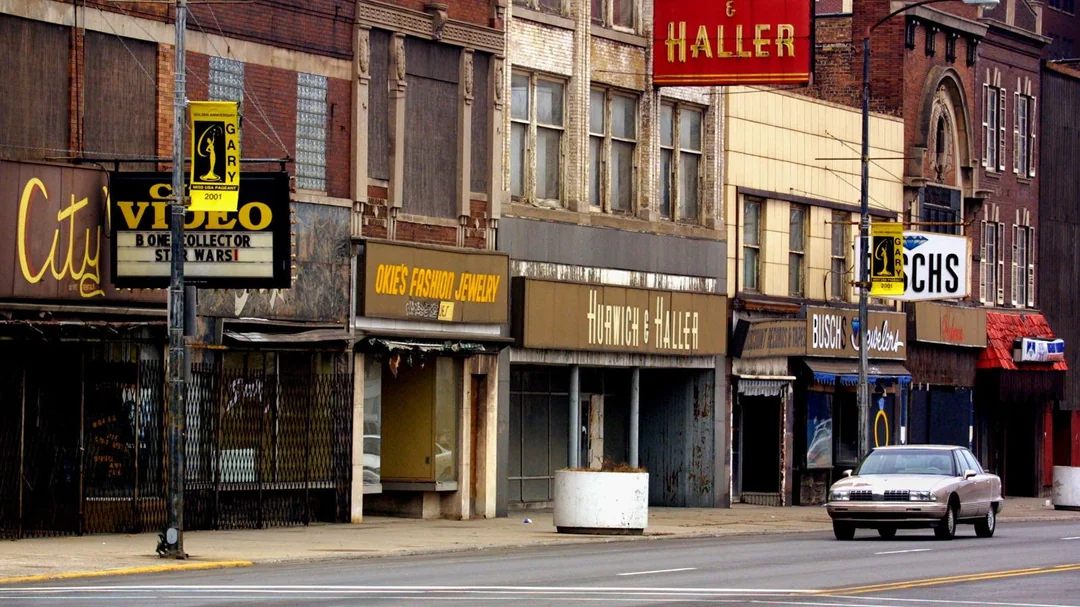
Gary’s murder rate has defined its national reputation more than any other single statistic.
In 1994–1995, Gary was labeled the murder capital of the United States. In 1995, the city recorded 129 homicides — an extraordinary number for a city with just over 100,000 residents at the time.
| Year | Homicides |
|---|---|
| 1995 (peak) | 129 |
| 2023 | 47 |
| 2024 | 39–40 |
| 2025 | 28 (lowest since 1970) |
The 2025 figure of 28 homicides represents a 78% reduction from the 1995 peak and is the lowest homicide count Gary has recorded in over 55 years. This is genuine progress — and it deserves to be acknowledged alongside the ongoing challenges.
Is Gary, Indiana Getting Safer?
The 2025 data from the Gary Police Department tells an important story of measurable improvement.
Non-fatal shootings dropped 24%, falling from 133 incidents in 2024 to 101 in 2025. Homicides fell 30%, from 40 in 2024 to 28 in 2025. Since 2023, homicides have declined a combined 46% and non-fatal shootings have decreased 31%.
The department’s homicide closure rate rose to 82% in 2025. Defendants charged in all crime categories more than doubled, rising from 163 in 2024 to 334 in 2025. Authorities seized 369 firearms in 2025 — a 41% increase over the previous year.
A Homicide Task Force formed in 2023 and multi-agency collaboration between local police, the Indiana State Police, the ATF, and the U.S. Attorney’s Office have been credited with much of this progress.
Most Dangerous Neighborhoods in Gary, Indiana
Crime in Gary is not uniformly distributed. Certain areas carry significantly higher risk than others.
Areas historically identified as higher-risk include the Midtown district, the Concord area, 5th Avenue corridors, the 21st Street corridor, the Delaney projects, Tarrytown, and Clark Road.
The neighborhoods closest to abandoned housing concentrations tend to have elevated property crime and drug activity. The downtown and near-downtown corridors see the highest concentrations of violent incidents.
Safer Areas Within Gary
Not every part of Gary carries equal risk. The southeastern portion of Gary — particularly near the Miller Beach neighborhood and areas bordering Merrillville — tends to have lower crime rates relative to the city’s core.
Miller Beach is a lakefront community with a distinct character. It sits along the Indiana Dunes shoreline and has attracted some investment and stabilization compared to Gary’s interior neighborhoods.
Residents and visitors consistently identify the western and northern central neighborhoods as the areas of greatest concern.
What Does Crime in Gary Actually Cost?
Crime has a financial cost that extends far beyond the immediate victims.
According to CrimeGrade data, the total projected cost of crime in Gary in 2025 was approximately $79.3 million. That translates to roughly $1,151 per resident or $2,953 per household annually.
When intangible costs — trauma, pain, suffering, reduced quality of life — are factored in using standard research-based methodologies, the total estimated economic burden of crime rises dramatically higher. These costs compound the city’s already severe fiscal challenges.
Gary Compared to Other Dangerous Indiana Cities
Gary is consistently ranked among Indiana’s most dangerous cities, though it is not always number one.
| City | Violent Crime Rate (per 100k) | Notes |
|---|---|---|
| Gary | 898.3 | Historically most dangerous |
| South Bend | High | Recently ranked most dangerous by some measures |
| Indianapolis | Elevated | Highest absolute crime numbers (largest city) |
| East Chicago | Elevated | Shares similar industrial decline history |
| Hammond | Moderate-High | Borders Gary, shares some issues |
Recent crime reporting identified South Bend, not Gary, as Indiana’s most dangerous city by certain metrics — a sign that Gary’s relative position is shifting, even if its absolute crime levels remain serious.
The Role of Proximity to Chicago
Gary’s location — just 25 miles from one of America’s largest cities — is both an asset and a liability.
The proximity to Chicago means Gary residents can access job markets, services, and cultural institutions that would otherwise be unavailable. The new South Shore Line rail expansion improves connectivity.
But it also means Gary sits within the operational territory of major Chicago-area gang networks. Drug trafficking routes, weapons trafficking, and gang-related violence extend outward from Chicago into Gary and other nearby communities in Lake County.
Efforts to Revitalize Gary, Indiana
Gary is not a city without hope. Multiple efforts are underway to address the structural roots of its problems.
Hard Rock Casino
The Hard Rock Casino Northern Indiana, which opened in 2021 in nearby Merrillville (with Gary benefiting from regional economic activity), has been cited as one of the more significant economic development wins for the region. Gaming tax revenue provides some additional fiscal resources for Lake County.
Demolition Programs
Federal and state funding has financed the demolition of thousands of blighted and abandoned buildings. Removing these structures directly reduces crime by eliminating cover for drug activity, squatting, and other criminal uses of abandoned properties.
South Shore Line Expansion
The South Shore Line double-track and west extension project aims to improve commuter rail access between Gary and Chicago. Better transit access opens the Chicago job market more fully to Gary residents — a critical economic lifeline.
Law Enforcement Partnerships
The Homicide Task Force and federal partnerships with the ATF and U.S. Attorney’s Office have produced measurable results in clearance rates and prosecutions. Federal prosecution of violent repeat offenders removes the most dangerous individuals from the community more effectively than state-level prosecution alone.
Community Organizations
Numerous nonprofit and faith-based organizations operate in Gary focused on youth employment, education, violence interruption, and neighborhood stabilization. These organizations provide essential services that government cannot always deliver effectively.
Is It Safe to Visit Gary, Indiana?
This is one of the most common questions people ask about Gary, and the honest answer is: it depends where you go and when.
Gary has legitimate tourist draws. The Indiana Dunes National Park borders the city and draws millions of visitors annually. The Miller Beach neighborhood offers lakefront access. The city has a rich musical history as the birthplace of the Jackson 5.
Daytime visits to established destinations — the dunes, historical sites, the lakefront — carry reasonable risk levels for an aware traveler. Venturing into unfamiliar residential neighborhoods, particularly after dark, carries significantly higher risk.
The standard advice applies: research specific destinations, stay in well-lit and trafficked areas, avoid displaying valuables, and remain aware of your surroundings.
What Would Actually Fix Gary, Indiana?
Law enforcement improvements are necessary but not sufficient on their own.
The structural causes of Gary’s crime — poverty, unemployment, abandoned housing stock, an eroded tax base, underfunded schools — require sustained economic investment, not just policing.
Gary needs private sector employers willing to locate within city limits, bringing stable jobs. It needs continued demolition of blighted properties and investment in new housing. It needs fully funded schools that can break the cycle of limited educational attainment. And it needs sustained political will at the state and federal level to treat Rust Belt urban decline as the national policy issue it is.
The residents of Gary have demonstrated decades of resilience. What has historically been missing is the external investment to match that resilience.
Signs of Progress Worth Watching in 2026
There are real, data-driven reasons for cautious optimism about Gary’s trajectory.
Homicides at their lowest in 55 years. Non-fatal shootings down nearly a third since 2023. Clearance rates improving. Federal law enforcement partnerships producing results. Infrastructure investments underway. Community organizations expanding programs.
None of this means Gary’s problems are solved. But the trend lines — for the first time in decades — are moving in the right direction.
Frequently Asked Questions (FAQs)
Why is Gary, Indiana so dangerous?
Gary’s danger stems from decades of poverty caused by the collapse of its steel industry, mass unemployment, thousands of abandoned buildings, and gang activity tied to nearby Chicago networks. These structural causes have built on each other for over 50 years.
What is the crime rate in Gary, Indiana?
Gary’s violent crime rate is approximately 898 per 100,000 residents — about 150% higher than the national average. Your chance of being a victim of violent crime in Gary is roughly 1 in 111 per year.
Was Gary, Indiana always this dangerous?
No. Gary was a prosperous boom city in the 1940s and 1950s with a population approaching 180,000. The city’s decline began in the 1960s and accelerated sharply through the 1970s and 1980s as the steel industry collapsed.
When was Gary, Indiana the murder capital of the United States?
Gary held that designation in the mid-1990s, particularly around 1994–1995, when it recorded 129 homicides in a single year — an extraordinary per-capita rate for a city of its size.
Is Gary, Indiana getting safer?
Yes, measurably so. In 2025, Gary recorded 28 homicides — the lowest since 1970 — representing a 30% drop from 2024 and a 46% combined reduction since 2023. Non-fatal shootings also fell 24% in 2025.
What neighborhoods in Gary, Indiana are the most dangerous?
Historically high-risk areas include the Midtown district, Concord area, 5th Avenue, 21st Street corridor, Delaney, Tarrytown, and Clark Road. The southeastern Miller Beach area is generally considered safer relative to Gary’s core.
Is it safe to visit Gary, Indiana?
Daytime visits to established destinations like the Indiana Dunes National Park and Miller Beach carry manageable risk for aware travelers. Unfamiliar residential neighborhoods, particularly after dark, should be avoided.
How does Gary, Indiana compare to other dangerous U.S. cities?
Gary’s violent crime rate is higher than 98.7% of all U.S. cities. It regularly competes with cities like Detroit, St. Louis, and Memphis for the highest per-capita violent crime rankings nationally.
What caused Gary, Indiana’s decline?
The primary cause was the collapse of the U.S. steel industry in the 1970s–1980s, which eliminated tens of thousands of jobs. This triggered population loss, tax base erosion, service cuts, abandoned housing, rising poverty, and eventually surging crime.
What is being done to improve safety in Gary, Indiana?
The Gary Police Department’s Homicide Task Force, federal law enforcement partnerships, firearm seizure operations, demolition of abandoned buildings, the South Shore Line expansion, and community investment programs are all part of ongoing efforts to address both crime and its root causes.
Conclusion
Why is Gary, Indiana so dangerous comes down to a decades-long chain of cause and effect: a city built entirely around one industry that collapsed, leaving behind poverty, unemployment, abandoned buildings, and a shrunken tax base unable to fund the services a struggling community needed most.
The danger Gary faces today is not random — it is the predictable outcome of industrial abandonment and systemic disinvestment that affected dozens of Rust Belt cities but hit Gary particularly hard.
At the same time, 2025 brought Gary’s lowest homicide count in over 55 years, and trend lines are genuinely improving.
Understanding why Gary became so dangerous is inseparable from understanding what it would take to make it safer — and that requires honest investment in jobs, housing, education, and community infrastructure, not just law enforcement alone.