Why Is My Eczema Moisturizer Not Working Properly?
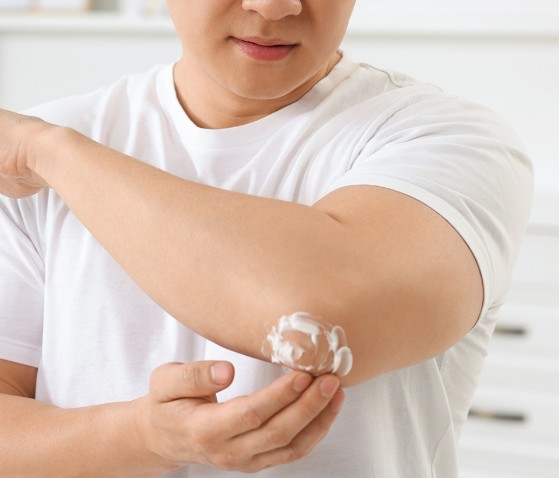
You follow the routine, apply your eczema moisturizer the way you’re meant to, and still end up in a situation where it doesn’t really feel like it’s doing much. The thing is, these products are proven to provide relief when eczema-related discomfort rears its head, so there must be a reason it’s not working, right? That’s what we’ll be looking at in this article.
The issue is that “moisturizer for eczema” gets used as a catch-all term, even though the products it describes don’t all sit at the same level. Some are aimed at keeping skin from getting too dry day to day, while others are formulated for skin that’s already starting to struggle and needs more direct support.
When your skin is already uncomfortable and you’ve just put something on that’s done nothing, that’s a pretty specific kind of frustration. So, let’s dive in and look at the facts.
What Eczema Moisturizer Is Actually Meant to Do
Eczema moisturizer isn’t a treatment in the clinical sense, so it only has the ability to make you feel comfortable, rather than stop a flare completely on its own. However, with a ‘relief’ cream like this, it’s supposed to provide some, so when you feel nothing, that’s a problem. The right product should help your skin feel noticeably better, usually in minutes.
Of course, there should be some general improvement over time with regular use, too, but mainly, you want the product to settle things down when they feel like they’re getting out of hand. As such, your eczema relief lotion should give you:
- Quick itch relief: You should feel some reduction in itching fairly soon after applying it. Perhaps not instant, but within a reasonable window. If that’s not happening at all, the product isn’t doing enough.
- Skin feeling less tight and reactive: A good application should take the edge off how uncomfortable the skin feels, not just add a layer of moisture that sits on top.
- Longer stretches between bad moments: When used regularly, things shouldn’t be flaring as frequently or as intensely, because of the support it offers.
- A calmer baseline: Skin that’s being properly supported should start to feel less reactive day to day, even when it’s not perfect.
The longer-term picture is about reinforcing your skin’s barrier gradually so things don’t deteriorate as quickly between flares. That’s the background work that’s slower, and less obvious, but still important. However, if it’s not working for you in the moment, and it’s not improving things, you might need to reconsider which product you’re using.
What Might Be Stopping Your Eczema Moisturizer Working
There are a few reasons why a moisturizer designed for eczema relief might not be delivering what you need. Also, most of them come down to the product itself rather than anything you’re doing wrong. That’s worth knowing, because it shifts the question away from how you’re using it and toward whether it’s actually the right one for your skin.
Most of the time, the issue lies somewhere in the formula, because of either what’s in it, what isn’t, or how it’s been designed to behave once it’s on your skin. Here’s why some moisturizers for eczema don’t help as much as they might.
- It doesn’t have anything in it to address the itch: Hydration and itch relief aren’t the same thing. A basic moisturizer can help with the former, but if there’s no active ingredient (like colloidal oatmeal) specifically there to calm irritation, it’s always going to fall short.
- It’s not formulated for flare support: Some products are designed to keep your skin stable, but they’re often not for moments when your skin is already reactive. Unsurprisingly, they don’t do a lot, because they were never intended for itch calming.
- Something in the formula is working against you: Fragrances, certain preservatives, and some emulsifiers can trigger reactions in sensitive skin, so if your skin feels worse after applying it, the product itself might be part of the problem.
- It isn’t strong enough for what your skin is dealing with right now: Not every eczema-focused moisturizer is the same. Some work fine for mild dryness but don’t have enough in the locker for skin that’s genuinely struggling.
If any of these apply, no amount of consistent use is going to turn it around, because the limitation is in the product, not the routine.
Ensuring You Have an Eczema Moisturizer That Works for You
If you’ve got eczema and your atopic dermatitis moisturizer isn’t giving you any noticeable relief when things flare, the most useful thing you can do is look at what’s actually in it. Hydration alone isn’t enough when skin is giving you discomfort, so you need something that can calm the irritation at the same time, and most basic moisturizers simply aren’t built to do that.
The one you use should include colloidal oatmeal to tackle the itch, alongside ingredients that support the skin barrier without any of the common triggers that can make sensitive skin worse. If your current product isn’t covering both bases, it’s worth trying something that does.