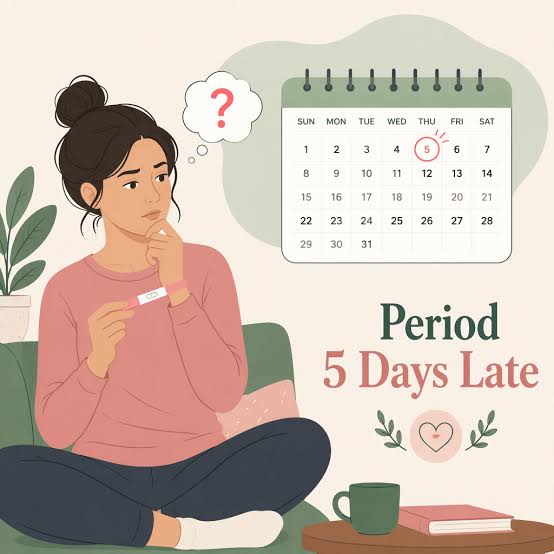
Why Is My Period 5 Days Late? Pregnancy or Stress? 2026
Why is my period 5 days late — that question usually comes with a small spike of worry, whether pregnancy feels likely or not.
A few days’ delay is common and often harmless, caused by stress, travel, sleep changes, illness, or shifts in weight or exercise.
Pregnancy is only one possibility among many, and a home test can rule it out quickly.
What Counts as a Late Period?

Most healthcare providers consider a period late once it’s five or more days past the expected date. A typical cycle runs between 24 and 38 days, so some month-to-month variation is normal.
If your cycles are usually predictable and this one is off by five days, that’s a meaningful shift worth paying attention to, even if it isn’t an emergency.
Quick Snapshot: Common Causes at a Glance
| Cause | How Common | Usually Serious? |
|---|---|---|
| Pregnancy | Common | Depends on plans |
| Stress | Very common | No |
| Weight changes | Common | Sometimes |
| Intense exercise | Common | Sometimes |
| Illness or fever | Common | No |
| Birth control changes | Common | No |
| PCOS | Moderate | Sometimes |
| Thyroid issues | Moderate | Sometimes |
| Perimenopause | Age-dependent | No |
| Travel or sleep changes | Common | No |
Is Pregnancy the First Thing to Rule Out?
If you’ve had unprotected sex since your last period, pregnancy should be the first thing you check, since it’s the most direct explanation for a missed cycle.
Home pregnancy tests detect hCG, a hormone your body produces once an embryo implants. Sensitivity improves the longer you wait past the expected date.
When Is a Pregnancy Test Most Accurate?
Testing on the first day of a missed period already gives a reasonably accurate result for most modern tests, though sensitivity keeps climbing over the following days.
Waiting until you’re five to seven days late, if you can, reduces the chance of a false negative caused by testing too early.
| Days Late | Pregnancy Test Reliability |
|---|---|
| 1–3 days | Moderate accuracy |
| 4–5 days | Good accuracy |
| 7+ days | High accuracy |
| Negative twice, still late | Consider other causes |
Early Pregnancy Symptoms to Watch For
Breast tenderness, nausea, fatigue, and mild cramping can all appear in early pregnancy alongside a missed period.
These symptoms overlap heavily with PMS, though, so a test is the only reliable way to tell the difference rather than symptoms alone.
Stress: The Most Common Non-Pregnancy Cause
Stress affects the hypothalamus, the brain region that signals your ovaries to release hormones controlling ovulation. High cortisol can delay or suppress that signal.
Work pressure, grief, travel, or major life changes are all common stress triggers that show up as a late or skipped period the following month.
Weight Changes and Diet
Rapid weight loss, restrictive dieting, or a very low body weight can disrupt hormone production enough to delay or completely pause ovulation.
Weight gain and higher body fat percentage can also shift estrogen and progesterone levels, throwing off the timing of your cycle.
Intense Exercise and Overtraining
Burning significantly more calories than you consume, especially with several hours of daily training, can suppress the hormones responsible for regular ovulation.
This is common among endurance athletes and typically resolves once training intensity decreases or calorie intake increases to match output.
Illness, Fever, and Short-Term Sickness
A cold, flu, or fever around the time of ovulation can delay the hormonal signal needed to trigger your next period on schedule.
This type of delay is usually temporary and resolves within one cycle once you’ve recovered.
Birth Control Changes
Starting, stopping, or switching hormonal birth control methods often causes a temporary disruption to your natural cycle as your body adjusts.
Some methods, like the hormonal IUD or the shot, can cause periods to become very light or stop altogether, which is a known and expected effect.
PCOS (Polycystic Ovary Syndrome)
PCOS affects an estimated 5 to 10 percent of people who menstruate and is one of the leading causes of irregular or delayed periods.
Because PCOS interferes with regular ovulation, cycles can stretch to 35, 40, or even 60 days, making “late” a more complicated concept for those affected.
Thyroid Problems
Your thyroid gland helps regulate the hormones that control your menstrual cycle. Both an overactive and underactive thyroid can cause a late or missing period.
Thyroid issues affect more than 10 percent of people who menstruate and are sometimes mistaken for early perimenopause due to overlapping symptoms.
Perimenopause
Perimenopause usually begins in the 40s and can last several years before periods stop completely. Cycle length often becomes unpredictable during this stage.
Hot flashes, mood changes, and sleep disruption alongside a late period are common signs that perimenopause may be starting.
Adolescence and Irregular Cycles
In the first few years after a first period, cycles are commonly irregular because the hormonal system regulating ovulation is still maturing.
This typically stabilizes by the late teens or early twenties, though occasional irregularity can continue a bit longer for some.
Travel, Sleep, and Routine Disruption
Crossing time zones or a sudden change in sleep schedule can disrupt the body’s internal clock, which plays a role in hormone timing.
This kind of delay is usually short-lived and resolves once your routine and sleep pattern return to normal.
Medications That Can Delay a Period
Certain medications, including some antidepressants, antipsychotics, and chemotherapy drugs, list irregular or delayed periods as a known side effect.
If a new medication lines up with the start of a delay, it’s worth mentioning to your prescribing doctor rather than stopping the medication yourself.
Comparison Table: Cause vs Typical Duration vs Action
| Cause | Typical Duration | Suggested Action |
|---|---|---|
| Stress | 1 cycle | Monitor, manage stress |
| Illness | 1 cycle | Monitor, rest |
| Weight change | Until stabilized | Adjust diet gradually |
| Overtraining | Until intensity reduced | Reduce training load |
| Birth control change | 1–3 cycles | Monitor, consult provider |
| PCOS | Ongoing | See a doctor |
| Thyroid issue | Ongoing | See a doctor |
| Perimenopause | Years | Monitor symptoms |
How Many Days Late Is Considered a Missed Period?
A period that’s five to seven days late is generally still within the range doctors describe as “late” rather than “missed.”
Once you pass 35 to 38 days without a period, or six to eight weeks for those tracking loosely, it’s usually reclassified as a missed period.
What to Do If Your Period Is 5 Days Late
Take a home pregnancy test if there’s any chance of pregnancy, since this is the fastest way to rule out the most common cause.
If the test is negative, think back over the last month for stress, illness, weight change, new medication, or travel that could explain the delay.
Give it a few more days if you have no other symptoms, since many five-day delays resolve on their own without any intervention.
Tracking Your Cycle for Clearer Answers
Logging your cycle length, symptoms, and any lifestyle changes each month makes it much easier to spot patterns behind a late period.
Apps or a simple calendar both work, and having this data ready for a doctor’s visit speeds up diagnosis considerably.
When to See a Doctor
A period that’s more than two weeks late with a negative pregnancy test is a reasonable point to schedule a doctor’s visit.
Three or more irregular or delayed cycles in a year, even without other symptoms, is worth discussing with a healthcare provider.
Severe pain, very heavy bleeding, or symptoms like extreme fatigue and unexplained weight change alongside a late period all warrant prompt evaluation.
If you’ve gone 90 days or more without a period, evaluation is recommended regardless of your usual cycle pattern.
Common Myths About Late Periods
A popular myth claims certain drinks, like lemon juice or salt water, can delay a period on purpose. There’s no scientific evidence supporting this.
Cold water is another myth often blamed for cycle changes, but temperature of water you drink has no documented effect on menstruation.
Alcohol, on the other hand, does have real evidence linking heavy or regular use to irregular cycles and disrupted ovulation.
How Lifestyle Habits Support Regular Cycles
Consistent sleep, balanced nutrition, and moderate exercise all support the hormonal stability needed for predictable cycles over time.
Managing chronic stress through routines like exercise, therapy, or mindfulness can reduce the frequency of stress-related delays.
Avoiding extreme calorie restriction protects the hormonal signals your body needs to maintain regular ovulation.
Late Period vs Irregular Periods: What’s the Difference
A late period is a single delayed cycle, often explained by a specific, identifiable event like travel or illness.
Irregular periods describe an ongoing pattern where cycle length varies significantly month to month, which points more toward an underlying condition like PCOS or thyroid dysfunction.
Understanding the Menstrual Cycle Phases
The follicular phase begins on day one of your period and lasts until ovulation, during which rising estrogen prepares the uterine lining and an egg matures.
Ovulation typically occurs around the midpoint of the cycle, releasing an egg that can only survive about 24 hours if it isn’t fertilized.
The luteal phase follows ovulation, when progesterone maintains the uterine lining in case of pregnancy. If fertilization doesn’t happen, hormone levels drop and your period begins.
A delay in any of these phases, especially a later-than-usual ovulation, pushes the entire cycle back and results in a late period.
Why a 28-Day Cycle Isn’t Universal
Many people assume 28 days is the “normal” cycle length, but research shows only a small percentage of people actually experience exactly that.
Cycles ranging from 21 to 38 days are all considered within the normal range by most medical guidelines, so some variation month to month is expected.
Understanding your own personal baseline, rather than comparing to the textbook 28-day figure, is far more useful for spotting a genuinely late period.
Diabetes and Blood Sugar’s Role in Cycle Timing
Poorly managed blood sugar levels, whether from type 1 or type 2 diabetes, can occasionally disrupt hormone production enough to delay a period.
This is relatively rare and typically only occurs when blood sugar has been consistently high or poorly controlled over an extended period.
Celiac Disease and Nutrient Absorption
Undiagnosed celiac disease can interfere with nutrient absorption, leading to deficiencies that affect the hormones responsible for regulating your cycle.
Menstrual irregularities alongside digestive symptoms like bloating or fatigue can be a clue worth mentioning to a doctor.
Breastfeeding and Postpartum Cycle Changes
Breastfeeding often delays the return of regular periods due to prolactin, a hormone that suppresses ovulation while milk production is active.
Cycles can remain unpredictable for months after birth, even after periods resume, as hormone levels continue adjusting during the postpartum period.
Emotional Impact of a Late Period
Waiting on an uncertain cycle can bring on real anxiety, especially when pregnancy is a genuine possibility or a concern either way.
Taking a test as soon as it’s reasonably accurate, rather than waiting and wondering, often reduces the stress that can itself contribute to further delay.
Building a Personal Baseline
Tracking three to six months of cycle data gives a much clearer picture of what’s “normal” for your body specifically, rather than relying on general averages.
This baseline makes it far easier to recognize when a five-day delay is unusual for you versus simply part of your natural variation.
What a Doctor Might Check For a Late Period
A doctor typically starts by asking about your cycle history, recent stress, weight changes, medications, and sexual activity to narrow down likely causes.
Bloodwork can check hormone levels, including thyroid function and markers associated with PCOS, if an underlying condition is suspected.
A pelvic ultrasound may be used to look at the ovaries and uterine lining if PCOS or another structural cause is being considered.
Diet and Supplements That Support Cycle Regularity
Eating enough overall calories, particularly from healthy fats, supports the hormone production your body needs to maintain regular ovulation.
Iron-rich foods help replenish what’s lost during menstruation, which can matter more for those with heavier or more frequent cycles.
Some people find that reducing caffeine and alcohol intake helps stabilize cycle length, though individual responses vary.
Speak with a doctor before starting any supplement marketed for cycle regulation, since some can interact with medications or existing conditions and may not be well studied.
How Age Affects Cycle Predictability
Teenagers often experience irregular cycles for the first one to three years after their first period as hormone regulation matures.
Cycles tend to become their most predictable in the twenties and thirties, assuming no underlying conditions are present.
In the 40s, cycles often start shifting again as the body enters perimenopause, making late or skipped periods increasingly common with age.
This gradual shift is a normal part of the reproductive lifespan, though tracking symptoms during this stage still helps distinguish typical perimenopause from other underlying issues.
The Difference Between a Late Period and Spotting
Light spotting a few days before an expected period is different from an actual delay and can sometimes be linked to ovulation or early pregnancy implantation.
A late period means no bleeding at all past your expected date, while spotting involves light, inconsistent bleeding that isn’t a full period.
Environmental and Seasonal Factors
Significant changes in daylight exposure, temperature, or altitude when traveling can occasionally influence hormone timing and shift a cycle.
Seasonal shifts in activity level, like more exercise in summer or less movement in winter, can also play a small role in cycle timing for some people.
Even changes in work schedule, such as switching to night shifts, can disrupt the internal rhythms that help keep ovulation and period timing consistent and predictable from month to month.
Supporting a Partner or Friend Through Cycle Anxiety
Being available to talk without judgment, and encouraging a test if pregnancy is a possibility, can ease a lot of unnecessary worry.
Avoiding minimizing language like “it’s probably nothing” can help, since taking the concern seriously tends to be more reassuring than dismissing it.
Red Flags That Need Same-Week Medical Attention
Severe abdominal pain alongside a late period can occasionally indicate an ectopic pregnancy, which needs urgent evaluation regardless of test results.
Fainting, dizziness, or heavy unexplained bleeding alongside a delayed cycle are signs that shouldn’t wait for a routine appointment.
A positive pregnancy test with severe one-sided pain is a combination that warrants immediate medical care.
Building Confidence Around Cycle Changes
Understanding your own cycle history turns a late period from a source of panic into a manageable, informative signal from your body.
Most delays resolve without any long-term consequence, and knowing the common, harmless explanations can make the waiting period far less stressful.
Over time, this understanding also helps you notice genuine changes faster, since you’ll have a clear sense of what’s typical for your own body.
Frequently Asked Questions (FAQs)
1. Why is my period 5 days late with a negative test?
Stress, illness, weight change, or a recent birth control switch are common non-pregnancy causes worth considering first.
2. Can stress alone delay a period for a week?
Yes, high stress can disrupt the hormonal signals controlling ovulation, pushing a period back by several days or more.
3. Should I retest if my period is still late?
Yes, testing again a few days later improves accuracy, especially if the first test was taken very early.
4. Can ovulation happen later some months?
Yes, ovulation timing can shift due to stress, illness, or lifestyle factors, which naturally delays the following period too.
5. Is a 5-day delay considered irregular?
A single 5-day delay is usually normal variation, not a sign of a chronic irregular cycle pattern.
6. Can birth control pills cause a late period after stopping?
Yes, your body needs time to resume its natural hormone rhythm after stopping hormonal contraceptives.
7. Does travel really affect period timing?
Yes, time zone changes and disrupted sleep can shift the body’s internal clock and delay ovulation.
8. Can a UTI or infection delay a period?
Illness and fever, including infections, can temporarily disrupt hormone signaling and push back your next period.
9. When should I worry about a late period?
If it extends past two weeks with a negative test, or happens repeatedly, it’s time to see a doctor.
10. Can PCOS cause just a 5-day delay?
Yes, PCOS can cause anything from a few days’ delay to cycles spaced many weeks apart.
Conclusion
A period that’s five days late is common and, in most cases, not a sign of anything serious.
Pregnancy is the first thing worth ruling out with a home test, especially if you’ve had unprotected sex, but stress, illness, weight changes, exercise intensity, and birth control adjustments explain the majority of short delays.
Tracking your cycle over time helps separate a one-off delay from a pattern that might point toward PCOS, thyroid issues, or perimenopause. Most five-day delays resolve on their own within a cycle or two once the underlying trigger passes.
If the delay stretches past two weeks, keeps repeating, or comes with symptoms like severe pain or major fatigue, it’s a clear signal to check in with a healthcare provider rather than keep guessing at the cause.