Why Is Police Called 12? Surprising Facts You Should Know 2026
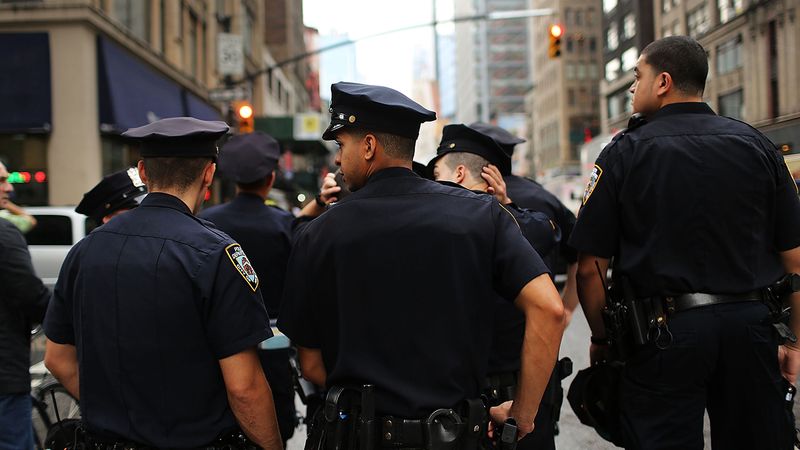
Why is police called 12? If you have ever heard someone shout “watch out, it’s the 12” or seen the phrase in a rap lyric, you have encountered one of the most widely used and least understood pieces of American street slang.
The number 12 as a nickname for law enforcement is not random — it carries a layered history rooted in police radio codes, a legendary TV show, Atlanta street culture, and the unstoppable reach of hip-hop music.
Understanding where this term came from gives you a deeper look at how language, culture, and community shape the way Americans talk about law enforcement in 2026.
What Does “12” Mean When Referring to Police?
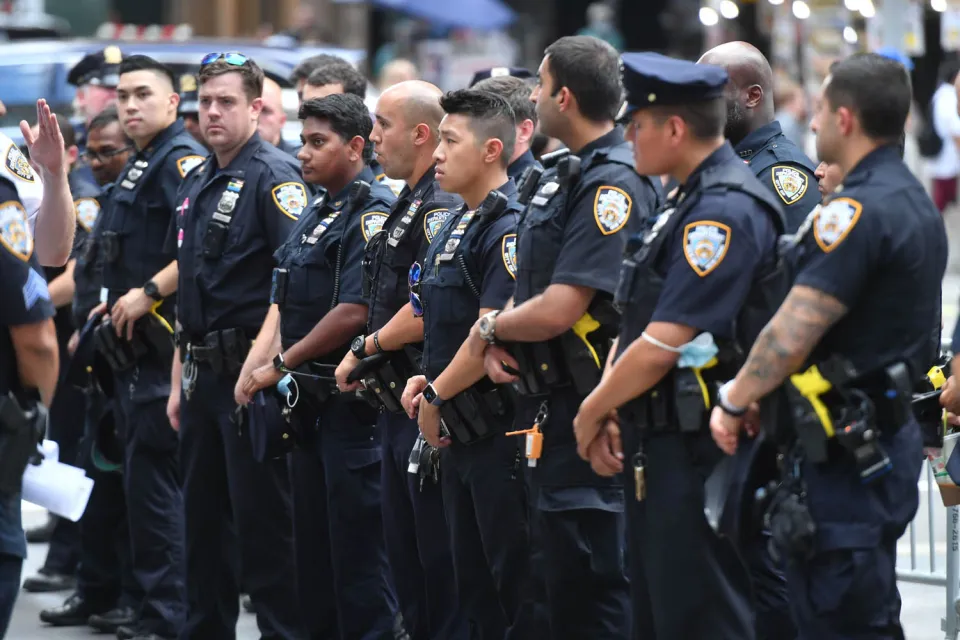
When someone says “12” in a street or hip-hop context, they mean police officers. It is a coded warning used to alert others that law enforcement is nearby.
You will hear it as a shout — “12 is outside!” — or as a reference in conversation — “the 12 came through last night.” The term functions exactly the same way “five-oh” or “the heat” does in other regional slang systems.
The word is most common in the American South, particularly in and around Atlanta, Georgia. However, thanks to trap music and social media, “12” is now understood in virtually every major American city.
Why Is Police Called 12? The 4 Main Origin Theories Explained
No single confirmed explanation exists for why police is called 12. What researchers, slang historians, and pop culture experts agree on is that the term grew from a convergence of at least four separate but related sources.
Theory 1: The 10-12 Police Radio Code
The most widely accepted explanation traces the slang directly to law enforcement’s own radio communication system. In the mid-twentieth century, police departments across the United States used a system of numeric codes over the radio to communicate quickly and efficiently.
One of those codes was “10-12.” In many jurisdictions, 10-12 meant “visitors are present” or “stand by — civilians are on the scene.” Officers used it to alert each other that a non-law enforcement person was nearby during a call.
Street communities — especially in urban areas with heavy police presence — became familiar with these codes through everyday exposure. Over time, people repurposed 10-12 into a street-side warning: when police were spotted, someone would shout “12!” to alert others. The code flipped from a police internal signal into a community lookout call.
This theory is backed by multiple slang dictionaries and is considered the most linguistically credible origin by researchers who study police and street slang.
Theory 2: The Adam-12 TV Show
The second major theory traces “12” to one of the most popular police dramas in American television history. Adam-12 aired on NBC from September 21, 1968 to May 20, 1975. It followed two LAPD officers — Pete Malloy and Jim Reed — as they patrolled the streets of Los Angeles in their patrol car.
The officers’ radio call sign was “1-Adam-12.” Every episode opened with a dispatcher calling out that phrase. Millions of Americans heard it weekly for seven seasons. The number 12 became inseparable from the image of a police patrol car in the minds of anyone who watched the show.
This theory gains significant credibility when you consider the parallel case of “five-oh.” The slang term “5-0” for police comes directly from Hawaii Five-O, another cop drama that aired from 1968 to 1980 — almost exactly the same era as Adam-12. Both shows, both airing simultaneously, both produced lasting police slang that is still in use over 50 years later.
If one TV show can give America “5-0” that survives five decades, there is no reason Adam-12 could not give America “12” in the exact same way.
Theory 3: Atlanta’s Narcotics Unit Numbers
The third theory is the most geographically specific and carries the most weight when it comes to explaining why “12” is strongest in Atlanta and the American South.
According to this account, the Atlanta Police Department’s narcotics enforcement division — the drug unit — was assigned radio designations and unit numbers beginning with “12” during the 1970s and 1980s.
Drug dealers and lookouts on Atlanta streets came into regular, high-stakes contact with these narcotics officers. When they spotted an officer from the narcotics unit approaching, they would shout “12!” as a coded warning to nearby associates. Drop the product. Get clear. The 12 is coming.
Over time, the term expanded beyond narcotics officers to refer to any law enforcement presence. The specificity faded, but the word stuck. Atlanta rap group Migos confirmed this Atlanta-specific meaning with their 2013 song, which used “12 outside” explicitly in the context of a narcotics raid — not a general police stop.
This theory explains something the other theories cannot: why “12” is so much more common and deeply embedded in Atlanta and Southern cities than anywhere else in the country.
Theory 4: ACAB and the 1312 Connection
The fourth theory is the most politically charged and also the most contested by researchers. It connects “12” to the long-standing anti-police slogan ACAB, which stands for “All Cops Are Bastards.”
The theory works like this: each letter in ACAB corresponds to its position in the alphabet — A=1, C=3, A=1, B=2. This produces the sequence 1-3-1-2, or 1312. Under this theory, people began abbreviating 1312 to just “12” as quick anti-police shorthand.
Most slang linguists and researchers treat this as the weakest of the four theories. The math does not hold cleanly — “12” would represent only “AB,” not the full phrase “All Cops Are Bastards.” A logical abbreviation of ACAB numerically would produce “1312,” not just its final two digits.
The more credible view is that “1312” developed as a parallel anti-police code during the 2014 Ferguson protests and the 2020 Black Lives Matter demonstrations, and it reinforced the existing “12” slang rather than creating it. The two terms coexist and support each other culturally, but they likely have separate origins.
The Debunked Theory: 9+1+1=12
One viral internet theory claims that “12” comes from adding the digits of the emergency number 911 together — 9 plus 1 plus 1 equals 12. This is simply wrong. 9+1+1 equals 11, not 12. The math does not work.
This theory circulates widely online and appears in social media comment sections regularly. It has been consistently dismissed by slang researchers and fact-checkers. It is included here only because so many people encounter it and deserve a clear correction.
The Timeline: How “12” Went from Local Slang to National Language
Understanding why police is called 12 requires following the word’s journey from regional jargon to a term understood coast to coast.
| Era | Development |
|---|---|
| 1950s – 1960s | Police radio codes including 10-12 become part of law enforcement communication across U.S. |
| 1968 – 1975 | Adam-12 airs on NBC; “1-Adam-12” call sign reaches millions of American households weekly |
| 1970s – 1980s | Atlanta PD narcotics units reportedly use 12-series unit numbers; drug trade adopts “12” as lookout term |
| Late 1980s – 1990s | “12” circulates in Atlanta street culture; Southern hip-hop begins incorporating local slang into lyrics |
| 2000s | Atlanta rap scene grows nationally; “12” spreads through music as trap music rises |
| 2013 | Migos releases “Fuck 12” on their mixtape Y.R.N., bringing the term to a national mainstream audience |
| 2014 | Ferguson protests; “Fuck 12” becomes a protest slogan; 1312/ACAB connection reinforces usage |
| 2020 | Black Lives Matter protests; “Fuck 12” appears on protest signs and social media globally |
| 2026 | “12” is one of the most recognized police slang terms in the United States |
How Hip-Hop Made “12” a National Term
No cultural force did more to spread the term “12” than Atlanta’s hip-hop scene. Atlanta is the birthplace of trap music — a genre defined by its direct, unfiltered documentation of street life.
When Atlanta artists speak, the rest of the country listens and adopts the language. Terms that originate in Atlanta have a documented history of going national within months through music, then spreading globally through streaming platforms.
Migos, one of the most influential trap groups in history, released “Fuck 12” in 2013. The song used “12” specifically to mean the narcotics officers who conducted raids — a reflection of the group’s Atlanta roots and the local meaning of the term.
The song’s reach was massive. It introduced the term to audiences in cities that had never used it, from New York to Los Angeles to cities outside the United States. Within a few years, “12” had moved from a Southern regional term to a national fixture of American slang.
Artists like Future, Young Thug, Gucci Mane, and dozens of others used the term in subsequent songs, locking it into the lexicon of anyone who listened to rap or trap music.
How “12” Compares to Other Police Slang Terms
“12” is one of many slang terms Americans use to refer to police. Understanding how it compares to other terms reveals how these nicknames develop from different cultural sources.
| Slang Term | Likely Origin | Region / Era |
|---|---|---|
| 12 | 10-12 radio code / Adam-12 TV show / Atlanta narcotics units | South / National (2010s–present) |
| Five-O / 5-0 | Hawaii Five-O TV show (1968–1980) | West Coast / National |
| Pigs | British anti-police protest slang (1800s) | UK origin / adopted in U.S. |
| The Heat | Slang for law enforcement pressure | National / 1950s–present |
| Feds | Federal agents; expanded to any law enforcement | National |
| Po-Po | Repeated syllable childlike reduplication of “police” | South / National |
| Johnny Law | Old American folk slang for a lawman | Rural South and Midwest |
| The Man | Counter-culture slang; any authority figure | National / 1960s |
| Boys in Blue | Reference to police uniform color | National / formal |
| Knockers | Primarily used in Baltimore and mid-Atlantic cities | Regional |
| One Time | California slang meaning police approached once | West Coast |
| 1312 | ACAB in numeric code form | Protest movements globally |
What Does “Fuck 12” Actually Mean?
“Fuck 12” is an anti-police phrase that emerged from Atlanta street culture and was spread nationally by Migos in 2013. It is directed at police generally, though in its original Atlanta context it was aimed specifically at narcotics officers.
The phrase became a protest slogan following the Ferguson demonstrations in 2014 and gained a second wave of visibility during the 2020 Black Lives Matter protests, where it appeared on signs, in chants, and across social media.
It is important to distinguish the phrase from the base term “12.” Saying “12” or “the 12” is a neutral warning or a descriptive term, similar to saying “cops” or “police.” Adding “fuck” transforms it into an explicit political statement expressing hostility toward law enforcement.
The phrase is protected speech under the First Amendment in the United States. Using it is not illegal, though it can escalate tensions in confrontational situations with officers.
Does “12” Mean the Same Thing Everywhere in the U.S.?
No, and this is one of the most important things to understand about why police is called 12. Police slang is deeply regional, and what people say in Atlanta is not always what people say in Baltimore or Los Angeles.
In the American South — especially Georgia, Alabama, Mississippi, and surrounding states — “12” is the dominant police slang term and is widely understood at all levels of street and urban culture.
In the mid-Atlantic region, particularly in Baltimore, “Knockers” is more common. On the West Coast, “5-0” and “One Time” are more prevalent. In New York, “po-po” and “the boys” are more common references.
The internet and hip-hop have made “12” recognizable nationwide, but it does not carry the same automatic instinctive meaning everywhere that it does in Atlanta and the South.
Is It Disrespectful to Call Police “12”?
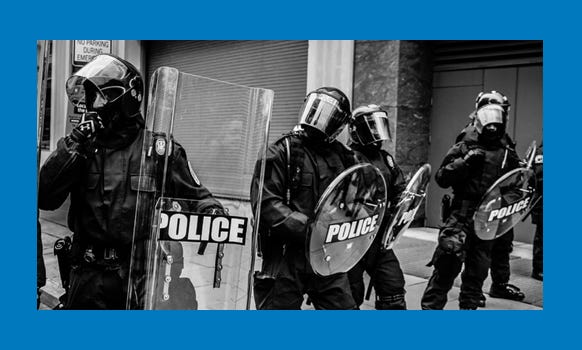
The answer depends entirely on context, tone, and intent. “12” on its own is primarily a descriptive or warning term — it simply identifies police officers the same way “cops” or “the feds” would.
Officers and police organizations are divided on how to treat the term. Some veteran officers view it as ordinary slang no different from “five-oh” — an accepted part of American street language with no meaningful disrespect attached.
Others, particularly in the context of the phrase “Fuck 12,” see the term as inherently tied to an anti-police sentiment and take personal offense to its use.
In everyday conversation and in hip-hop lyrics, “12” functions largely as a neutral descriptive. In protest contexts or in direct confrontation with officers, the same word can carry a much sharper and more hostile edge. Tone, situation, and relationship to the speaker all determine what “12” means in any given moment.
The French Parallel: How Other Countries Developed Similar Codes
The pattern of communities creating coded number-based warnings about police is not uniquely American. France developed a remarkably similar system with completely different roots.
In France, the traditional slang warning for police is “22!” — pronounced “vingt-deux!” The origin traces to French police uniforms of an earlier era, which featured 22 buttons on the jacket. Civilians who spotted an officer would count the buttons and shout the warning.
The French also use “les poulets” (literally “the chickens”) as a slang term for police, a nickname with origins in the 19th century referring to the location of the old Paris police headquarters near a poultry market.
These parallel developments — number-coded warnings developed independently across different cultures — show that the human instinct to create coded lookout language around law enforcement is universal, even if the specific numbers and words vary dramatically.
Why Slang for Police Matters Culturally
The existence of terms like “12,” “five-oh,” and “pig” reflects something real about the relationship between certain communities and law enforcement in America. These words do not develop in neutral, trusting environments.
Slang for police develops most intensely in communities where police contact is frequent, unpredictable, and often adversarial. The words are tools of survival and solidarity — ways of alerting community members quickly and communicating group identity and shared experience.
Understanding why police is called 12 is not just an exercise in etymology. It is a window into the communities that created the term, the circumstances that made it necessary, and the cultural machinery — particularly hip-hop — that carried it to the rest of the world.
The word “12” carries the history of Atlanta’s streets, decades of police radio codes, a classic television era, and the entire arc of American hip-hop in a single syllable. Few slang terms anywhere can claim that kind of density of meaning.
Frequently Asked Questions (FAQs)
Why is police called 12?
Police is called 12 most likely because of the 10-12 police radio code, which meant “visitors or bystanders are present.” Communities repurposed it as a street warning that police were nearby.
Did the term 12 come from the TV show Adam-12?
Adam-12 is one strong contributing theory. The show aired from 1968 to 1975 and featured officers in patrol unit “1-Adam-12,” embedding the number in pop culture the same way Hawaii Five-O produced the slang “5-0.”
Where did the slang term 12 for police originate?
The term most likely originated from a combination of the 10-12 police radio code, the TV show Adam-12, and Atlanta’s narcotics street culture in the 1970s and 1980s, then spread nationally through hip-hop music.
What does Fuck 12 mean?
Fuck 12 is an anti-police phrase originating from Atlanta street culture and popularized by Migos in 2013. In its original context it referred to narcotics officers; it later became a broader anti-police protest slogan.
Is 12 for police only used in Atlanta?
The term is most deeply rooted in Atlanta and the American South, but thanks to trap music and social media it is now understood and used nationally and even internationally.
Does 12 come from 9+1+1?
No. This is a commonly shared but incorrect theory. Nine plus one plus one equals 11, not 12. Slang researchers have consistently dismissed this explanation.
What is the connection between 12 and ACAB?
ACAB stands for All Cops Are Bastards and encodes as 1312 numerically. Some people connect this to “12,” but researchers consider it a parallel reinforcing usage from the 2014 protest era rather than the original source of the slang.
Is it illegal to say “Fuck 12” to a police officer?
No. In the United States, “Fuck 12” is protected speech under the First Amendment. It is a political expression and using it is not a criminal offense, though it can escalate confrontational situations.
How is 12 different from 5-0 as police slang?
Both terms refer to police but come from different origins. Five-O comes from the TV show Hawaii Five-O. Twelve likely comes from the 10-12 radio code or Adam-12. Five-O is more common on the West Coast while 12 is dominant in the South.
When did 12 become mainstream slang for police?
The term went mainstream after Migos released “Fuck 12” in 2013. Its usage surged again during the 2014 Ferguson protests and the 2020 Black Lives Matter demonstrations, reaching a global audience through social media.
Conclusion
Why is police called 12? The honest answer is that no single definitive source exists, but the evidence points strongly to a convergence of three real origins — the 10-12 police radio code that communities repurposed as a street warning, the iconic television show Adam-12 that embedded the number into pop culture, and Atlanta’s narcotics street culture where drug enforcement officers were known by unit numbers beginning with 12.
Hip-hop music — particularly Migos in 2013 — took a regional Southern term and delivered it to a national and global audience. By 2026, “12” is one of the most recognized pieces of American slang, carrying the history of communities, courts, cameras, and rap verses in a single, two-digit number.
Understanding it means understanding something real about America’s complicated relationship with law enforcement and the language built around that relationship.