Yes or No Tarot: Quick Answers to Your Questions 2026
Yes or No Tarot is one of the most powerful and beginner-friendly ways to get fast, clear guidance from the cards. Instead of complex multi-card spreads, this method gives you a direct answer — yes, no, or maybe — to any specific question you bring to the deck.
Whether you need clarity on love, career, money, or a life decision, Yes or No Tarot cuts through the noise and delivers the insight you need in seconds.
What Is Yes or No Tarot?
Yes or No Tarot is a simplified tarot reading method designed to give you a direct answer to a specific question.
Unlike traditional multi-card spreads that explore layers of meaning, Yes or No Tarot distills the wisdom of the cards into one clear outcome — yes, no, or maybe.
It is the most popular form of tarot reading online in 2026, used by millions of people for quick daily guidance.
How Does Yes or No Tarot Work?
The core process is simple. You focus your mind on one specific question, draw one or three cards, and interpret the answer based on the card’s energy and position.
Upright cards generally indicate a “Yes” answer. Reversed cards typically suggest “No.” Some cards carry neutral energy and signal “Maybe” or a need for more patience.
The beauty of Yes or No Tarot is that it takes thousands of years of tarot symbolism and condenses it into a format anyone can use — even complete beginners.
The One-Card vs. Three-Card Yes or No Tarot Spread
There are two main methods used in Yes or No Tarot readings in 2026.
One-Card Reading: You draw a single card and interpret its energy as yes, no, or maybe. This is the fastest method and ideal for simple, focused questions.
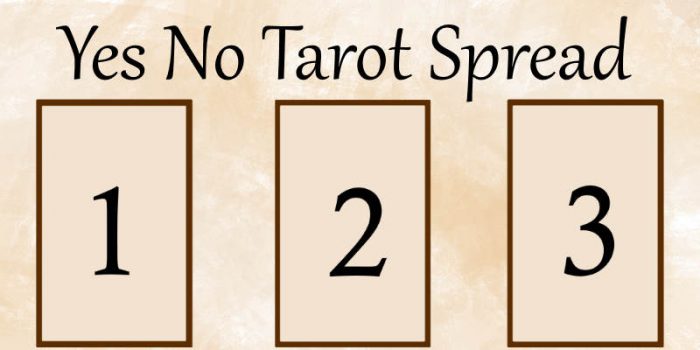
Three-Card Reading: You draw three cards representing past, present, and future — or context, situation, and outcome. If two or more cards are upright, the answer leans toward yes. If two or more are reversed, the answer leans toward no.
| Method | Cards Drawn | Best For | Speed |
|---|---|---|---|
| One-Card Spread | 1 card | Simple, direct questions | Instant |
| Three-Card Spread | 3 cards | Complex situations needing context | 2–3 minutes |
| Celtic Cross (advanced) | 10 cards | Deep life guidance | 15–30 minutes |
The one-card spread is perfect for everyday questions. The three-card spread adds nuance when the situation is more complex or emotionally charged.
Yes or No Tarot: Major Arcana Card Meanings
The Major Arcana cards carry the most powerful energy in the tarot deck. When they appear in a Yes or No reading, they signal that your question touches on significant life themes.
| Card | Yes or No | Core Energy |
|---|---|---|
| The Fool | Yes (conditional) | New beginnings, leap of faith |
| The Magician | Strong Yes | You have all the tools you need |
| The High Priestess | Maybe / Wait | Trust your intuition, timing matters |
| The Empress | Yes | Growth, creativity, abundance |
| The Emperor | Yes | Stability, strong foundations |
| The Hierophant | Yes | Traditional wisdom, guidance |
| The Lovers | Yes | Alignment, love, harmony |
| The Chariot | Yes | Success through willpower |
| Strength | Yes | Courage, inner power |
| The Hermit | No / Wait | Reflection needed before action |
| Wheel of Fortune | Yes | Positive change, good timing |
| Justice | Maybe | Balance, fairness, depends on context |
| The Hanged Man | No / Wait | Pause, surrender, not yet |
| Death | No | Endings, transformation required |
| Temperance | Yes | Balance, moderation, harmony |
| The Devil | No | Blocks, unhealthy patterns |
| The Tower | No | Upheaval, disruption |
| The Star | Yes | Hope, healing, wishes coming true |
| The Moon | No | Illusion, confusion, hidden truths |
| The Sun | Strong Yes | Success, joy, clarity |
| Judgement | Maybe | Reflection, awakening |
| The World | Strong Yes | Completion, achievement, success |
Yes or No Tarot: Minor Arcana — The Suit of Cups
The Cups suit rules love, emotions, relationships, and intuition. It is the most consulted suit for romantic questions in Yes or No Tarot.
| Card | Yes or No | Meaning |
|---|---|---|
| Ace of Cups | Strong Yes | New love, emotional fulfillment |
| Two of Cups | Yes | Partnership, mutual attraction |
| Three of Cups | Yes | Celebration, joy, friendship |
| Four of Cups | No | Apathy, dissatisfaction |
| Five of Cups | No | Loss, grief, disappointment |
| Six of Cups | Maybe/Yes | Nostalgia, past connections |
| Seven of Cups | No | Confusion, illusions, choices |
| Eight of Cups | No | Walking away, disillusionment |
| Nine of Cups | Strong Yes | Wish fulfillment, contentment |
| Ten of Cups | Strong Yes | Ultimate happiness, family harmony |
| Page of Cups | Yes | New emotional beginnings |
| Knight of Cups | Yes | Romance, pursuit |
| Queen of Cups | Yes | Compassion, nurturing love |
| King of Cups | Yes | Emotional balance, wisdom |
Yes or No Tarot: Minor Arcana — The Suit of Wands
The Wands suit rules passion, ambition, creativity, and career energy. It often answers questions about action, timing, and bold moves.
| Card | Yes or No | Meaning |
|---|---|---|
| Ace of Wands | Strong Yes | Inspired action, new start |
| Two of Wands | Yes | Planning, vision |
| Three of Wands | Yes | Progress, expansion |
| Four of Wands | Yes | Celebration, stability |
| Five of Wands | No | Conflict, competition |
| Six of Wands | Strong Yes | Victory, recognition |
| Seven of Wands | Maybe | Defend your position |
| Eight of Wands | Yes | Fast movement, things are happening |
| Nine of Wands | No | Exhaustion, near burnout |
| Ten of Wands | No | Overload, too much pressure |
| Page of Wands | Yes | Enthusiasm, fresh energy |
| Knight of Wands | Yes | Bold action, passion |
| Queen of Wands | Yes | Confidence, charisma |
| King of Wands | Yes | Leadership, vision |
Yes or No Tarot: Minor Arcana — The Suit of Swords
The Swords suit is the most challenging in Yes or No Tarot. It rules the mind, communication, conflict, and truth. Many Swords cards lean toward “no” or signal caution.
| Card | Yes or No | Meaning |
|---|---|---|
| Ace of Swords | Yes | Clarity, breakthrough |
| Two of Swords | No | Indecision, blocked |
| Three of Swords | No | Heartbreak, pain |
| Four of Swords | No | Rest needed, pause |
| Five of Swords | No | Conflict, defeat |
| Six of Swords | Yes | Moving on, calmer waters |
| Seven of Swords | No | Deception, dishonesty |
| Eight of Swords | No | Trapped, restricted |
| Nine of Swords | No | Anxiety, worry |
| Ten of Swords | No | Ending, rock bottom |
| Page of Swords | Yes | Curiosity, quick thinking |
| Knight of Swords | No | Reckless, too fast |
| Queen of Swords | Yes | Sharp clarity, directness |
| King of Swords | Yes | Intellectual authority, fair outcome |
Yes or No Tarot: Minor Arcana — The Suit of Pentacles
The Pentacles suit governs money, career, health, and material matters. It is the most grounded and practical suit in Yes or No Tarot readings.
| Card | Yes or No | Meaning |
|---|---|---|
| Ace of Pentacles | Yes | New financial opportunity |
| Two of Pentacles | Maybe | Balance needed, juggling priorities |
| Three of Pentacles | Yes | Teamwork, skill, collaboration |
| Four of Pentacles | No | Holding back, fear of loss |
| Five of Pentacles | No | Financial struggle, hardship |
| Six of Pentacles | Yes | Generosity, flow of abundance |
| Seven of Pentacles | Maybe | Patience required, wait and see |
| Eight of Pentacles | Yes | Hard work pays off |
| Nine of Pentacles | Yes | Independence, financial comfort |
| Ten of Pentacles | Strong Yes | Legacy, long-term wealth |
| Page of Pentacles | Yes | Practical start, learning |
| Knight of Pentacles | Yes | Steady progress, reliability |
| Queen of Pentacles | Yes | Nurturing abundance |
| King of Pentacles | Strong Yes | Financial mastery, stability |
How to Ask the Right Yes or No Tarot Questions
The quality of your answer depends almost entirely on the quality of your question.
Vague questions produce vague answers. Specific, clear, and focused questions give you the clearest guidance from Yes or No Tarot in 2026.
Questions that work well:
- Should I accept this job offer?
- Is now the right time to have that conversation?
- Will this relationship lead somewhere meaningful?
- Should I move to a new city this year?
- Is this investment a good idea for me right now?
Questions to avoid:
- What will happen in my life? (Too broad)
- Why does this keep happening? (Open-ended, not a yes/no)
- Will I ever be happy? (Too vague and emotionally loaded)
- Should I stay or go? (Double question — split into two readings)
The best Yes or No Tarot questions start with “Should I,” “Will,” or “Is it.” They focus on one specific issue at a time.
Yes or No Tarot for Love and Relationships in 2026
Love questions are the single most popular category in Yes or No Tarot readings globally.
Common love questions include: “Does he/she love me?”, “Will we get back together?”, “Is this relationship right for me?”, and “Should I confess my feelings?”
The strongest “Yes” cards for love are the Ace of Cups, Two of Cups, Ten of Cups, The Lovers, and The Sun. These cards carry powerful romantic energy and indicate positive outcomes.
The clearest “No” cards for love questions are the Five of Cups, Three of Swords, The Moon, The Devil, and Eight of Cups — signaling emotional pain, confusion, or unhealthy patterns.
Yes or No Tarot for Career and Money
Career and financial questions are the second most common use of Yes or No Tarot in 2026.
Strong “Yes” cards for career include the Ace of Pentacles, Six of Wands, Three of Pentacles, The Chariot, and Ten of Pentacles — indicating opportunity, success, and financial growth.
For money questions, pay close attention to the entire Pentacles suit, as it directly rules material circumstances and finances.
Yes or No Tarot for Life Decisions
Some of the most meaningful Yes or No Tarot readings happen when someone faces a major life crossroads.
Whether you are considering a move, a new business, ending a chapter, or starting fresh — Yes or No Tarot provides a simple energetic compass.
Remember that the cards reflect the current energy around your situation. Your free will can always shift the outcome.
Upright vs. Reversed Cards in Yes or No Tarot
Understanding card position is one of the most important skills in Yes or No Tarot reading.
Upright cards generally carry the card’s core positive energy and lean toward “Yes.”
Reversed cards typically indicate blocked energy, delays, obstacles, or the opposite of the upright meaning — leaning toward “No.”
However, it is not always that simple. A reversed positive card might mean “not yet” rather than a hard no. And a reversed negative card could mean “the obstacle is clearing.”
Most experienced readers suggest: for beginners, treat upright as yes and reversed as no. As your practice grows, allow your intuition to refine the interpretation.
How to Do a Yes or No Tarot Reading Step by Step
You do not need to be an expert to get meaningful answers from Yes or No Tarot in 2026. Follow these steps:
Step 1 — Clear Your Mind
Take three slow, deep breaths. Release stress and distractions. A calm mental state produces clearer readings.
Step 2 — Formulate Your Question
State your question clearly and specifically in your mind — or write it down. Keep it focused on one issue only.
Step 3 — Shuffle the Deck
Shuffle your tarot deck thoroughly while holding your question in mind. Some readers prefer riffle shuffling, others spread the cards on a table. Do what feels natural.
Step 4 — Draw Your Card
Stop when your intuition tells you to and draw one card from the deck. Or let an online platform generate your card randomly.
Step 5 — Interpret the Answer
Note whether the card is upright or reversed. Check whether it is a “Yes,” “No,” or “Maybe” card based on its traditional meaning and current position.
Step 6 — Reflect and Act
Take a moment to feel how the answer resonates with you. Your gut reaction to the answer often reveals what you already know deep down.
What “Maybe” Cards Mean in Yes or No Tarot
Not every Yes or No Tarot card gives a clear binary answer — and that is important information too.
“Maybe” cards such as The Moon, Justice, The Hanged Man, Wheel of Fortune, and Two of Swords indicate that the outcome is not yet fixed.
This usually means one of three things: you need more time, you need more information, or there is a significant decision you have not yet made that will influence the outcome.
When you draw a “Maybe” card, consider asking a follow-up question — or wait a few days before reading again.
Yes or No Tarot Accuracy: What to Realistically Expect
One of the most common questions people ask is: “How accurate is Yes or No Tarot?”
Multiple studies and user surveys in 2025–2026 found that 70 to 80 percent of people feel their Yes or No Tarot readings strongly resonate with their current situation.
Accuracy depends on three main factors: the clarity of your question, your emotional state at the time of the reading, and the depth of your interpretation.
Yes or No Tarot is best used as a tool for insight and reflection — not as an absolute prediction of the future. Free will always plays a role.
Yes or No Tarot Online: Free Tools in 2026
In 2026, there are dozens of platforms offering free Yes or No Tarot readings online. The most popular and trusted include Labyrinthos, iFate, DailyTarotDraw, Tarotap, Arcaniva, and yesnotarot.org.
Many of these platforms now combine traditional tarot card meanings with AI-powered interpretation for faster, more personalized readings.
You can access these tools 24 hours a day, seven days a week — no deck required.
AI-Powered Yes or No Tarot in 2026
One of the biggest developments in tarot reading in recent years is the integration of artificial intelligence into Yes or No Tarot platforms.
AI-powered Yes or No Tarot combines traditional card symbolism with machine learning to deliver more contextual, personalized, and nuanced answers than ever before.
These platforms can process your specific question, select the most relevant cards, and provide detailed explanations — all within seconds.
Tips for Getting the Most Accurate Yes or No Tarot Reading
Getting the best results from Yes or No Tarot is about preparation, focus, and trust.
- Be specific. The more focused your question, the clearer your answer.
- Ask only one question per reading. Double questions split the energy and muddy the response.
- Do not repeat the same question immediately. Asking the same question multiple times in a row does not change reality — it only causes confusion.
- Trust your first reading. Your initial draw is your most energetically pure answer.
- Pay attention to your gut reaction. If you feel relief at a “Yes,” that is confirmation. If you feel dread at a “Yes,” it may be time to examine why.
Common Yes or No Tarot Mistakes and How to Avoid Them
Even experienced tarot enthusiasts make mistakes that compromise their Yes or No Tarot readings.
- Asking when emotionally overwhelmed. If you are in the middle of a crisis or panic, wait until you are calm before drawing cards. Strong emotion clouds interpretation.
- Asking the same question again and again. This habit leads to contradictory answers and weakens your trust in the cards.
- Ignoring reversed cards. Reversals carry important nuance — never skip them just because you want a “Yes.”
- Asking questions about third parties. “Will my ex come back?” focuses on someone else’s free will, which the cards cannot reliably predict.
- Treating the reading as a fixed fate. Yes or No Tarot reflects current energy, not an unchangeable future. You always have the power to shift outcomes through your choices.
Yes or No Tarot vs. Traditional Tarot Readings: Key Differences
| Factor | Yes or No Tarot | Traditional Tarot |
|---|---|---|
| Cards Drawn | 1 or 3 | 3 to 10+ |
| Answer Type | Yes, No, or Maybe | Narrative, multi-layered |
| Time Required | 1–5 minutes | 15–60 minutes |
| Best For | Quick decisions | Deep life guidance |
| Skill Level Needed | Beginner-friendly | Intermediate to Advanced |
| Depth of Insight | Surface to moderate | Deep and nuanced |
Yes or No Tarot is the ideal entry point for beginners. As your practice deepens, traditional multi-card spreads reveal far more complexity and wisdom.
Yes or No Tarot for Specific Life Areas in 2026
Yes or No Tarot can guide you in virtually every area of your life. Here are the most common categories and the best questions to ask:
Love and Relationships
- Should I pursue this person?
- Is my relationship moving in the right direction?
- Will we reconcile after this conflict?
Career and Work
- Should I apply for this promotion?
- Is now the right time to start my business?
- Will this project be a success?
Money and Finance
- Is this a good investment?
- Will my financial situation improve this year?
- Should I make this purchase now?
Health and Wellness
- Am I on the right path for my health?
- Should I seek a second medical opinion?
- Will I recover quickly from this setback?
Personal Growth
- Should I pursue this new opportunity?
- Is it time to let go of this situation?
- Will this change be good for me?
How Often Should You Do a Yes or No Tarot Reading?
There is no strict rule, but most experienced readers recommend spacing out your readings for the same question.
For day-to-day questions, one reading per day is perfectly fine. For significant life decisions, allow at least a few days between readings on the same topic.
Asking the same question too frequently creates energetic noise and makes it harder to trust the answers you receive.
Frequently Asked Questions (FAQs)
What is Yes or No Tarot and how does it work?
Yes or No Tarot is a quick divination method where you draw one or three tarot cards to receive a direct yes, no, or maybe answer. Upright cards generally indicate yes, while reversed cards indicate no.
Which tarot cards are the strongest “Yes” cards?
The strongest “Yes” cards are The Sun, The World, Ace of Cups, Ace of Wands, Ten of Cups, Six of Wands, and Nine of Cups. These cards carry positive, forward-moving energy.
Which tarot cards are the clearest “No” cards?
The clearest “No” cards include The Tower, Five of Cups, Three of Swords, The Moon, Ten of Swords, The Devil, and Eight of Cups. These cards signal obstacles, endings, or unfavorable energy.
Can I do a Yes or No Tarot reading online for free?
Yes. Many trusted platforms like Labyrinthos, iFate, Arcaniva, and Tarotap offer completely free Yes or No Tarot readings online with no signup required.
How accurate is Yes or No Tarot?
Research and user surveys suggest 70 to 80 percent of people find Yes or No Tarot readings resonate with their situation. Accuracy improves significantly when questions are specific and the reader is calm and focused.
Can I ask Yes or No Tarot about love?
Absolutely. Love and relationships are the most popular category for Yes or No Tarot. The best cards for love questions are from the Cups suit, especially the Ace, Two, and Ten of Cups.
What does a “Maybe” card mean in Yes or No Tarot?
A “Maybe” card means the outcome is not yet fixed and depends on factors still in motion. Cards like The Moon, Justice, and The Hanged Man commonly signal this — take it as a prompt to reflect before acting.
Should I use one card or three cards for Yes or No Tarot?
Use one card for simple, direct questions. Use three cards when you need more context about the situation, such as understanding the past, present, and future energies around your question.
Can I do a Yes or No Tarot reading for someone else?
Yes, but focus the question on the querent’s situation and choices — not on predicting another person’s behavior, as free will makes those readings unreliable.
How often should I repeat a Yes or No Tarot reading?
Do not repeat the same question in the same session. For the same life situation, wait at least a few days before drawing again to allow energy and circumstances to shift.
Conclusion
Yes or No Tarot is the most accessible and widely used form of tarot reading in 2026, offering instant clarity on the questions that matter most. Whether you are navigating love, career, finances, or personal decisions, this powerful method gives you a direct answer grounded in centuries of tarot wisdom.
The key to getting the most from Yes or No Tarot is asking clear, focused questions, approaching each reading with a calm and open mind, and trusting the first answer you receive.
Remember that the cards reflect the current energy of your situation — your free will always shapes the final outcome. Use Yes or No Tarot as a trusted compass, not a fixed script, and it will serve as one of the most valuable tools in your personal growth journey throughout 2026 and beyond.