Auld Lang Syne Lyrics Meaning & Interpretation 2026
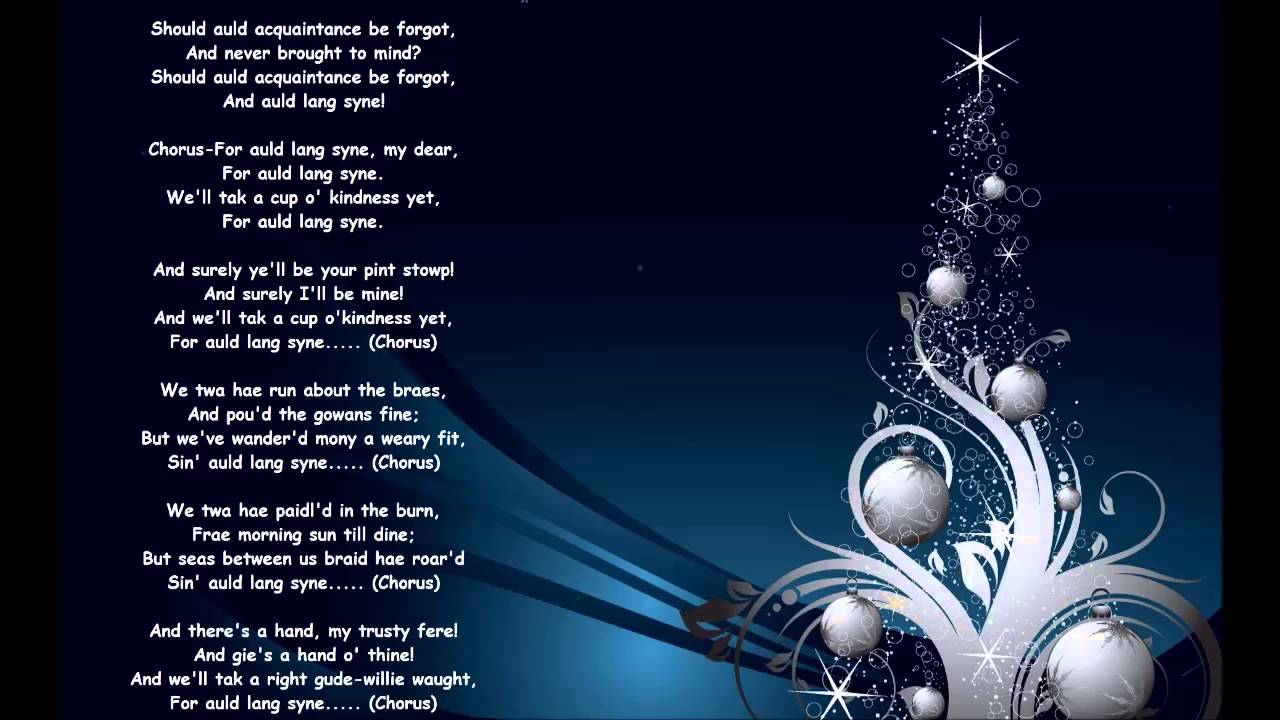
Auld Lang Syne lyrics are sung by millions of people every New Year’s Eve — yet very few singers actually know what the words mean or where they came from.
Written by Scottish poet Robert Burns in 1788 and rooted in an even older folk tradition, this song carries one of the most emotionally resonant messages in the English-speaking world.
Every verse, every line, and every Scots phrase tells a story about friendship, memory, and the courage to look back before stepping forward.
What Does “Auld Lang Syne” Actually Mean?
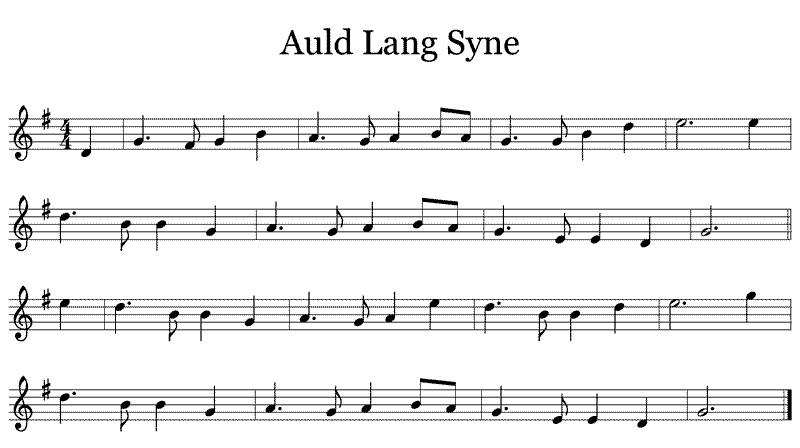
The title “Auld Lang Syne” comes directly from the Scots language, not standard English.
Translated literally into standard English, the title means “Old Long Since.” The words can be interpreted as meaning “since long ago” or “for old times’ sake.”
Professor Murray Pittock, a literary historian, notes that “Auld Lang Syne” refers to a shared past underpinning the current relationships of a family, community, or professional and social association — it goes deeper than a simple translation can capture.
The three Scots words pile together as near-synonyms of the same emotional sensation — old, long, and since — each reinforcing the idea of a treasured but distant past. It is one of the most evocative phrases in any language.
| Scots Word | Literal Meaning | Emotional Weight |
|---|---|---|
| Auld | Old | Age, familiarity, time passed |
| Lang | Long | Distance, duration, longing |
| Syne | Since / Ago | Memory, the past, what has been |
| Combined | Old Long Since | For old times’ sake / Long ago |
Who Wrote Auld Lang Syne? The History of Robert Burns
The lyrics of “Auld Lang Syne” are attributed to Robert Burns, the national poet of Scotland. Burns first wrote down “Auld Lang Syne” in 1788, but the poem did not appear in print until shortly after his death in 1796.
Burns did not claim to have invented the song from scratch. He said he took a fragment of a folk song that he had heard and built more lyrics around it. It is believed that the chorus and first stanza came from elsewhere, while the rest is a Burns original.
Burns was trying to preserve Scottish language and culture after Scotland and England formed the United Kingdom. He travelled the country and collected old Scots poetry and songs, including “Auld Lang Syne.”
The song Burns wrote down can be traced even further back. An earlier ballad by James Watson named “Old Long Syne” dates to 1711, and use of the title phrase appears in poems from as early as the 17th century. Sir Robert Ayton (1570–1638) and Allan Ramsay (1686–1757) both used similar phrases in their own work. The emotional idea behind the song is centuries old.
Timeline of Auld Lang Syne History
| Year | Event |
|---|---|
| 1568 | Earliest known ancestor “Auld Kyndness Forgot” preserved in manuscript |
| 1711 | James Watson publishes “Old Long Syne” ballad |
| 1788 | Robert Burns writes down “Auld Lang Syne” from an old man’s singing |
| 1796 | Burns dies; song first published in Johnson’s Scots Musical Museum |
| 1799 | Best-known version published with George Thomson’s Select Songs of Scotland |
| 1929 | Guy Lombardo broadcasts it on New Year’s Eve radio, cementing US tradition |
| 1976 | Lombardo’s final New Year’s broadcast after nearly 50 years of annual tradition |
| 2026 | Still the most widely recognised New Year’s song in the world |
The Full Auld Lang Syne Lyrics in Scots
Here are the complete original Auld Lang Syne lyrics in Robert Burns’ Scots language, exactly as published in the 1799 edition — the version most widely recognised today.
Verse 1 Should auld acquaintance be forgot, And never brought to mind? Should auld acquaintance be forgot, And auld lang syne?
Chorus For auld lang syne, my jo, For auld lang syne, We’ll tak’ a cup o’ kindness yet, For auld lang syne!
Verse 2 And surely ye’ll be your pint-stoup, And surely I’ll be mine! And we’ll tak’ a cup o’ kindness yet, For auld lang syne!
Verse 3 We twa hae run about the braes, And pu’d the gowans fine; But we’ve wander’d mony a weary foot, Sin’ auld lang syne.
Verse 4 We twa hae paidl’d i’ the burn, Frae mornin’ sun till dine; But seas between us braid hae roar’d, Sin’ auld lang syne.
Verse 5 And there’s a hand, my trusty fiere! And gie’s a hand o’ thine! And we’ll tak’ a right guid-willie waught, For auld lang syne!
Auld Lang Syne Lyrics: Full English Translation
Most people only know the first verse and chorus — and even then, the Scots phrases leave many guessing. Here is a complete, line-by-line English translation of every verse.
Verse 1 Translation
“Should old acquaintance be forgotten, and never brought to mind? Should old acquaintance be forgotten, and long, long ago?”
This first verse is a rhetorical question of whether you should forget about your old friends — and the answer is that you should not.
The song opens not with a statement but a question. It challenges the listener to consider whether old friendships deserve to be forgotten. The implied answer is a resounding no — which is what the rest of the song celebrates.
Chorus Translation
“For long, long ago, my dear, for long, long ago, we will take a cup of kindness yet, for long, long ago.”
The word “jo” in Scots means “dear” or “sweetheart” — a term of genuine warmth and affection. Taking a “cup of kindness” is an invitation to raise a drink in honour of the friendships and times being remembered.
Verse 2 Translation
“And surely you will pay for your pint, and surely I will pay for mine! And we will take a cup of kindness yet, for long, long ago.”
This verse is the most practically joyful in the whole song. Two old friends meet and insist on buying each other a drink — each paying their own way as a gesture of generosity and mutual respect.
Verse 3 Translation
“We two have run about the hills, and picked the daisies fine; but we have wandered many a weary step since long, long ago.”
Here the song shifts into memory. The middle verses acknowledge the reality of hardship alongside celebratory affirmation — the passage of time often coincides with increased difficulty, and the song does not shy away from that truth.
“Braes” means hillsides. “Gowans” are daisies. The verse paints a picture of childhood — two friends running free across open landscape, carefree and young.
Verse 4 Translation
“We two have paddled in the stream, from morning sun till dinnertime; but broad seas have roared between us since long, long ago.”
This is the most emotionally loaded verse in the entire song. The “broad seas” represent everything that life puts between people — distance, time, circumstance, choices made, paths taken.
The friends who once paddled together in a shallow burn (a small stream) have been separated by oceans. Yet here they are, together again, raising a glass.
Verse 5 Translation
“And there is a hand, my trusted friend! And give me a hand of yours! And we will take a great good-will draught, for long, long ago.”
“Fiere” means a trusted friend or companion. “Guid-willie waught” means a generous, heartfelt drink taken in goodwill. This final verse is the song’s emotional resolution — a handshake, a toast, a full-hearted reunion.
Complete Scots to English Glossary
| Scots Word / Phrase | English Meaning |
|---|---|
| Auld | Old |
| Acquaintance | Friend / companion |
| Syne | Since / ago |
| Jo | Dear / sweetheart |
| Tak’ | Take |
| Cup o’ kindness | A drink shared in friendship |
| Pint-stoup | Pint cup / drinking vessel |
| Twa | Two |
| Hae | Have |
| Braes | Hillsides |
| Pu’d | Pulled / picked |
| Gowans | Daisies |
| Wander’d mony a weary foot | Walked many a tiring path |
| Paidl’d | Paddled |
| Burn | Stream / brook |
| Frae | From |
| Dine | Dinnertime / midday meal |
| Braid | Broad / wide |
| Fiere | Trusted friend / companion |
| Gie’s | Give us |
| Guid-willie waught | A hearty, generous drink |
| Sin’ | Since |
The Deeper Meaning of Auld Lang Syne Lyrics
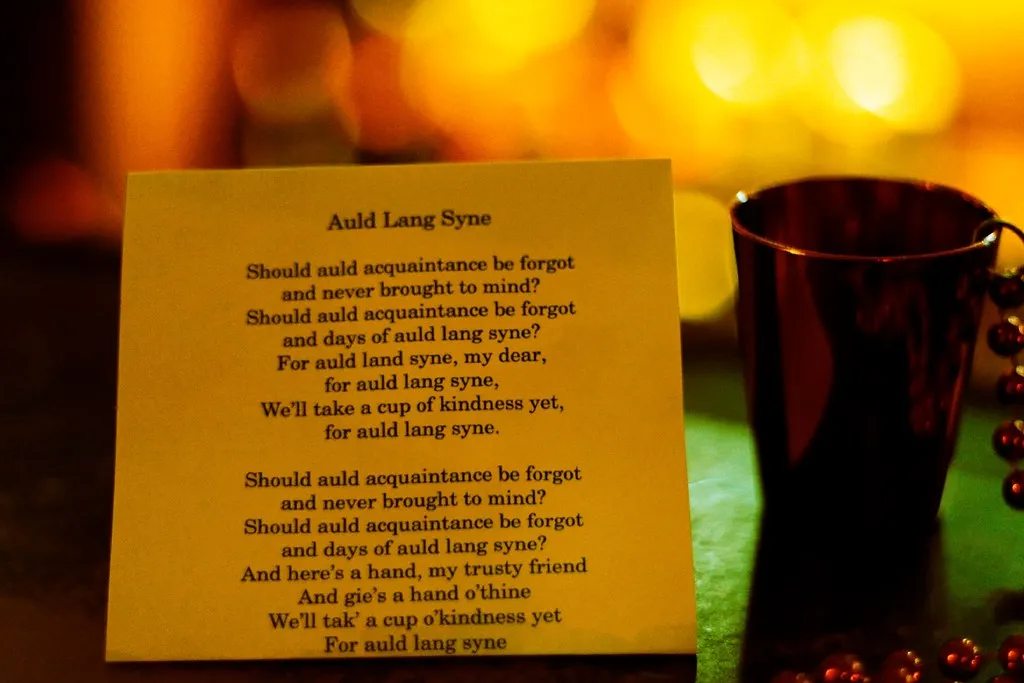
Every verse of Auld Lang Syne works on multiple levels — as a simple drinking song between friends and as a profound meditation on time, memory, and what endures.
It Is Not Really a New Year’s Song
This surprises most people. The lyrics are about old friends having a drink and recalling adventures they had long ago. There is no specific reference to the new year anywhere in the text.
The song’s connection to New Year’s Eve is purely cultural and contextual — it is about endings and reunions, which happen to fit perfectly at midnight on December 31st.
The Song’s Central Question Is a Moral Argument
The opening verse asks whether old friendships should be forgotten. The rest of the song answers the question through action rather than argument.
The two friends do not debate whether memory matters — they meet, they remember, they buy each other drinks, they reach across the table and take each other’s hands. The argument is made through lived behaviour, not philosophy.
The Sad Middle Verses Are Intentional
Many performances skip straight from verse one to the final handshake verse, missing the emotional heart of the song entirely.
The song intentionally moves from positive notes to the negative in order to emphasise how the passage of time often coincides with increased hardship. These middle verses acknowledge the reality of sad memories while insisting on an immediate return to the chorus and its famous affirmation of auld lang syne.
The “broad seas” and “weary feet” are not incidental. They make the reunion all the more meaningful. The greater the distance overcome, the more the handshake in verse five means.
Friendship Is the Song’s True Subject
After all is said and done, Auld Lang Syne points us to relationship as that alone which makes memories worth celebrating.
The song is not about nostalgia for its own sake — it is about the people who make certain memories worth keeping. Friendship is the thread that runs through every verse, and “kindness” is the word that stands out most clearly in the chorus.
How Auld Lang Syne Became a New Year’s Tradition
The song’s global reach today would have astonished Robert Burns. Its spread from a Scottish folk tradition into a worldwide New Year’s ritual happened in stages over two centuries.
The Scottish Hogmanay Tradition
It has long been a much-loved Scottish tradition to sing the song just before midnight. Everyone stands in a circle holding hands, then at the beginning of the final verse they cross their arms across their bodies so that their left hand is holding the hand of the person on their right and their right hand holds that of the person on their left. When the song ends, everyone rushes to the middle, still holding hands.
This circle tradition is the most physically expressive part of the Hogmanay celebration and has been widely adopted at New Year’s parties around the world.
Guy Lombardo and the American Tradition
The pivotal moment in the song’s American history came on New Year’s Eve 1929.
Bandleader Guy Lombardo popularised it after he and his Royal Canadian Big Band played it on a New Year’s Eve broadcast in 1929. Lombardo came from a part of western Ontario home to a large Scottish population, where it was traditional for bands to end every dance with Auld Lang Syne.
Lombardo’s broadcast ran from 1929 all the way to 1976 — nearly five decades of annual New Year’s Eve radio and television tradition that embedded the song into American cultural memory permanently.
Auld Lang Syne in Film and Popular Culture
The song’s emotional power has made it irresistible to filmmakers and storytellers for over a century.
It appeared in Forrest Gump, Sex and the City, and When Harry Met Sally. In the 1989 film, Harry says: “My whole life, I don’t know what this song means.” That line resonates because almost everyone shares the feeling.
Charles Dickens referenced it in both David Copperfield and Our Mutual Friend. South Korea used the melody as its national anthem in the 1940s. The Maldives used it until 1972. Beethoven, Haydn, and William Shield all composed arrangements of the melody. Cliff Richard used it for his 1999 single “Millennium Prayer,” setting the words of the Lord’s Prayer over the Auld Lang Syne tune.
How to Sing Auld Lang Syne Correctly
Every New Year’s Eve, millions of people sing the song with varying degrees of confidence. Here is exactly what you need to know to sing it right.
The Parts Most People Actually Sing
Most common usage of the song involves only the first verse and the chorus. The full five-verse version is rarely performed outside Scotland and formal musical settings.
For most New Year’s celebrations, knowing verse one and the chorus is all you need.
The Hand-Linking Tradition Explained
At the final verse — “And there’s a hand, my trusty fiere” — the tradition at Hogmanay and many New Year’s celebrations is to cross arms and link hands with the people on either side of you, forming a connected circle. When the song ends, everyone steps toward the centre while still holding hands.
This physical act mirrors the song’s emotional message — the reaching across distance to hold the hand of an old friend.
The Most Common Lyric Mistake
Almost every English-speaking singer gets one line slightly wrong. The chorus is often sung as “For the sake of auld lang syne” — but Burns wrote “For auld lang syne, my jo.” The “for the sake of” version is an English paraphrase that became common through repetition but is not the original text.
Notable Versions and Recordings of Auld Lang Syne
The song has attracted remarkable musical talent across every genre and era.
| Artist | Year | Style | Notable Detail |
|---|---|---|---|
| Guy Lombardo & Royal Canadians | 1929 | Big Band / Jazz | Made it a US New Year’s tradition |
| Beethoven (arrangement) | 1814 | Classical | Part of 12 Scottish Folksongs, WoO 156 |
| Joseph Haydn (arrangement) | 1792 | Classical | One of 400+ Scottish folk arrangements |
| Frank Sinatra | 1965 | Vocal Jazz | Smooth, sentimental reading |
| Elvis Presley | 1961 | Rock and Roll | Energetic live performances |
| Rod Stewart | 1993 | Smooth Jazz | Romantic, laid-back delivery |
| Mariah Carey | 2011 | Pop | Modern production, updated sound |
| Celtic Woman | 2002 | Celtic Folk | Traditional, upbeat tempo |
| Cliff Richard | 1999 | Pop | “Millennium Prayer” — Lord’s Prayer over the tune |
| Beach Boys | 1967 | Psychedelic Rock | Dreamy, introspective version |
Auld Lang Syne Lyrics Around the World
The melody and spirit of Auld Lang Syne have been adopted by countries and cultures worldwide, often with entirely new lyrics set to the familiar tune.
In Japan, the melody is used for a song called “Hotaru no Hikari” (Light of the Firefly), traditionally played at school graduation ceremonies and at closing time in shops and department stores.
In South Korea, the tune was used for the national anthem “Aegukga” during the 1940s before an original melody was composed.
In the Netherlands, a version called “Wilt heden nu treden” uses the melody for a harvest hymn with roots going back to the 17th century.
In India, the tune appears in various regional folk and film music adaptations. In Taiwan and parts of Southeast Asia, it is used in school graduation and farewell ceremonies.
| Country | Local Title / Use | Context |
|---|---|---|
| Scotland | Auld Lang Syne (original) | Hogmanay, New Year’s Eve, cèilidhs |
| Japan | Hotaru no Hikari | Graduations, shop closing time |
| South Korea | Aegukga (1940s) | Former national anthem |
| Netherlands | Wilt heden nu treden | Harvest hymn |
| USA | Auld Lang Syne (English) | New Year’s Eve tradition since 1929 |
| India | Various regional adaptations | Film music, farewell occasions |
| Taiwan | Graduation farewell song | School ceremonies |
The Scots Language: Why Auld Lang Syne Matters Linguistically
Auld Lang Syne is one of the most widely heard examples of the Scots language in the world — though most people who sing it do not know that.
Scots is a distinct Germanic language closely related to English that developed separately in Scotland. It is not simply a dialect or an accent — it is a separate linguistic tradition with its own grammar, vocabulary, and literary history.
Robert Burns was one of the most important Scots language writers in history. His decision to write in Scots at a time when educated Scots were being encouraged to adopt English literary standards was a deliberate act of cultural preservation.
Every time someone sings “auld acquaintance” instead of “old acquaintance,” they are — even unknowingly — participating in the survival of the Scots language across more than two centuries.
Auld Lang Syne and Broader Uses Beyond New Year’s
The song is used far beyond New Year’s Eve in many cultures and contexts.
As well as celebrating the New Year, Auld Lang Syne is very widely used to symbolise other endings and new beginnings — including farewells, funerals and other memorials, graduations, the end of a party, the election of a new government, and as a signal that a retail store is about to close for the day.
In Scotland, it is sung at the end of a cèilidh — a traditional social gathering with folk music and dancing — and at weddings. Its emotional flexibility is one of the core reasons for its enduring survival.
The song has even appeared in Sacred Harp choral tradition under the name “Plenary,” with entirely different lyrics serving as a memento mori beginning with the words “Hark! from the tomb a doleful sound.”
Verse-by-Verse Meaning Summary Table
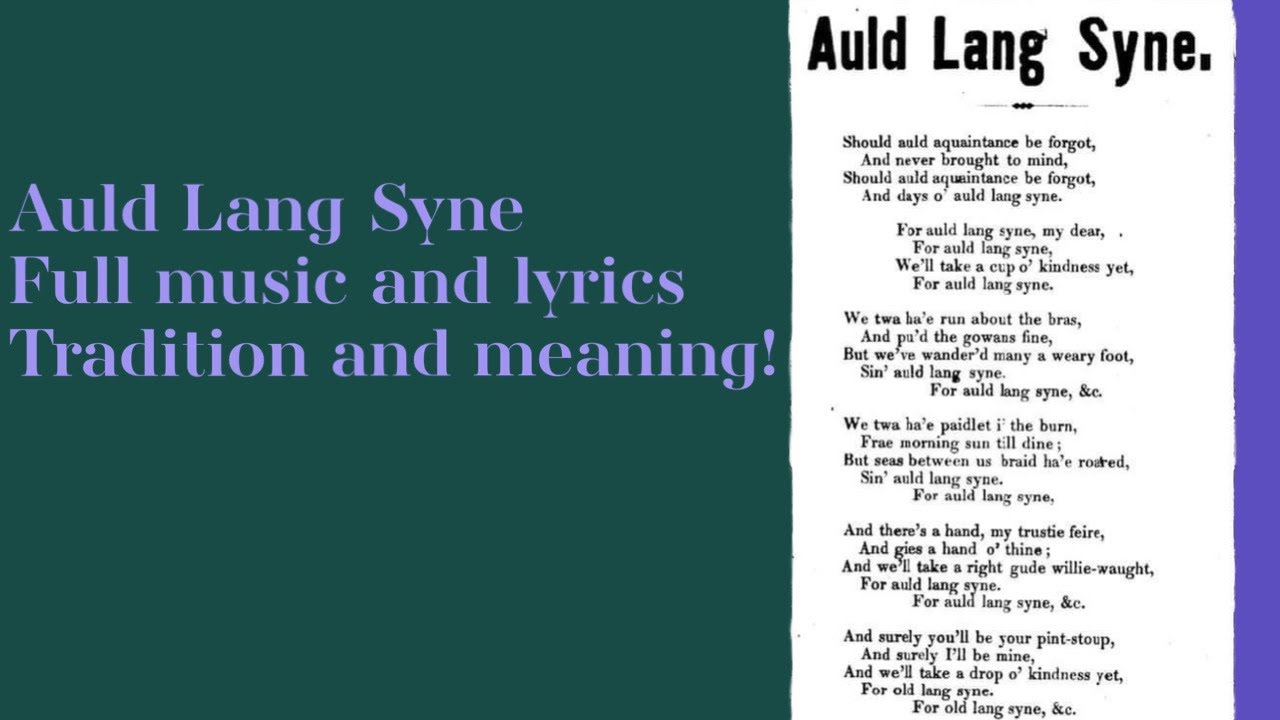
| Verse | Scots Opening | English Theme | Emotional Tone |
|---|---|---|---|
| Verse 1 | Should auld acquaintance be forgot | Should we forget old friends? (No) | Questioning, reflective |
| Chorus | For auld lang syne, my jo | A toast to old times and dear friends | Warm, celebratory |
| Verse 2 | And surely ye’ll be your pint-stoup | Let’s both buy each other a drink | Joyful, generous |
| Verse 3 | We twa hae run about the braes | We ran the hills together in youth | Nostalgic, bittersweet |
| Verse 4 | We twa hae paidl’d i’ the burn | We played in streams — now separated by seas | Poignant, honest |
| Verse 5 | And there’s a hand, my trusty fiere | Reach out your hand — let’s reunite | Triumphant, emotional |
Frequently Asked Questions (FAQs)
Q1. What do the Auld Lang Syne lyrics mean in English?
Auld Lang Syne translates literally as “Old Long Since” in standard English, meaning “for old times’ sake.” The lyrics describe two old friends reuniting, sharing a drink, and remembering the long friendship and adventures they shared in younger days.
Q2. Who wrote the Auld Lang Syne lyrics?
The lyrics are attributed to Scottish national poet Robert Burns, who wrote them down in 1788. Burns said he collected the words from an old man singing a traditional folk song, adding his own verses to complete the poem.
Q3. What does “should auld acquaintance be forgot” mean?
This opening line is a rhetorical question asking whether old friends should be forgotten — the answer the entire song gives is no. The phrase encourages listeners to remember and honour the friendships they have built throughout their lives.
Q4. What is the meaning of “a cup of kindness” in Auld Lang Syne?
A “cup of kindness” simply means a drink shared in the spirit of warmth, friendship, and goodwill. It is an invitation to raise a glass not out of celebration alone but out of genuine affection and gratitude for old friendships.
Q5. Why is Auld Lang Syne sung on New Year’s Eve?
The song is about remembering the past and honouring old friendships, which fits naturally at midnight on December 31st. Its global adoption as a New Year’s tradition in the USA was cemented by Guy Lombardo’s annual radio and TV broadcasts from 1929 to 1976.
Q6. What does “guid-willie waught” mean?
Guid-willie waught is a Scots phrase from the final verse meaning a hearty, generous draught — a big, heartfelt drink taken in genuine goodwill. It is the most joyful expression of friendship in the entire song.
Q7. How many verses does Auld Lang Syne have?
The full version of Auld Lang Syne has five verses plus a repeated chorus. Most New Year’s Eve performances use only the first verse and chorus. The remaining four verses contain the song’s deeper emotional content about shared memories, childhood, distance, and reunion.
Q8. What language are the Auld Lang Syne lyrics written in?
The lyrics are written in the Scots language — a distinct Germanic language related to English that developed in Scotland. Scots is not simply a dialect; it has its own grammar, vocabulary, and literary tradition going back centuries.
Q9. What does “my jo” mean in the Auld Lang Syne chorus?
“My jo” is a Scots term of endearment meaning “my dear” or “my sweetheart.” In the chorus, “For auld lang syne, my jo” translates as “For old times’ sake, my dear” — a direct, affectionate address to the old friend being celebrated.
Q10. Is Auld Lang Syne a Scottish song?
Yes, Auld Lang Syne is a Scottish song rooted in the Scots language and folk tradition, written down by Scotland’s national poet Robert Burns in 1788. It is now a global cultural institution, particularly associated with Hogmanay — the Scottish New Year’s Eve celebration.
Conclusion
The Auld Lang Syne lyrics carry far more depth than most New Year’s Eve singers realise.
What appears to be a cheerful singalong is actually a carefully crafted meditation on friendship, memory, the passage of time, and the courage it takes to honour what has been lost and found again.
Robert Burns preserved something ancient and universal when he wrote these words down in 1788 — a truth about human connection that crosses every border, language, and era.
From the Hogmanay circle in Edinburgh to a midnight countdown in Tokyo, New York, or Karachi, this song unites people in the same quiet understanding: that the people we have known and loved are worth remembering, worth raising a glass to, and worth reaching across any distance to hold hands with one more time. That is what auld lang syne really means.