NRFI Stats Today: MLB First Inning Data & Trends 2026
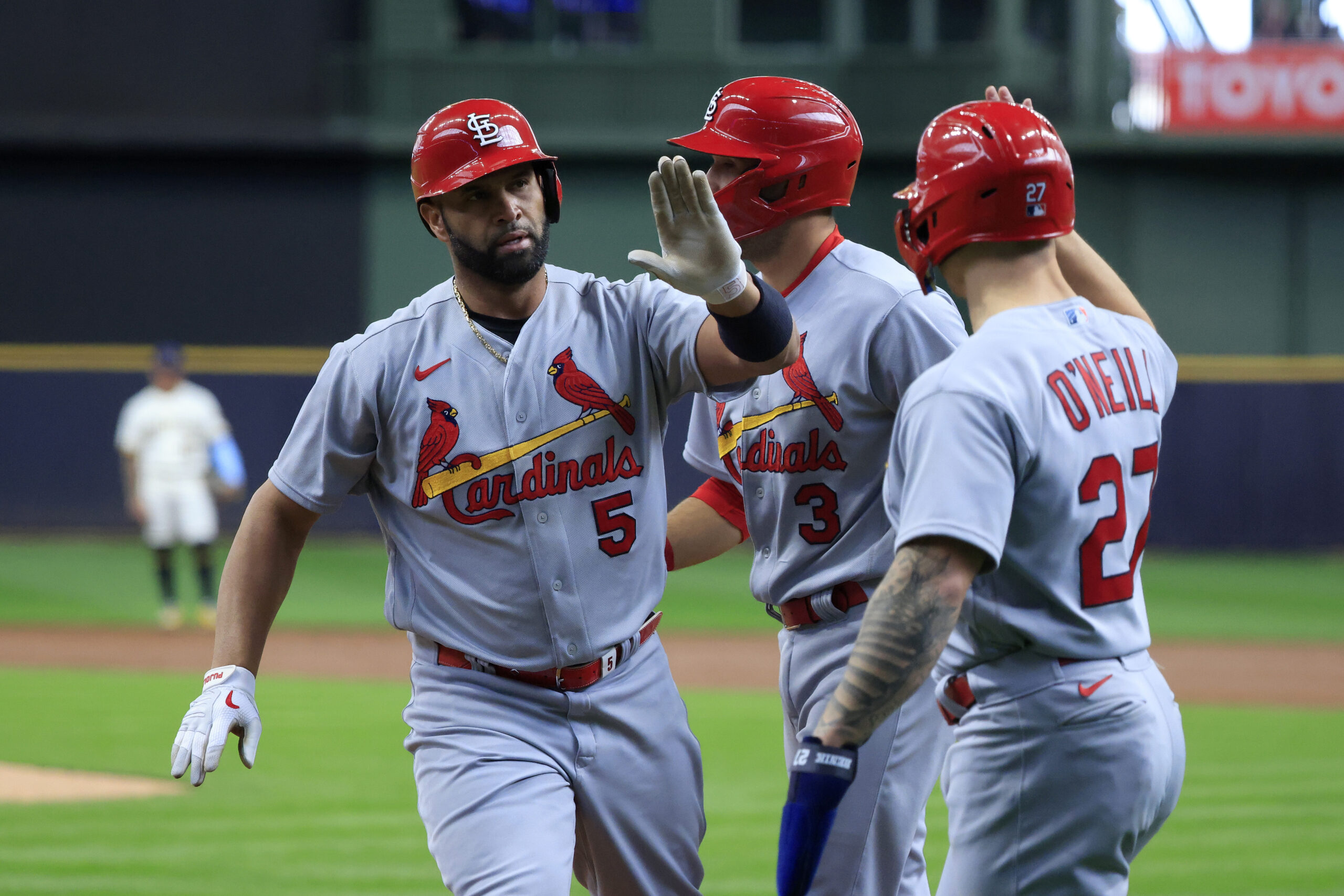
NRFI stats are the most closely watched data points in MLB prop betting right now. NRFI stands for No Runs First Inning — a wager that neither team will score during the opening six outs of a baseball game.
What started as a niche prop has exploded into the most popular daily MLB bet on the board, available at every major sportsbook in the US and Canada.
What Does NRFI Mean?
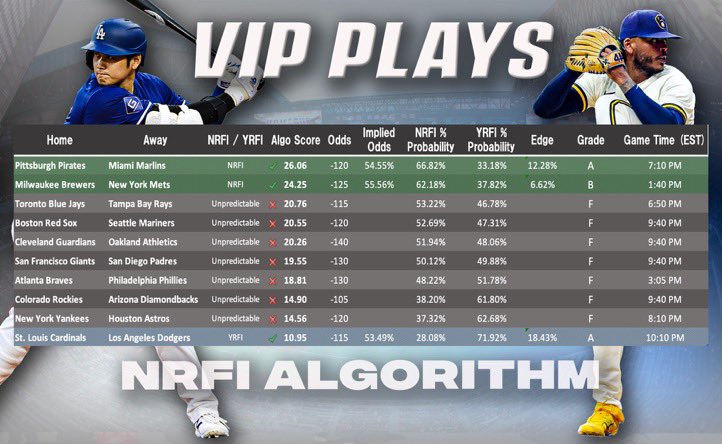
NRFI stands for No Runs First Inning. It is a bet that predicts neither the home team nor the visiting team will score during the first inning of a Major League Baseball game.
The first inning is complete when both sides have batted and six total outs have been recorded. For an NRFI bet to win, the scoreboard must still read 0-0 when that sixth out is made.
If even one run is scored — whether earned or unearned, by the home or away team, off a home run or a wild pitch — the NRFI bet loses immediately.
What Is YRFI?
YRFI stands for Yes Runs First Inning and is the direct opposite of NRFI. You are betting that at least one run will be scored in the opening inning by either side.
A YRFI bet can win on the very first pitch of the game if a leadoff batter hits a home run. That instant resolution is part of why both NRFI and YRFI bets have become so massively popular.
Most sportsbooks present the market as a simple Yes/No question or as an Over/Under 0.5 runs line for the first inning specifically.
How NRFI Bets Are Structured
Sportsbooks display NRFI bets in two common formats. The first is a Yes/No question: “Will there be a run scored in the 1st inning?” The second is an inning-specific total: “1st Inning Runs — Over 0.5 / Under 0.5.”
Both formats result in the same wager. Betting No or Under 0.5 is your NRFI. Betting Yes or Over 0.5 is your YRFI.
| Bet Type | You Win When | You Lose When |
|---|---|---|
| NRFI (No) | First inning ends 0-0 | Any run scored by either team |
| YRFI (Yes) | At least one run scores | First inning ends completely scoreless |
The odds on each side vary dramatically based on the pitching matchup and the game’s overall run total. A matchup featuring two elite starters will push NRFI odds toward -150 or heavier. A game featuring weak pitching or a high total might push NRFI to +120 or beyond.
Why NRFI Stats Have Exploded in Popularity
The biggest driver of NRFI popularity is speed. Most NRFI bets resolve within the first 15 minutes of a baseball game. You do not need to sit through nine innings, late-game managerial decisions, or extra frames. The bet is done almost before your first sip of beer.
MLB’s introduction of the pitch clock in 2023 made games faster overall, which made the quick resolution of NRFI bets even more appealing. First innings now move noticeably faster than they did before the rule change.
Bettors also love NRFI because it rewards research and analysis more directly than most prop bets. Pitcher data, lineup tendencies, ballpark factors, and weather all directly influence the outcome in measurable, trackable ways.
The League-Average NRFI Rate
Understanding the baseline NRFI rate is the first step in building any betting strategy around it. Across modern MLB history, the league-wide NRFI rate sits at approximately 70%.
That means roughly seven out of every ten first innings end without a run being scored. It also means roughly three out of ten first innings do produce at least one run — which is why YRFI bets carry real value in the right matchups.
In 2023, only 12 MLB teams managed winning records on NRFI wagers, while the remaining 18 teams allowed runs in the first inning in more than half of their games. That spread reveals just how much variation exists between franchises.
The median team across MLB scores in just 28.79% of first innings — confirming that the majority of opening frames end scoreless, but the minority that do not can carry heavy consequences for bettors who did not do their homework.
Key NRFI Stats to Track
Not all stats are created equal when it comes to NRFI research. These are the metrics that matter most:
| Stat | What It Measures | Why It Matters for NRFI |
|---|---|---|
| First-Inning ERA | Runs allowed per 9 innings in inning 1 only | Direct measure of how often a pitcher gives up first-inning runs |
| WHIP | Walks + Hits per Inning Pitched | Measures baserunner traffic — more runners means more NRFI risk |
| K% (Strikeout Rate) | Percentage of batters struck out | High K% limits first-inning scoring opportunities |
| BB% (Walk Rate) | Percentage of batters walked | High walk rates create free baserunners and NRFI danger |
| xERA | Expected ERA based on quality of contact | More predictive than ERA for future first-inning performance |
| xFIP | Expected Fielding Independent Pitching | Strips out defense and luck for a cleaner pitcher evaluation |
| Team 1st-Inning Runs/Game | Average runs scored by a team in the first inning | Key offensive data to evaluate the lineup’s early-game punch |
| OPS (Leadoff/Top of Order) | On-base plus slugging for 1-2-3 batters | Elite top-of-order hitters drive up YRFI probability |
First-Inning ERA: The Most Important Pitcher Stat
First-inning ERA is the single most valuable pitcher stat for NRFI research. Unlike season-long ERA, it isolates exactly how a pitcher performs in the one inning that determines your bet’s outcome.
A pitcher can have a respectable 3.80 overall ERA while posting a bloated 6.00 first-inning ERA because he struggles with his command before settling in. That split alone tells you to avoid NRFI bets when that pitcher starts.
Conversely, some pitchers are notoriously dominant in the first inning and tend to cool off as games progress. Finding those pitchers is the foundation of a sustainable NRFI betting edge.
Pitcher Scoreless First-Inning Streaks and Records
Individual pitcher performance in first innings is among the most predictive data for NRFI betting. Elite starters in 2025 demonstrated just how skewed this data can be.
Cristopher Sanchez threw a scoreless first inning in 26 of 31 starts in 2025, including 12 of 14 at home and eight straight entering one of his final starts of the year. That kind of consistency makes him one of the strongest NRFI targets the market offers.
Another pitcher posted a scoreless first inning in 27 of 32 starts in 2025, including 15 of 16 at home — the kind of home/road split that is critical context when handicapping where the game is being played.
These records are available on Baseball-Reference.com and FanGraphs, which track split statistics down to the inning level for every starting pitcher in the league.
How Game Totals Affect NRFI Odds
The overall game total is one of the most reliable secondary indicators for NRFI probability. Sportsbooks use it as a core input when pricing the first-inning market.
When a game’s total is considered high — Over/Under +10 — the odds are significantly greater that a first-inning run will be scored. When a total is much lower, such as 6.5, the odds of a first-inning run are considerably reduced as well.
This relationship exists because game totals are set by the same pitching and offensive inputs that determine first-inning scoring. A high total signals strong offenses, weak pitching, or a hitter-friendly environment — all of which increase YRFI risk.
As a rough guide, totals under 7.5 favor NRFI. Totals above 9.5 should trigger serious consideration of YRFI or at minimum push NRFI bettors to demand plus odds.
Team NRFI Trends: Who Scores Early and Who Does Not
Teams like the Cubs, Astros, and Brewers often trend toward NRFI results, thanks to a combination of low-scoring first innings and dependable starting pitching. On the offensive side, teams like the Red Sox and Angels tend to threaten early, so NRFI bettors should proceed with caution in those matchups.
The 2025 Yankees averaged just 0.05 first-inning runs per game and made contact on only 71.6% of their swings — one of the most favorable NRFI team profiles in the entire league based on offensive first-inning output alone.
Understanding which teams are early-inning threats versus which teams build slow requires tracking team-specific first-inning run averages across the full season, not just recent games.
NRFI Stats by Team Type
| Team Profile | NRFI Tendency | What to Watch |
|---|---|---|
| Elite rotation + weak leadoff | Strong NRFI | Check first-inning ERA of both starters |
| Power lineup + top-3 mashers | Lean YRFI | Check OPS and wRC+ for slots 1–3 |
| High game total (9.5+) | Lean YRFI | Game total reflects overall offense level |
| Low game total (7.0 or less) | Strong NRFI | Both teams expected to score infrequently |
| Home pitcher, pitcher-friendly park | NRFI boost | Coors Field favors YRFI; Oracle Park favors NRFI |
| Windy/cold weather conditions | Slight NRFI edge | Cold air suppresses ball flight and offense |
Ballpark Factors and NRFI Stats
The stadium where a game is played has a measurable effect on NRFI probability. Ballparks vary significantly in how much they suppress or amplify offense, and those effects do not disappear in the first inning.
Coors Field in Denver is the most notorious run-inflating park in baseball. The altitude reduces air resistance, causing the ball to carry further and turning routine fly balls into extra-base hits. NRFI bets at Coors carry real risk regardless of the pitching matchup.
Oracle Park in San Francisco sits at sea level and features cold, heavy air and vast outfield dimensions. It is one of the most pitcher-friendly parks in baseball and has historically supported strong NRFI outcomes.
Fenway Park in Boston features a short left-field wall that favors right-handed power hitters. Its unique layout inflates offense and should push NRFI bettors toward higher odds demands or YRFI consideration.
Weather and NRFI Betting
Weather is an underused variable in NRFI analysis. Most bettors ignore it. Sharp bettors do not.
Cold temperatures suppress offensive production by reducing ball carry and making it harder for hitters to get full extension on their swings. Early-season games in northern cities where temperatures sit in the 40s tend to produce more scoreless first innings than the average would predict.
Wind direction matters too. Wind blowing in from centerfield into a hitter’s face is one of the strongest short-term suppressors of run scoring in baseball. Wind blowing out toward the outfield walls raises YRFI probability considerably.
Rain delays and wet ball conditions before the game can also affect grip for pitchers and feel for hitters, adding another unpredictable variable to monitor on game day.
Advanced NRFI Metrics: xERA, xFIP, and SIERA
Experienced NRFI bettors go beyond first-inning ERA and reach for predictive metrics that strip out noise. The three most useful are xERA, xFIP, and SIERA.
xERA (Expected ERA) is based on the quality of contact allowed rather than actual runs scored. A pitcher with a 5.00 ERA but a 3.20 xERA is likely due for regression back to the mean — making his NRFI value better than his surface stats suggest.
xFIP (Expected Fielding Independent Pitching) removes the influence of the defense behind the pitcher and adjusts for home run rates based on fly ball rates. It is one of the cleanest measures of true pitcher quality.
SIERA (Skill-Interactive ERA) adds batted ball data into the formula for the most comprehensive single-number pitcher evaluation available. All three metrics are freely available on FanGraphs for every starting pitcher in the league.
How to Read NRFI Odds
NRFI odds are presented as American moneyline odds, the same format used for standard game lines. Here is a quick decoder:
| Odds | Meaning | $100 Win | $100 Bet Returns |
|---|---|---|---|
| -150 | NRFI is a significant favorite | Need to bet $150 to win $100 | $166.67 total |
| -110 | Slight favorite | Bet $110 to win $100 | $190.91 total |
| +100 | Even money | Bet $100 to win $100 | $200 total |
| +120 | NRFI is a slight underdog | Bet $100 to win $120 | $220 total |
| +150 | NRFI is a clear underdog | Bet $100 to win $150 | $250 total |
Many YRFI/NRFI MLB odds are close to even money for both sides of the wager. In those cases, a winning $100 bet on either side pays out approximately $186.96.
The juice is driven primarily by the pitching matchup and game total. Always shop multiple sportsbooks for the best available line before placing any NRFI wager.
NRFI Parlay Strategy
One of the most popular ways to leverage NRFI stats is by building multi-game NRFI parlays. Because the individual probability of each NRFI sits around 70%, stacking multiple legs produces attractive combined odds.
A two-game NRFI parlay at -110 per leg pays roughly +264. A three-game parlay pays approximately +600. These payouts make parlays exciting, but the math still favors the house once the vig on each leg compounds across multiple bets.
The smarter application of NRFI parlays is selecting only high-confidence spots — games featuring two elite starters, low game totals, pitcher-friendly parks, and cold weather — rather than filling out a card with marginal matchups.
Platforms like Underdog Fantasy allow users to select NRFI picks either by game or by individual pitcher across 40+ states, making multi-leg first-inning plays accessible even in states without fully legal traditional sports betting.
Step-by-Step NRFI Research Process
Building a daily NRFI analysis routine does not need to be complicated. Here is a streamlined framework:
Step 1 — Confirm the Starting Pitchers. Check injury reports and lineup confirmations. An unexpected bullpen start collapses your entire NRFI case instantly.
Step 2 — Pull First-Inning ERA and xFIP. Look up both starters on Baseball-Reference or FanGraphs. The first-inning ERA split is the most critical single number in your analysis.
Step 3 — Review Offensive Lineups. Check the top three hitters for both teams. A lineup featuring three dangerous bats at the top of the order dramatically raises YRFI probability.
Step 4 — Check the Game Total. Totals under 7.5 lean NRFI. Totals above 9 lean YRFI. Use it as a secondary confirmation of what the market already thinks.
Step 5 — Factor in the Park and Weather. Open a weather app and check conditions at first pitch. Check the park’s run factor on Baseball-Reference or FanGraphs’ park factors page.
Step 6 — Compare Odds Across Books. Even half a point of line difference compounded across a season is significant. Use an odds aggregator like OddsShark or BettingPros to find the sharpest available number.
Common NRFI Betting Mistakes
The most common error is betting NRFI solely because an ace is starting. Sportsbooks are fully aware that elite pitchers are less likely to allow a first-inning run than weaker arms, and they price the options accordingly. A heavily juiced NRFI on a premium starter often holds no positive expected value.
Ignoring the opposing pitcher is another costly oversight. Even if the home team’s starter is elite, the away team bats first. A weak away-side starter means the home team’s top-of-order bats get an elevated shot at scoring early.
Overweighting recent streaks without checking the underlying sample size is also problematic. A pitcher on a five-game scoreless first-inning run sounds impressive until you discover it came against weak lineups in pitcher-friendly parks with cold-weather conditions — a cluster of supportive factors unlikely to repeat.
Best Resources for Daily NRFI Stats
| Resource | What It Provides |
|---|---|
| Baseball-Reference.com | First-inning ERA splits, pitcher logs, full historical data |
| FanGraphs.com | xERA, xFIP, SIERA, K%, BB%, batted ball data |
| BettingPros.com | Live NRFI/YRFI team records and daily odds |
| TeamRankings.com | NRFI percentage by team across current and historical seasons |
| OddsShark.com | NRFI betting trends and best available odds |
| BestOdds.com | Daily NRFI stats tracking and pitcher-specific first-inning data |
| SportsReference / Stathead | Advanced split finder for any pitcher/team/inning combination |
NRFI Stats in Context: 2025 Season Highlights
The 2025 MLB season reinforced several key trends that carry forward into 2026 handicapping. Pitching-dominant rotations continued to generate reliable NRFI value, particularly for teams with stable top-of-rotation starters taking the ball every fifth day.
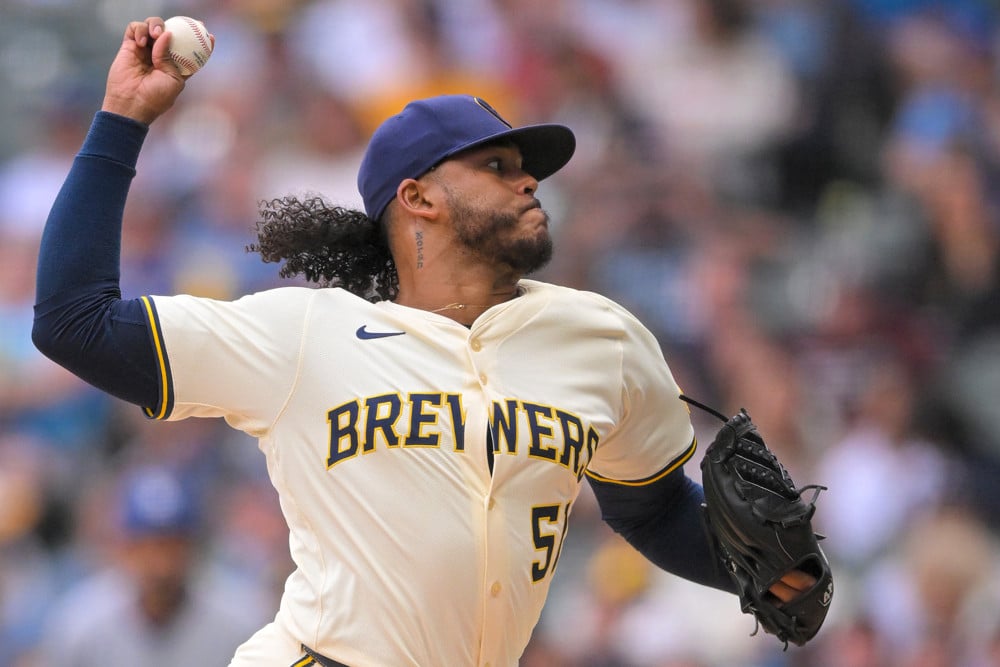
Milwaukee was a prime example of pitching-dominant NRFI results in 2025, ranking second in MLB with a 3.55 ERA from its starting pitching rotation.
The introduction of stricter pitch clock enforcement continued to shorten first innings in terms of real time, keeping bettors engaged and the market active on a daily basis throughout the season.
The 2025 World Series featured the Blue Jays versus the Dodgers, and NRFI markets were active for every postseason game — a further sign of how mainstream the bet has become across the full baseball calendar.
Frequently Asked Questions (FAQs)
What does NRFI mean in baseball betting?
NRFI stands for No Runs First Inning. It is a bet that neither team will score during the first inning of an MLB game, settling within the first 15 minutes of play.
How do NRFI stats work?
NRFI stats track how often teams and pitchers produce or prevent first-inning scoring. Key metrics include first-inning ERA, WHIP, K rate, and team first-inning run averages per game.
What is the league-average NRFI rate in MLB?
The league-wide NRFI rate is approximately 70%, meaning roughly seven out of ten MLB first innings end without a run being scored by either team.
What is the difference between NRFI and YRFI?
NRFI bets on a scoreless first inning by both teams. YRFI bets that at least one run will score in the first inning — it wins the moment any run crosses the plate.
Which stats matter most for NRFI betting?
First-inning ERA is the most important single stat. WHIP, strikeout rate, xERA, and xFIP provide deeper predictive value beyond what raw ERA shows on the surface.
How does the game total affect NRFI bets?
Game totals below 7.5 tend to favor NRFI outcomes. Totals above 9.5 signal higher expected scoring, which raises the probability of a first-inning run and leans toward YRFI value.
Which ballparks favor NRFI bets?
Pitcher-friendly parks like Oracle Park in San Francisco favor NRFI. High-altitude parks like Coors Field in Denver strongly inflate scoring risk and work against standard NRFI value.
Can you parlay NRFI bets?
Yes, NRFI bets can be parlayed across multiple games. A two-leg NRFI parlay at -110 per leg pays roughly +264, but each additional leg compounds risk alongside the payout.
Where can I find daily NRFI stats?
Baseball-Reference, FanGraphs, BettingPros, and TeamRankings all provide NRFI-relevant data. BestOdds and OddsShark offer team NRFI records and daily betting trends updated throughout the season.
Is NRFI betting profitable long-term?
It depends entirely on line value and research quality. Blindly betting NRFI every game is not profitable due to sportsbook vig. Selective betting on high-confidence spots with plus odds or minimal juice is where the edge lives.
Conclusion
NRFI stats represent one of the most data-rich and analytically rewarding corners of the entire MLB betting market. The combination of fast resolution, clear statistical drivers, and massive daily availability has made this the hottest prop bet in baseball.
Understanding first-inning ERA, game totals, ballpark factors, and pitcher quality gives any bettor a genuine edge over casual money flooding into the market.
As the 2026 MLB season unfolds, the bettors who track NRFI stats consistently — daily, systematically, and with disciplined bankroll management — are the ones who will come out ahead over a full 162-game season.