Path of Titans Stats: Track Your Progress Easily 2026
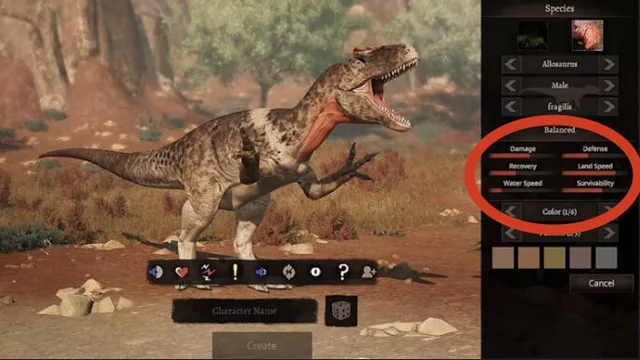
Path of Titans stats are the backbone of every decision you make in this prehistoric survival MMO.
Whether you are choosing your first dinosaur, planning a combat build, or customizing a private server, understanding how health, stamina, armor, combat weight, damage, and bleed interact with each other is the difference between thriving and going extinct.
What Are Path of Titans Stats?
In Path of Titans, all playable dinosaurs have numeric stats that define every aspect of how they perform in the wild and in combat.
These numbers cover everything from how much punishment your creature can absorb to how fast it can sprint across the map before collapsing from exhaustion.
Every stat has a direct gameplay effect. Ignoring them means picking dinosaurs blind and losing fights you could have won with a better build.
Every Core Stat Explained
Health
Health is the basic value of how much damage a creature can receive before dying. Health is reduced by taking damage and regenerates over time based on the creature’s heal speed.
Larger dinosaurs with 5-slot group requirements generally carry the highest health pools. Smaller, faster creatures sacrifice health for speed and maneuverability.
Armor
Armor is a multiplier that directly reduces the amount of damage a player receives.
Armor interacts with incoming damage using a formula that also accounts for combat weight. A high-armor dinosaur facing a lighter attacker will absorb significantly more punishment than raw health numbers alone suggest.
Stamina
Stamina is a value of 100 that is drained by performing various actions. Sprinting is the most common, steadily draining Stamina as long as the player continues sprinting. Some abilities drain Stamina on use, like calls and boosts. Charge abilities drain Stamina when activated and continue to drain until the charge ends. Running out of Stamina will result in Exhaustion, preventing the player from sprinting until they reach 10% of their total Stamina.
Stamina management separates beginner players from veterans. A dinosaur that chases prey recklessly burns out fast and becomes an easy target.
Combat Weight
Combat Weight is determined by how heavy a creature is. The Combat Weight of a dinosaur affects how much damage is taken from attacks. Heavy weights will take significantly less damage from lighter weight dinosaurs. Heavier dinosaurs deal more damage to lighter ones.
This is one of the most important — and most misunderstood — stats in the entire game. Combat weight effectively acts as a hidden damage multiplier in every exchange.
Heal Rate
Heal Rate, or health regen, is the speed that creatures regenerate lost health out of combat. Creatures regenerate health every second at their heal speed. Sitting increases the player’s heal rate and sleeping increases it further. Players cannot regenerate health while they are inflicted with Bleed.
This makes bleed one of the deadliest status effects in the game. Any creature relying on natural regen gets completely shut down while bleeding.
Stamina Recovery Rate and Drain Rate
Stamina recovery rate, or stamina regen, is the speed that playables regenerate Stamina. Stamina will be regenerated more slowly while the player is inflicted with Venom. Like health regen, stamina regen can be increased by sitting and sleeping. Stamina drain rate is how much stamina it costs per second for a dinosaur to sprint.
You can calculate effective sprint duration using the formula: Stamina divided by Stamina Drain Rate equals total sprint time in seconds.
Bleed Heal Rate
Bleed heal rate, or bleed heal, reduces the amount of bleed the player is inflicted by. It reduces the total bleed every second until no bleed remains. Bleed healing can be increased by sitting and further increased by sleeping.
Venom heal rate works on the same principle, ticking down the total venom stack over time. Both are separate stats and can be tuned independently on custom servers.
Group Slots
All player-made groups have 12 available group slots. All creatures have a group slot value assigned to them. Dinosaurs which are not fully grown tend to take up fewer group slots. Each time a new member is added to the group the slot count will be increased.
Larger apex-tier dinosaurs like Barsboldia and Eotriceratops consume 5 slots each. This naturally caps group compositions at two massive dinosaurs and limits how many apex predators can run together.
The Damage Formula: How Hits Are Actually Calculated
This is where Path of Titans stats get genuinely deep. Raw damage numbers alone do not tell you what will actually happen in a fight.
The damage dealt by an attack is not the same as the base value, being affected by both parties’ weight. The damage dealt per hit is calculated by: (AttackerWeight / VictimWeight) × Damage.
As a concrete example from the official wiki: if an Alioramus bites an Albertaceratops, the calculation is (3000/3500) × 30 = 25.7 damage. The weight disadvantage reduced the attack’s effective power.
Armor is added to this formula as (AttackerWeight / VictimWeight) × Damage / ArmorValue. The majority of dinos have a headshot multiplier of 1.2x, increasing all damage dealt to the head. The exception to this is Ceratopsians, which lack the damage multiplier and instead take base damage when hit in the head.
This means aiming for headshots is almost always worth it — except against ceratopsians whose bony frills provide natural head protection.
Combat Weight Tiers at a Glance
| Weight Range | Typical Dinosaur Examples | Combat Role |
|---|---|---|
| 1,000–2,000 | Latenivenatrix, Rhamphorhynchus | Fast flankers, harassers |
| 2,500–4,000 | Alioramus, Metriacanthosaurus, Daspletosaurus | Mid-tier fighters |
| 4,500–6,500 | Sarcosuchus, Suchomimus | Heavy mid-range predators |
| 7,000–10,000+ | Tyrannosaurus, Tyrannotitan, Spinosaurus | Apex combat |
| Herbivore Apex | Eotriceratops, Barsboldia | Defensive tanks |
Higher combat weight dramatically reduces incoming damage from smaller opponents. A Tyrannosaurus hit by a Latenivenatrix receives a fraction of that creature’s base damage value.
Growth Stages and How Stats Scale
Every dinosaur in Path of Titans passes through five distinct growth stages. Your stats are not static — they scale linearly from hatchling to full adult.
The stats will linearly scale between each growth stage. These are the core attributes of the dinosaur in the format: CurveName=”Styracosaurus.Core.MaxThirst”, Values=(1000,2000,3000,4000,5000)
The five values in every curve override correspond directly to each stage.
The Five Growth Stages
| Stage | Order | Growth Progress |
|---|---|---|
| Hatchling | 1st | 0–20% |
| Juvenile | 2nd | 20–40% |
| Adolescent | 3rd | 40–60% |
| Sub-Adult | 4th | 60–80% |
| Adult | 5th | 80–100% (Growth = 1) |
A dinosaur is considered an adult when its Growth value reaches 1. The GlobalPassiveGrowthPerMinute setting adds growth points to a dinosaur every minute. Each dinosaur gains 0.01 growth points per minute. After 100 minutes: 0.01 × 100 = 1 total growth point, making the dinosaur an adult.
At hatchling stage, a dinosaur’s health, combat weight, and damage are all a fraction of their adult values. Surviving as a juvenile requires extreme caution.
Why Growth Stage Matters for Combat
A Sub-Adult Metriacanthosaurus facing a full Adult of the same species is at a serious statistical disadvantage. The game deliberately creates this gap to encourage careful, patient growth rather than early aggression.
Group slot requirements also scale with growth. Most dinosaurs consume fewer slots as hatchlings and juveniles, allowing larger mixed-age groups before they fully mature.
Subspecies: How They Change Your Stats
Subspecies are one of the most impactful stat-modification systems in Path of Titans. Each subspecies type shifts your base stat distribution in a specific direction.
All mobility stats are increased for any character made as a Speed subspecies.
Speed subspecies trade raw defensive power for superior movement — faster sprint speeds, better turn rates, and lower stamina drain. They are ideal for hit-and-run hunters and ambush predators.
Subspecies Types and Their Stat Focus
| Subspecies Type | Primary Stat Boost | Primary Stat Reduction |
|---|---|---|
| Speed | Sprint speed, Turn rate, Stamina drain | Combat weight, Health |
| Attack (ATTK+) | Damage per hit | Defensive resilience |
| Defense (DEF++) | Armor multiplier, Health | Speed, Stamina drain efficiency |
| Balanced | Moderate across all stats | No major weaknesses |
Subspecies are beginning to go into the realms of ATTK+ and DEF++, making it very important to see just how much of a boost it gives and how much the downside is.
The tradeoffs are real. A DEF++ dinosaur will absorb more damage but struggle to chase faster prey. An ATTK+ build hits harder but folds faster under sustained pressure.
Movement Stats: Speed, Turn Rate, and Fall Resistance
Movement stats control your ability to chase, escape, and navigate the world of Path of Titans. These are often overlooked in favor of raw combat numbers.
Speed is how fast a creature moves. Dinos have different speeds for whether they are walking, trotting, or sprinting, though walk speed rarely comes into importance.
Sprinting speed is what matters in combat. Walk speed only affects day-to-day traversal between food sources and water.
Precise Movement
Precise movement is controlled by two stats: Precise Movement Speed and Precise Turn Speed. Precise movement speed determines how fast a creature moves while sidestepping or backing up in precise movement. Precise turn speed, or Turn in Place, controls how fast a dinosaur turns while not moving and holding the precise movement key.
Precise turn speed is critical for large predators in melee. A Tyrannosaurus that cannot pivot quickly enough will miss attacks against fast, circling opponents.
Fall Resistance
Fall resistance, sometimes called “Fall death speed”, is how well a creature can withstand falls. The value is the speed needed for a creature to die from falling. If a player falls and lands before reaching their death speed, they will receive damage based on how fast they were falling. Higher value results in less fall damage.
Large, heavy dinosaurs tend to have lower fall resistance relative to their mass. Cliff diving as a Tyrannosaurus is a fast way to chip away your own health.
Aquatic and Semi-Aquatic Stats
Swimming introduces an entirely separate stat layer that land-focused players often ignore until it costs them their life.
Entering deep water will force the player to swim. Swimming drains Stamina at a separate rate than the base Stamina drain. Sprinting while swimming increases stamina drain. Semi-Aquatics do not drain stamina while swimming, but do drain while sprint swimming.
This creates a massive tactical advantage for semi-aquatic dinosaurs like Sarcosuchus, Spinosaurus, and Suchomimus in and around water bodies.
Turn rate and swim turn rate can be increased on land by some abilities, or decreased by others. Swim turn can be increased by Paddle or Streamlined Hide for dinos that have the abilities, like Spinosaurus.
The updated Spinosaurus after its 2025 TLC patch gained specific aquatic stat boosts that made it genuinely dangerous underwater — a significant shift from its previous land-focused identity.
The 2025 Spinosaurus TLC: The Rebalance That Changed Everything
The single most significant stat change in Path of Titans’ recent history was the 2025 Spinosaurus TLC patch. It didn’t just update one dinosaur — it restructured the entire top-tier stat balance.
With this patch, adjustments were made to the stats of many of the largest dinosaurs on the roster to generally reduce their base stats but improve the effectiveness of their attacks and passive abilities, such as increased running stamina, tail attack damage, and stamina recovery.
Previously, 5-slot dinosaurs acted like stat walls thanks to their high health pools and combat weight values that were completely unapproachable by most smaller slot-sized dinosaurs. This caused mid-tier dinosaurs like Anodontosaurus or Amargasaurus to have their stats boosted to compete, resulting in numbers slowly scaling to unmanageable levels for many other dinosaurs.
While their base health and combat weight were lowered, improvements were made to attacks and passive abilities, such as running stamina, tail attack damage, and stamina recovery. This helps reduce the wide power gap between mid-sized and large dinosaurs, while keeping large species impactful without overwhelming others.
The result was a more consistent stat floor across all tier sizes — and a genuinely fairer competitive environment for medium-weight dinosaurs like Daspletosaurus and Miragaia.
What Changed for Specific Dinosaurs Post-TLC
| Dinosaur | Pre-TLC Issue | Post-TLC Change |
|---|---|---|
| Tyrannosaurus | Stat wall due to high health + CW | Reduced base health/CW, improved attack effectiveness |
| Spinosaurus | Dominant on land and water equally | Refocused on aquatic advantage, new ability suite |
| Eotriceratops | Unapproachable defensive tank | Recalibrated to match new balance floor |
| Barsboldia | Extreme health pool | Normalized to new large-dino baseline |
| Daspletosaurus | Underpowered vs 5-slots | Benefited from top-tier reduction |
| Amargasaurus | Artificially inflated to compensate | Recalibrated stats |
Tyrannotitan: A New Approach to Stat Distribution
The Tyrannotitan introduced a genuinely novel stat philosophy to Path of Titans. Instead of simply being a stat wall like previous apex predators, it was designed around mobility and attrition.
Tyrannotitan boasts a large health pool, more stamina than its peers, good recovery stats, and excellent mobility for its size. However, to offset this, it has similar combat weight to a Suchomimus, heals its status effects slower than other dinosaurs, and its big damaging moves have noticeable tradeoffs.
This design philosophy pushes the Tyrannotitan toward an active combat style — using its speed and bleed to grind down targets — rather than simply tanking attacks and overpowering everything through raw numbers.
Tyrannotitan Stat Profile
| Stat Category | Rating vs Peers |
|---|---|
| Health Pool | High (above average for size) |
| Stamina | High (exceeds most apex competitors) |
| Recovery Stats | Good |
| Mobility | Excellent for its size |
| Combat Weight | Lower than expected (similar to Suchomimus) |
| Status Effect Heal | Slow (below average) |
| Big Attack Damage | Slightly reduced — tradeoffs exist |
The lower combat weight means smaller opponents can actually land meaningful damage if they play well. This makes fighting a Tyrannotitan a legitimate skill challenge rather than simply a hopeless size mismatch.
Bleed, Venom, and Bone Break: Status Effect Stats
Status effects add another layer of stat complexity on top of base values. They interact directly with heal rate, stamina regen, and combat survivability.
Bleed
Bleed deals ongoing damage per second and — critically — prevents health regeneration entirely. Any creature relying on natural heal rate to survive a fight is immediately vulnerable once bleed is applied.
Bleed stacks can accumulate. Frenzied Tear, one of Tyrannotitan’s signature abilities, specifically deals amplified damage to targets already inflicted with bleed.
Venom
Venom does not block regen like bleed but slows stamina recovery significantly. Against a sprinting, mobile target, venom shuts down their escape capability over time.
Stamina will be regenerated more slowly while the player is inflicted with Venom.
A venomed dinosaur sprinting to escape will exhaust itself faster than normal and become an easier target as a result.
Bone Break
Bone break applies movement debuffs and penalties that reduce a target’s effective speed and turning ability. It is most commonly associated with biting attacks from heavy predators and creates windows for follow-up strikes.
Status Effect Summary
| Status Effect | Primary Impact | Countered By |
|---|---|---|
| Bleed | Blocks health regen, ongoing damage | Bleed Heal Rate, sitting, sleeping |
| Venom | Slows stamina recovery | Venom Heal Rate, sitting, sleeping |
| Bone Break | Reduces mobility, speed, turn rate | Time, specific abilities |
| Exhaustion | Prevents sprinting until 10% stamina | Resting, stamina recovery |
How to Check Your Stats In-Game in 2026
One of the most common frustrations in the Path of Titans community has been the lack of a clear in-game stat display. The community has been pushing for a proper stat screen for years.
It would be incredibly useful to know how much HP you have, and how much damage your abilities deal, plus seeing your other stats in general, how much quests you need to grow to the next stage.
Despite all this, there aren’t stats that the game tells you directly. It doesn’t tell you your HP, speed, damage, armor, or even one of the most important factors in the game, combat weight. The community has had to rely on spreadsheets made by other members that don’t even list all the abilities.
Currently the best ways to track your stats are through the official Path of Titans Wiki, community-maintained spreadsheets on Discord, and the /getattr command on servers that allow it.
Where to Find Reliable Stat Data
| Resource | Best Used For |
|---|---|
| Path of Titans Official Wiki (pathoftitans.wiki) | Core stats, mechanics explanations |
| Fandom Wiki (path-of-titans.fandom.com) | Dinosaur-specific details, TLC notes |
| Alderon Games Discord | Community spreadsheets, current patch data |
| GSH Servers Guides (guides.gsh-servers.com) | Server curve override reference |
| /getattr in-game command | Live stat checking on compatible servers |
Editing Dinosaur Stats on Private Servers
One of Path of Titans’ most powerful features is the ability for server administrators to customize every stat through the Game.ini configuration file.
You are able to edit base game dinosaur stats without the need to install mods. This allows you to balance dinosaurs or edit your gameplay without having to download the Dev Kit and create your own mod.
Server operators can define curve overrides in two ways: a dedicated CurveOverrides.ini file placed alongside Game.ini in the server’s config directory, or directly within Game.ini under the [/Script/PathOfTitans.IGameSession] header. Both will work in tandem, with CurveOverrides.ini taking priority if a duplicate is encountered.
The format for editing a specific dinosaur stat looks like this:
CurveOverrides=(CurveName=”Styracosaurus.Core.MaxThirst”,Values=(1000,2000,3000,4000,5000))
The five values represent each growth stage from hatchling through adult. Every stat can be adjusted independently per species.
Common Server Customizations
| Customization Type | Curve Override Used | Common Use Case |
|---|---|---|
| Faster growth | GlobalPassiveGrowthPerMinute | Reducing adult growth time from 100 min |
| Higher HP for large dinos | DinoName.Core.MaxHealth | Realism servers |
| Reduced bleed impact | DinoName.Core.BleedingHealRate | Balancing competitive servers |
| Increased stamina | DinoName.Core.Stamina | Extended chase mechanics |
| Custom thirst/hunger | DinoName.Core.MaxThirst | Survival difficulty settings |
You can directly edit damage that creatures deal, including bleed, venom, bone break, and more. However, you currently cannot add status effects to attacks if they do not already exist.
This is an important limitation. You can increase Styracosaurus headbutt bleed damage, but you cannot add venom to it if the base attack has no venom attribute at all.
Tracking Your Progress: Growth, Quests, and Marks
Path of Titans stats are not purely tied to combat. Your overall progression system ties growth, marks, and quests together into a unified tracking experience.
Growth progress is measured on a 0–1 scale where 1 equals full adult. Passive growth adds points every minute based on server settings. Quest completion adds additional growth bursts above the passive rate.
The Path of Titans Growth Calculator allows server owners and admins to generate precise curve overrides for efficient growth management, whether tracking growth stages or customizing growth times.
Marks are the in-game currency earned through quest completion. They unlock cosmetics, skins, and additional ability slots that enhance your dinosaur’s versatility without directly altering base stats.
Typical Progression Milestones
| Milestone | What Changes |
|---|---|
| Juvenile stage reached | Stats at roughly 40% of adult values |
| Adolescent stage reached | Stats at 60%, most abilities available |
| Sub-Adult stage reached | Full combat viability begins at 80% |
| Adult stage (Growth = 1) | Full stats, maximum combat weight, all abilities |
| Subspecies selected | Stat distribution shifts toward chosen specialization |
Popular Carnivore Stat Profiles: 2026 Overview
Understanding where specific carnivores sit in the current stat hierarchy helps you pick the right creature for your playstyle.
Tyrannosaurus
The most famous predator in the game and a balanced apex option after its 2025 TLC. It has two known body forms — Gracile (lighter, faster) and Robust (heavier, tankier) — that effectively function as stat variants within the same species.
Tyrannosaurus TLC was the second Carnivore TLC of 2025, and Tyrannosaurus is one of the largest carnivores in the game, only ever competing in size with the current Spinosaurus and Tyrannotitan.
Spinosaurus
Completely reworked in 2025 with new aquatic abilities and a revised stat profile. Now functions as a dominant water predator with significant passive bonuses near and in water sources.
Sarcosuchus
Sarcosuchus is the fastest swimmer in the world of Path of Titans. The bite attack of this dinosaur comes along with 50 damage and the charges bite attack can go up to 210 damage points.
Its charge bite is among the highest single-hit damage values available to any semi-aquatic predator in the game.
Metriacanthosaurus
A fan-favorite mid-tier carnivore known for its Healing Call — which restores health to nearby allies — and Intimidating Screech, which temporarily reduces incoming damage. Its stat spread is generalist rather than specialized, which makes it less dominant in any one area but reliable across multiple situations.
Daspletosaurus
One of the primary beneficiaries of the 2025 rebalance. The gap between Daspletosaurus and 5-slot apex dinosaurs was significantly reduced, making it a genuinely viable solo predator rather than a perpetual underdog.
Popular Herbivore Stat Profiles: 2026 Overview
Herbivores are often underestimated by new players. Their stat profiles lean heavily into defensive values, group utility, and area control.
Eotriceratops
An apex herbivore with massive health, high armor, and exceptional combat weight. The 2025 rebalance reduced its raw health pool but preserved its role as an unapproachable defensive tank at a corrected, more reasonable baseline.
Amargasaurus
The Amargasaurus in Path of Titans is a plant-eating glass cannon. Although it can deal heavy damage to opponents, its survivability is relatively low due to the lack of defensive abilities and tough skin. Additionally, this spiked dinosaur is lumberingly slow, making it challenging to avoid combat.
Its high offensive output and low defensive stats create a high-risk, high-reward stat profile that rewards careful positioning and group support.
Barsboldia
A 5-slot mega-herbivore with some of the highest health and combat weight in the game. Built entirely for group play and area denial. A solo Barsboldia is powerful but vulnerable to persistent bleed from organized pack hunters.
Ankylosaurus
A defensive specialist with high armor values and a powerful tail sweep that deals significant AoE damage. Its turn rate and speed are among the lowest in the game, making positioning critical.
Tips for Optimizing Your Stat Build in 2026
Knowing the stat system is only half the battle. Applying that knowledge in practice requires a clear strategy.
Pick your subspecies based on your actual playstyle, not what looks good on paper. A Speed subspecies Tyrannosaurus sounds exciting but requires consistent hit-and-run discipline that many players abandon under pressure.
Prioritize stamina management in every fight. The most common way to lose a winnable engagement is sprinting yourself into exhaustion before the critical moment of the fight arrives.
Use sitting and sleeping aggressively between encounters. The heal rate and stamina regen bonuses from these states are significant and free. There is no reason to walk around at 60% health when a 30-second rest would fully restore you.
Track bleed during fights. If you are inflicted with bleed, your natural health regen is completely disabled. Sitting or sleeping clears bleed faster, but both leave you vulnerable. Choose your recovery moment carefully.
On custom servers, ask the admin for the server’s curve overrides. Knowing whether health values, growth speed, or damage multipliers have been adjusted changes every tactical decision you make.
Frequently Asked Questions (FAQs)
What is combat weight and why does it matter in Path of Titans?
Combat weight determines how much damage your dinosaur takes from attacks based on the attacker’s weight versus your own. Heavier dinosaurs take significantly less damage from lighter opponents and deal more damage in return.
How does the damage formula work in Path of Titans?
Damage is calculated as (Attacker Weight ÷ Victim Weight) × Base Damage, then divided by the victim’s armor value. A headshot adds a 1.2x multiplier for most dinosaurs except ceratopsians.
Can I see my Path of Titans stats in-game?
There is currently no built-in stat display panel in the game. Players rely on the official wiki, community spreadsheets, and the /getattr command on compatible servers to check their numbers.
What do the five growth stage values mean in curve overrides?
The five values in every curve override correspond to Hatchling, Juvenile, Adolescent, Sub-Adult, and Adult stages. Stats scale linearly between each stage as the dinosaur grows.
What does bleed do to my stats in Path of Titans?
Bleed applies ongoing damage per second and completely disables your health regeneration for the duration. You cannot naturally recover health while bleeding, making it one of the most dangerous status effects in the game.
How do subspecies change dinosaur stats?
Subspecies redistribute your base stat weights. A Speed subspecies boosts all movement stats while reducing survivability. ATTK+ raises damage output. DEF++ increases armor and health at the cost of speed and stamina.
What changed in the 2025 Spinosaurus TLC stat rebalance?
The TLC reduced base health and combat weight for the largest 5-slot dinosaurs while improving their attack effectiveness, running stamina, and passive abilities. This narrowed the power gap between mid-tier and apex-tier creatures.
How long does it take to grow to adult in Path of Titans?
On default server settings, a dinosaur needs 100 minutes of passive growth time to reach adult stage. Servers can modify GlobalPassiveGrowthPerMinute to make growth faster or slower.
What is the best dinosaur for beginners based on stats?
Metriacanthosaurus is widely recommended for beginners due to its balanced stat spread, medium combat weight, Healing Call for group survival, and straightforward attack patterns with no major weaknesses.
Can server admins change individual dinosaur stats without mods?
Yes. Server admins can edit the Game.ini file or a dedicated CurveOverrides.ini file to adjust any dinosaur’s core stats, combat values, and growth multipliers at each growth stage without installing mods.
Conclusion
Path of Titans stats form a deep, interconnected system that rewards players who take the time to understand them.
Health, armor, combat weight, stamina, heal rate, bleed, venom, movement speed, and subspecies modifiers all work together to define exactly how your dinosaur performs in every situation.
The 2025 rebalance that accompanied the Spinosaurus TLC brought the most significant stat restructuring the game has seen, leveling the playing field between mid-tier and apex creatures and creating a stronger foundation for all future balance updates.
Whether you are playing vanilla servers, custom realism servers, or managing your own community, tracking and understanding these numbers in 2026 puts you in control of your experience in a way that instinct alone never can. Study the stats, build with intention, and survive smarter.